Skip to content
Renewable Carbon Publications - LogoRenewable Carbon Publications - Logo
  • Publications
  • Contact
0

No products in the cart.

  • Renewable Carbon
    • Renewable Carbon
    • Events
    • Publications
    • Graphics
    • News
    • Business Directory
    • Newsletter
    • nova-Institute
  • Publications
  • Contact

Renewable Carbon Publications - LogoRenewable Carbon Publications - Logo
0

No products in the cart.

  • Renewable Carbon Publications
  • Markets & Economy
  • Page 7
Grid view List view

Showing 121–140 of 412

  • Download Statistics
  • Direct Download
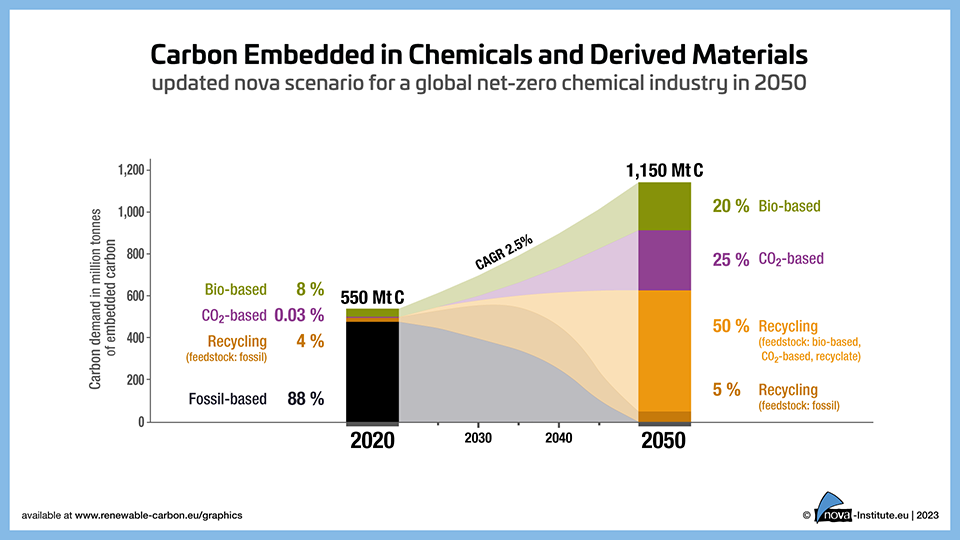
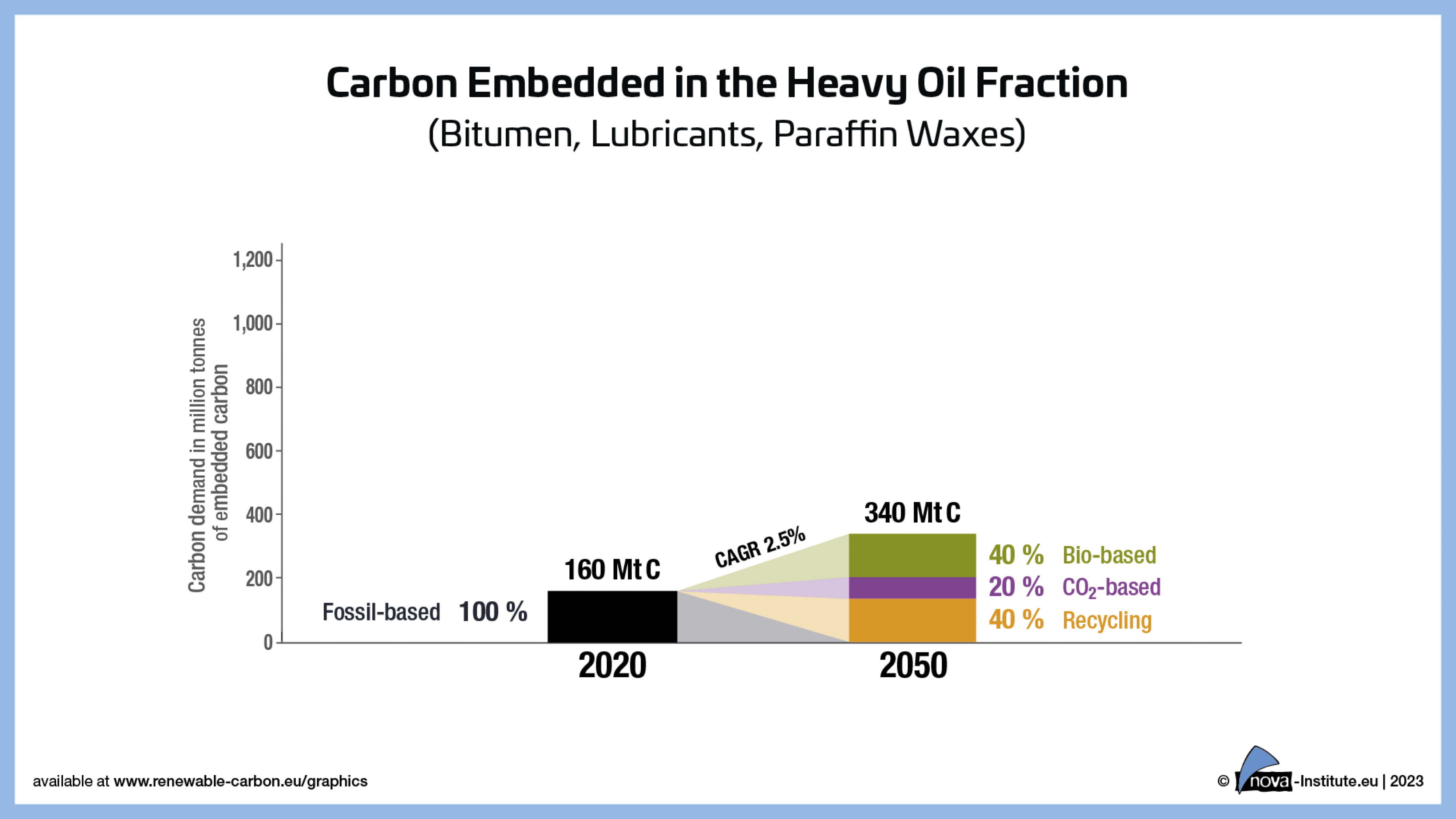
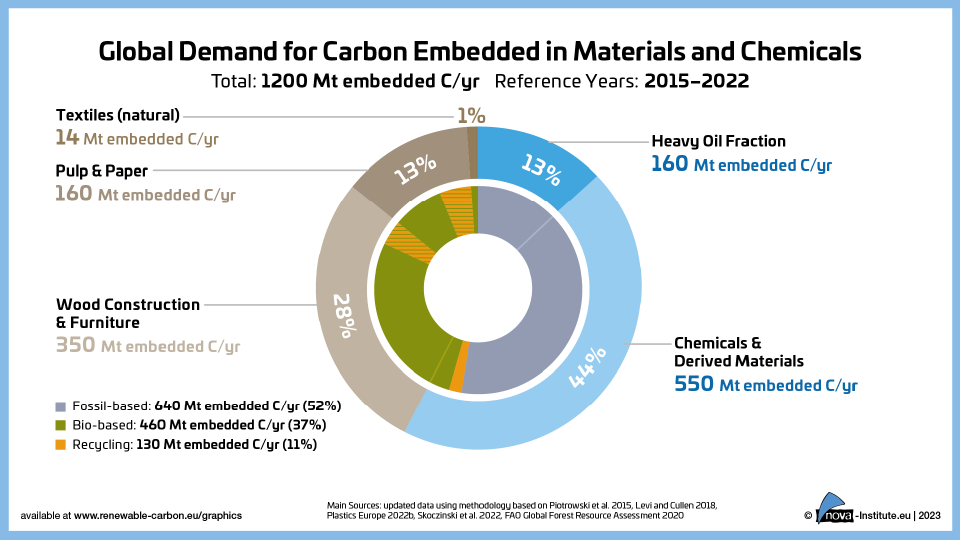
    global demand for carbon embedded in materials and chemicals tn

    Global Demand for Carbon Embedded in Materials and Chemicals (PNG)

    Markets & Economy, Policy

    1 Page
    259 Downloads

    259 Downloads  

    2023-07

    FREE

    Free Shipping
     

    259
    Downloads

    Direct Download

    Figure from the RCI Carbon Flows Report 2023

  • Direct Download
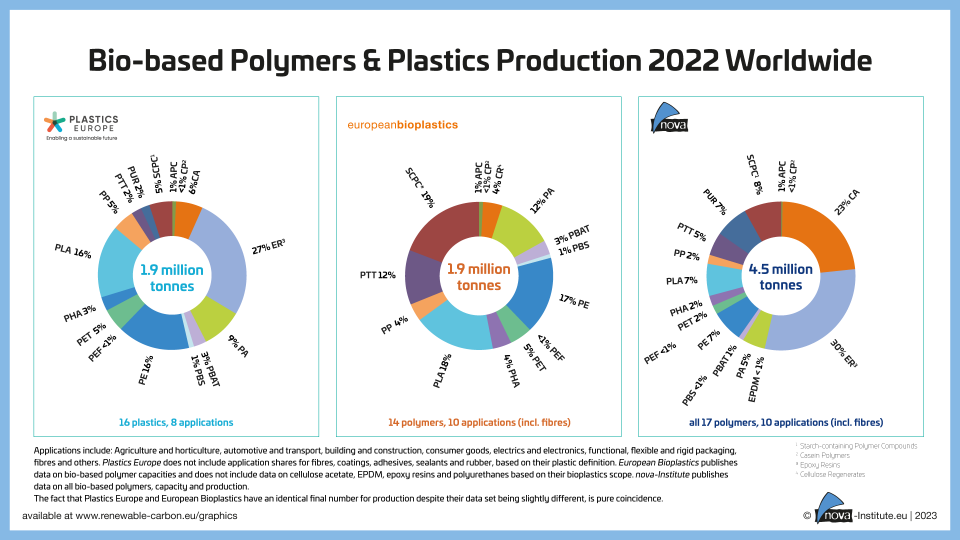
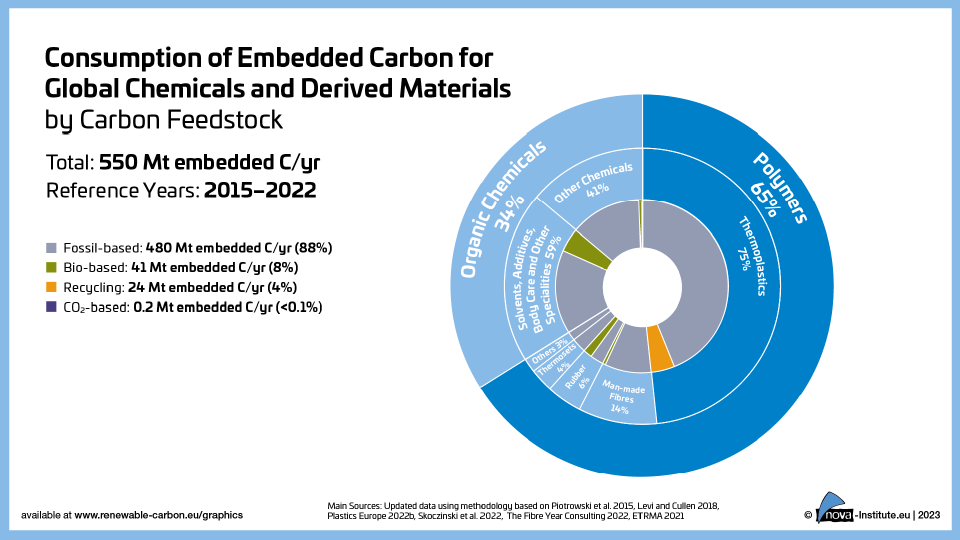
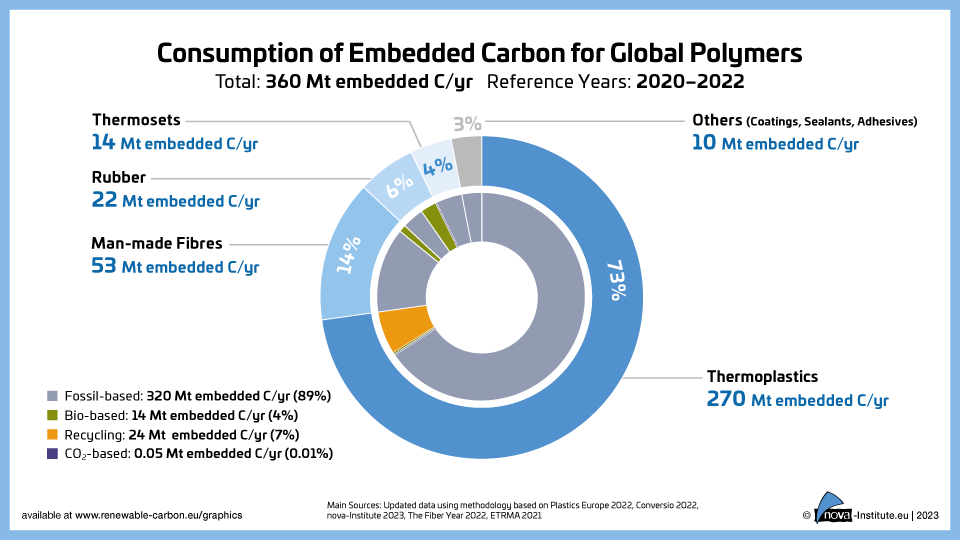
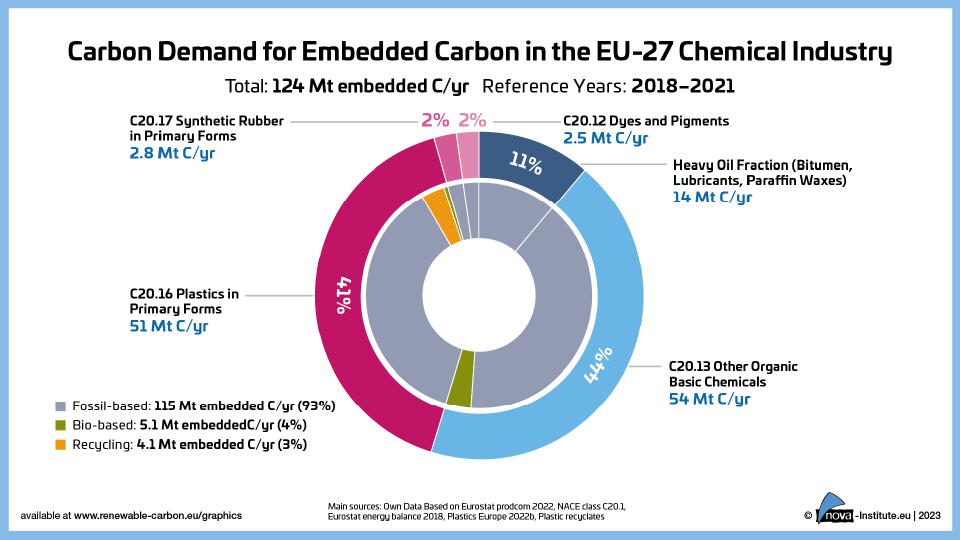
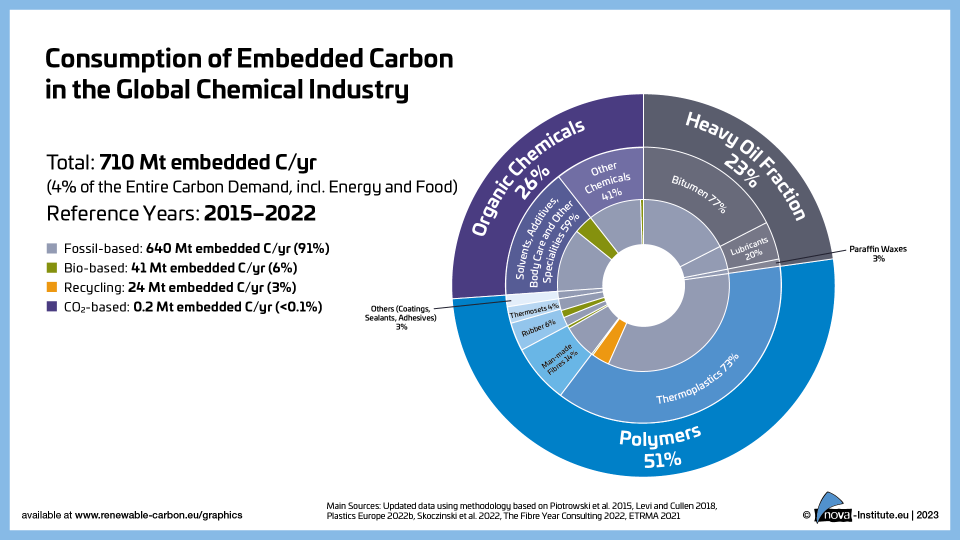
    consumption of embedded carbon in the global chemical industry (png)

    Consumption of Embedded Carbon in the Global Chemical Industry (PNG)

    Markets & Economy, Policy

    1 Page
    137 Downloads

    137 Downloads  

    2023-07

    FREE

    Free Shipping
     

    137
    Downloads

    Direct Download

    Figure from the RCI Carbon Flows Report 2023

  • Direct Download
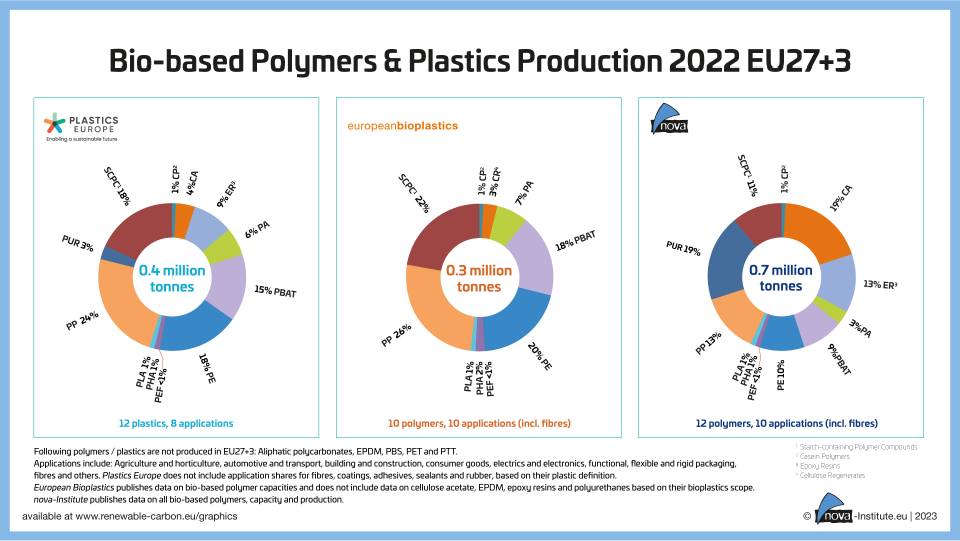
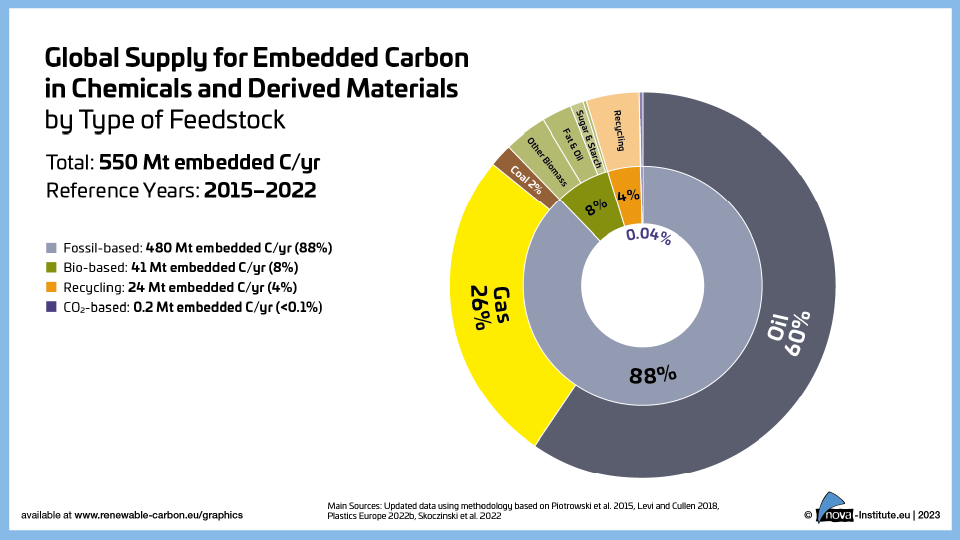
    global supply for embedded carbon in chemicals and derived materials by type of feedstock tn

    Global Supply for Embedded Carbon in Chemicals and Derived Materials by Type of Feedstock (PNG)

    Markets & Economy, Policy

    1 Page
    176 Downloads

    176 Downloads  

    2023-07

    FREE

    Free Shipping
     

    176
    Downloads

    Direct Download

    Figure from the RCI Carbon Flows Report 2023

  • Direct Download
    Renewable Carbon Initiative - Cover

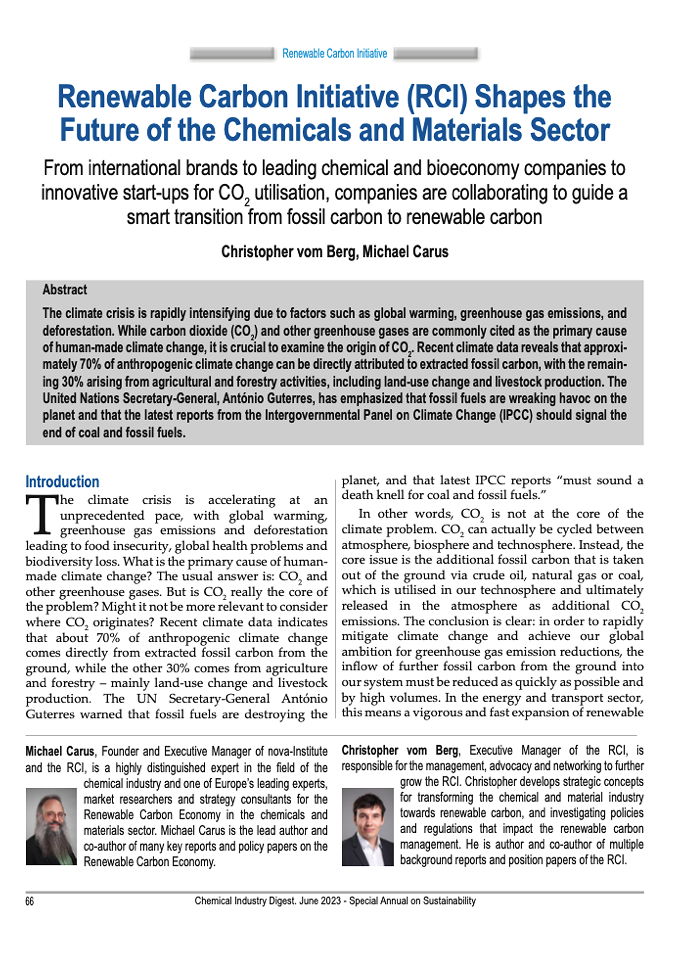
    Renewable Carbon Initiative (RCI) Shapes the Future of the Chemicals and Materials Sector

    Markets & Economy, Policy

    3 Pages
    136 Downloads

    136 Downloads  

    2023-07

    FREE

    Free Shipping
     

    136
    Downloads

    Direct Download

    From international brands to leading chemical and bioeconomy companies to innovative start-ups for CO2 utilisation, companies are collaborating to guide a smart transition from fossil carbon to renewable carbon. The Renewable Carbon Initiative (RCI) (www.renewable-carbon-initiative.com) was created after observing the struggles of the chemical and material industriesin facing the enormous challenges to meet the climate goals set by the European Union and the sustainability expectations held by societies around the globe. It was clear that the industry has to go beyond using renewable energy and also consider their raw materials. Because decarbonisation is not an option for the chemical and material sector, as it is entirely based on the use of carbon, an alternative strategy is required: defossilisation through renewable carbon – carbon from above the ground: biomass, CO2 and recycling.

  • Direct Download
    23 07 12 making a case for ccu shop

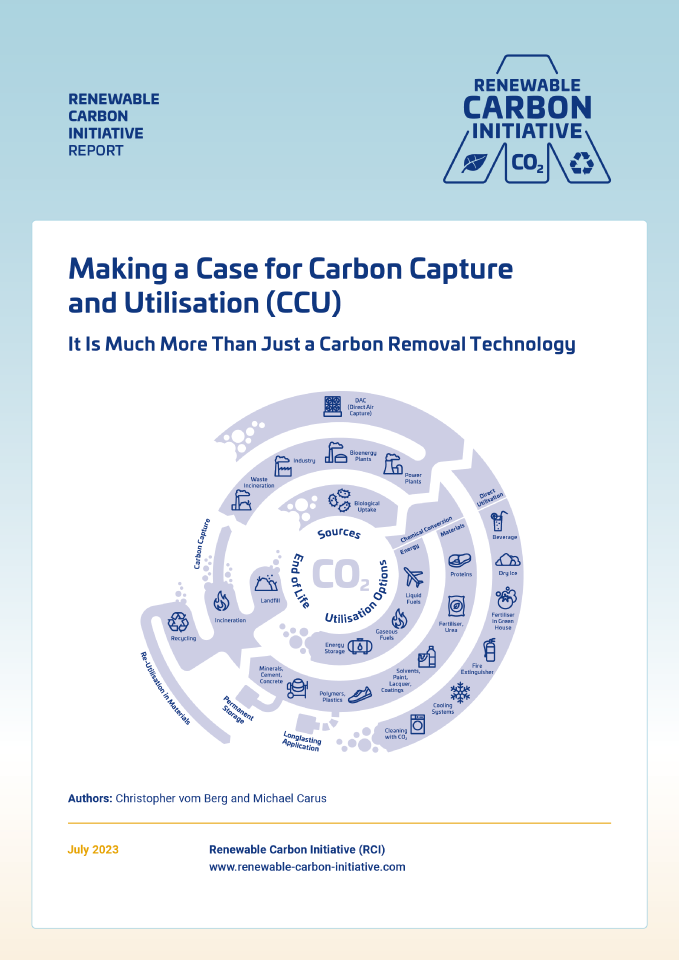
    RCI’s scientific background paper: “Making a case for Carbon Capture and Utilisation (CCU) – It is much more than just a carbon removal technology” (July 2023)

    Markets & Economy, Policy, Sustainability & Health, Technology

    48 Pages
    2082 Downloads

    2082 Downloads  

    2023-07

    FREE

    Free Shipping
     

    2082
    Downloads

    Direct Download

    This scientific background paper highlights the importance of Carbon Capture and Utilisation (CCU) and the need for more political recoginition and support for CCU.

    CCU enables the substitution of fossil carbon in sectors where carbon is necessary, supports the full defossilisation of the chemical and derived material industries, creates a circular economy, reduces the emission gap, promotes sustainable carbon cycles, fosters innovation, generates local value and stimulates job growth.

    CCU is much more than a carbon removal technology: the technology offers multiple solutions to pressing problems of our modern world and can support several Sustainable Development Goals if implemented properly.

    In total, 14 different benefits and advantages of CCU are described and discussed in the paper. A key advantage is that CCU supplies renewable carbon to – and thereby substitutes fossil carbon in – sectors that will require carbon in the long run. This includes the chemical sectors and products like polymers, plastics, solvents, paints, detergents, cosmetics or pharmaceuticals. But CCU is also essential to a long-term net-zero strategy, crucial for creating a sustainable circular economy, providing solutions for scaling up the renewable energy system, and bringing multiple benefits for innovation and business.

    The relevance of the technology is not yet accepted in Europe, but the RCI wants to make a very clear statement: CCU is a central pillar for the biggest transformation of the chemical and material industry since the industrial revolution.

    DOI No.: https://doi.org/10.52548/VYKR3129

  • Direct Download
    23 07 12 co2 as a feedstock shop thumbnail

    CO2 as a Feedstock

    Markets & Economy

    1 Page
    550 Downloads

    550 Downloads  

    2023-07

    FREE

    Free Shipping
     

    550
    Downloads

    Direct Download

    Carbon Capture and Utilization (CCU) provides multiple solutions for sustainability

  • Direct Download
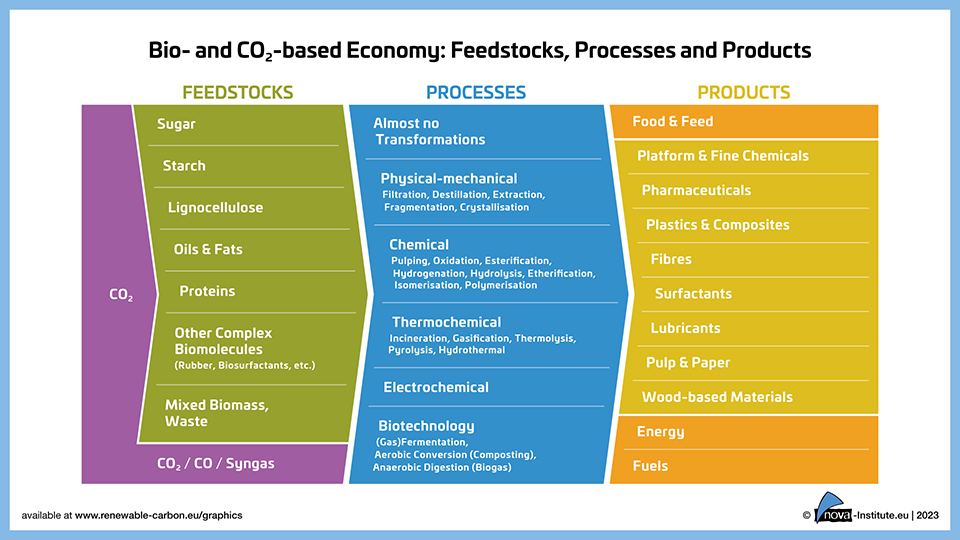
    23 07 13 overview of ccu based chemicals derived materials and products nl

    CO2-based Products – Poster

    Markets & Economy


    374 Downloads

    374 Downloads  

    2023-07

    FREE

    Free Shipping
     

    374
    Downloads

    Direct Download

    This poster shows examples of CO2-based products.

  • Direct Download
    23 03 01 traffic light sustainability risk evaluation of bio based feedstocks thumbnail

    Traffic Light Sustainability Risk Evaluation of Bio-based Feedstocks (PNG)

    Markets & Economy, Policy, Sustainability & Health, Technology

    1 Page
    298 Downloads

    298 Downloads  

    2023-06

    FREE


    298
    Downloads

    Direct Download
  • Direct Download
    23 03 17 corn and its applications thumbnail

    Corn and its Applications (PNG)

    Markets & Economy, Policy, Sustainability & Health, Technology

    1 Page
    124 Downloads

    124 Downloads  

    2023-06

    FREE


    124
    Downloads

    Direct Download
  • Direct Download
    rapeseed and its applications (png)

    Rapeseed and its Applications (PNG)

    Markets & Economy, Policy, Sustainability & Health, Technology

    1 Page
    97 Downloads

    97 Downloads  

    2023-06

    FREE


    97
    Downloads

    Direct Download
  • Direct Download
    23 06 14 yield of fermentable sugars thumbnail

    Yield of Fermentable Sugars (PNG)

    Markets & Economy, Policy, Sustainability & Health, Technology

    1 Page
    152 Downloads

    152 Downloads  

    2023-06

    FREE


    152
    Downloads

    Direct Download
  • Direct Download
    23 06 12 the use of food and feed crops for bio based materials 960x540 thumbnail

    Graphic of the scientific paper „The Use of Food and Feed Crops for Bio-based Materials and the Related Effects on Food Security“ (PNG)

    Markets & Economy, Policy, Sustainability & Health, Technology

    1 Page
    113 Downloads

    113 Downloads  

    2023-06

    FREE


    113
    Downloads

    Direct Download

    Promoting Evidence-based Debates and Recognising Potential Benefits

    The graphic shows the multiple potential benefits of using food and feed crops for bio-based materials, in terms of climate, land productivity, environment, farmers, market stability, feed security and food security.

    1. The climate wins – Bio-based materials are part of the solution to achieve climate change mitigation.
    2. Land productivity wins – The competition between applications is not for the type of crop grown, but for the land
    3. The environment wins – due to increased resource efficiency and productivity of food and feed crops.
    4. Farmers win – because they have more options for selling stock to different markets.
    5. Market stability wins – due to increased global availability of food and feed crops.
    6. Feed security wins – due to the high value of the protein-rich co-products of food and feed crops.
    7. Food security wins – due to the increased overall availability of edible crops that can be stored and flexibly distributed.
  • Direct Download
    the use of food and feed crops for bio based materials and the related effects on food security long version (pdf)

    RCI’s scientific background report: “The use of food and feed crops for bio-based materials and the related effects on food security – Promoting evidence-based debates and recognising potential benefits” (June 2023) Long Version

    Markets & Economy, Policy, Sustainability & Health, Technology

    36 Pages
    1704 Downloads

    1704 Downloads  

    2023-06

    FREE


    1704
    Downloads

    Direct Download

    Promoting Evidence-based Debates and Recognising Potential Benefits

    This scientific paper highlights new insights into a hotly debated topic and urges for careful and evidence-based debates.

    The paper aims to show that the well-known biomass debate is flawed, subjective and not fully based on evidence. What is detrimental to food security are, according to the World Food Programme in 2023, climate change, conflict, extreme inequalities in wealth distribution, heavy dependence on food imports from industrial countries, overconsumption of meat, losses along the value chain and the impact of the COVID pandemic. Competition between biomass uses is not mentioned among the relevant causes.

    The use of biomass for industrial applications, does have the potential to replace fossil feedstocks and thus contribute to the urgently needed reduction of fossil carbon emissions into our atmosphere to mitigate climate change.

    While not denying the dire need to combat world hunger, the authors of the paper argue that using food and feed crops for chemicals and materials will not necessarily exacerbate food insecurity, and in fact has the potential to cause multiple benefits for local and global food security, climate mitigation and other factors:

    1.  The climate wins – Bio-based materials are part of the solution to achieve climate change mitigation.
    2. Land productivity wins – The competition between applications is not for the type of crop grown, but for the land.
    3. The environment wins – due to increased resource efficiency and productivity of food and feed crops.
    4. Farmers win – because they have more options for selling stock to different markets.
    5. Market stability wins – due to increased global availability of food and feed crops.
    6. Feed security wins – due to the high value of the protein-rich co-products of food and feed crops.
    7. Food security wins – due to the increased overall availability of edible crops that can be stored and flexibly distributed.


    DOI No.: https://doi.org/10.52548/WQXU7327

  • Direct Download
    22 11 10 wholesale prices of bioethanol and wheat thumbnail

    Wholesale Prices of Bioethanol and Wheat (PNG)

    Markets & Economy, Policy, Sustainability & Health, Technology

    1 Page
    84 Downloads

    84 Downloads  

    2023-06

    FREE


    84
    Downloads

    Direct Download
  • Direct Download
    22 12 05 global harvested agricultural and grazed biomass demand by sectors thumbnail

    Global Harvested Agricultural and Grazed Biomass Demand by Sectors (PNG)

    Markets & Economy, Policy, Sustainability & Health, Technology

    1 Page
    149 Downloads

    149 Downloads  

    2023-06

    FREE


    149
    Downloads

    Direct Download
  • Direct Download
    23 02 13 embedded carbon demand for main sector thumbnail

    Embedded Carbon Demand for Main Sector (PNG)

    Markets & Economy, Policy, Sustainability & Health, Technology

    1 Page
    141 Downloads

    141 Downloads  

    2023-06

    FREE


    141
    Downloads

    Direct Download
  • Direct Download
    Renewable Materials Conference 2023 Proceedings [Digital]

    Renewable Materials Conference 2023 Proceedings

    Markets & Economy, Policy, Sustainability & Health, Technology


    225 Downloads

    225 Downloads  

    2023-06

    FREE

    Plus 19% MwSt.
     

    225
    Downloads

    Direct Download

    The proceedings of the Renewable Materials Conference  2023 (23-25 May 2023, https://renewable-materials.eu) contain all released presentations of three conference days, the conference journal, and the press release of the three winners of the Innovation Award “Renewable Material of the Year 2023“.

  • Direct Download
    Conference on CO2-based Fuels and Chemicals 2023 Proceedings [Digital]

    Conference on CO2-based Fuels and Chemicals 2023 Proceedings

    Markets & Economy, Policy, Sustainability & Health, Technology


    165 Downloads

    165 Downloads  

    2023-05

    FREE

    Plus 19% MwSt.
     

    165
    Downloads

    Direct Download

    The proceedings of the Conference on CO2-based Fuels and Chemicals  (19-20 April 2023, https://co2-chemistry.eu) contain all released presentations, the conference journal, and the press release of the three winners of the Innovation Award “Best CO2 Utilisation 2023″.

    Press Release: https://renewable-carbon.eu/news/smart-carbon-capture-and-utilisation-ccu-technologies-and-materials-defossilise-the-economy

  • Select
    licence
    23 04 13 carbon dioxide (co2) as feedstock for chemicals cover shop

    Carbon Dioxide (CO₂) as Feedstock for Chemicals, Advanced Fuels, Polymers, Proteins and Minerals (PDF)

    Markets & Economy, Technology

    242 Pages


    2023-04

    2,500 € – 10,000 €Price range: 2,500 € through 10,000 € ex. tax

    Plus 19% MwSt.
    Press
    release
    Select
    licence

    New report on the use of CO₂ for chemicals, advanced fuels, polymers, proteins and minerals by nova-Institute – A deep and comprehensive insight into the evolving technologies, trends and the dynamically growing market of CO₂ transformation and utilisation.
    Several successfully implemented technologies are now in commercial use, and many more are at the laboratory and pilot stage. A current total production capacity of novel CO₂-based products of about 1.3 Mt/a in 2022 is observed. The production capacity in 2022 is dominated by the production of CO₂-based aromatic polycarbonates, ethanol from captured CO/CO₂, aliphatic polycarbonate and methanol. By 2030, the capacity outlook for CO₂-based products is expected to exceed 6 Mt/a of CO₂-based products. High dynamic growth is observed for methanol projects, methane plants, ethanol and hydrocarbons – the latter especially for the aviation sector. The potential of CCU has been recognised by several global brands which are already expanding their feedstock portfolio. However, in Europe, investments and prospects for CO₂ utilisation are largely undermined by a lack of political support. In contrast, we see supportive policies in China as well as in the US with the Inflation Reduction Act. Such smart policies are needed to bridge the gap between now and 2050 for companies to remain competitive in the sustainable transformation.

    nova-Institute’s new report examines this renewable carbon source in detail: Which products can be made from CO₂, and by which processes? To which extend have the technologies already been developed and implemented in pilot, demonstration and commercial plants? Which companies are working on technologies to uses CO₂ as a feedstock? What are the trends in CO₂ utilisation in the coming years?

    This report addresses the fuel, chemical and materials industries, brands, technology scouts, investors, and policy makers. The report provides 240 pages of information on CO₂ utilisation. All the 116 companies mentioned are described in detailed profiles.

    DOI No.: https://doi.org/10.52548/HKBS8158

  • Direct Download
    23 04 13 carbon dioxide (co2) as feedstock for chemicals cover shop

    Carbon Dioxide (CO₂) as Feedstock for Chemicals, Advanced Fuels, Polymers, Proteins and Minerals – Short Version (PDF)

    Markets & Economy, Technology

    18 Pages
    1004 Downloads

    1004 Downloads  

    2023-04

    FREE


    1004
    Downloads

    Direct Download

    New report on the use of CO₂ for chemicals, advanced fuels, polymers, proteins and minerals by nova-Institute – A deep and comprehensive insight into the evolving technologies, trends and the dynamically growing market of CO₂ transformation and utilisation.
    Several successfully implemented technologies are now in commercial use, and many more are at the laboratory and pilot stage. A current total production capacity of novel CO₂-based products of about 1.3 Mt/a in 2022 is observed. The production capacity in 2022 is dominated by the production of CO₂-based aromatic polycarbonates, ethanol from captured CO/CO₂, aliphatic polycarbonate and methanol. By 2030, the capacity outlook for CO₂-based products is expected to exceed 6 Mt/a of CO₂-based products. High dynamic growth is observed for methanol projects, methane plants, ethanol and hydrocarbons – the latter especially for the aviation sector. The potential of CCU has been recognised by several global brands which are already expanding their feedstock portfolio. However, in Europe, investments and prospects for CO₂ utilisation are largely undermined by a lack of political support. In contrast, we see supportive policies in China as well as in the US with the Inflation Reduction Act. Such smart policies are needed to bridge the gap between now and 2050 for companies to remain competitive in the sustainable transformation.

    nova-Institute’s new report examines this renewable carbon source in detail: Which products can be made from CO₂, and by which processes? To which extend have the technologies already been developed and implemented in pilot, demonstration and commercial plants? Which companies are working on technologies to uses CO₂ as a feedstock? What are the trends in CO₂ utilisation in the coming years?

    This report addresses the fuel, chemical and materials industries, brands, technology scouts, investors, and policy makers. The report provides 240 pages of information on CO₂ utilisation. All the 116 companies mentioned are described in detailed profiles.


Renewable Carbon Types

Publications

Topics

  • 1
  • …
  • 5
  • 6
  • 7
  • 8
  • 9
  • …
  • 21

nova-Logo
contact@nova-institut.de
www.nova-institute.eu

nova-Institut GmbH
Leyboldstr. 16
50354 Hürth / Germany

  • Renewable Carbon
  • Events
  • Publications
  • Graphics
  • News
  • Business Directory
  • Newsletter
  • nova-Institute
  • My account
  • Legal Information
  • Terms and Conditions
  • Data protection regulation
© 2025 nova-Institut GmbH
Renewable Carbon Publications - Logo

Login

Lost your password?