Most of the protein on our plates begins its journey on farmland. React Foods wants to explore a very different route.
Instead of growing crops, the spin-out company will use microorganisms to turn CO₂ and hydrogen produced using renewable electricity into protein-rich yeast biomass.
The ambition is to develop protein ingredients that could eventually be used in products such as protein bars or as an alternative to egg or dairy proteins – without requiring additional farmland.
“We are aiming to supplement existing protein value chains by creating a sustainable, vegan alternative – one that does not depend on arable land and is less exposed to extreme weather and geopolitical uncertainties,” says Michael Martin, CEO of React Foods.
The new spin-out builds on research from Aarhus University, Stanford University and the University of Tübingen, conducted in collaboration with the Novo Nordisk Foundation CO₂ Research Center, CORC.
React Foods will develop and scale the technology using pilot facilities at AU Viborg, Aarhus University’s research campus near the city of Viborg in central Denmark.
How it’s made
First, microorganisms are fed CO₂ and renewable hydrogen, which they convert into acetate, the main component of vinegar. The acetate then becomes food for yeast in a second process. As the yeast grows, it produces a biomass rich in protein.
What comes out of the process is not a ready-made food. The biomass still needs to be processed into ingredients with the right taste and properties before it can end up in the food we eat.
During the scale-up, the company aims to demonstrate that the complete process of producing yeast-based protein can operate as one integrated system. This will provide crucial knowledge about whether the technology can be scaled further and help lay the groundwork for future investment and industrial partnerships.
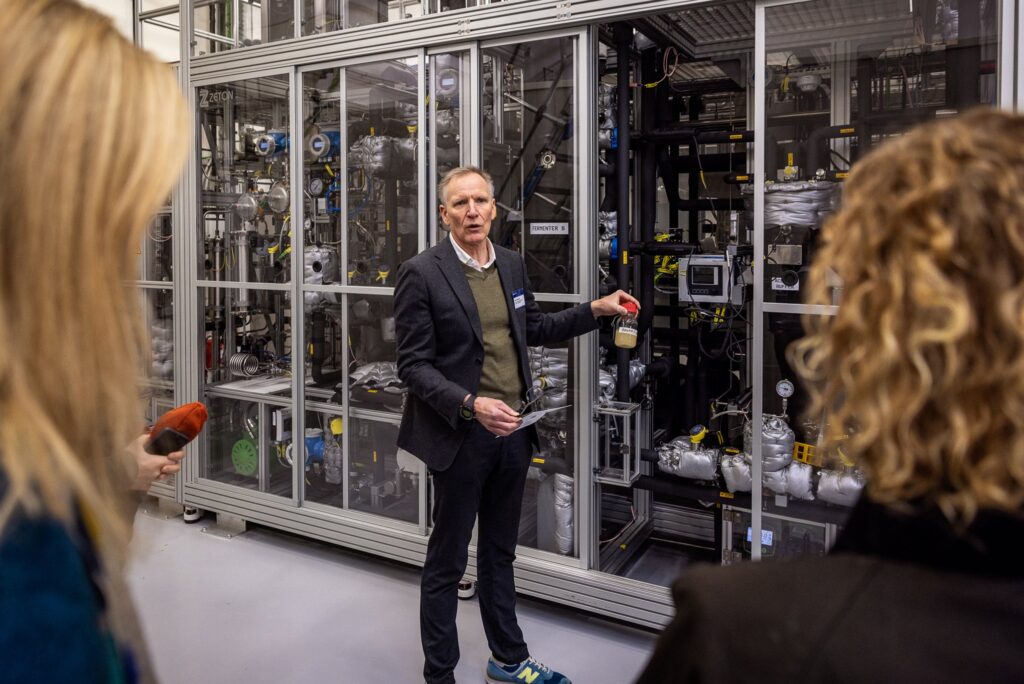
“The CO₂-to-food concept offers an opportunity to produce protein without using additional arable land. But making the individual processes work is not enough. We need to connect them into an efficient system that can ultimately operate at industrial scale. That is exactly what the pilot facilities at AU Viborg allow us to work on: bringing the different processes together and studying how they perform as one integrated system,” says Professor Lars Ottosen, Head of Department at the Department of Biological and Chemical Engineering at Aarhus University and part of the company’s scientific advisory board.
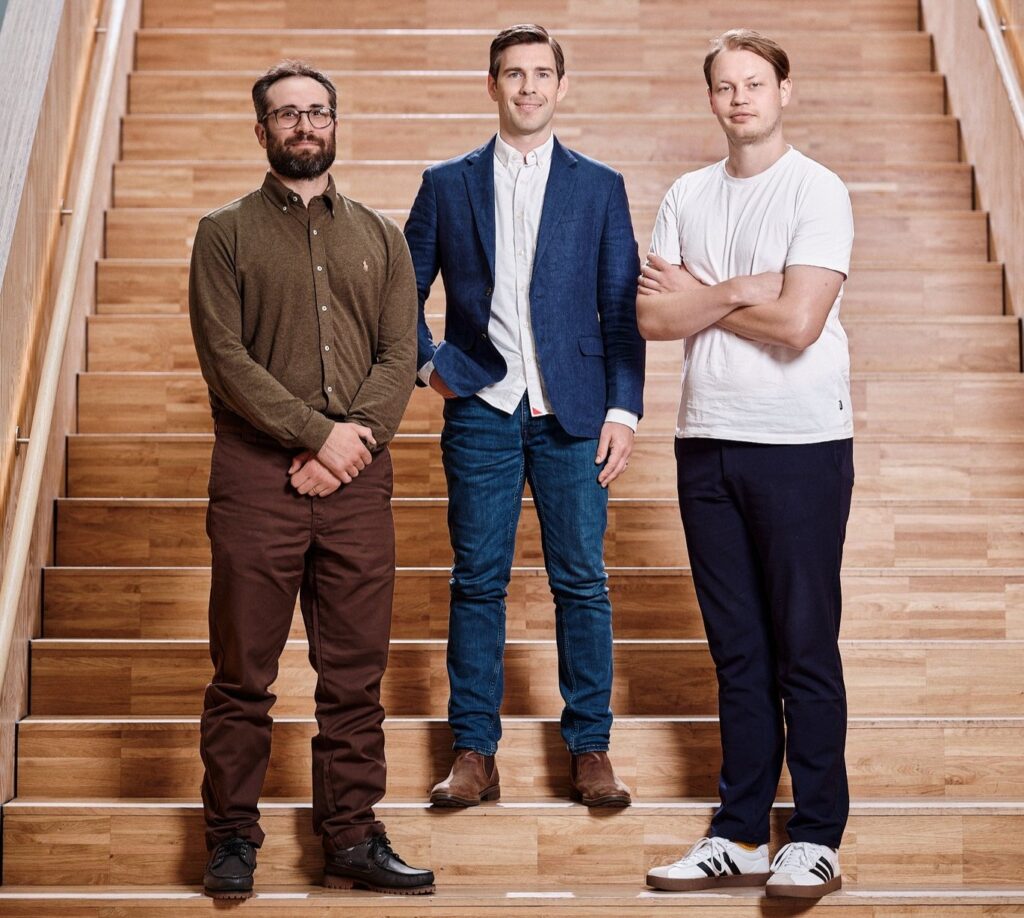
The start-up’s operating team consists of CTO Nils Rohbohm, CSO Alberto Robazza both postdocs from Aarhus University and part of CORC, as well as CEO Michael Martin.
In addition to the operating team, the founders of React Foods include Lars Angenent, Professor at the University of Tübingen; Alfred Spormann, Professor at Aarhus University and Stanford University; and Lars Ottosen. All three are Principal Investigators at CORC. Jozef M. E. Pennings, Professor at Maastricht University, is also among the founders.
They all serve on the company’s scientific advisory board.
The start-up is backed by DKK 4.2 million from BioInnovation Institute (BII) and will be based in Copenhagen.
Academic founders on the advisory board
The operating team consists of Martin, CTO Nils Rohbohm and CSO Alberto Robazza, with Rohbohm and Robazza both postdoctoral researchers at Aarhus University and members of CORC. The wider founding group includes Lars Angenent of the University of Tübingen, Alfred Spormann of Aarhus University and Stanford University, and Lars Ottosen of Aarhus University, all three principal investigators at CORC, along with Jozef M. E. Pennings of Maastricht University. All of the founders sit on the company’s scientific advisory board.
Other routes to CO₂-derived protein
Aarhus University is also a partner in the Acetate Consortium, which uses CO₂-derived acetate in place of sugar as a fermentation feedstock and entered a scale-up phase focused on food prototypes last year with backing from the Gates Foundation and the Novo Nordisk Foundation.
“The CO₂-to-food concept offers an opportunity to produce protein without using additional arable land. But making the individual processes work is not enough. We need to connect them into an efficient system that can ultimately operate at industrial scale.
“That is exactly what the pilot facilities at AU Viborg allow us to work on: bringing the different processes together and studying how they perform as one integrated system,” said Professor Lars Ottosen, Head of Department at the Department of Biological and Chemical Engineering at Aarhus University.
Author
Jesper Bruun
Source
Aarhus University, press release, 2026-09-16.
Supplier
Aarhus University
BioInnovation Institute
Maastricht University
Novo Nordisk Foundation Center
Stanford University
Universität Tübingen
Share
Renewable Carbon News – Daily Newsletter
Subscribe to our daily email newsletter – the world's leading newsletter on renewable materials and chemicals