Skip to content
Renewable Carbon Publications - LogoRenewable Carbon Publications - Logo
  • Publications
  • Contact
1
  • Cellulose Fibres Conference 2023 (Proceedings, PDF) [Digital]Cellulose Fibres Conference 2023 (Proceedings, PDF) [Digital] 1 × 50 €
    Plus 19% MwSt.

Subtotal: 50 €

CartCheckout

  • Renewable Carbon
    • Renewable Carbon
    • Events
    • Publications
    • Graphics
    • News
    • Business Directory
    • Newsletter
    • nova-Institute
  • Publications
  • Contact

Renewable Carbon Publications - LogoRenewable Carbon Publications - Logo
1
  • Cellulose Fibres Conference 2023 (Proceedings, PDF) [Digital]Cellulose Fibres Conference 2023 (Proceedings, PDF) [Digital] 1 × 50 €
    Plus 19% MwSt.

Subtotal: 50 €

CartCheckout

  • Renewable Carbon Publications
  • Sustainability & Health
  • Page 6
Grid view List view
“Cellulose Fibres Conference 2023 (Proceedings, PDF)” has been added to your cart. View cart

Showing 101–120 of 237

  • Download Statistics
  • Direct Download
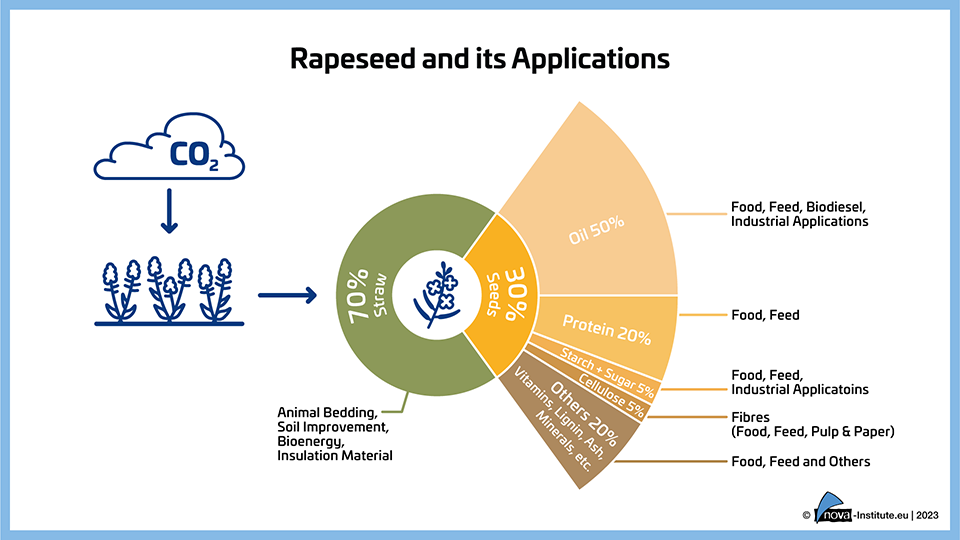
    rapeseed and its applications (png)

    Rapeseed and its Applications (PNG)

    Markets & Economy, Policy, Sustainability & Health, Technology

    1 Page
    97 Downloads

    97 Downloads  

    2023-06

    FREE


    97
    Downloads

    Direct Download
  • Direct Download
    23 06 14 yield of fermentable sugars thumbnail

    Yield of Fermentable Sugars (PNG)

    Markets & Economy, Policy, Sustainability & Health, Technology

    1 Page
    152 Downloads

    152 Downloads  

    2023-06

    FREE


    152
    Downloads

    Direct Download
  • Direct Download
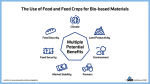
    23 06 12 the use of food and feed crops for bio based materials 960x540 thumbnail

    Graphic of the scientific paper „The Use of Food and Feed Crops for Bio-based Materials and the Related Effects on Food Security“ (PNG)

    Markets & Economy, Policy, Sustainability & Health, Technology

    1 Page
    113 Downloads

    113 Downloads  

    2023-06

    FREE


    113
    Downloads

    Direct Download

    Promoting Evidence-based Debates and Recognising Potential Benefits

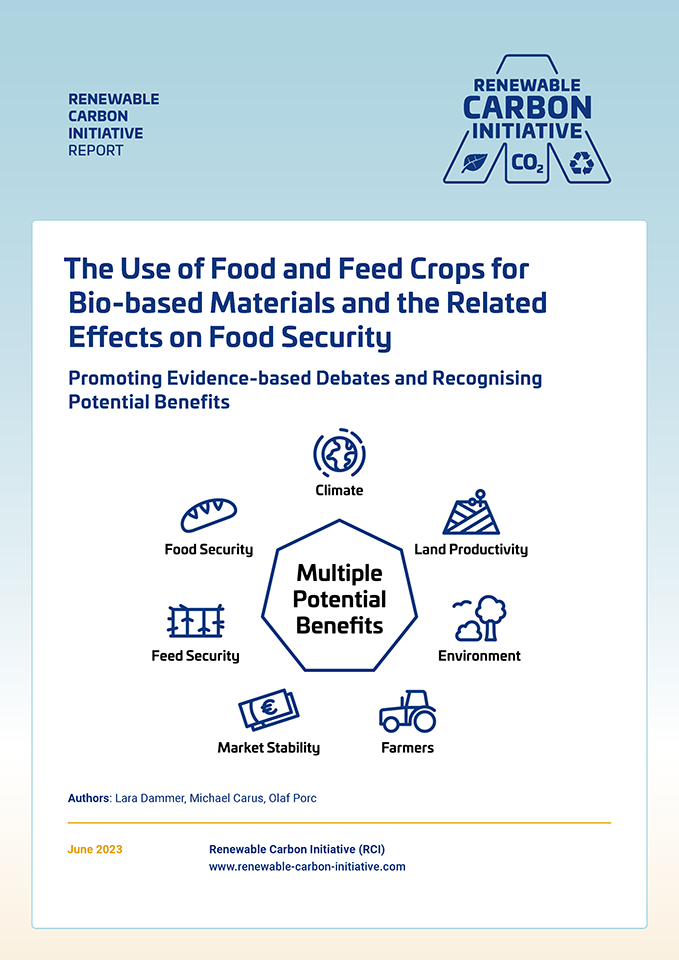
    The graphic shows the multiple potential benefits of using food and feed crops for bio-based materials, in terms of climate, land productivity, environment, farmers, market stability, feed security and food security.

    1. The climate wins – Bio-based materials are part of the solution to achieve climate change mitigation.
    2. Land productivity wins – The competition between applications is not for the type of crop grown, but for the land
    3. The environment wins – due to increased resource efficiency and productivity of food and feed crops.
    4. Farmers win – because they have more options for selling stock to different markets.
    5. Market stability wins – due to increased global availability of food and feed crops.
    6. Feed security wins – due to the high value of the protein-rich co-products of food and feed crops.
    7. Food security wins – due to the increased overall availability of edible crops that can be stored and flexibly distributed.
  • Direct Download
    the use of food and feed crops for bio based materials and the related effects on food security long version (pdf)

    RCI’s scientific background report: “The use of food and feed crops for bio-based materials and the related effects on food security – Promoting evidence-based debates and recognising potential benefits” (June 2023) Long Version

    Markets & Economy, Policy, Sustainability & Health, Technology

    36 Pages
    1704 Downloads

    1704 Downloads  

    2023-06

    FREE


    1704
    Downloads

    Direct Download

    Promoting Evidence-based Debates and Recognising Potential Benefits

    This scientific paper highlights new insights into a hotly debated topic and urges for careful and evidence-based debates.

    The paper aims to show that the well-known biomass debate is flawed, subjective and not fully based on evidence. What is detrimental to food security are, according to the World Food Programme in 2023, climate change, conflict, extreme inequalities in wealth distribution, heavy dependence on food imports from industrial countries, overconsumption of meat, losses along the value chain and the impact of the COVID pandemic. Competition between biomass uses is not mentioned among the relevant causes.

    The use of biomass for industrial applications, does have the potential to replace fossil feedstocks and thus contribute to the urgently needed reduction of fossil carbon emissions into our atmosphere to mitigate climate change.

    While not denying the dire need to combat world hunger, the authors of the paper argue that using food and feed crops for chemicals and materials will not necessarily exacerbate food insecurity, and in fact has the potential to cause multiple benefits for local and global food security, climate mitigation and other factors:

    1.  The climate wins – Bio-based materials are part of the solution to achieve climate change mitigation.
    2. Land productivity wins – The competition between applications is not for the type of crop grown, but for the land.
    3. The environment wins – due to increased resource efficiency and productivity of food and feed crops.
    4. Farmers win – because they have more options for selling stock to different markets.
    5. Market stability wins – due to increased global availability of food and feed crops.
    6. Feed security wins – due to the high value of the protein-rich co-products of food and feed crops.
    7. Food security wins – due to the increased overall availability of edible crops that can be stored and flexibly distributed.


    DOI No.: https://doi.org/10.52548/WQXU7327

  • Direct Download
    22 11 10 wholesale prices of bioethanol and wheat thumbnail

    Wholesale Prices of Bioethanol and Wheat (PNG)

    Markets & Economy, Policy, Sustainability & Health, Technology

    1 Page
    84 Downloads

    84 Downloads  

    2023-06

    FREE


    84
    Downloads

    Direct Download
  • Direct Download
    22 12 05 global harvested agricultural and grazed biomass demand by sectors thumbnail

    Global Harvested Agricultural and Grazed Biomass Demand by Sectors (PNG)

    Markets & Economy, Policy, Sustainability & Health, Technology

    1 Page
    149 Downloads

    149 Downloads  

    2023-06

    FREE


    149
    Downloads

    Direct Download
  • Direct Download
    23 02 13 embedded carbon demand for main sector thumbnail

    Embedded Carbon Demand for Main Sector (PNG)

    Markets & Economy, Policy, Sustainability & Health, Technology

    1 Page
    141 Downloads

    141 Downloads  

    2023-06

    FREE


    141
    Downloads

    Direct Download
  • Direct Download
    23 03 01 traffic light sustainability risk evaluation of bio based feedstocks thumbnail

    Traffic Light Sustainability Risk Evaluation of Bio-based Feedstocks (PNG)

    Markets & Economy, Policy, Sustainability & Health, Technology

    1 Page
    298 Downloads

    298 Downloads  

    2023-06

    FREE


    298
    Downloads

    Direct Download
  • Direct Download
    23 03 17 corn and its applications thumbnail

    Corn and its Applications (PNG)

    Markets & Economy, Policy, Sustainability & Health, Technology

    1 Page
    124 Downloads

    124 Downloads  

    2023-06

    FREE


    124
    Downloads

    Direct Download
  • Direct Download
    Renewable Materials Conference 2023 Proceedings [Digital]

    Renewable Materials Conference 2023 Proceedings

    Markets & Economy, Policy, Sustainability & Health, Technology


    225 Downloads

    225 Downloads  

    2023-06

    FREE

    Plus 19% MwSt.
     

    225
    Downloads

    Direct Download

    The proceedings of the Renewable Materials Conference  2023 (23-25 May 2023, https://renewable-materials.eu) contain all released presentations of three conference days, the conference journal, and the press release of the three winners of the Innovation Award “Renewable Material of the Year 2023“.

  • Direct Download
    Conference on CO2-based Fuels and Chemicals 2023 Proceedings [Digital]

    Conference on CO2-based Fuels and Chemicals 2023 Proceedings

    Markets & Economy, Policy, Sustainability & Health, Technology


    165 Downloads

    165 Downloads  

    2023-05

    FREE

    Plus 19% MwSt.
     

    165
    Downloads

    Direct Download

    The proceedings of the Conference on CO2-based Fuels and Chemicals  (19-20 April 2023, https://co2-chemistry.eu) contain all released presentations, the conference journal, and the press release of the three winners of the Innovation Award “Best CO2 Utilisation 2023″.

    Press Release: https://renewable-carbon.eu/news/smart-carbon-capture-and-utilisation-ccu-technologies-and-materials-defossilise-the-economy

  • Add to
    cart
    Cellulose Fibres Conference 2023 (Proceedings, PDF) [Digital]

    Cellulose Fibres Conference 2023 (Proceedings, PDF)

    Markets & Economy, Policy, Sustainability & Health, Technology


    2023-03

    50 € ex. tax

    Plus 19% MwSt.
    Press
    release
    Add to
    cart

    The unique conference focused on cellulose fibres – in textiles, hygiene products and packaging!

    The Cellulose Fibres 2023 Conference Proceedings (https://cellulose-fibres.eu, 8-9 March 2023, Cologne, hybrid) include all released conference presentations, the conference journal, sponsor documents, a Fiber2Fashion Knowledgepaper and the conference press release.

  • Add to
    cart
    nova-Session: “Bio- and CO₂-based Polymers: Production, Trends 2022-2027 and the latest Policy Developments” (Proceedings, PDF) [Digital]

    nova-Session: “Bio- and CO₂-based Polymers: Production, Trends 2022-2027 and the latest Policy Developments” (Proceedings, PDF)

    Markets & Economy, Policy, Sustainability & Health, Technology


    2023-03

    50 € ex. tax

    Plus 19% MwSt.
     
    Add to
    cart

    The download of the proceedings contains all six presentations of the nova-Session (March 2023).

    Bio-based and CO2-based Solutions – Where are we heading?

    The only way for chemicals and plastics to become sustainable, climate-friendly and part of the circular economy is the complete substitution of fossil carbon with renewable carbon from alternative sources: biomass, CO2 and recycling. We see strong investment in all three sectors, with growth rates far exceeding that of fossil polymers – i.e. fossil polymers are being substituted in the market.

    The session will focus on developments in bio- and CO2-based polymers and building blocks: Bio-based polymers are estimated to grow at a CAGR of 14 % from 2022 to 2027. Some examples: Bio-based epoxy resin production is on the rise, PTT regained attractiveness after several years of constant capacities and PE and PP made from bio based naphtha are being further established with growing volumes. Increased capacities for PLA are ongoing, after being sold out in 2019. Current and future expansions for bio based polyamides as well as PHAs are on the horizon. And also, bio-based PET is getting back in the game.

    Additionally, the use of CO2 as chemical feedstock for building blocks and polymers has been intensively diversified. Several successfully implemented technologies used at commercial level are in place and many more at the laboratory and pilot phase. Besides the long-established use of CO2 for the synthesis of polycarbonates, also polyurethanes are based on it. The most notable biotechnological conversion pathway of a syngas produces ethanol at commercial scale. Additionally, high interest is also observed in CO2-based methanol and in CO2-based hydrocarbons, which can be used for fuel, chemical and polymers applications. A current total production capacity of these CO2-based products of ca. 1.3 Mt/a in 2022 is observed and a strong increase in capacity is expected by 2027.

    The EU policy landscape has seen significant updates in the final weeks of 2022 with the proposed Packaging and Packaging Waste Regulation and the publication of the Policy Framework on bio-based, biodegradable and compostable plastics. How these updates may affect CO2 and bio-based polymers will be addressed in the session.

  • Direct Download
    2175660e f28b 4333 bc65 1302311814c2

    Letter to the Commission on the definition of natural polymers in the REACH microplastics restriction

    Policy, Sustainability & Health

    4 Pages
    482 Downloads

    482 Downloads  

    2023-02

    FREE


    482
    Downloads

    Direct Download

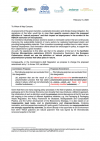
    Six leading associations and stakeholders from the chemicals, polymers and plastics sectors – namely BioChem Europe (a sector group of Cefic), EDANA, EuropaBio, European BioPlastics, GO!PHA and Renewable Carbon Initiative) – express in this letter their specific concerns about the proposed definition of “natural polymers” and its impact on biopolymers in the context of the REACH restriction on microplastics.

    Under the coordination of the Renewable Carbon Initiative (RCI) they ask the European Commission in a letter “that in the adoption of the text of the Synthetic Polymer Microparticles restrictions (REACH Microplastics Restriction), the European Commission should not use the definition of ‘natural polymer’ which refers to a polymerisation process that takes place in nature.“

  • Direct Download
    cover importance of mass balance and free attribution (mbfa) for the conversion of the chemical sector to alternative carbon sources

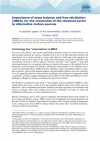
    Importance of mass balance and free attribution (MBFA) for the conversion of the chemical sector to alternative carbon sources (October 2022)

    Policy, Sustainability & Health

    4 Pages
    763 Downloads

    763 Downloads  

    2022-12

    FREE

    Free Shipping
     

    763
    Downloads

    Direct Download

    A position paper of the Renewable Carbon Initiative

    This position paper highlights the importance of mass balance and free attribution “MBFA” as one possible way to incentivise the transformation of the chemical sector away from fossil and on towards renewable carbon.

    The term “mass balance” has become established to describe systems in which biomass, CO2 and secondary materials are used as a feedstock, but is not or not fully physically traced to the end product . It is common practice in many value chains in which large scale capacities are involved in one or more steps of the value chain that require mixing the sustainable with conventional material to fill the capacity. The approach makes it possible to substitute large quantities of fossil raw materials and attractive renewable content shares can be attributed to desired materials or products for which demand on the market exists. This incentivises a stepwise continuous transformation to increase the share of renewable carbon in particular for the large-scale chemical industry

    However, the term “mass balance” is somewhat unfortunate because it is too general, and does not mention the essence of the method: the free attribution of the bio-based, CO2-based or chemically recycled share in the feedstock mix to certain selected end products.

    The RCI recommends to only speak of “mass balance and free attribution (MBFA)” when talking about such cases, as this is how the complete method and its two central parts are referred to. This is transparent and honest, building trust from customers, end consumers and society in general. Both, mass balance and the free attribution are based on solid and established certifications.

    Besides terminology, there is still a need for regulatory harmonisation between the schemes of the existing certification systems. MBFA cannot only be applied for bio-based feedstock, but also for CO/CO2 or feedstock from chemical recycling, both will gain strongly in importance in the coming years. Every MBFA scheme should cover these three renewable feedstocks: biomass, CO/CO2 and recycling.


  • Direct Download
    22 11 28 rc publications cover proceedings arc

    Advanced Recycling Conference 2022 (Proceedings)

    Markets & Economy, Policy, Sustainability & Health, Technology


    124 Downloads

    124 Downloads  

    2022-11

    FREE

    Plus 19% MwSt.
     

    124
    Downloads

    Direct Download

    The proceedings of the Advanced Recycling Conference 2022 (14-15 November 2022, hybrid, https://advanced-recycling.eu) contain conference presentations, the conference journal, sponsor documents and the press release.

  • Direct Download
    renewable carbon initiative und eu policy framework on bio based, biodegradable and compostable plastics

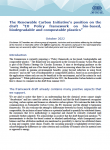
    RCI’s position paper: “Draft EU policy framework on bio-based, biodegradable and compostable plastics” (October 2022)

    Policy, Sustainability & Health

    5 Pages
    537 Downloads

    537 Downloads  

    2022-10

    FREE

    Free Shipping
     

    537
    Downloads

    Direct Download

    The Commission is currently preparing a “Policy framework on bio-based, biodegradable and compostable plastics.” The framework was announced in the Circular Economy Action Plan and is part of the Plastics Strategy for Circular Economy. It aims at developing guidance on the “sourcing, labelling and use of bio-based plastics, based on assessing where the use of bio-based feedstock results in genuine environmental benefits, going beyond reduction in using fossil resources” and on the “use of biodegradable or compostable plastics, based on an assessment of the applications where such use can be beneficial to the environment, and of the criteria for such applications”. While publication is planned for late 2022, the Renewable Carbon Initiative took the opportunity to comment on the draft from summer 2022.

  • Direct Download
    nova-Session "Life Cycle Assessment (LCA) in Science and Policy" (Proceedings) [Digital]

    nova-Session “Life Cycle Assessment (LCA) in Science and Policy” (Proceedings)

    Sustainability & Health


    2 Downloads

    2 Downloads  

    2022-10

    FREE

    Plus 19% MwSt.
     

    2
    Downloads

    Direct Download

    The download of the proceedings contains all eight presentations.

    This nova-Session (September 2022 and October 2022) discussed the important tool of Life Cycle Assessment (LCA) – its scientific and methodological principles as well as practical implementation in political decision-making.

    Assessing and comparing products’ environmental performances is a critical element in transforming our economic system towards sustainability and mitigating climate change. How else to make decisions as to which technologies, feedstocks or production systems are preferable?

    LCA according to ISO 14040 has become the most widely accepted and applied method to provide information on products’ and companies’ environmental performance.
    As a standardised tool it offers many advantages such as credibility and comparability.

    However, it also offers flexibility to cover a multitude of products, companies and processes. This has the advantage that it can be adapted to all kinds of circumstances, but it also reduces comparability and there is a certain danger of greenwashing. Therefore, higher comparability has been a goal of LCA method development for quite some time. Recently, policy also has been referring more and more to LCA to provide guidelines, support, incentives or permits. These need fixed values and comparable results – so the longer intended method development is imperative now. Accordingly, there have been increased efforts to build on the LCA method for political purposes and develop common assumptions, comparators and default values for product groups. Prominent examples are the calculation rules for biofuels, the discussions about the Product Environmental Footprint (PEF), LCA calculations for bio-based plastics, GHG emissions of recycled plastics and for fuels made from CCU, discussions in the framework of the Taxonomy and more.

  • Direct Download
    22 07 07 pef plant based pef bottles thumbnail

    Plant-based PEF bottles (PNG)

    Sustainability & Health, Technology

    1 Page
    291 Downloads

    291 Downloads  

    2022-08

    FREE

    Free Shipping
     

    291
    Downloads

    Direct Download

    Avantium has developed a technology to convert plant-based sugars into FDCA (furandicarboxylic acid), the building block of PEF (polyethylene furanoate): a plant-based, fully recyclable polymer with superior performance. FDCA is polymerised with plant-based mono-ethylene glycol (MEG) to make a 100% plant-based PEF polymer. In December 2021, Avantium has taken a positive investment decision concerning the construction of the world’s first FDCA Flagship Plant in Delfzijl (The Netherlands), with construction planned to be completed by the end of 2023 and the aim to be operational in 2024. This will be the world’s first commercial FDCA facility and will have a targeted production capacity of 5,000 tonnes per annum. FDCA is the key building block for the 100% plant-based, recyclable polymer PEF.

  • Direct Download
    22 07 07 pef properties thumbnail

    PEF properties (PNG)

    Sustainability & Health, Technology

    1 Page
    153 Downloads

    153 Downloads  

    2022-08

    FREE

    Free Shipping
     

    153
    Downloads

    Direct Download

    PEF has enhanced barrier, mechanical and thermal properties compared to today’s widely used
    petroleum-based polymers. The barrier properties of PEF, which are ~10x better for O2, ~15x better
    for CO2 and ~2.5x better for water than PET, represent a revolutionary opportunity compared with traditional packaging solutions regarding performance, price, and sustainability when produced at scale. The improved barrier properties lead to a longer shelf life of packaged products. PEF also offers higher mechanical strength, which means that thinner PEF packaging can be produced and fewer resources are required.
    In terms of thermal properties, PEF has superior ability to withstand heat and can be processed at lower temperatures. PEF has enhanced mechanical stiffness and allows for increasing shaping possibilities.

Renewable Carbon Types

Publications

Topics

  • 1
  • …
  • 4
  • 5
  • 6
  • 7
  • 8
  • …
  • 12

nova-Logo
contact@nova-institut.de
www.nova-institute.eu

nova-Institut GmbH
Leyboldstr. 16
50354 Hürth / Germany

  • Renewable Carbon
  • Events
  • Publications
  • Graphics
  • News
  • Business Directory
  • Newsletter
  • nova-Institute
  • My account
  • Legal Information
  • Terms and Conditions
  • Data protection regulation
© 2025 nova-Institut GmbH
Renewable Carbon Publications - Logo

Login

Lost your password?