Skip to content
Renewable Carbon Publications - LogoRenewable Carbon Publications - Logo
  • Publications
  • Contact
1
  • nova-Session: “Bio- and CO₂-based Polymers: Production, Trends 2022-2027 and the latest Policy Developments” (Proceedings, PDF) [Digital]nova-Session: “Bio- and CO₂-based Polymers: Production, Trends 2022-2027 and the latest Policy Developments” (Proceedings, PDF) [Digital] 1 × 50 €
    Plus 19% MwSt.

Subtotal: 50 €

CartCheckout

  • Renewable Carbon
    • Renewable Carbon
    • Events
    • Publications
    • Graphics
    • News
    • Business Directory
    • Newsletter
    • nova-Institute
  • Publications
  • Contact

Renewable Carbon Publications - LogoRenewable Carbon Publications - Logo
1
  • nova-Session: “Bio- and CO₂-based Polymers: Production, Trends 2022-2027 and the latest Policy Developments” (Proceedings, PDF) [Digital]nova-Session: “Bio- and CO₂-based Polymers: Production, Trends 2022-2027 and the latest Policy Developments” (Proceedings, PDF) [Digital] 1 × 50 €
    Plus 19% MwSt.

Subtotal: 50 €

CartCheckout

  • Renewable Carbon Publications
  • Policy
  • Page 7
Grid view List view
“nova-Session: “Bio- and CO₂-based Polymers: Production, Trends 2022-2027 and the latest Policy Developments” (Proceedings, PDF)” has been added to your cart. View cart

Showing 121–140 of 238

  • Download Statistics
  • Add to
    cart
    Cellulose Fibres Conference 2023 (Proceedings, PDF) [Digital]

    Cellulose Fibres Conference 2023 (Proceedings, PDF)

    Markets & Economy, Policy, Sustainability & Health, Technology


    2023-03

    50 € ex. tax

    Plus 19% MwSt.
    Press
    release
    Add to
    cart

    The unique conference focused on cellulose fibres – in textiles, hygiene products and packaging!

    The Cellulose Fibres 2023 Conference Proceedings (https://cellulose-fibres.eu, 8-9 March 2023, Cologne, hybrid) include all released conference presentations, the conference journal, sponsor documents, a Fiber2Fashion Knowledgepaper and the conference press release.

  • Add to
    cart
    nova-Session: “Bio- and CO₂-based Polymers: Production, Trends 2022-2027 and the latest Policy Developments” (Proceedings, PDF) [Digital]

    nova-Session: “Bio- and CO₂-based Polymers: Production, Trends 2022-2027 and the latest Policy Developments” (Proceedings, PDF)

    Markets & Economy, Policy, Sustainability & Health, Technology


    2023-03

    50 € ex. tax

    Plus 19% MwSt.
     
    Add to
    cart

    The download of the proceedings contains all six presentations of the nova-Session (March 2023).

    Bio-based and CO2-based Solutions – Where are we heading?

    The only way for chemicals and plastics to become sustainable, climate-friendly and part of the circular economy is the complete substitution of fossil carbon with renewable carbon from alternative sources: biomass, CO2 and recycling. We see strong investment in all three sectors, with growth rates far exceeding that of fossil polymers – i.e. fossil polymers are being substituted in the market.

    The session will focus on developments in bio- and CO2-based polymers and building blocks: Bio-based polymers are estimated to grow at a CAGR of 14 % from 2022 to 2027. Some examples: Bio-based epoxy resin production is on the rise, PTT regained attractiveness after several years of constant capacities and PE and PP made from bio based naphtha are being further established with growing volumes. Increased capacities for PLA are ongoing, after being sold out in 2019. Current and future expansions for bio based polyamides as well as PHAs are on the horizon. And also, bio-based PET is getting back in the game.

    Additionally, the use of CO2 as chemical feedstock for building blocks and polymers has been intensively diversified. Several successfully implemented technologies used at commercial level are in place and many more at the laboratory and pilot phase. Besides the long-established use of CO2 for the synthesis of polycarbonates, also polyurethanes are based on it. The most notable biotechnological conversion pathway of a syngas produces ethanol at commercial scale. Additionally, high interest is also observed in CO2-based methanol and in CO2-based hydrocarbons, which can be used for fuel, chemical and polymers applications. A current total production capacity of these CO2-based products of ca. 1.3 Mt/a in 2022 is observed and a strong increase in capacity is expected by 2027.

    The EU policy landscape has seen significant updates in the final weeks of 2022 with the proposed Packaging and Packaging Waste Regulation and the publication of the Policy Framework on bio-based, biodegradable and compostable plastics. How these updates may affect CO2 and bio-based polymers will be addressed in the session.

  • Direct Download
    2175660e f28b 4333 bc65 1302311814c2

    Letter to the Commission on the definition of natural polymers in the REACH microplastics restriction

    Policy, Sustainability & Health

    4 Pages
    486 Downloads

    486 Downloads  

    2023-02

    FREE


    486
    Downloads

    Direct Download

    Six leading associations and stakeholders from the chemicals, polymers and plastics sectors – namely BioChem Europe (a sector group of Cefic), EDANA, EuropaBio, European BioPlastics, GO!PHA and Renewable Carbon Initiative) – express in this letter their specific concerns about the proposed definition of “natural polymers” and its impact on biopolymers in the context of the REACH restriction on microplastics.

    Under the coordination of the Renewable Carbon Initiative (RCI) they ask the European Commission in a letter “that in the adoption of the text of the Synthetic Polymer Microparticles restrictions (REACH Microplastics Restriction), the European Commission should not use the definition of ‘natural polymer’ which refers to a polymerisation process that takes place in nature.“

  • Direct Download
    cover importance of mass balance and free attribution (mbfa) for the conversion of the chemical sector to alternative carbon sources

    Importance of mass balance and free attribution (MBFA) for the conversion of the chemical sector to alternative carbon sources (October 2022)

    Policy, Sustainability & Health

    4 Pages
    769 Downloads

    769 Downloads  

    2022-12

    FREE

    Free Shipping
     

    769
    Downloads

    Direct Download

    A position paper of the Renewable Carbon Initiative

    This position paper highlights the importance of mass balance and free attribution “MBFA” as one possible way to incentivise the transformation of the chemical sector away from fossil and on towards renewable carbon.

    The term “mass balance” has become established to describe systems in which biomass, CO2 and secondary materials are used as a feedstock, but is not or not fully physically traced to the end product . It is common practice in many value chains in which large scale capacities are involved in one or more steps of the value chain that require mixing the sustainable with conventional material to fill the capacity. The approach makes it possible to substitute large quantities of fossil raw materials and attractive renewable content shares can be attributed to desired materials or products for which demand on the market exists. This incentivises a stepwise continuous transformation to increase the share of renewable carbon in particular for the large-scale chemical industry

    However, the term “mass balance” is somewhat unfortunate because it is too general, and does not mention the essence of the method: the free attribution of the bio-based, CO2-based or chemically recycled share in the feedstock mix to certain selected end products.

    The RCI recommends to only speak of “mass balance and free attribution (MBFA)” when talking about such cases, as this is how the complete method and its two central parts are referred to. This is transparent and honest, building trust from customers, end consumers and society in general. Both, mass balance and the free attribution are based on solid and established certifications.

    Besides terminology, there is still a need for regulatory harmonisation between the schemes of the existing certification systems. MBFA cannot only be applied for bio-based feedstock, but also for CO/CO2 or feedstock from chemical recycling, both will gain strongly in importance in the coming years. Every MBFA scheme should cover these three renewable feedstocks: biomass, CO/CO2 and recycling.


  • Direct Download
    22 11 28 rc publications cover proceedings arc

    Advanced Recycling Conference 2022 (Proceedings)

    Markets & Economy, Policy, Sustainability & Health, Technology


    131 Downloads

    131 Downloads  

    2022-11

    FREE

    Plus 19% MwSt.
     

    131
    Downloads

    Direct Download

    The proceedings of the Advanced Recycling Conference 2022 (14-15 November 2022, hybrid, https://advanced-recycling.eu) contain conference presentations, the conference journal, sponsor documents and the press release.

  • Direct Download
    circular economyplus

    Circular EconomyPLUS: Recommendations for action for a German Circular Economy Strategy

    Policy

    15 Pages
    120 Downloads

    120 Downloads  

    2022-11

    FREE

    Free Shipping
     

    120
    Downloads

    Direct Download

    A contribution to the discussion on a circular economy for plastics moderated by PlasticsEurope Deutschland e. V.

    With the necessary transformation into a circular economy with plastics, the plastics industry is facing a far-reaching paradigm shift. Plastics Europe would like to drive this change forward. In the first half of 2022, as part of an initiative by Plastics Europe Deutschland, leading experts in the field of circular economy with plastics have developed recommendations for action for the German circular economy strategy announced in the latest coalition agreement in 2021 after intensive consultations. Plastics Europe Deutschland took the role of a moderator in this discussion process in order to guarantee recommendations for action on a technical and scientific basis.

    With this paper we would like to initiate a discussion process and actively accompany the circular economy strategy and thus also the transformation path for our industry.

  • Direct Download
    renewable carbon initiative und eu policy framework on bio based, biodegradable and compostable plastics

    RCI’s position paper: “Draft EU policy framework on bio-based, biodegradable and compostable plastics” (October 2022)

    Policy, Sustainability & Health

    5 Pages
    538 Downloads

    538 Downloads  

    2022-10

    FREE

    Free Shipping
     

    538
    Downloads

    Direct Download

    The Commission is currently preparing a “Policy framework on bio-based, biodegradable and compostable plastics.” The framework was announced in the Circular Economy Action Plan and is part of the Plastics Strategy for Circular Economy. It aims at developing guidance on the “sourcing, labelling and use of bio-based plastics, based on assessing where the use of bio-based feedstock results in genuine environmental benefits, going beyond reduction in using fossil resources” and on the “use of biodegradable or compostable plastics, based on an assessment of the applications where such use can be beneficial to the environment, and of the criteria for such applications”. While publication is planned for late 2022, the Renewable Carbon Initiative took the opportunity to comment on the draft from summer 2022.

  • Direct Download
    handlungsempfehlungen fuer die kreislaufwirtschaftsstrategie

    KreislaufwirtschaftPLUS: Handlungsempfehlungen für eine nationale Kreislaufwirtschaftsstrategie (PDF)

    Policy

    15 Pages
    131 Downloads

    131 Downloads  

    2022-10

    FREE

    Free Shipping
     

    131
    Downloads

    Direct Download

    Ein Diskussionsbeitrag für eine Kreislaufwirtschaft mit Kunststoffen moderiert von PlasticsEurope Deutschland e.V.

    Mit der erforderlichen Transformation in eine Kreislaufwirtschaft mit Kunststoffen steht die Kunststoffbranche vor einem tiefgreifenden Paradigmenwechsel. Wir möchten diesen Wandel gerne vorantreiben. In der ersten Jahreshälfte 2022 haben im Rahmen einer Initiative von PlasticsEurope Deutschland e. V. ausgewiesene und führende Experten im Bereich der Kreislaufwirtschaft mit Kunststoffen in intensiven Beratungen Handlungsempfehlungen für die im Koalitionsvertrag angekündigte Nationale Kreislaufwirtschaftsstrategie erarbeitet. Plastics Europe Deutschland nahm in diesem Erörterungsprozess ausschließlich eine Moderatorenrolle ein, um Handlungsempfehlungen auf technisch-wissenschaftlicher Basis zu gewährleisten.

    Mit diesem Papier möchten wir einen Diskussionsprozess anstoßen und die Kreislaufwirtschaftsstrategie und somit auch den Transformationspfad aktiv begleiten.

  • Direct Download
    22 07 erneuerbarer kohlenstoff chemanager carus thumbnail

    Erneuerbarer Kohlenstoff – Schlüssel zur Zukunft (PDF)

    Policy, Sustainability & Health, Technology

    2 Pages
    346 Downloads

    346 Downloads  

    2022-07

    FREE

    Free Shipping
     

    346
    Downloads

    Direct Download

    Die chemische Industrie steht aktuell vor einer Vielzahl an Herausforderungen, aus denen eine neue, nachhaltige Chemie erwachsen kann – wenn die große Transformation in den nächsten Jahrzehnten gelingt. Und das muss sie!

    Quelle: „Erneuerbarer Kohlenstoff – Schlüssel zur Zukunft“ – aus CHEManager 7/2022
    https://www.chemanager-online.com/news/erneuerbarer-kohlenstoff-schluessel-zur-zukunft

  • Direct Download
    biomass utilisation factor shop thumbnail

    nova-paper #16: The Biomass Utilisation Factor (BUF)

    Markets & Economy, Policy, Sustainability & Health

    62 Pages
    1469 Downloads

    1469 Downloads  

    2022-06

    FREE


    1469
    Downloads

    Direct Download

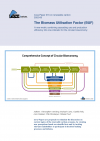
    The Biomass Utilisation Factor (BUF) is a new metric combining cascading use and production efficiency into one indicator to investigate the circularity of materials for the circular bioeconomy. Cascading use captures the repeated use of the original biomass, either for the same or a different purpose. Production efficiency looks at how much of the biomass input is actually transformed into useful products or materials.

    The BUF can serve not only as an indicator for the circular economy principle of keeping materials in use, but also act as an efficient tool for stakeholders and policy makers to identify options that maximize biomass utilisation and keep materials in use for longer. In light of recent political developments in Europe, the BUF can serve as a tool that provides additional insights for achieving sustainable carbon cycles or help to respect the cascading principle of biomass utilisation.

  • Direct Download
    22 05 die neue tugend – kunststoff im kreislauf umweltmagazin michael carus thumbnail

    Die neue Tugend: Kunststoff im Kreislauf (PDF)

    Markets & Economy, Policy, Sustainability & Health

    1 Page
    293 Downloads

    293 Downloads  

    2022-05

    FREE


    293
    Downloads

    Direct Download

    Rohstoffe werden knapp, sowohl Metalle wie auch Mineralien. Nur erneuerbarer Kohlenstoff ist praktisch unbegrenzt verfügbar. Daher werden Kunststoffe in Zukunft noch wichtiger sein als heute, und deshalb müssen sie so nachhaltig wie möglich gestaltet werden: aus erneuerbarem Kohlenstoff und voll recycelbar.

  • Direct Download
    Renewable Materials Conference, 10-12 May 2022 (Proceedings) [Digital]

    Renewable Materials Conference, 10-12 May 2022 (Proceedings)

    Markets & Economy, Policy, Sustainability & Health, Technology


    254 Downloads

    254 Downloads  

    2022-05

    FREE

    Plus 19% MwSt.
     

    254
    Downloads

    Direct Download

    The proceedings of the Renewable Materials Conference (10-12 May 2022, https://renewable-materials.eu) contain conference presentations, the conference journal, and the press release of the three winners of the innovation award “Renewable Material of the Year”!


  • Direct Download
    Conference on CO2-based Fuels and Chemicals 2022 Proceedings [Digital]

    Conference on CO2-based Fuels and Chemicals 2022 Proceedings

    Markets & Economy, Policy, Sustainability & Health, Technology


    111 Downloads

    111 Downloads  

    2022-04

    FREE

    Plus 19% MwSt.
     

    111
    Downloads

    Direct Download

    The proceedings of the Conference on CO2-based Fuels and Chemicals  2022 (23-24 March 2022, https://co2-chemistry.eu) contain 26 presentations, the conference journal, and the press release of the three winners of the Innovation Award “Best CO2 Utilisation 2022“.


  • Direct Download
    International Conference on Cellulose Fibres 2022 Proceedings [Digital]

    International Conference on Cellulose Fibres 2022 Proceedings

    Markets & Economy, Policy, Sustainability & Health, Technology


    179 Downloads

    179 Downloads  

    2022-02

    FREE

    Plus 19% MwSt.
     

    179
    Downloads

    Direct Download

    The proceedings of the International Conference on Cellulose Fibres  2022 (2-3 February 2022, https://cellulose-fibres.eu) contain 26 presentations, the conference journal, and the press release of the three winners of the Cellulose Fibre Innovation of the Year 2021 Award!


  • Direct Download
    22 02 14 renewable carbon as a guiding principle for sustainable carbon cycles shop

    RCI’s scientific background report: “Renewable carbon as a guiding principle for sustainable carbon cycles” (February 2022)

    Policy, Sustainability & Health

    41 Pages
    2974 Downloads

    2974 Downloads  

    2022-02

    FREE


    2974
    Downloads

    Direct Download

    Why it is right to choose renewable carbon as a guiding principle for sustainable development in the chemicals and materials sectors.
    The Renewable Carbon Initiative (RCI) publishes this fundamental strategy paper on the defossilisation of the chemical and material industry with eleven policy recommendations. The Renewable Carbon Initiative is an interest group of more than 30 well-known companies from the wide field of the chemical and material value chains. (www.renewable-carbon-initiative.com)

    Read more here: https://renewable-carbon-initiative.com/media/press/?id=315

    DOI No.: https://doi.org/10.52548/QUHG1295

  • Direct Download
    22 01 26+the+climate+change+mitigation+star+ +a+sixfold+challenge

    The Climate Change Mitigation Star: A Sixfold Challenge (PNG)

    Policy, Sustainability & Health

    1 Page
    178 Downloads

    178 Downloads  

    2022-02

    FREE


    178
    Downloads

    Direct Download

    Why it is right to choose renewable carbon as a guiding principle for sustainable development in the chemicals and materials sectors.
    The Renewable Carbon Initiative (RCI) publishes this fundamental strategy paper on the defossilisation of the chemical and material industry with eleven policy recommendations. The Renewable Carbon Initiative is an interest group of more than 30 well-known companies from the wide field of the chemical and material value chains. (www.renewable-carbon-initiative.com)

    Read more here: https://renewable-carbon-initiative.com/media/press/?id=315

  • Direct Download
    21 11 rci draws worldwide attention thumbnail

    Renewable Carbon Initiative (RCI) draws worldwide attention (PDF)

    Policy, Sustainability & Health

    2 Pages
    292 Downloads

    292 Downloads  

    2021-11

    FREE


    292
    Downloads

    Direct Download

    The climate crisis is accelerating at an unprecedented pace, with global warming, greenhouse gas emissions and deforestation leading to food insecurity, global health problems and biodiversity loss. Greenhouse gas emissions associated with the use of carbon-containing fossil energy sources such as oil, coal and natural gas have been shown to be a major contributor to climate change. Thus, for decades the focus of climate protection has been predominantly on the energy sector. A new initiative is now expanding this view. Learn about the history and activities of the Renewable Carbon Initiative (RCI).

  • Direct Download
    21 09 14 scenario for the plastic industry 2050 thumbnail

    Scenario for the Plastic Industry 2050 (PNG)

    Markets & Economy, Policy, Sustainability & Health, Technology

    1 Page
    1558 Downloads

    1558 Downloads  

    2021-10

    FREE


    1558
    Downloads

    Direct Download

    The plastics industry of the future will be decoupled from petrochemicals and will meet its carbon needs primarily from recycling. This alone will not close the renewable carbon cycle. The unavoidable losses will then be closed by bio- and CO2-based polymers.

  • Direct Download
    21 05 19 global carbon demand 2020 and 2050 thumbnail

    Global Carbon Demand for Chemicals and Derived Materials (PNG)

    Markets & Economy, Policy, Sustainability & Health, Technology

    1 Page
    1375 Downloads

    1375 Downloads  

    2021-10

    FREE


    1375
    Downloads

    Direct Download

    Global Carbon Demand for Chemicals and Derived Materials in 2020 and Scenario for 2050 in million of embedded carbon.

  • Direct Download
    21 06 the renewable carbon initiative & nora bioplasticsmagazine thumbnail

    The Renewable Carbon Initiative – A new movement draws worldwide attention NORA and her FlyPhone on Renewable Carbon

    Policy, Sustainability & Health

    3 Pages
    313 Downloads

    313 Downloads  

    2021-08

    FREE


    313
    Downloads

    Direct Download

    A short history of the Renewable Carbon Initiative (RCI), goals and current activities – supplemented by a simple comic about the Renewable Carbon concept.

Renewable Carbon Types

Publications

Topics

  • 1
  • …
  • 5
  • 6
  • 7
  • 8
  • 9
  • …
  • 12

nova-Logo
contact@nova-institut.de
www.nova-institute.eu

nova-Institut GmbH
Leyboldstr. 16
50354 Hürth / Germany

  • Renewable Carbon
  • Events
  • Publications
  • Graphics
  • News
  • Business Directory
  • Newsletter
  • nova-Institute
  • My account
  • Legal Information
  • Terms and Conditions
  • Data protection regulation
© 2026 nova-Institut GmbH
Renewable Carbon Publications - Logo

Login

Lost your password?