Showing 101–120 of 243
-
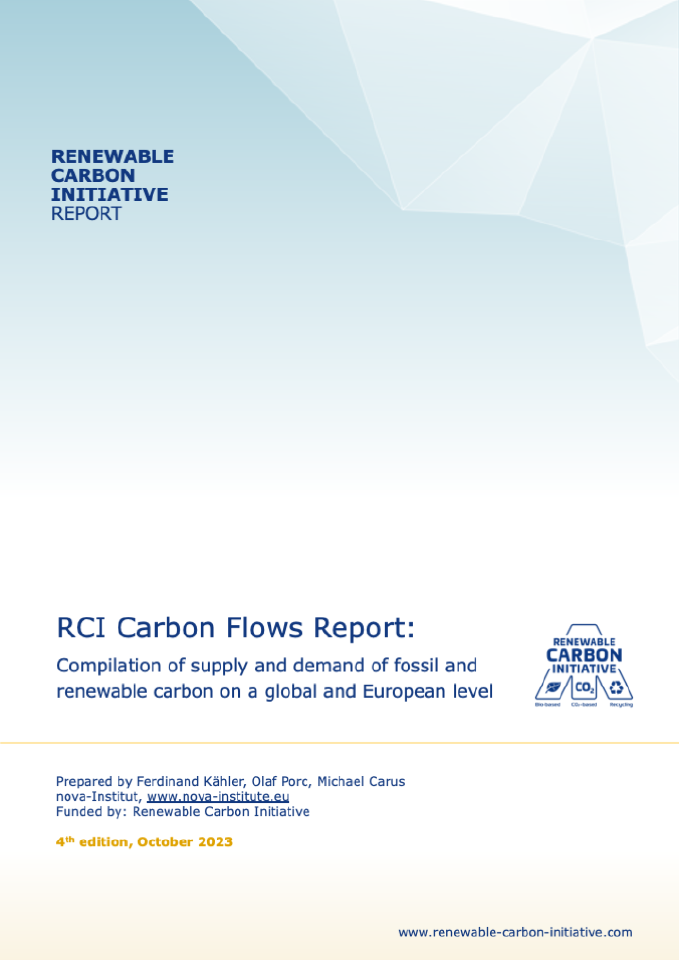
RCI Carbon Flows Report: Compilation of Supply and Demand of Fossil and Renewable Carbon on a Global and European Level – RCI Report (October 2023)
Policy, Sustainability & Health
92 Pages
3438 Downloads
3438 Downloads
2023-10
FREE
3438
DownloadsThe Carbon Flows report is a compilation of supply and demand of fossil and renewable carbon on a global and European level. It provides a comprehensive understanding of today’s carbon flows and what it means to replace fossil carbon with renewable carbon in the materials and chemicals sectors. It’s main intent is to provide a uniform and transparent data basis for a future carbon management that can be used and shared by industry, associations, policy-makers, science and alike.
In the last five years, the mindset around carbon has changed fundamentally. Of course, there is no way around the fact that the rising concentration of carbon dioxide in the atmosphere pose an existential threat to life on Earth. But at the same time, carbon is the main component of our food, the basis of all organic chemicals and plastics, and the backbone of life on Earth.
In the chemicals and plastics sectors in particular, almost 90% of the carbon used as feedstock is fossil carbon. This fossil carbon must be replaced by renewable carbon from recycling, biomass and CO2 by 2050 to avoid a further influx of fossil carbon into our technosphere and atmosphere.This report provides a comprehensive, detailed and updated carbon flow data basis that significantly surpasses previous publications, containing more than 35 figures and tables with corresponding descriptions of methodology, source material and data. All data have been corroborated as best as currently possible by scientific publications, feedback from experts and additional research. Remaining gaps and differences are transparently depicted and explained as well as possible.
The nova experts assessed data from a multitude of sources. A wide range of data on material flow are used to compile a comprehensive inventory of carbon stocks and flows. The sectors covered include all applications of organic carbon from fossil resources and biomass production, from raw materials through utilisation to final end-of-life. This includes use of carbon for feed and food, for materials, for energy and for fuels. A special focus is put on the carbon demand in the chemical and plastic industry today and tomorrow, with several figures specifically zooming into this sector and including scenarios for a full defossilisation by 2050.
The Carbon Flows report is designed to be a living document that we would like to update every one to two years if possible. This also means that we look forward to your feedback, additional input, new data and suggestions from any interested party. Please directly contact olaf.porc@nova-institut.de
DOI No.: https://doi.org/10.52548/KCTT1279
-
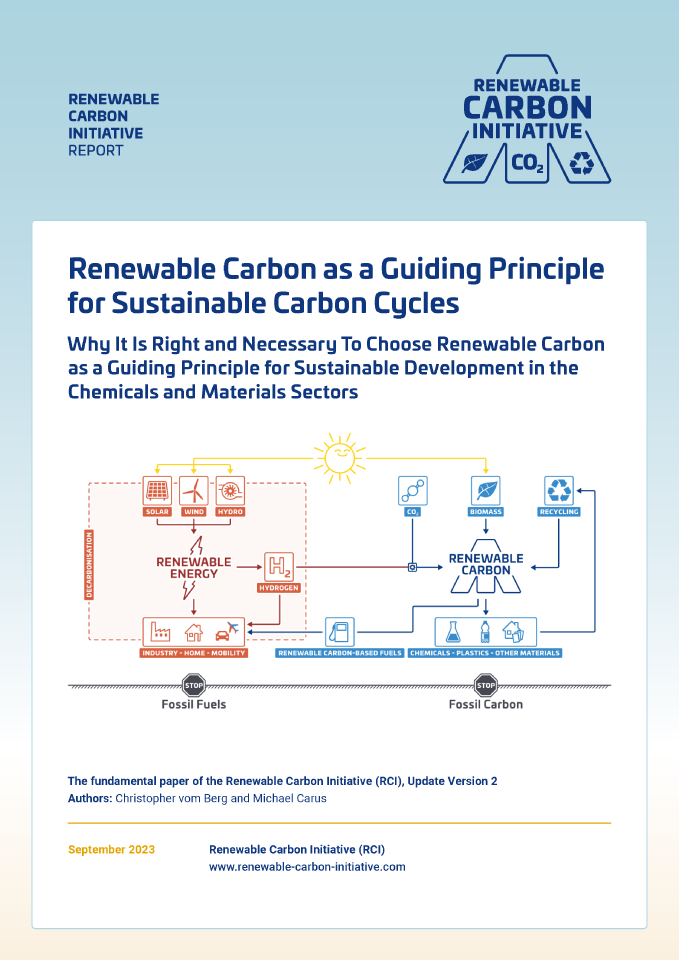
Renewable Carbon as a Guiding Principle for Sustainable Carbon Cycles (Update): Why It Is Right and Necessary to Choose Renewable Carbon as a Guiding Principle for Sustainable Development in the Chemicals and Materials Sectors – RCI Report (September 2023)
Policy, Sustainability & Health
51 Pages
1257 Downloads
1257 Downloads
2023-09
FREE
1257
DownloadsWhy It Is Right and Necessary To Choose Renewable Carbon as a Guiding Principle for Sustainable Development in the Chemicals and Materials Sectors
The Scientific Background Report on “Renewable Carbon as a Guiding Principle for Sustainable Carbon Cycles – Why It Is Right and Necessary To Choose Renewable Carbon as a Guiding Principle for Sustainable Development in the Chemicals and Materials Sectors“ was RCI’s first major publication and forms the basis for the concept and strategy of the RCI. Together with input from all members, the RCI has worked on an updated version – In this second edition, the following main changes have been implemented:
- New IPCC data on greenhouse gas emissions from the 6th Assessment Report (published March 2022) have been integrated.
- To establish proper data baselines, entirely novel carbon flows data have been integrated.
- The initial eleven policy recommendations were further sharpened, fine-tuned and concretised through lots of feedback from talks with politicians, NGOs, industrial actors, the bio-based, CO2-based and recycling sector, energy experts and many other stakeholders. Further political demands resulted from these discussions as well as recently published RCI position papers and consultations, which are now also integrated into the paper.
To reduce greenhouse gas emissions and mitigate climate change, the inflow of fossil carbon must be reduced quickly and in high volumes. The EU has started pushing for decarbonisation in energy and transport sectors, but has largely ignored chemical and material industries. These sectors require carbon-based feedstocks and cannot be “decarbonised,” so tackling embedded carbon in these industries is crucial. This paper proposes an approach to minimize environmental impact and maximize the reduction of GHG emissions.
DOI No.: https://doi.org/10.52548/CXFS7519
-
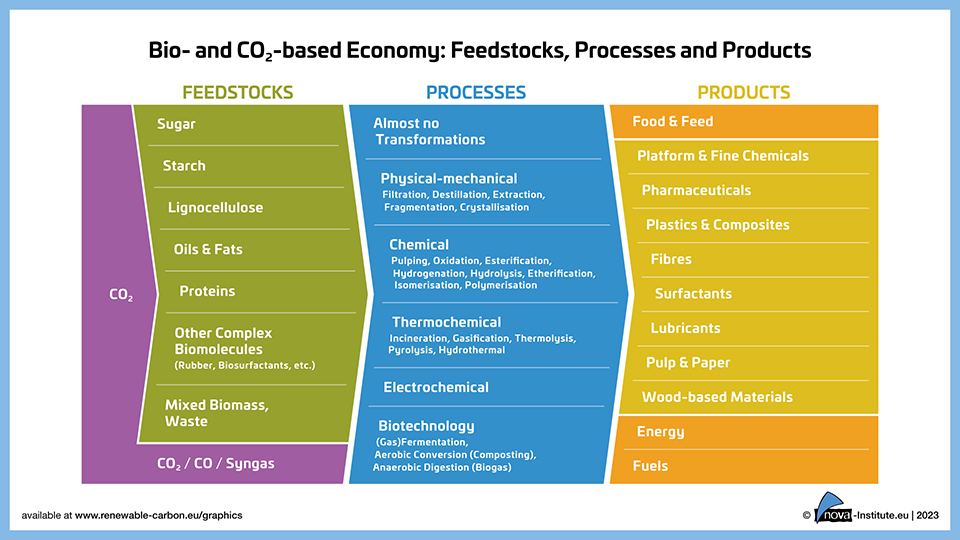
“Bio- and CO2-based Economy: feedstocks, processes and products” − Graphic – Update
Markets & Economy, Sustainability & Health, Technology
1 Page
3416 Downloads
3416 Downloads
2023-09
FREE
3416
Downloads -
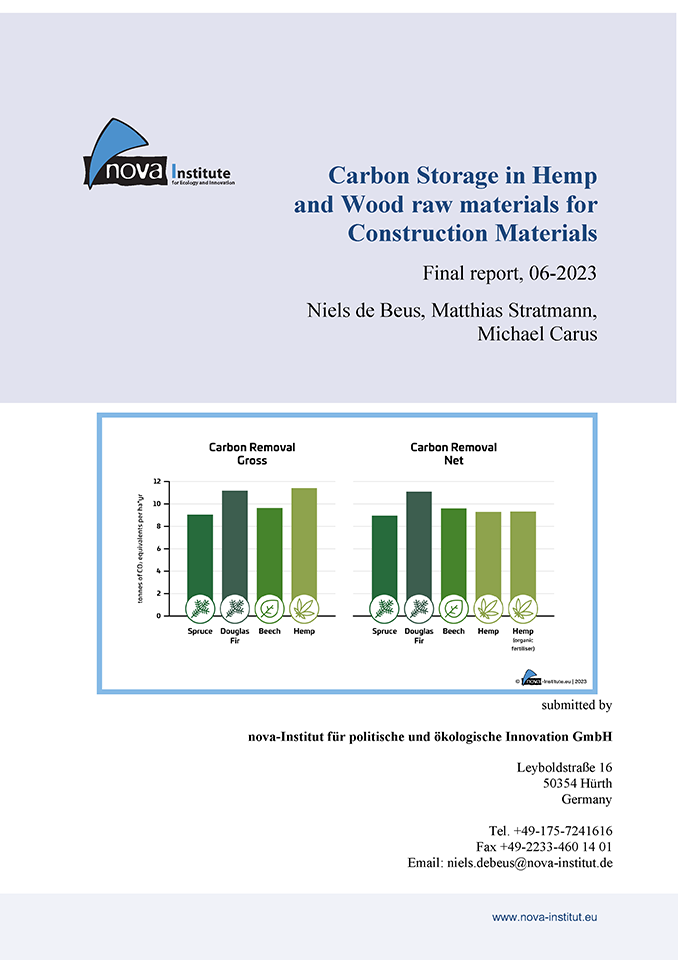
Carbon Storage in Hemp and Wood raw materials for Construction Materials
Sustainability & Health
20 Pages
485 Downloads
485 Downloads
2023-07
FREE
Free Shipping485
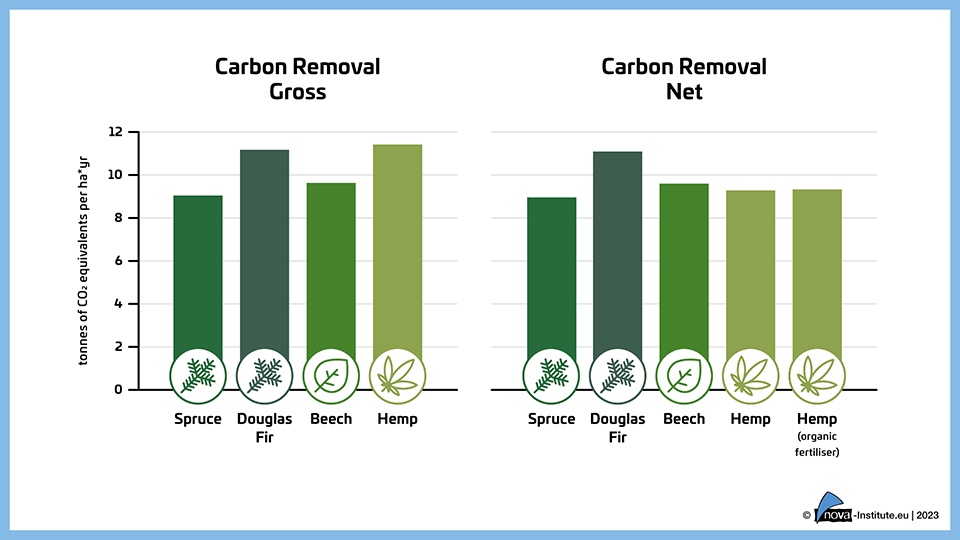
DownloadsAs such, it is interesting to investigate the potential of biomass to store carbon in raw materials used in industry, more specifically the construction industry. What is the potential of biomass to supply the construction industry with raw materials containing temporarily stored biogenic carbon per hectare and year? Are there differences between various biomass types? What is the associated reduction of atmospheric greenhouse gasses due to the carbon in the raw materials? What are the emissions of greenhouse gasses associated with this provision of raw materials? This study will look into these questions for wood and hemp based raw materials which can be used in the construction industry. The production of the construction materials, and the associated emissions with the conversion of the raw materials to final products, is outside the scope of this assessment due to the wide variety of construction materials which can be produced from the raw materials. The study has calculated the potential of a hectare of wood and hemp to transfer carbon from the biosphere to materials which can be used in the construction and insulation industry. The potential of a hectare of wood and hemp to provide carbon to the construction industry, including greenhouse gas emissions associated with the production, is similar.
-
Gross and net carbon removal of hemp and wood per hectare and year (PNG)
Sustainability & Health
1 Page
86 Downloads
86 Downloads
2023-07
FREE
Free Shipping86
Downloads -
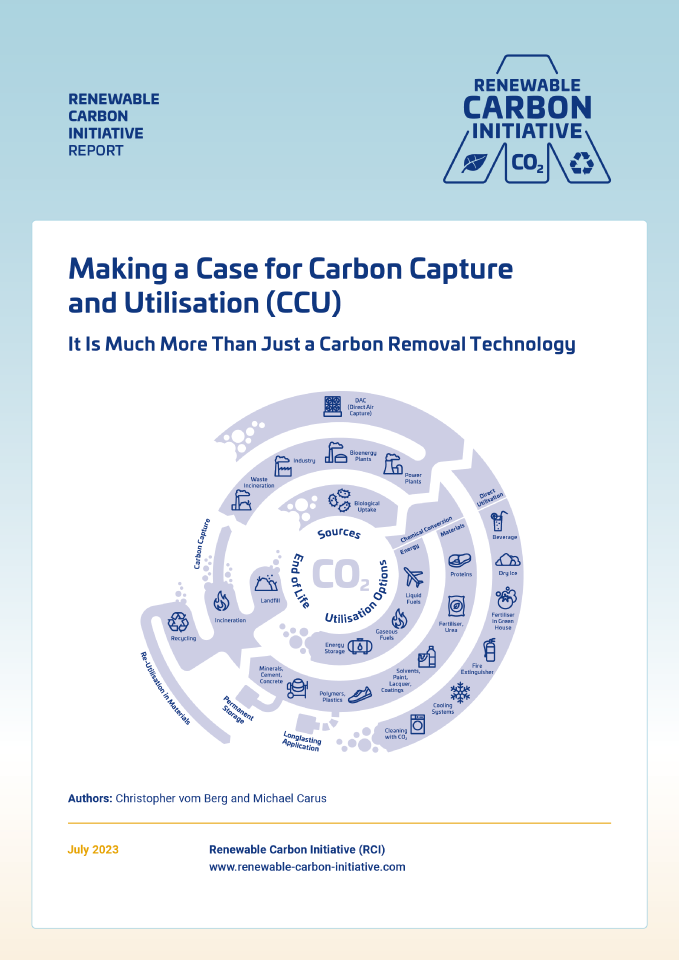
Making a Case for Carbon Capture and Utilisation (CCU): It Is Much More than Just a Carbon Removal Technology” – RCI Report (July 2023)
Markets & Economy, Policy, Sustainability & Health, Technology
48 Pages
2140 Downloads
2140 Downloads
2023-07
FREE
Free Shipping2140
DownloadsThis scientific background paper highlights the importance of Carbon Capture and Utilisation (CCU) and the need for more political recoginition and support for CCU.
CCU enables the substitution of fossil carbon in sectors where carbon is necessary, supports the full defossilisation of the chemical and derived material industries, creates a circular economy, reduces the emission gap, promotes sustainable carbon cycles, fosters innovation, generates local value and stimulates job growth.
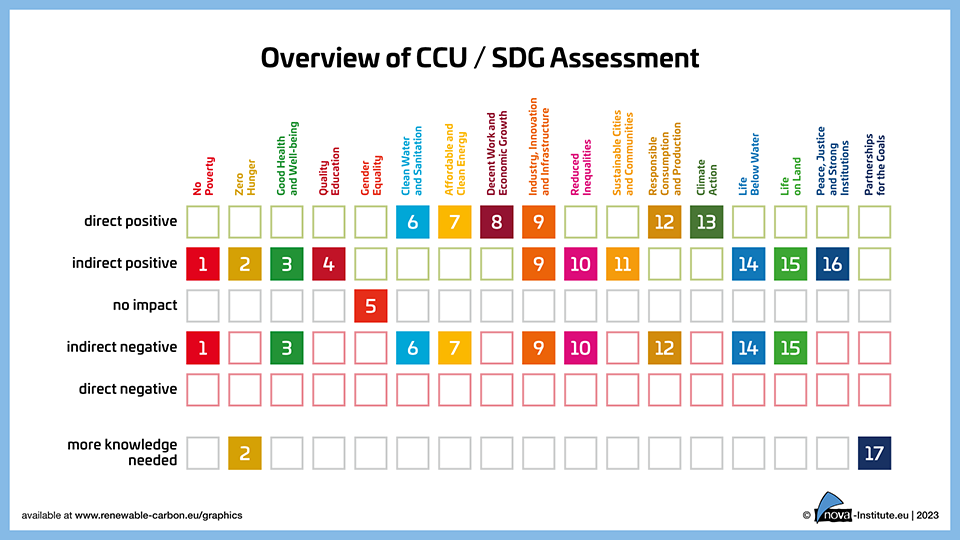
CCU is much more than a carbon removal technology: the technology offers multiple solutions to pressing problems of our modern world and can support several Sustainable Development Goals if implemented properly.
In total, 14 different benefits and advantages of CCU are described and discussed in the paper. A key advantage is that CCU supplies renewable carbon to – and thereby substitutes fossil carbon in – sectors that will require carbon in the long run. This includes the chemical sectors and products like polymers, plastics, solvents, paints, detergents, cosmetics or pharmaceuticals. But CCU is also essential to a long-term net-zero strategy, crucial for creating a sustainable circular economy, providing solutions for scaling up the renewable energy system, and bringing multiple benefits for innovation and business.
The relevance of the technology is not yet accepted in Europe, but the RCI wants to make a very clear statement: CCU is a central pillar for the biggest transformation of the chemical and material industry since the industrial revolution.
DOI No.: https://doi.org/10.52548/VYKR3129
-
Corn and its Applications (PNG)
Markets & Economy, Policy, Sustainability & Health, Technology
1 Page
127 Downloads
127 Downloads
2023-06
FREE
127
Downloads -
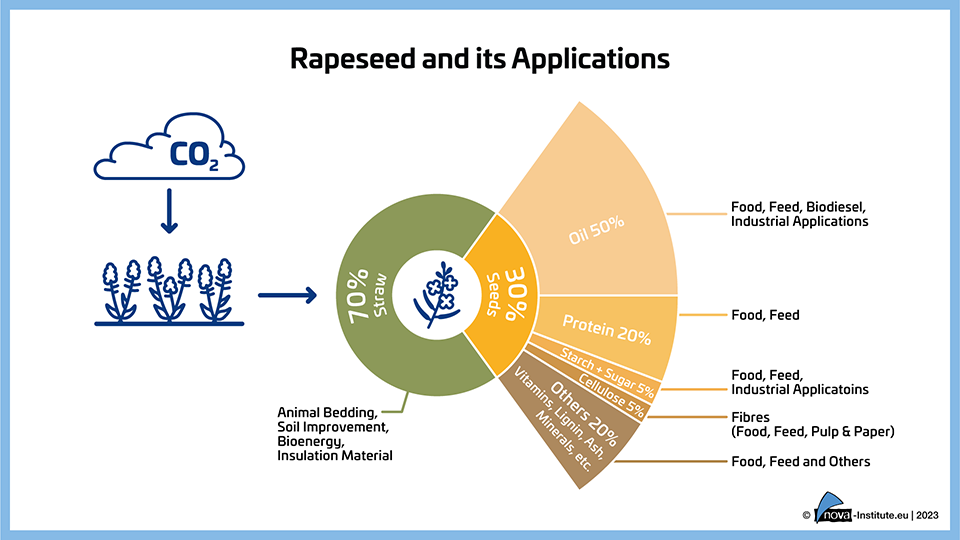
Rapeseed and its Applications (PNG)
Markets & Economy, Policy, Sustainability & Health, Technology
1 Page
99 Downloads
99 Downloads
2023-06
FREE
99
Downloads -
Yield of Fermentable Sugars (PNG)
Markets & Economy, Policy, Sustainability & Health, Technology
1 Page
154 Downloads
154 Downloads
2023-06
FREE
154
Downloads -
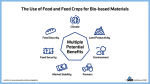
Graphic of the scientific paper „The Use of Food and Feed Crops for Bio-based Materials and the Related Effects on Food Security“ (PNG)
Markets & Economy, Policy, Sustainability & Health, Technology
1 Page
117 Downloads
117 Downloads
2023-06
FREE
117
DownloadsPromoting Evidence-based Debates and Recognising Potential Benefits
The graphic shows the multiple potential benefits of using food and feed crops for bio-based materials, in terms of climate, land productivity, environment, farmers, market stability, feed security and food security.
- The climate wins – Bio-based materials are part of the solution to achieve climate change mitigation.
- Land productivity wins – The competition between applications is not for the type of crop grown, but for the land
- The environment wins – due to increased resource efficiency and productivity of food and feed crops.
- Farmers win – because they have more options for selling stock to different markets.
- Market stability wins – due to increased global availability of food and feed crops.
- Feed security wins – due to the high value of the protein-rich co-products of food and feed crops.
- Food security wins – due to the increased overall availability of edible crops that can be stored and flexibly distributed.
-
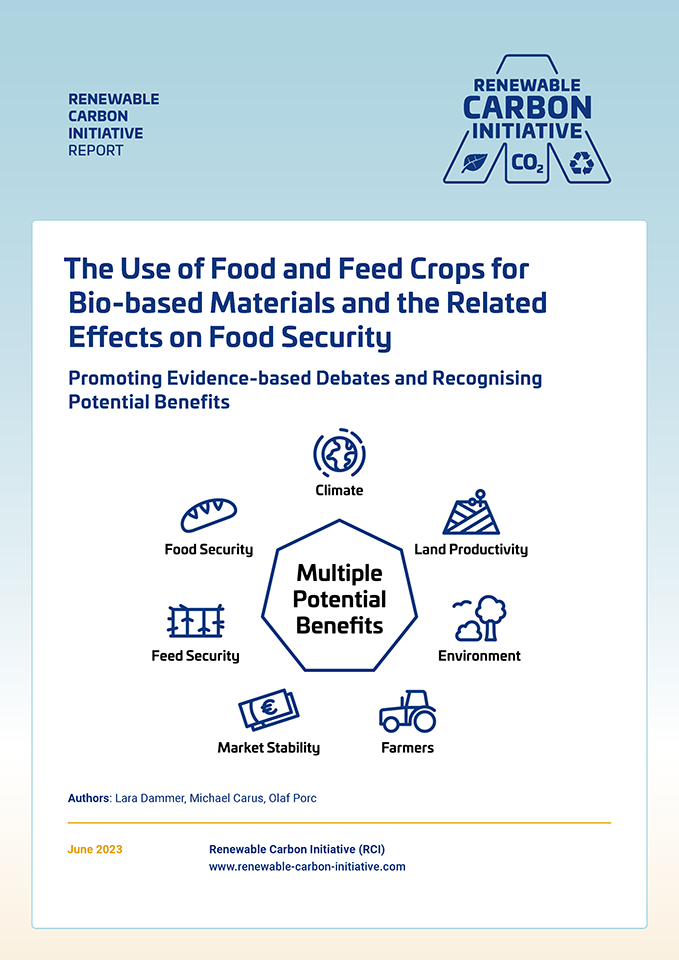
The Use of Food and Feed Crops for Bio-Based Materials and the Related Effects on Food Security: Promoting Evidence-Based Debates and Recognising Potential Benefits – RCI Report (Long Version) (June 2023)
Markets & Economy, Policy, Sustainability & Health, Technology
36 Pages
1756 Downloads
1756 Downloads
2023-06
FREE
1756
DownloadsPromoting Evidence-based Debates and Recognising Potential Benefits
This scientific paper highlights new insights into a hotly debated topic and urges for careful and evidence-based debates.
The paper aims to show that the well-known biomass debate is flawed, subjective and not fully based on evidence. What is detrimental to food security are, according to the World Food Programme in 2023, climate change, conflict, extreme inequalities in wealth distribution, heavy dependence on food imports from industrial countries, overconsumption of meat, losses along the value chain and the impact of the COVID pandemic. Competition between biomass uses is not mentioned among the relevant causes.
The use of biomass for industrial applications, does have the potential to replace fossil feedstocks and thus contribute to the urgently needed reduction of fossil carbon emissions into our atmosphere to mitigate climate change.
While not denying the dire need to combat world hunger, the authors of the paper argue that using food and feed crops for chemicals and materials will not necessarily exacerbate food insecurity, and in fact has the potential to cause multiple benefits for local and global food security, climate mitigation and other factors:
- The climate wins – Bio-based materials are part of the solution to achieve climate change mitigation.
- Land productivity wins – The competition between applications is not for the type of crop grown, but for the land.
- The environment wins – due to increased resource efficiency and productivity of food and feed crops.
- Farmers win – because they have more options for selling stock to different markets.
- Market stability wins – due to increased global availability of food and feed crops.
- Feed security wins – due to the high value of the protein-rich co-products of food and feed crops.
- Food security wins – due to the increased overall availability of edible crops that can be stored and flexibly distributed.
DOI No.: https://doi.org/10.52548/WQXU7327
-
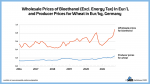
Wholesale Prices of Bioethanol and Wheat (PNG)
Markets & Economy, Policy, Sustainability & Health, Technology
1 Page
85 Downloads
85 Downloads
2023-06
FREE
85
Downloads -
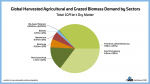
Global Harvested Agricultural and Grazed Biomass Demand by Sectors (PNG)
Markets & Economy, Policy, Sustainability & Health, Technology
1 Page
154 Downloads
154 Downloads
2023-06
FREE
154
Downloads -
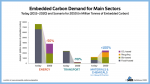
Embedded Carbon Demand for Main Sector (PNG)
Markets & Economy, Policy, Sustainability & Health, Technology
1 Page
143 Downloads

143 Downloads
2023-06
FREE
143
Downloads -
Traffic Light Sustainability Risk Evaluation of Bio-based Feedstocks (PNG)
Markets & Economy, Policy, Sustainability & Health, Technology
1 Page
304 Downloads
304 Downloads
2023-06
FREE
304
Downloads -
Renewable Materials Conference 2023 Proceedings
Markets & Economy, Policy, Sustainability & Health, Technology
241 Downloads
241 Downloads
2023-06
FREE
Plus 19% MwSt.241
DownloadsThe proceedings of the Renewable Materials Conference 2023 (23-25 May 2023, https://renewable-materials.eu) contain all released presentations of three conference days, the conference journal, and the press release of the three winners of the Innovation Award “Renewable Material of the Year 2023“.
-
Conference on CO2-based Fuels and Chemicals 2023 Proceedings
Markets & Economy, Policy, Sustainability & Health, Technology
200 Downloads
200 Downloads
2023-05
FREE
Plus 19% MwSt.200
DownloadsThe proceedings of the Conference on CO2-based Fuels and Chemicals (19-20 April 2023, https://co2-chemistry.eu) contain all released presentations, the conference journal, and the press release of the three winners of the Innovation Award “Best CO2 Utilisation 2023″.
Press Release: https://renewable-carbon.eu/news/smart-carbon-capture-and-utilisation-ccu-technologies-and-materials-defossilise-the-economy
-
Cellulose Fibres Conference 2023 (Proceedings, PDF)
Markets & Economy, Policy, Sustainability & Health, Technology
82 Downloads
82 Downloads
2023-03
FREE
Plus 19% MwSt.82
DownloadsThe unique conference focused on cellulose fibres – in textiles, hygiene products and packaging!
The Cellulose Fibres 2023 Conference Proceedings (https://cellulose-fibres.eu, 8-9 March 2023, Cologne, hybrid) include all released conference presentations, the conference journal, sponsor documents, a Fiber2Fashion Knowledgepaper and the conference press release.
-
nova-Session: “Bio- and CO₂-based Polymers: Production, Trends 2022-2027 and the latest Policy Developments” (Proceedings, PDF)
Markets & Economy, Policy, Sustainability & Health, Technology
2023-03
50 € ex. tax
Plus 19% MwSt.Add to
cartThe download of the proceedings contains all six presentations of the nova-Session (March 2023).
Bio-based and CO2-based Solutions – Where are we heading?
The only way for chemicals and plastics to become sustainable, climate-friendly and part of the circular economy is the complete substitution of fossil carbon with renewable carbon from alternative sources: biomass, CO2 and recycling. We see strong investment in all three sectors, with growth rates far exceeding that of fossil polymers – i.e. fossil polymers are being substituted in the market.
The session will focus on developments in bio- and CO2-based polymers and building blocks: Bio-based polymers are estimated to grow at a CAGR of 14 % from 2022 to 2027. Some examples: Bio-based epoxy resin production is on the rise, PTT regained attractiveness after several years of constant capacities and PE and PP made from bio based naphtha are being further established with growing volumes. Increased capacities for PLA are ongoing, after being sold out in 2019. Current and future expansions for bio based polyamides as well as PHAs are on the horizon. And also, bio-based PET is getting back in the game.
Additionally, the use of CO2 as chemical feedstock for building blocks and polymers has been intensively diversified. Several successfully implemented technologies used at commercial level are in place and many more at the laboratory and pilot phase. Besides the long-established use of CO2 for the synthesis of polycarbonates, also polyurethanes are based on it. The most notable biotechnological conversion pathway of a syngas produces ethanol at commercial scale. Additionally, high interest is also observed in CO2-based methanol and in CO2-based hydrocarbons, which can be used for fuel, chemical and polymers applications. A current total production capacity of these CO2-based products of ca. 1.3 Mt/a in 2022 is observed and a strong increase in capacity is expected by 2027.
The EU policy landscape has seen significant updates in the final weeks of 2022 with the proposed Packaging and Packaging Waste Regulation and the publication of the Policy Framework on bio-based, biodegradable and compostable plastics. How these updates may affect CO2 and bio-based polymers will be addressed in the session.
-
Letter to the Commission on the definition of natural polymers in the REACH microplastics restriction
Policy, Sustainability & Health
4 Pages
492 Downloads
492 Downloads
2023-02
FREE
492
DownloadsSix leading associations and stakeholders from the chemicals, polymers and plastics sectors – namely BioChem Europe (a sector group of Cefic), EDANA, EuropaBio, European BioPlastics, GO!PHA and Renewable Carbon Initiative) – express in this letter their specific concerns about the proposed definition of “natural polymers” and its impact on biopolymers in the context of the REACH restriction on microplastics.
Under the coordination of the Renewable Carbon Initiative (RCI) they ask the European Commission in a letter “that in the adoption of the text of the Synthetic Polymer Microparticles restrictions (REACH Microplastics Restriction), the European Commission should not use the definition of ‘natural polymer’ which refers to a polymerisation process that takes place in nature.“


![Renewable Materials Conference 2023 Proceedings [Digital]](https://renewable-carbon.eu/publications/wp-content/uploads/2020/05/21-01-07_RC-Publications-Cover-Proceedings_RMC-100x141.png)
![Conference on CO2-based Fuels and Chemicals 2023 Proceedings [Digital]](https://renewable-carbon.eu/publications/wp-content/uploads/2020/05/21-01-07_RC-Publications-Cover-Proceedings_CO2-based-100x141.png)
![Cellulose Fibres Conference 2023 (Proceedings, PDF) [Digital]](https://renewable-carbon.eu/publications/wp-content/uploads/2020/05/21-01-07_RC-Publications-Cover-Proceedings_Cellulose-Fibres-100x141.png)
![nova-Session: “Bio- and CO₂-based Polymers: Production, Trends 2022-2027 and the latest Policy Developments” (Proceedings, PDF) [Digital]](https://renewable-carbon.eu/publications/wp-content/uploads/2020/05/21-01-07_RC-Publications-Cover-Proceedings_1-100x141.png)