Showing 141–160 of 234
-
287 Downloads
2021-05
FREE
287
Downloads -
BioSinn Präsentation Abschlusskonferenz 28. April 2021 (deutsch) (PDF)
Markets & Economy, Policy
141 Pages
306 Downloads
306 Downloads
2021-05
FREE
306
DownloadsBioSinn Präsentation Abschlusskonferenz 28. April 2021 (deutsch). Fotos: nova-Institute sofern nicht andern angegeben.
-
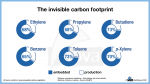
BioSinn Presentation Final Conference 30 April 2021 (PDF)
Markets & Economy, Policy
141 Pages
434 Downloads
434 Downloads
2021-05
FREE
434
DownloadsBioSinn Presentation Final Conference 30 April 2021. Photos: nova-Institute unless otherwise stated.
-
BioSinn – Products for which biodegradation makes sense (PDF)
Markets & Economy, Policy
134 Pages
2610 Downloads
2610 Downloads
2021-05
FREE
2610
DownloadsIn the project “BioSinn – Products for which biodegradation makes sense”, which was funded by the Federal Ministry of Food and Agriculture (funding code 2219NR197), experts from the nova-Institute in Hürth near Cologne investigated whether there are applications and products for which biodegradation is a sensible or even the best end-of-life option. The selection criteria were that collecting the products (or their remaining parts), separating them from other organic waste or material recycling is not possible, economically not feasible or does not take place in practice. Further criteria were that the input of microplastics into the environment can be avoided through the use of biodegradable materials or that indirect positive effects, a relevant secondary benefit, can be achieved through the use of biodegradable materials.
The result of the project is a brochure for decision-makers from industry and politics but also for the general public, with 25 fact sheets and extensive background information on biodegradation. For each product, it explains to what extent biodegradation is a sensible and feasible option and what technical substitution options are available for a more sustainable use of materials. In addition, political framework conditions and regulations were highlighted and evaluated on a product-specific basis. For the first time, the market volumes for Germany and the EU were also surveyed and estimated. The total volume of the 25 applications in Germany is about 170,000 tonnes and in the European Union even about 1 million tonnes, of which the largest share ends up in the environment. Here, the use of biodegradable materials would bring considerable environmental benefits.
-
466 Downloads
2021-05
FREE
466
Downloads -
BioSinn – Steckbriefe sinnvoll biologisch abbaubarer Produkte auf Basis von nachwachsenden Rohstoffen
Markets & Economy, Policy
137 Pages
1760 Downloads
1760 Downloads
2021-04
FREE
1760
DownloadsIm Projekt „BioSinn – Steckbriefe sinnvoller biologisch abbaubarer Produkte“, welches durch das Bundesministerium für Ernährung und Landwirtschaft gefördert wurde (Förderkennzeichen 2219NR197), wurde von Expertinnen und Experten des nova-Instituts aus Hürth bei Köln untersucht, ob es Anwendungen und Produkte gibt, für die der biologische Abbau eine sinnvolle oder sogar die beste End-of-Life-Option darstellt. Dabei waren die Auswahlkriterien, dass das Einsammeln der Produkte (oder ihrer Überbleibsel), die Abtrennung der Produkte von sonstigem organischem Abfall oder ein stoffliches Recycling nicht möglich, ökonomisch nicht realisierbar ist bzw. in der Praxis nicht stattfindet. Andere Kriterien waren, dass durch die Verwendung biologisch abbaubarer Materialien der Eintrag von Mikroplastik in die Umwelt vermieden werden kann oder dass durch die Verwendung biologisch abbaubarer Materialien indirekte positive Effekte, ein relevanter Sekundärnutzen erzielt werden kann.
Das Ergebnis des Projektes ist eine Broschüre für Entscheidungsträger aus Industrie und Politik aber auch für die breite Öffentlichkeit, mit 25 Produktsteckbriefen und umfangreicher Hintergrundinformation zum Thema biologischer Abbau. Für jedes Produkt wird erklärt, inwiefern der biologische Abbau eine sinnvolle und machbare Option ist und welche technischen Substitutionsmöglichkeiten es für einen nachhaltigeren Materialeinsatz gibt. Zudem wurden politische Rahmenbedingungen und Regularien beleuchtet und produktspezifisch ausgewertet. Erstmalig wurden auch die Marktvolumina für Deutschland und die EU erhoben und abgeschätzt. Das Gesamtvolumen der 25 Anwendungen liegt in Deutschland bei rund 170.000 Tonnen und in der Europäischen Union sogar bei etwa 1 Million Tonnen, von denen der größte Anteil in die Umwelt gelangt. Hier würde der Einsatz biologisch abbaubarer Materialien erhebliche Umweltvorteile bringen. (Stand: April 2021, Update Mai 2021) -
Turning off the Tap for Fossil Carbon – Future Prospects for a Global Chemical and Derived Material Sector Based on Renewable Carbon
Policy, Sustainability & Health
34 Pages
3174 Downloads
3174 Downloads
2021-04
FREE
Free Shipping3174
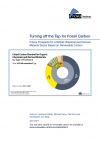
DownloadsNew study on the feedstock for global chemical and derived material sector and future prospects for the transition from fossil to renewable carbon sources
In a new study, total carbon embedded in products from the chemical and derived material sector is examined on a global scale. This includes product groups like plastics, rubbers, textile fibres, detergents and personal care solutions. For the first time ever, total global amount of embedded carbon is calculated, visualized and connected to the different feedstocks. Furthermore, end-user applications are investigated and depicted. A 2050 scenario is introduced, which outlines future prospects to transition from fossil to renewable carbon sources. Solutions for the highly interconnected chemical industry are illustrated together with supporting policy measures. This report aims to raise awareness of the need for, and the technical, industrial and political feasibility of, the biggest transformation of the chemical and derived material sector since the industrial revolution.
-
Guidance for a biorefining roadmap for Thailand
Markets & Economy, Policy, Sustainability & Health, Technology
55 Pages
168 Downloads
168 Downloads
2021-04
FREE
168
DownloadsOECD SCIENCE, TECHNOLOGY AND INDUSTRY POLICY PAPERS
April 2021 No. 110Biorefineries present an alternative to fossil-based production, and can create employment, wealth and the ecosystem needed to make them function. Thailand is establishing a bioeconomy with widespread biorefining as a strategy for future economic growth. There is political will to establish in Thailand, if feasible, small, decentralised biorefineries to which farmers can locally deliver biomass as feedstock, which can then be processed into bio-based products. This would help to relieve rural poverty, which is still a problem in some areas of Thailand despite progress. Developing a biorefining roadmap will help to assess the feasibility of such an initiative.
-
Bioeconomy is not alone – from Bioeconomy to Carbon Management
Policy, Sustainability & Health, Technology
2 Pages
201 Downloads
201 Downloads
2021-04
FREE
Free Shipping201
DownloadsThe bioeconomy faces great expectations and hopes in the fight against climate change, and at the same time is viewed critically. The biggest problems in building a strong bioeconomy are direct and indirect land use changes, which have significant impacts on biodiversity, climate change, and food security.
-
2nd International Conference on Cellulose Fibres Proceedings 2021
Markets & Economy, Policy, Sustainability & Health, Technology
102 Downloads
102 Downloads
2021-02
FREE
Plus 19% MwSt.Free Shipping102
DownloadsThe proceedings of the 2nd International Conference on Cellulose Fibres (2-3 February 2021, https://cellulose-fibres.eu) contain 26 presentations, the conference journal, and the press release of the three winners of the Cellulose Fibre Innovation of the Year 2021 Award!
-
Carbon economy – Studies on support to research and innovation policy in the area of bio-based products and services
Markets & Economy, Policy, Sustainability & Health, Technology
384 Pages
650 Downloads
650 Downloads
2021-02
FREE
Free Shipping650
DownloadsNova-Institute, together with COWI and Utrecht University published a report on the role of carbon in the global, European and regional economy for the Directorate-General for Research and Innovation (European Commission).
The report herein contains five Work Packages (WPs) that embody the requirements set out in the European Commission’s “Studies on support to R&I policy in the area of bio-based products and services – Carbon Economy (Lot 1).” The main aim of the project was to map out the current pathways available for the transition towards a low carbon economy as well as the barriers that hinder this transition. Based on the conclusions and key findings from the WPs, the authors set the scene for the future of the bio-based sector with a particular focus on ten case studies of regions and cities across the EU (WP4), an evaluation of promising innovations and novel technologies for the realisation of such an economy and a sweeping regulatory analysis containing Q1 2020 updates (WP3) on EU directives and regulations that pertain to the low carbon economy. This attention to the local level as well as the broader policy sphere is supported by a scientific understanding of the low carbon economy (WP1), potential future scenarios towards 2050 (WP2) as well as clear dissemination of the findings across the entire study (WP5). In the frame of the study an animated educational video was produced. The final study report contains an executive summary followed by each Work Package in its entirety, which can also be treated as stand-alone reports in their own right.
Further information at: https://op.europa.eu/en/publication-detail/-/publication/8c4de15d-a17d-11eb-b85c-01aa75ed71a1
-
“Bioeconomy: More than Circular Economy” − Graphic
Markets & Economy, Policy, Sustainability & Health
1 Page
3140 Downloads
3140 Downloads
2021-01
FREE
3140
Downloads -
Renewable Carbon for a Sustainable Future − Graphic (September 2020) (PNG)
Markets & Economy, Policy, Sustainability & Health
1 Page
14 Downloads
14 Downloads
2020-09
FREE
Free Shipping14
Downloads -
nova-Paper #12: Renewable Carbon – Key to a Sustainable and Future-oriented Chemical and Plastic Industry − Full version
Policy
25 Pages
4958 Downloads
4958 Downloads
2020-09
FREE
4958
Downloads -
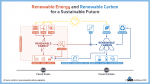
Renewable Energy and Renewable Carbon for a Sustainable Future − Graphic
Markets & Economy, Policy, Sustainability & Health, Technology
1 Page
1987 Downloads
1987 Downloads
2020-09
FREE
1987
Downloads -
How much biomass do bio-based plastics need? − Article in bioplastics MAGAZINE
Markets & Economy, Policy, Sustainability & Health
2 Pages
1518 Downloads
1518 Downloads
2020-04
FREE
1518
Downloads -
Renewable Carbon is the Key to a Sustainable and Future-Oriented Chemical and Plastic Industry − Full version
Markets & Economy, Policy, Sustainability & Health
46 Pages
1521 Downloads
1521 Downloads
2020-03
FREE
1521
Downloads -
Can the European Union’s kerosene demand be met by the amount of biomass produced in the EU? − Full version
Markets & Economy, Policy, Sustainability & Health
2 Pages
263 Downloads
263 Downloads
2020-03
FREE
263
Downloads -
Kann der Kerosinbedarf der Europäischen Union durch in der EU produzierte Biomasse gedeckt werden? − Langfassung
Markets & Economy, Policy, Sustainability & Health
2 Pages
139 Downloads
139 Downloads
2020-03
FREE
139
Downloads -
Opinions of the Chinese National Development and Reform Commission and the Ministry of Ecology and Environment concerning the further reinforcement of measures against plastic pollution − Full version
Markets & Economy, Policy
7 Pages
148 Downloads
148 Downloads
2020-02
FREE
148
Downloads


![2nd International Conference on Cellulose Fibres Proceedings 2021 [Digital]](https://renewable-carbon.eu/publications/wp-content/uploads/2020/05/21-01-07_RC-Publications-Cover-Proceedings_Cellulose-Fibres-100x141.png)