Skip to content
Renewable Carbon Publications - LogoRenewable Carbon Publications - Logo
  • Publications
  • Contact
0

No products in the cart.

  • Renewable Carbon
    • Renewable Carbon
    • Events
    • Publications
    • Graphics
    • News
    • Business Directory
    • Newsletter
    • nova-Institute
  • Publications
  • Contact

Renewable Carbon Publications - LogoRenewable Carbon Publications - Logo
0

No products in the cart.

  • Renewable Carbon Publications
  • Renewable Carbon Types
  • Recycling
  • Page 5
Grid view List view

Showing 81–100 of 158

  • Download Statistics
  • Direct Download
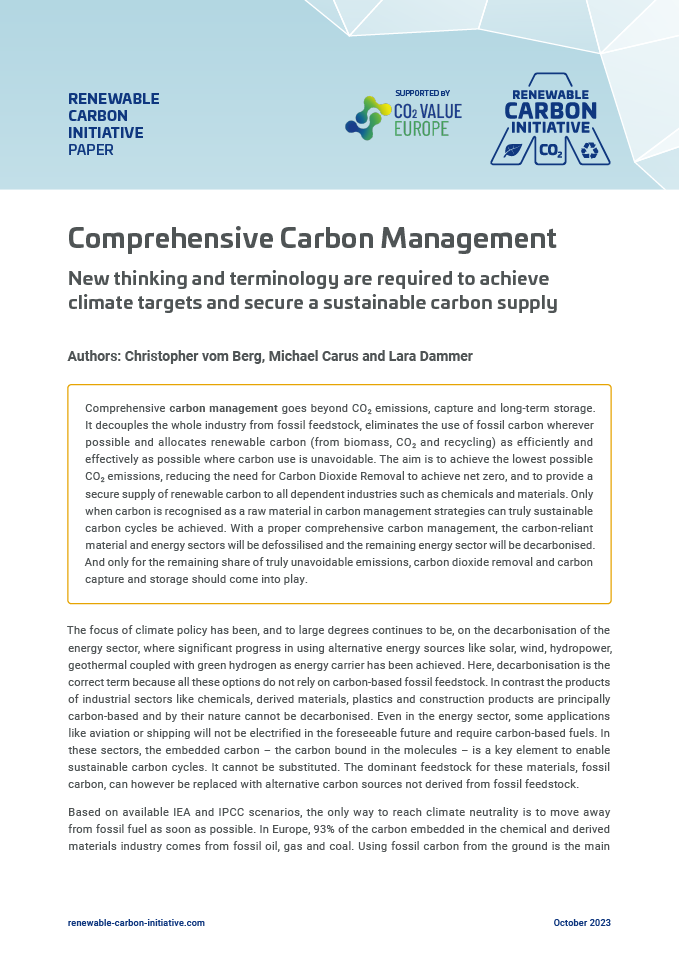
    rci position paper on comprehensive carbon management (pdf)

    RCI’s position paper: “Comprehensive carbon management“ (October 2023)

    Policy

    3 Pages
    357 Downloads

    357 Downloads  

    2023-10

    FREE


    357
    Downloads

    Direct Download

    This position paper describes that our understanding that new thinking and terminology are required to achieve climate targets and secure a sustainable carbon supply

    Comprehensive carbon management goes beyond CO2 emissions, capture and long-term storage, to which it is often reduced to. It decouples the whole industry from fossil feedstock, eliminates the use of fossil carbon wherever possible and allocates renewable carbon (from biomass, CO2 and recycling) as efficiently and effectively as possible where carbon use is unavoidable. The aim is to achieve the lowest possible CO2 emissions, reducing the need for Carbon Dioxide Removal to achieve net zero, and to provide a secure supply of renewable carbon to all dependent industries such as chemicals and materials. Only when carbon is recognised as a raw material in carbon management strategies can truly sustainable carbon cycles be achieved. With a proper comprehensive carbon management, the carbon-reliant material and energy sectors will be defossilised and the remaining energy sector will be decarbonised. And only for the remaining share of truly unavoidable emissions, carbon dioxide removal and carbon capture and storage should come into play.

  • Direct Download
    rci carbon flows report: compilation of supply and demand of fossil and renewable carbon on a global and european level (pdf)

    RCI’s scientific background report: “RCI carbon flows report – Compilation of supply and demand of fossil and renewable carbon on a global and European level” (Oct. 2023)

    Policy, Sustainability & Health

    92 Pages
    3324 Downloads

    3324 Downloads  

    2023-10

    FREE


    3324
    Downloads

    Direct Download

    The Carbon Flows report is a compilation of supply and demand of fossil and renewable carbon on a global and European level. It provides a comprehensive understanding of today’s carbon flows and what it means to replace fossil carbon with renewable carbon in the materials and chemicals sectors. It’s main intent is to provide a uniform and transparent data basis for a future carbon management that can be used and shared by industry, associations, policy-makers, science and alike.

    In the last five years, the mindset around carbon has changed fundamentally. Of course, there is no way around the fact that the rising concentration of carbon dioxide in the atmosphere pose an existential threat to life on Earth. But at the same time, carbon is the main component of our food, the basis of all organic chemicals and plastics, and the backbone of life on Earth.
    In the chemicals and plastics sectors in particular, almost 90% of the carbon used as feedstock is fossil carbon. This fossil carbon must be replaced by renewable carbon from recycling, biomass and CO2 by 2050 to avoid a further influx of fossil carbon into our technosphere and atmosphere.

    This report provides a comprehensive, detailed and updated carbon flow data basis that significantly surpasses previous publications, containing more than 35 figures and tables with corresponding descriptions of methodology, source material and data. All data have been corroborated as best as currently possible by scientific publications, feedback from experts and additional research. Remaining gaps and differences are transparently depicted and explained as well as possible.

    The nova experts assessed data from a multitude of sources. A wide range of data on material flow are used to compile a comprehensive inventory of carbon stocks and flows. The sectors covered include all applications of organic carbon from fossil resources and biomass production, from raw materials through utilisation to final end-of-life. This includes use of carbon for feed and food, for materials, for energy and for fuels. A special focus is put on the carbon demand in the chemical and plastic industry today and tomorrow, with several figures specifically zooming into this sector and including scenarios for a full defossilisation by 2050.

    The Carbon Flows report is designed to be a living document that we would like to update every one to two years if possible. This also means that we look forward to your feedback, additional input, new data and suggestions from any interested party. Please directly contact the main author of the study for this: ferdinand.kaehler@nova-institut.de

    DOI No.: https://doi.org/10.52548/KCTT1279


  • Direct Download
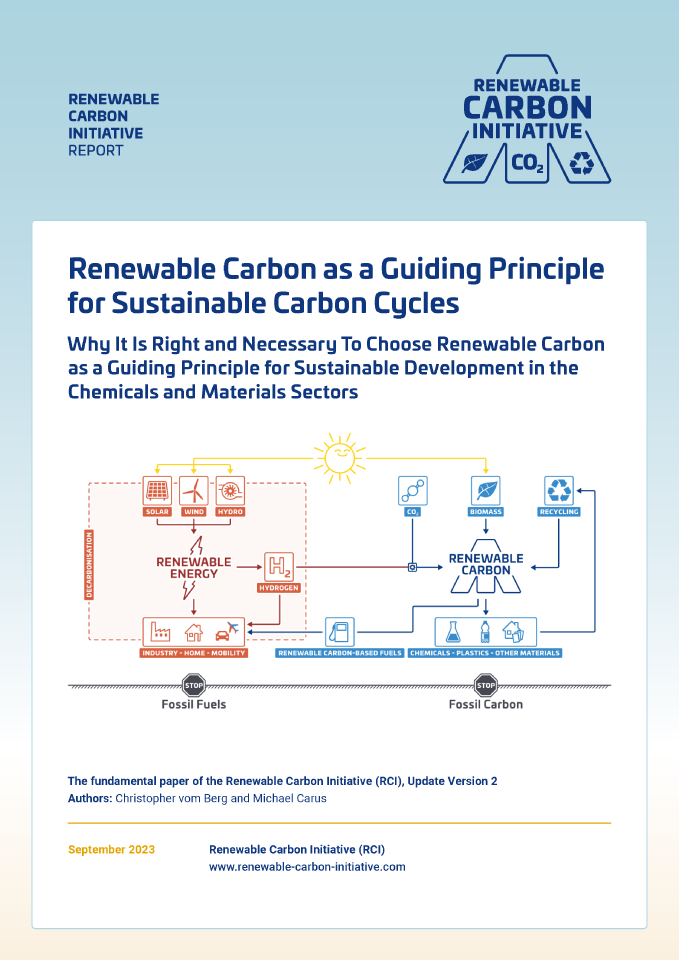
    renewable carbon as a guiding principle for sustainable carbon cycles (pdf)

    RCI’s scientific background report: “Renewable carbon as a guiding principle for sustainable carbon cycles (Update)” (September 2023)

    Policy, Sustainability & Health

    51 Pages
    1245 Downloads

    1245 Downloads  

    2023-09

    FREE


    1245
    Downloads

    Direct Download

    Why It Is Right and Necessary To Choose Renewable Carbon as a Guiding Principle for Sustainable Development in the Chemicals and Materials Sectors

    The Scientific Background Report on “Renewable Carbon as a Guiding Principle for Sustainable Carbon Cycles – Why It Is Right and Necessary To Choose Renewable Carbon as a Guiding Principle for Sustainable Development in the Chemicals and Materials Sectors“ was RCI’s first major publication and forms the basis for the concept and strategy of the RCI. Together with input from all members, the RCI has worked on an updated version – In this second edition, the following main changes have been implemented:

    • New IPCC data on greenhouse gas emissions from the 6th Assessment Report (published March 2022) have been integrated.
    • To establish proper data baselines, entirely novel carbon flows data have been integrated.
    • The initial eleven policy recommendations were further sharpened, fine-tuned and concretised through lots of feedback from talks with politicians, NGOs, industrial actors, the bio-based, CO2-based and recycling sector, energy experts and many other stakeholders. Further political demands resulted from these discussions as well as recently published RCI position papers and consultations, which are now also integrated into the paper.

    To reduce greenhouse gas emissions and mitigate climate change, the inflow of fossil carbon must be reduced quickly and in high volumes. The EU has started pushing for decarbonisation in energy and transport sectors, but has largely ignored chemical and material industries. These sectors require carbon-based feedstocks and cannot be “decarbonised,” so tackling embedded carbon in these industries is crucial. This paper proposes an approach to minimize environmental impact and maximize the reduction of GHG emissions.


    DOI No.: https://doi.org/10.52548/CXFS7519

  • Direct Download
    the renewable carbon initiative’s position on the commission proposal for a green claims directive (gcd) – towards science based substantiation of claims and accurate biogenic carbon accounting (pdf)

    RCI’s position paper: “Commission proposal for a Green Claims Directive (GCD) – Towards science-based substantiation of claims and accurate biogenic carbon accounting” (September 2023)

    Policy

    3 Pages
    165 Downloads

    165 Downloads  

    2023-09

    FREE


    165
    Downloads

    Direct Download

    Towards science-based substantiation of claims and accurate biogenic carbon accounting

    The Renewable Carbon Initiative (RCI) wholeheartedly endorses the Green Claims Directive’s (GCD) mission to provide consumers and businesses with reliable, comparable, and verifiable information to facilitate sustainable choices.

    In our position paper, we emphasise three aspects that, in our view, require additional attention to maximise the impact of the GCD and support products and solutions derived from non-fossil, renewable-carbon-based feedstock from biomass, CCU or recycling.

    1. Science-Based Life-Cycle Assessment Methodologies: RCI welcomes the acceptance of several life-cycle assessment methods for substantiating environmental claims but emphasises the practical importance of maintaining flexibility in the upcoming trilogue negotiations. We also call for clarification on how to determine if an environmental impact is considered “significant.”

    2. Differentiated Biogenic Carbon Accounting Methodology: The RCI advocates for enabling the possibility to better reflect uptake of atmospheric CO2 via biogenic carbon (and principally any process that captures CO2 from the atmosphere) in product assessments. In general, biogenic carbon in LCA is neither credited with carbon uptake through biomass at the beginning nor with the emissions (e.g. from incineration) at end of life. While this is from a proper LCA point-of-view valid and recommended, it leads to issues for stakeholders reporting their biogenic product’s carbon footprint at factory gate, because the uptake of atmospheric carbon cannot be shown and the conceptual advantage over fossil products gets lost. At the same time, we are aware of misleading “carbon negative” claims and argue that only full cradle-to-grave LCAs should qualify for such B2C claims.

    3. Ensuring a Reliable Verification Mechanism: Recognising the need for mandated verification of environmental claims before B2C communication, RCI acknowledges the potential challenges posed by these resource-intensive processes. We want to stress the importance of an effective approach and an extended transition period to enable authorities, verifiers, and the industry to smoothly adapt to these processes and mitigate potential delays in communicating claims for innovative products.
    tation.

  • Direct Download
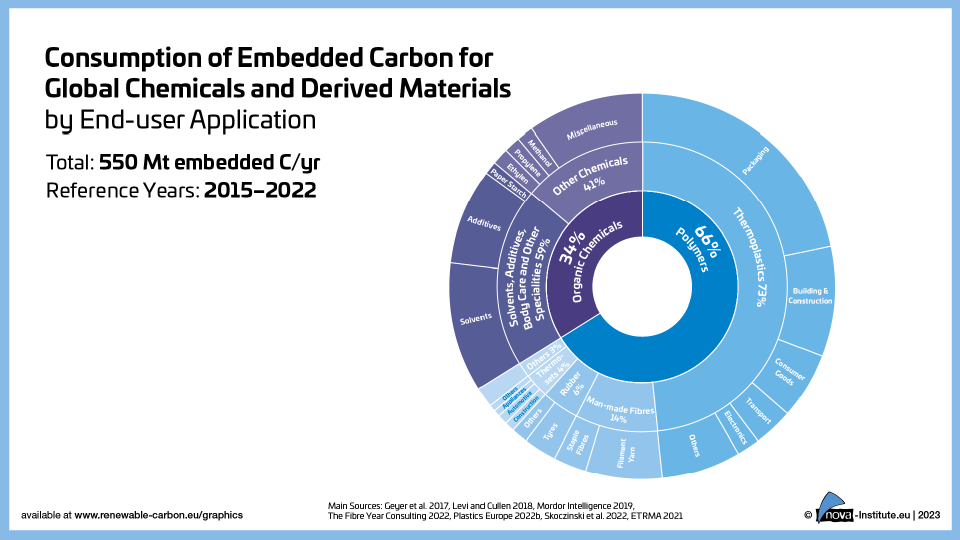
    consumption of embedded carbon for global chemicals and derived materials by end user application tn

    Consumption of Embedded Carbon for Global Chemicals and Derived Materials by End-user Application (PNG)

    Markets & Economy, Policy

    1 Page
    124 Downloads

    124 Downloads  

    2023-07

    FREE

    Free Shipping
     

    124
    Downloads

    Direct Download

    Figure from the RCI Carbon Flows Report 2023

  • Direct Download
    consumption of embedded carbon for global polymers tn

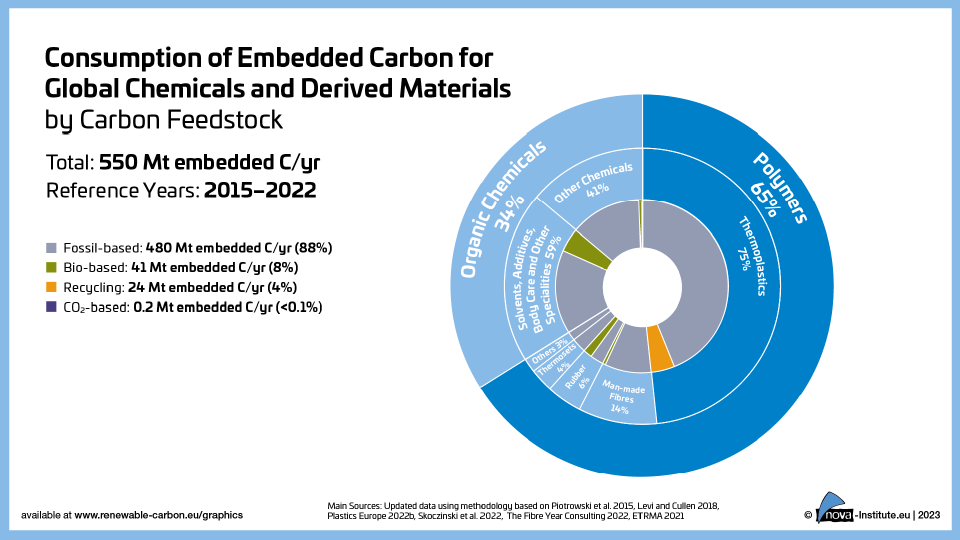
    Consumption of Embedded Carbon for Global Chemicals and Derived Materials by Carbon Feedstock (PNG)

    Markets & Economy, Policy

    1 Page
    119 Downloads

    119 Downloads  

    2023-07

    FREE

    Free Shipping
     

    119
    Downloads

    Direct Download

    Figure from the RCI Carbon Flows Report 2023

  • Direct Download
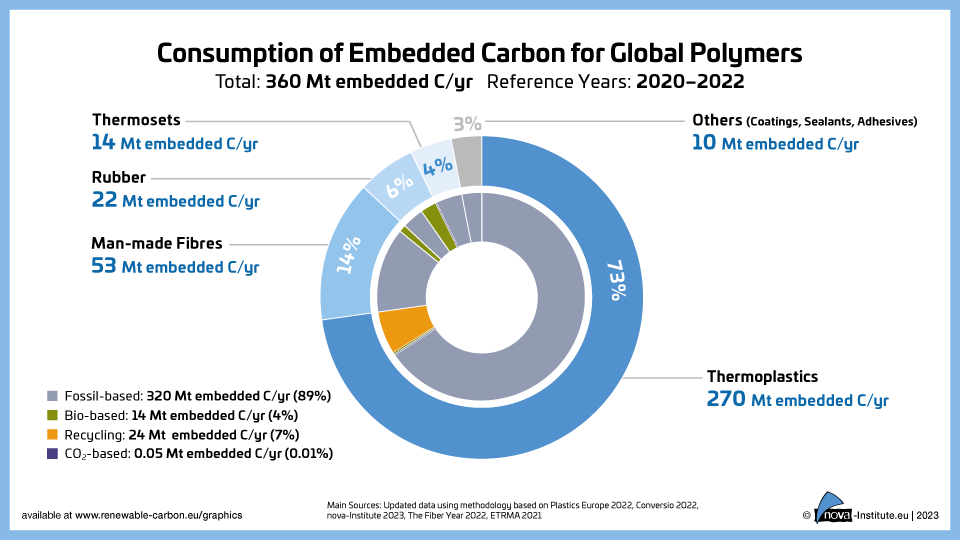
    consumption of embedded carbon for global polymers (png)

    Consumption of Embedded Carbon for Global Polymers (PNG)

    Markets & Economy, Policy

    1 Page
    133 Downloads

    133 Downloads  

    2023-07

    FREE

    Free Shipping
     

    133
    Downloads

    Direct Download

    Figure from the RCI Carbon Flows Report 2023

  • Direct Download
    consumption of embedded carbon for global chemicals and derived materials by carbon feedstock tn

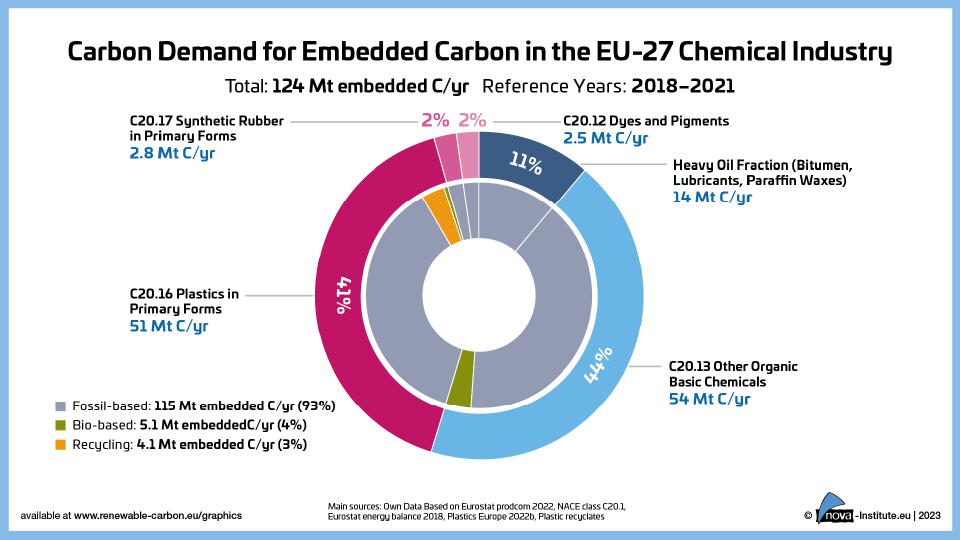
    Carbon Demand for Embedded Carbon in the EU-27 Chemical Industry (PNG)

    Markets & Economy, Policy

    1 Page
    152 Downloads

    152 Downloads  

    2023-07

    FREE

    Free Shipping
     

    152
    Downloads

    Direct Download

    Figure from the RCI Carbon Flows Report 2023

  • Direct Download
    23 06 21 fig 03 02 explorative scenario carbon embedded in the heavy oil fraction

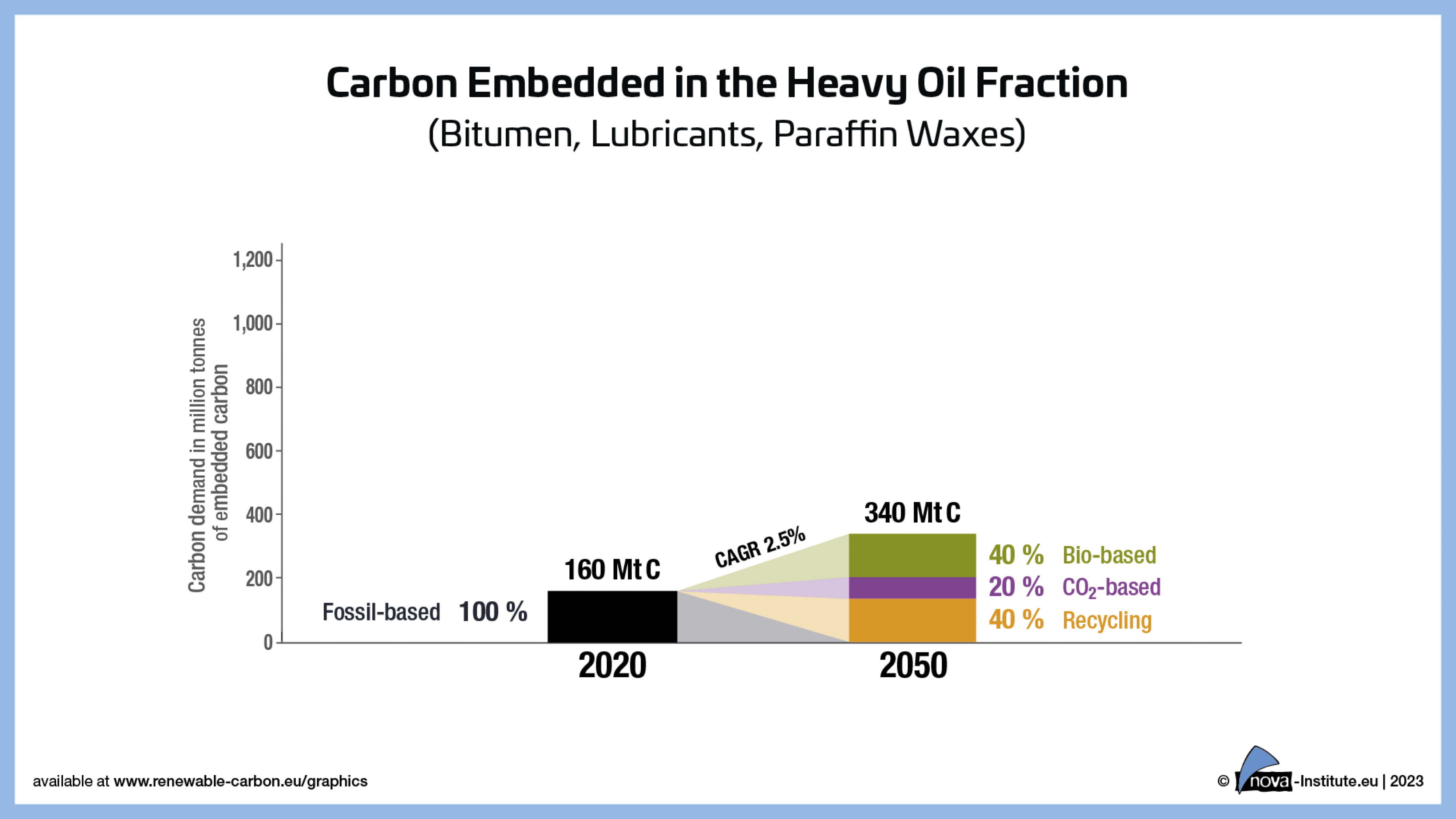
    Explorative Scenario – Carbon Embedded in the Heavy Oil Fraction. (PNG)

    Markets & Economy, Policy

    1 Page
    56 Downloads

    56 Downloads  

    2023-07

    FREE

    Free Shipping
     

    56
    Downloads

    Direct Download

    Figure from the RCI Carbon Flows Report 2023

  • Direct Download
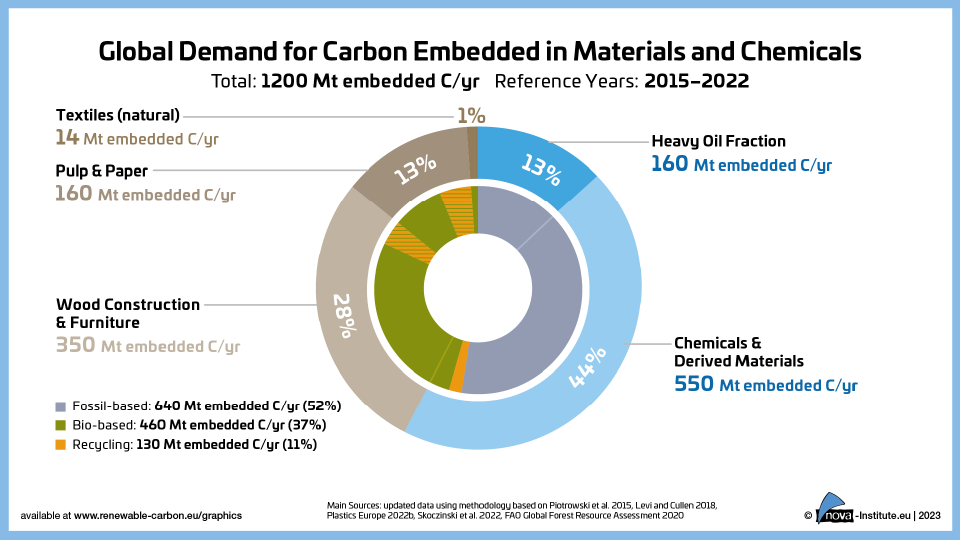
    global demand for carbon embedded in materials and chemicals tn

    Global Demand for Carbon Embedded in Materials and Chemicals (PNG)

    Markets & Economy, Policy

    1 Page
    265 Downloads

    265 Downloads  

    2023-07

    FREE

    Free Shipping
     

    265
    Downloads

    Direct Download

    Figure from the RCI Carbon Flows Report 2023

  • Direct Download
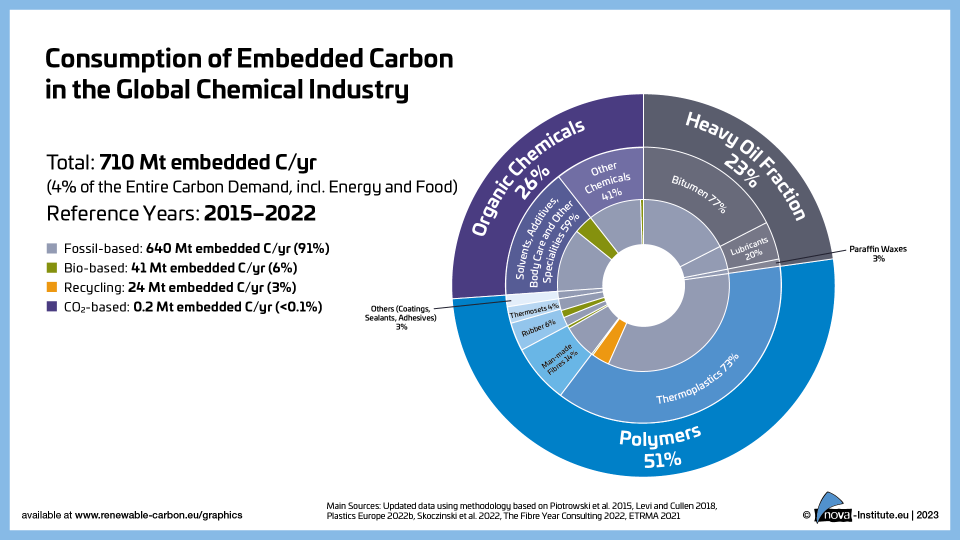
    consumption of embedded carbon in the global chemical industry (png)

    Consumption of Embedded Carbon in the Global Chemical Industry (PNG)

    Markets & Economy, Policy

    1 Page
    140 Downloads

    140 Downloads  

    2023-07

    FREE

    Free Shipping
     

    140
    Downloads

    Direct Download

    Figure from the RCI Carbon Flows Report 2023

  • Direct Download
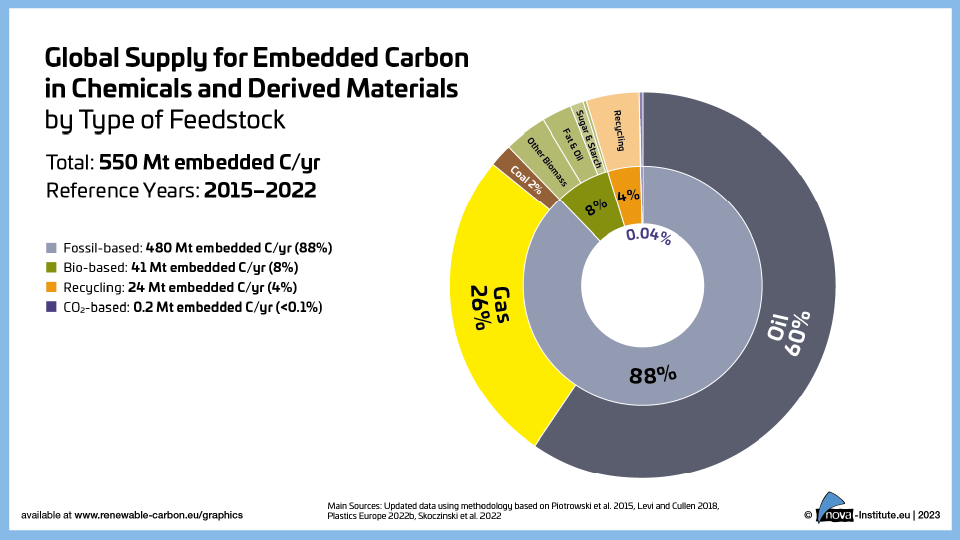
    global supply for embedded carbon in chemicals and derived materials by type of feedstock tn

    Global Supply for Embedded Carbon in Chemicals and Derived Materials by Type of Feedstock (PNG)

    Markets & Economy, Policy

    1 Page
    181 Downloads

    181 Downloads  

    2023-07

    FREE

    Free Shipping
     

    181
    Downloads

    Direct Download

    Figure from the RCI Carbon Flows Report 2023

  • Direct Download
    23 07 21 diversity of advanced recycling thumbnail

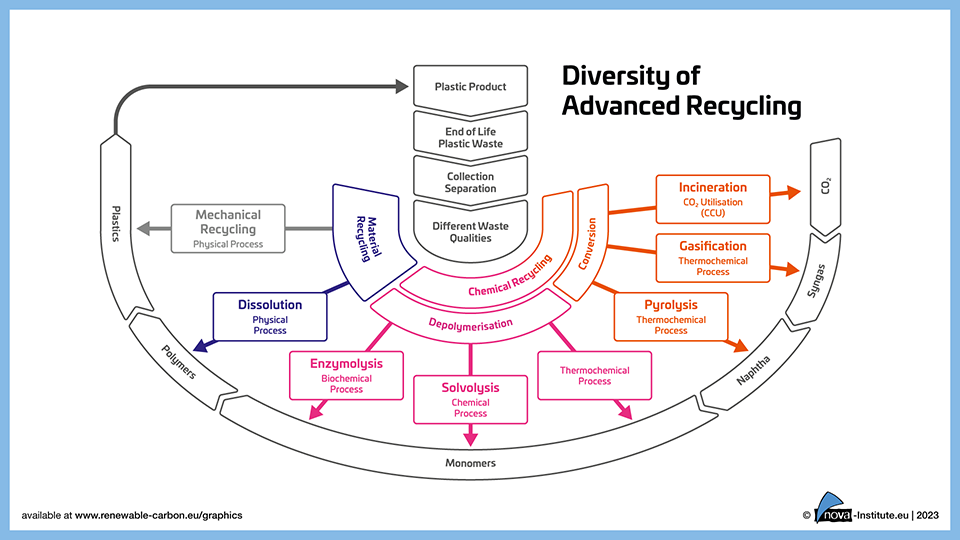
    Diversity of Advanced Recycling (PNG)

    Technology

    1 Page
    1376 Downloads

    1376 Downloads  

    2023-07

    FREE

    Free Shipping
     

    1376
    Downloads

    Direct Download

    Full spectrum of available recycling technologies divided by their basic working principles and their products.

  • Direct Download
    RCI Policy Messages - Cover

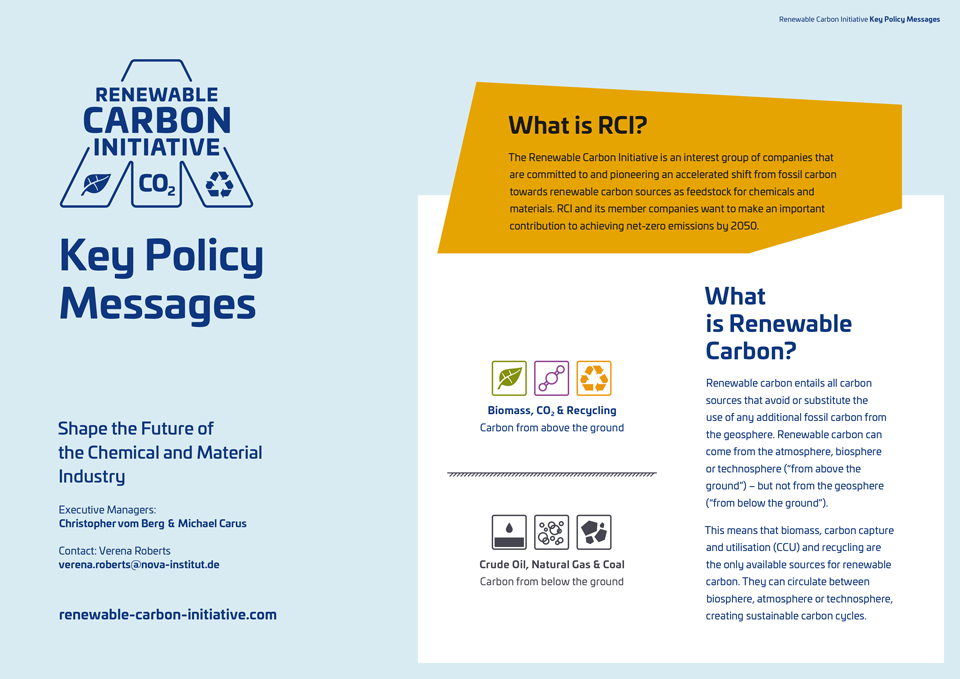
    RCI Key Policy Messages (PDF)

    Policy

    3 Pages
    182 Downloads

    182 Downloads  

    2023-07

    FREE


    182
    Downloads

    Direct Download

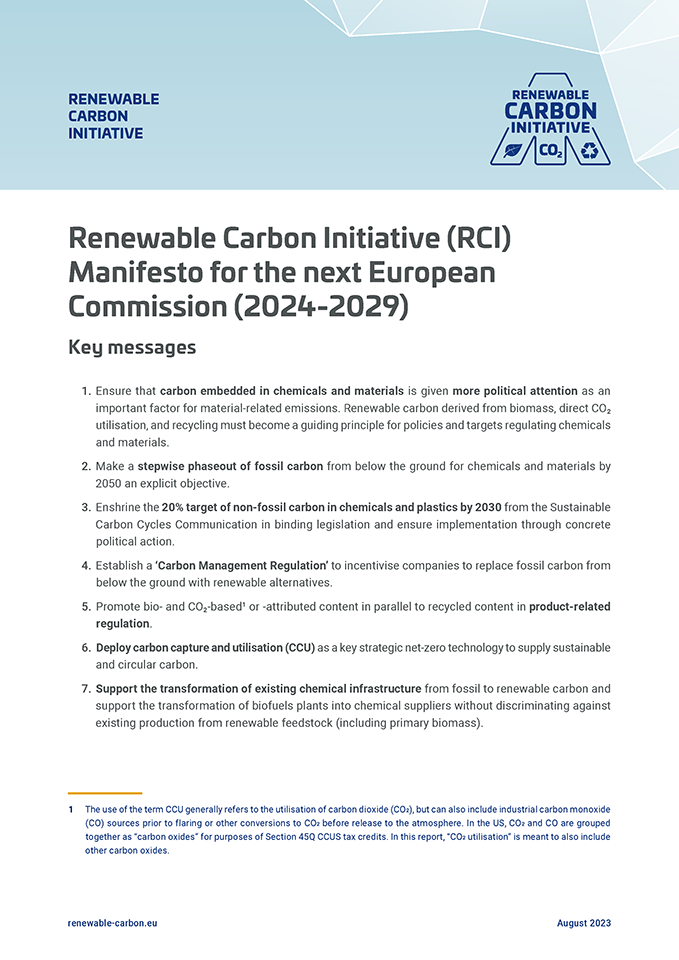
    This short document contains seven key policy messages the RCI advocates for to shape the future of the chemical and material industry. These seven messages are:

    1. Renewable carbon and comprehensive carbon management need to become integral guiding principles of policies to achieve truly sustainable carbon cycles.
    2. Adopt a precise definition of “non-fossil, sustainable” carbon and then adopt a legally binding target for 20% sustainable, non-virgin-fossil carbon content
    3. Suitable measures to support the 20% goal would be
      1. material- and product focused policies that promote all three renewable carbon sources,
      2. CCU receiving at least the same support as CCS and
      3. recognition and promotion of chemical recycling technologies
    4. Support the transformation of existing chemical infrastructure from fossil to renewable carbon and support the transformation of biofuels plants into chemical suppliers
    5. Support the massive expansion of renewable energies
    6. Develop standards, certificates and labels for renewable carbon
    7. Phase out financial support, tax advantages and tax exemptions for fossil feedstocks
  • Direct Download
    Renewable Materials Conference 2023 Proceedings [Digital]

    Renewable Materials Conference 2023 Proceedings

    Markets & Economy, Policy, Sustainability & Health, Technology


    233 Downloads

    233 Downloads  

    2023-06

    FREE

    Plus 19% MwSt.
     

    233
    Downloads

    Direct Download

    The proceedings of the Renewable Materials Conference  2023 (23-25 May 2023, https://renewable-materials.eu) contain all released presentations of three conference days, the conference journal, and the press release of the three winners of the Innovation Award “Renewable Material of the Year 2023“.

  • Direct Download
    23 05 08 rci position ppwr thumbnail

    RCI’s position paper: “Commission proposal for a Packaging and Packaging Waste Regulation” (May 2023)

    Policy

    3 Pages
    295 Downloads

    295 Downloads  

    2023-05

    FREE


    295
    Downloads

    Direct Download

    This position paper highlights chances for the EU to lead the way to a sustainable packaging industry and to promote innovation

    In November 2022, the Commission adopted the Proposal for a Regulation of the European Parliament and of the Council on packaging and packaging waste, amending Regulation (EU) 2019/1020 and Directive (EU) 2019/904, and repealing Directive 94/62/EC. The proposed regulation includes several rules that would – if implemented – push for a much stronger circular economy in the packaging sector, due to higher re-use and refill quotas, higher use of recycled materials and mandatory composting of certain hard-to-recycle products.

    The Renewable Carbon Initiative (RCI) welcomes this proposal and wants to offer several suggestions to strengthen it further and get implementation closer to the market realities of Europe.

    1. Set ambitious targets for all types of renewable content:
    A complementary renewable content target should be added to the proposal promoting the use of bio- and CO2-based feedstocks in packaging similar to recycling.

    2. Keep Article 8 as it is – scientific evidence shows that these products offer true environmental benefits from being compostable
    The proposal, following scientific evidence, requires that certain types of tea and coffee packaging, sticky labels attached to fruit and vegetables as well as very lightweight plastic carrier bags shall be compostable in industrially controlled conditions in bio-waste treatment facilities.

    3. Support the market uptake of all state-of-the-art recycling technologies
    To actually achieve the ambitious recycling quotas and recycled content targets, technologies will have to evolve. Advanced recycling technologies (i.e. depolymerisation) are key.

  • Direct Download
    23 04 20 rci position paper sustainable carbon cycles update thumbnail

    RCI’s position paper: “Communication on sustainable carbon cycles” (April 2023)

    Policy

    7 Pages
    561 Downloads

    561 Downloads  

    2023-04

    FREE

    Free Shipping
     

    561
    Downloads

    Direct Download

    The RCI, an interest group of leading companies and pioneers from the chemical and material sector, has a rich history of advocating for policies acknowledging the indispensable need of carbon in a broad range of chemical and material industries. The Communication on Sustainable Carbon Cycles, as published in December 2021, is a milestone in European policy as it acknowledges exactly this value of carbon as a feedstock and its unavoidability for certain sectors. The recently published position paper of the RCI highlights why this is an important step in the right direction and asks policy makers for effective follow-up.

  • Direct Download
    2175660e f28b 4333 bc65 1302311814c2

    Letter to the Commission on the definition of natural polymers in the REACH microplastics restriction

    Policy, Sustainability & Health

    4 Pages
    486 Downloads

    486 Downloads  

    2023-02

    FREE


    486
    Downloads

    Direct Download

    Six leading associations and stakeholders from the chemicals, polymers and plastics sectors – namely BioChem Europe (a sector group of Cefic), EDANA, EuropaBio, European BioPlastics, GO!PHA and Renewable Carbon Initiative) – express in this letter their specific concerns about the proposed definition of “natural polymers” and its impact on biopolymers in the context of the REACH restriction on microplastics.

    Under the coordination of the Renewable Carbon Initiative (RCI) they ask the European Commission in a letter “that in the adoption of the text of the Synthetic Polymer Microparticles restrictions (REACH Microplastics Restriction), the European Commission should not use the definition of ‘natural polymer’ which refers to a polymerisation process that takes place in nature.“

  • Direct Download
    cover importance of mass balance and free attribution (mbfa) for the conversion of the chemical sector to alternative carbon sources

    Importance of mass balance and free attribution (MBFA) for the conversion of the chemical sector to alternative carbon sources (October 2022)

    Policy, Sustainability & Health

    4 Pages
    769 Downloads

    769 Downloads  

    2022-12

    FREE

    Free Shipping
     

    769
    Downloads

    Direct Download

    A position paper of the Renewable Carbon Initiative

    This position paper highlights the importance of mass balance and free attribution “MBFA” as one possible way to incentivise the transformation of the chemical sector away from fossil and on towards renewable carbon.

    The term “mass balance” has become established to describe systems in which biomass, CO2 and secondary materials are used as a feedstock, but is not or not fully physically traced to the end product . It is common practice in many value chains in which large scale capacities are involved in one or more steps of the value chain that require mixing the sustainable with conventional material to fill the capacity. The approach makes it possible to substitute large quantities of fossil raw materials and attractive renewable content shares can be attributed to desired materials or products for which demand on the market exists. This incentivises a stepwise continuous transformation to increase the share of renewable carbon in particular for the large-scale chemical industry

    However, the term “mass balance” is somewhat unfortunate because it is too general, and does not mention the essence of the method: the free attribution of the bio-based, CO2-based or chemically recycled share in the feedstock mix to certain selected end products.

    The RCI recommends to only speak of “mass balance and free attribution (MBFA)” when talking about such cases, as this is how the complete method and its two central parts are referred to. This is transparent and honest, building trust from customers, end consumers and society in general. Both, mass balance and the free attribution are based on solid and established certifications.

    Besides terminology, there is still a need for regulatory harmonisation between the schemes of the existing certification systems. MBFA cannot only be applied for bio-based feedstock, but also for CO/CO2 or feedstock from chemical recycling, both will gain strongly in importance in the coming years. Every MBFA scheme should cover these three renewable feedstocks: biomass, CO/CO2 and recycling.


  • Direct Download
    circular economyplus

    Circular EconomyPLUS: Recommendations for action for a German Circular Economy Strategy

    Policy

    15 Pages
    120 Downloads

    120 Downloads  

    2022-11

    FREE

    Free Shipping
     

    120
    Downloads

    Direct Download

    A contribution to the discussion on a circular economy for plastics moderated by PlasticsEurope Deutschland e. V.

    With the necessary transformation into a circular economy with plastics, the plastics industry is facing a far-reaching paradigm shift. Plastics Europe would like to drive this change forward. In the first half of 2022, as part of an initiative by Plastics Europe Deutschland, leading experts in the field of circular economy with plastics have developed recommendations for action for the German circular economy strategy announced in the latest coalition agreement in 2021 after intensive consultations. Plastics Europe Deutschland took the role of a moderator in this discussion process in order to guarantee recommendations for action on a technical and scientific basis.

    With this paper we would like to initiate a discussion process and actively accompany the circular economy strategy and thus also the transformation path for our industry.

Renewable Carbon Types

Publications

Topics

  • 1
  • …
  • 3
  • 4
  • 5
  • 6
  • 7
  • 8

nova-Logo
contact@nova-institut.de
www.nova-institute.eu

nova-Institut GmbH
Leyboldstr. 16
50354 Hürth / Germany

  • Renewable Carbon
  • Events
  • Publications
  • Graphics
  • News
  • Business Directory
  • Newsletter
  • nova-Institute
  • My account
  • Legal Information
  • Terms and Conditions
  • Data protection regulation
© 2026 nova-Institut GmbH
Renewable Carbon Publications - Logo

Login

Lost your password?