Showing 121–140 of 158
-
189 Downloads
2021-12
FREE
189
DownloadsWoodCircus opened the discussion with industry experts on how to measure the circularity of wood. The result is a rating system with the 13 social, economic and environmental indicators, which was used to compare practices in the wood sector and develop a catalogue of good practices. This document describes the 13 criteria in detail and provides an example of their application.
-
Renewable Carbon Initiative (RCI) draws worldwide attention (PDF)
Policy, Sustainability & Health
2 Pages
294 Downloads
294 Downloads
2021-11
FREE
294
DownloadsThe climate crisis is accelerating at an unprecedented pace, with global warming, greenhouse gas emissions and deforestation leading to food insecurity, global health problems and biodiversity loss. Greenhouse gas emissions associated with the use of carbon-containing fossil energy sources such as oil, coal and natural gas have been shown to be a major contributor to climate change. Thus, for decades the focus of climate protection has been predominantly on the energy sector. A new initiative is now expanding this view. Learn about the history and activities of the Renewable Carbon Initiative (RCI).
-
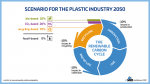
Scenario for the Plastic Industry 2050 (PNG)
Markets & Economy, Policy, Sustainability & Health, Technology
1 Page
1566 Downloads
1566 Downloads
2021-10
FREE
1566
DownloadsThe plastics industry of the future will be decoupled from petrochemicals and will meet its carbon needs primarily from recycling. This alone will not close the renewable carbon cycle. The unavoidable losses will then be closed by bio- and CO2-based polymers.
-
Global Carbon Demand for Chemicals and Derived Materials (PNG)
Markets & Economy, Policy, Sustainability & Health, Technology
1 Page
1384 Downloads
1384 Downloads
2021-10
FREE
1384
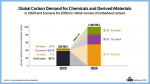
DownloadsGlobal Carbon Demand for Chemicals and Derived Materials in 2020 and Scenario for 2050 in million of embedded carbon.
-
Biokomposite: überzeugende Lösungen aus erneuerbaren Materialien
Markets & Economy, Technology
3 Pages
435 Downloads
435 Downloads
2021-09
FREE
435
DownloadsHeute können die verschiedenen Bioverbundwerkstoffe problemlos in einem breiten Spektrum von Anwendungen eingesetzt werden und haben als Alternative zu herkömmlichen Kunststoffen den Massenmarkt erreicht. Das jährliche Wachstum der Biokomposit-Granulate wird von nova-Institut von 2020 bis 2028 auf 5 % (CAGR) geschätzt. Der Bericht zeigt zudem die 20 führenden Produzenten von Biokompost-Granulaten in Europa.
-
The Renewable Carbon Initiative – A new movement draws worldwide attention NORA and her FlyPhone on Renewable Carbon
Policy, Sustainability & Health
3 Pages
314 Downloads
314 Downloads
2021-08
FREE
314
DownloadsA short history of the Renewable Carbon Initiative (RCI), goals and current activities – supplemented by a simple comic about the Renewable Carbon concept.
-
Comprehensive Concept of a Circular Economy (PNG)
Policy, Sustainability & Health
1 Page
965 Downloads
965 Downloads
2021-08
FREE
965
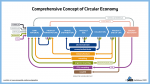
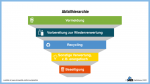
DownloadsThe graphic shows the value chain from the carbon-containing raw material to the end of the product’s life and all the possible paths to drive all the material flows that arise in the process in a circle. The waste hierarchy also becomes clear.
-
nova-paper #15: A Tax on Fossil Carbon is More Effective Than a Tax on CO2 Emissions
Policy
12 Pages
726 Downloads
726 Downloads
2021-06
FREE
726
DownloadsThis paper describes a fossil carbon tax as a potential realisation of the planned Carbon Border Adjustment Mechanism of the EU. It provides several advantages compared to a CO2 emission tax, such as complexity, carbon leakage, eligibility to WTO rules or taxation coverage of all sectors in the economy. With its focus on the raw material aspect, it is a much simpler and elegant approach than an end-of-pipe solution that looks at CO2 emissions.
-
Global Carbon Demand for Chemicals and Materials by Sectors (PDF)
Sustainability & Health
1 Page
552 Downloads
552 Downloads
2021-06
FREE
552
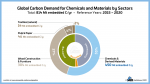
DownloadsThis figure shows the global carbon demand for chemicals and materials by sector. It shows how the chemical sector and its derived materials such as plastics, rubber or synthetic fibres account for over 50% of the world’s embedded carbon. Of this, most of the carbon comes from fossil resources. However, the graph shows that the largest share of embedded carbon in materials comes from biogenic sources at around 50 %.
This is mainly found in fully bio-based sectors such as wood in construction and furniture, pulp and paper, and natural fibres. -
Global Carbon Demand for Chemicals and Materials by Sectors (PNG)
Sustainability & Health
1 Page
362 Downloads
362 Downloads
2021-06
FREE
362
DownloadsThis figure shows the global carbon demand for chemicals and materials by sector. It shows how the chemical sector and its derived materials such as plastics, rubber or synthetic fibres account for over 50% of the world’s embedded carbon. Of this, most of the carbon comes from fossil resources. However, the graph shows that the largest share of embedded carbon in materials comes from biogenic sources at around 50 %.
This is mainly found in fully bio-based sectors such as wood in construction and furniture, pulp and paper, and natural fibres. -
Embedded Carbon Demand for Main Sector – Today and 2050 (PNG)
Sustainability & Health
1 Page
207 Downloads
207 Downloads
2021-06
FREE
207
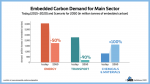
DownloadsThis graph shows how the global carbon demand for the most important sectors could develop by 2050. On the one hand, it shows the steadily growing demand for carbon in the chemical and materials sectors and, on the other hand, the declining demand in the energy and transport sectors, driven by ongoing decarbonisation.
-
Embedded Carbon Demand for Main Sector – Today and 2050 (PDF)
Sustainability & Health
1 Page
249 Downloads
249 Downloads
2021-06
FREE
249
DownloadsThis graph shows how the global carbon demand for the most important sectors could develop by 2050. On the one hand, it shows the steadily growing demand for carbon in the chemical and materials sectors and, on the other hand, the declining demand in the energy and transport sectors, driven by ongoing decarbonisation.
-
Renewable Materials Conference, 18-20 May 2021 (Proceedings)
Markets & Economy, Policy, Sustainability & Health
209 Downloads
209 Downloads
2021-06
FREE
Plus 19% MwSt.Free Shipping209
DownloadsThe proceedings of the Renewable Materials Conference (18-20 May 2021, https://renewable-materials.eu) contain conference presentations, the conference journal, and the press release of the three winners of the innovation award “Renewable Material of the Year”!
-
BioSinn Applications – Overview of Market Volumes in Germany (PNG)
Markets & Economy
1 Page
175 Downloads
175 Downloads
2021-05
FREE
175
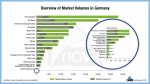
DownloadsWithin the BioSinn project nova-Institute compiled the market volumes of the 25 applications and estimated the loss into the environment.
-
BioSinn Produkte / Anwendungen – Übersicht der Marktvolumina in Deutschland (PNG)
Markets & Economy
1 Page
192 Downloads
192 Downloads
2021-05
FREE
192
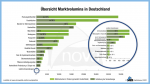
DownloadsIm BioSinn Projekt hat das nova-Institut die Marktvolumina für 25 Produkte und Anwendungen zusammengetragen und die Verlustmenge in die Natur geschätzt.
-
293 Downloads
2021-05
FREE
293
Downloads -
BioSinn Präsentation Abschlusskonferenz 28. April 2021 (deutsch) (PDF)
Markets & Economy, Policy
141 Pages
310 Downloads
310 Downloads
2021-05
FREE
310
DownloadsBioSinn Präsentation Abschlusskonferenz 28. April 2021 (deutsch). Fotos: nova-Institute sofern nicht andern angegeben.
-
BioSinn Presentation Final Conference 30 April 2021 (PDF)
Markets & Economy, Policy
141 Pages
442 Downloads
442 Downloads
2021-05
FREE
442
DownloadsBioSinn Presentation Final Conference 30 April 2021. Photos: nova-Institute unless otherwise stated.
-
BioSinn – Products for which biodegradation makes sense (PDF)
Markets & Economy, Policy
134 Pages
2674 Downloads
2674 Downloads
2021-05
FREE
2674
DownloadsIn the project “BioSinn – Products for which biodegradation makes sense”, which was funded by the Federal Ministry of Food and Agriculture (funding code 2219NR197), experts from the nova-Institute in Hürth near Cologne investigated whether there are applications and products for which biodegradation is a sensible or even the best end-of-life option. The selection criteria were that collecting the products (or their remaining parts), separating them from other organic waste or material recycling is not possible, economically not feasible or does not take place in practice. Further criteria were that the input of microplastics into the environment can be avoided through the use of biodegradable materials or that indirect positive effects, a relevant secondary benefit, can be achieved through the use of biodegradable materials.
The result of the project is a brochure for decision-makers from industry and politics but also for the general public, with 25 fact sheets and extensive background information on biodegradation. For each product, it explains to what extent biodegradation is a sensible and feasible option and what technical substitution options are available for a more sustainable use of materials. In addition, political framework conditions and regulations were highlighted and evaluated on a product-specific basis. For the first time, the market volumes for Germany and the EU were also surveyed and estimated. The total volume of the 25 applications in Germany is about 170,000 tonnes and in the European Union even about 1 million tonnes, of which the largest share ends up in the environment. Here, the use of biodegradable materials would bring considerable environmental benefits.
-
200 Downloads
2021-05
FREE
200
Downloads

![Renewable Materials Conference, 18-20 May 2021 (Proceedings) [Digital]](https://renewable-carbon.eu/publications/wp-content/uploads/2020/05/21-01-07_RC-Publications-Cover-Proceedings_RMC-100x141.png)