Skip to content
Renewable Carbon Publications - LogoRenewable Carbon Publications - Logo
  • Publications
  • Contact
1
  • Cellulose Fibres Conference 2023 (Proceedings, PDF) [Digital]Cellulose Fibres Conference 2023 (Proceedings, PDF) [Digital] 1 × 50 €
    Plus 19% MwSt.

Subtotal: 50 €

CartCheckout

  • Renewable Carbon
    • Renewable Carbon
    • Events
    • Publications
    • Graphics
    • News
    • Business Directory
    • Newsletter
    • nova-Institute
  • Publications
  • Contact

Renewable Carbon Publications - LogoRenewable Carbon Publications - Logo
1
  • Cellulose Fibres Conference 2023 (Proceedings, PDF) [Digital]Cellulose Fibres Conference 2023 (Proceedings, PDF) [Digital] 1 × 50 €
    Plus 19% MwSt.

Subtotal: 50 €

CartCheckout

  • Renewable Carbon Publications
  • Markets & Economy
  • Page 9
Grid view List view
“Cellulose Fibres Conference 2023 (Proceedings, PDF)” has been added to your cart. View cart

Showing 161–180 of 511

  • Download Statistics
  • Direct Download
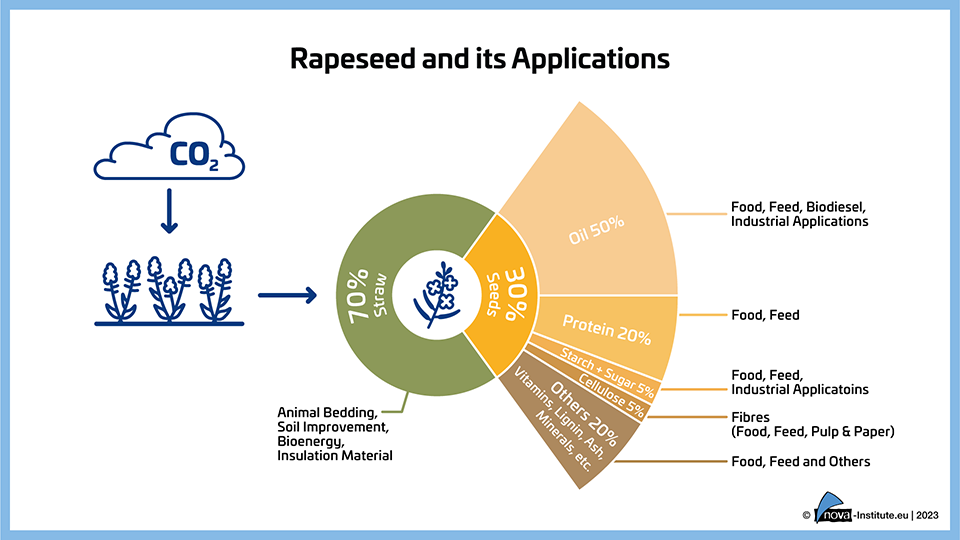
    rapeseed and its applications (png)

    Rapeseed and its Applications (PNG)

    Markets & Economy, Policy, Sustainability & Health, Technology

    1 Page
    97 Downloads

    97 Downloads  

    2023-06

    FREE


    97
    Downloads

    Direct Download
  • Direct Download
    23 06 14 yield of fermentable sugars thumbnail

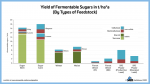
    Yield of Fermentable Sugars (PNG)

    Markets & Economy, Policy, Sustainability & Health, Technology

    1 Page
    152 Downloads

    152 Downloads  

    2023-06

    FREE


    152
    Downloads

    Direct Download
  • Direct Download
    Renewable Materials Conference 2023 Proceedings [Digital]

    Renewable Materials Conference 2023 Proceedings

    Markets & Economy, Policy, Sustainability & Health, Technology


    228 Downloads

    228 Downloads  

    2023-06

    FREE

    Plus 19% MwSt.
     

    228
    Downloads

    Direct Download

    The proceedings of the Renewable Materials Conference  2023 (23-25 May 2023, https://renewable-materials.eu) contain all released presentations of three conference days, the conference journal, and the press release of the three winners of the Innovation Award “Renewable Material of the Year 2023“.

  • Direct Download
    23 05 08 rci position ppwr thumbnail

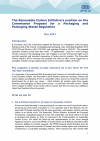
    RCI’s position paper: “Commission proposal for a Packaging and Packaging Waste Regulation” (May 2023)

    Policy

    3 Pages
    295 Downloads

    295 Downloads  

    2023-05

    FREE


    295
    Downloads

    Direct Download

    This position paper highlights chances for the EU to lead the way to a sustainable packaging industry and to promote innovation

    In November 2022, the Commission adopted the Proposal for a Regulation of the European Parliament and of the Council on packaging and packaging waste, amending Regulation (EU) 2019/1020 and Directive (EU) 2019/904, and repealing Directive 94/62/EC. The proposed regulation includes several rules that would – if implemented – push for a much stronger circular economy in the packaging sector, due to higher re-use and refill quotas, higher use of recycled materials and mandatory composting of certain hard-to-recycle products.

    The Renewable Carbon Initiative (RCI) welcomes this proposal and wants to offer several suggestions to strengthen it further and get implementation closer to the market realities of Europe.

    1. Set ambitious targets for all types of renewable content:
    A complementary renewable content target should be added to the proposal promoting the use of bio- and CO2-based feedstocks in packaging similar to recycling.

    2. Keep Article 8 as it is – scientific evidence shows that these products offer true environmental benefits from being compostable
    The proposal, following scientific evidence, requires that certain types of tea and coffee packaging, sticky labels attached to fruit and vegetables as well as very lightweight plastic carrier bags shall be compostable in industrially controlled conditions in bio-waste treatment facilities.

    3. Support the market uptake of all state-of-the-art recycling technologies
    To actually achieve the ambitious recycling quotas and recycled content targets, technologies will have to evolve. Advanced recycling technologies (i.e. depolymerisation) are key.

  • Direct Download
    Conference on CO2-based Fuels and Chemicals 2023 Proceedings [Digital]

    Conference on CO2-based Fuels and Chemicals 2023 Proceedings

    Markets & Economy, Policy, Sustainability & Health, Technology


    173 Downloads

    173 Downloads  

    2023-05

    FREE

    Plus 19% MwSt.
     

    173
    Downloads

    Direct Download

    The proceedings of the Conference on CO2-based Fuels and Chemicals  (19-20 April 2023, https://co2-chemistry.eu) contain all released presentations, the conference journal, and the press release of the three winners of the Innovation Award “Best CO2 Utilisation 2023″.

    Press Release: https://renewable-carbon.eu/news/smart-carbon-capture-and-utilisation-ccu-technologies-and-materials-defossilise-the-economy

  • Direct Download
    23 04 20 rci position paper sustainable carbon cycles update thumbnail

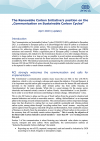
    RCI’s position paper: “Communication on sustainable carbon cycles” (April 2023)

    Policy

    7 Pages
    559 Downloads

    559 Downloads  

    2023-04

    FREE

    Free Shipping
     

    559
    Downloads

    Direct Download

    The RCI, an interest group of leading companies and pioneers from the chemical and material sector, has a rich history of advocating for policies acknowledging the indispensable need of carbon in a broad range of chemical and material industries. The Communication on Sustainable Carbon Cycles, as published in December 2021, is a milestone in European policy as it acknowledges exactly this value of carbon as a feedstock and its unavoidability for certain sectors. The recently published position paper of the RCI highlights why this is an important step in the right direction and asks policy makers for effective follow-up.

  • Select
    licence
    23 04 13 carbon dioxide (co2) as feedstock for chemicals cover shop

    Carbon Dioxide (CO₂) as Feedstock for Chemicals, Advanced Fuels, Polymers, Proteins and Minerals (PDF)

    Markets & Economy, Technology

    242 Pages


    2023-04

    2,500 € – 10,000 €Price range: 2,500 € through 10,000 € ex. tax

    Plus 19% MwSt.
    Press
    release
    Select
    licence

    New report on the use of CO₂ for chemicals, advanced fuels, polymers, proteins and minerals by nova-Institute – A deep and comprehensive insight into the evolving technologies, trends and the dynamically growing market of CO₂ transformation and utilisation.
    Several successfully implemented technologies are now in commercial use, and many more are at the laboratory and pilot stage. A current total production capacity of novel CO₂-based products of about 1.3 Mt/a in 2022 is observed. The production capacity in 2022 is dominated by the production of CO₂-based aromatic polycarbonates, ethanol from captured CO/CO₂, aliphatic polycarbonate and methanol. By 2030, the capacity outlook for CO₂-based products is expected to exceed 6 Mt/a of CO₂-based products. High dynamic growth is observed for methanol projects, methane plants, ethanol and hydrocarbons – the latter especially for the aviation sector. The potential of CCU has been recognised by several global brands which are already expanding their feedstock portfolio. However, in Europe, investments and prospects for CO₂ utilisation are largely undermined by a lack of political support. In contrast, we see supportive policies in China as well as in the US with the Inflation Reduction Act. Such smart policies are needed to bridge the gap between now and 2050 for companies to remain competitive in the sustainable transformation.

    nova-Institute’s new report examines this renewable carbon source in detail: Which products can be made from CO₂, and by which processes? To which extend have the technologies already been developed and implemented in pilot, demonstration and commercial plants? Which companies are working on technologies to uses CO₂ as a feedstock? What are the trends in CO₂ utilisation in the coming years?

    This report addresses the fuel, chemical and materials industries, brands, technology scouts, investors, and policy makers. The report provides 240 pages of information on CO₂ utilisation. All the 116 companies mentioned are described in detailed profiles.

    DOI No.: https://doi.org/10.52548/HKBS8158

  • Direct Download
    23 04 13 carbon dioxide (co2) as feedstock for chemicals cover shop

    Carbon Dioxide (CO₂) as Feedstock for Chemicals, Advanced Fuels, Polymers, Proteins and Minerals – Short Version (PDF)

    Markets & Economy, Technology

    18 Pages
    1004 Downloads

    1004 Downloads  

    2023-04

    FREE


    1004
    Downloads

    Direct Download

    New report on the use of CO₂ for chemicals, advanced fuels, polymers, proteins and minerals by nova-Institute – A deep and comprehensive insight into the evolving technologies, trends and the dynamically growing market of CO₂ transformation and utilisation.
    Several successfully implemented technologies are now in commercial use, and many more are at the laboratory and pilot stage. A current total production capacity of novel CO₂-based products of about 1.3 Mt/a in 2022 is observed. The production capacity in 2022 is dominated by the production of CO₂-based aromatic polycarbonates, ethanol from captured CO/CO₂, aliphatic polycarbonate and methanol. By 2030, the capacity outlook for CO₂-based products is expected to exceed 6 Mt/a of CO₂-based products. High dynamic growth is observed for methanol projects, methane plants, ethanol and hydrocarbons – the latter especially for the aviation sector. The potential of CCU has been recognised by several global brands which are already expanding their feedstock portfolio. However, in Europe, investments and prospects for CO₂ utilisation are largely undermined by a lack of political support. In contrast, we see supportive policies in China as well as in the US with the Inflation Reduction Act. Such smart policies are needed to bridge the gap between now and 2050 for companies to remain competitive in the sustainable transformation.

    nova-Institute’s new report examines this renewable carbon source in detail: Which products can be made from CO₂, and by which processes? To which extend have the technologies already been developed and implemented in pilot, demonstration and commercial plants? Which companies are working on technologies to uses CO₂ as a feedstock? What are the trends in CO₂ utilisation in the coming years?

    This report addresses the fuel, chemical and materials industries, brands, technology scouts, investors, and policy makers. The report provides 240 pages of information on CO₂ utilisation. All the 116 companies mentioned are described in detailed profiles.


  • Direct Download
    23 03 31 ways to use co₂ for chemicals and polymers shop

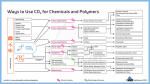
    Ways to Use CO₂ for Chemicals and Polymers – Graphic (PNG)

    Markets & Economy, Technology

    1 Page
    1091 Downloads

    1091 Downloads  

    2023-04

    FREE

    Plus 19% MwSt.
     

    1091
    Downloads

    Direct Download
  • Direct Download
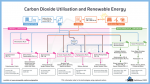
    23 03 30 carbon dioxide utilisation and renewable energy shop

    Carbon Dioxide Utilisation and Renewable Energy − Graphic (PNG)

    Markets & Economy, Technology

    1 Page
    1523 Downloads

    1523 Downloads  

    2023-04

    FREE


    1523
    Downloads

    Direct Download
  • Add to
    cart
    Cellulose Fibres Conference 2023 (Proceedings, PDF) [Digital]

    Cellulose Fibres Conference 2023 (Proceedings, PDF)

    Markets & Economy, Policy, Sustainability & Health, Technology


    2023-03

    50 € ex. tax

    Plus 19% MwSt.
    Press
    release
    Add to
    cart

    The unique conference focused on cellulose fibres – in textiles, hygiene products and packaging!

    The Cellulose Fibres 2023 Conference Proceedings (https://cellulose-fibres.eu, 8-9 March 2023, Cologne, hybrid) include all released conference presentations, the conference journal, sponsor documents, a Fiber2Fashion Knowledgepaper and the conference press release.

  • Add to
    cart
    nova-Session: “Bio- and CO₂-based Polymers: Production, Trends 2022-2027 and the latest Policy Developments” (Proceedings, PDF) [Digital]

    nova-Session: “Bio- and CO₂-based Polymers: Production, Trends 2022-2027 and the latest Policy Developments” (Proceedings, PDF)

    Markets & Economy, Policy, Sustainability & Health, Technology


    2023-03

    50 € ex. tax

    Plus 19% MwSt.
     
    Add to
    cart

    The download of the proceedings contains all six presentations of the nova-Session (March 2023).

    Bio-based and CO2-based Solutions – Where are we heading?

    The only way for chemicals and plastics to become sustainable, climate-friendly and part of the circular economy is the complete substitution of fossil carbon with renewable carbon from alternative sources: biomass, CO2 and recycling. We see strong investment in all three sectors, with growth rates far exceeding that of fossil polymers – i.e. fossil polymers are being substituted in the market.

    The session will focus on developments in bio- and CO2-based polymers and building blocks: Bio-based polymers are estimated to grow at a CAGR of 14 % from 2022 to 2027. Some examples: Bio-based epoxy resin production is on the rise, PTT regained attractiveness after several years of constant capacities and PE and PP made from bio based naphtha are being further established with growing volumes. Increased capacities for PLA are ongoing, after being sold out in 2019. Current and future expansions for bio based polyamides as well as PHAs are on the horizon. And also, bio-based PET is getting back in the game.

    Additionally, the use of CO2 as chemical feedstock for building blocks and polymers has been intensively diversified. Several successfully implemented technologies used at commercial level are in place and many more at the laboratory and pilot phase. Besides the long-established use of CO2 for the synthesis of polycarbonates, also polyurethanes are based on it. The most notable biotechnological conversion pathway of a syngas produces ethanol at commercial scale. Additionally, high interest is also observed in CO2-based methanol and in CO2-based hydrocarbons, which can be used for fuel, chemical and polymers applications. A current total production capacity of these CO2-based products of ca. 1.3 Mt/a in 2022 is observed and a strong increase in capacity is expected by 2027.

    The EU policy landscape has seen significant updates in the final weeks of 2022 with the proposed Packaging and Packaging Waste Regulation and the publication of the Policy Framework on bio-based, biodegradable and compostable plastics. How these updates may affect CO2 and bio-based polymers will be addressed in the session.

  • Direct Download
    2175660e f28b 4333 bc65 1302311814c2

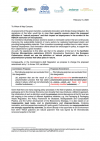
    Letter to the Commission on the definition of natural polymers in the REACH microplastics restriction

    Policy, Sustainability & Health

    4 Pages
    482 Downloads

    482 Downloads  

    2023-02

    FREE


    482
    Downloads

    Direct Download

    Six leading associations and stakeholders from the chemicals, polymers and plastics sectors – namely BioChem Europe (a sector group of Cefic), EDANA, EuropaBio, European BioPlastics, GO!PHA and Renewable Carbon Initiative) – express in this letter their specific concerns about the proposed definition of “natural polymers” and its impact on biopolymers in the context of the REACH restriction on microplastics.

    Under the coordination of the Renewable Carbon Initiative (RCI) they ask the European Commission in a letter “that in the adoption of the text of the Synthetic Polymer Microparticles restrictions (REACH Microplastics Restriction), the European Commission should not use the definition of ‘natural polymer’ which refers to a polymerisation process that takes place in nature.“

  • Direct Download
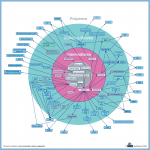
    23 01 13 pathways to bio based polymers

    Pathways to bio-based polymers (PNG)

    Markets & Economy

    1 Page
    555 Downloads

    555 Downloads  

    2023-02

    FREE


    555
    Downloads

    Direct Download

    Report on the global bio-based polymer market 2022 – A deep and comprehensive insight into this dynamically growing market

    The year 2022 was a promising year for bio-based polymers: Bio-based epoxy resin production is on the rise, PTT regained attractiveness after several years of constant capacities and PE and PP made from bio-based naphtha are being further established with growing volumes. Increased capacities for PLA are ongoing, after being sold out in 2019. Current and future expansions for bio-based polyamides as well as PHAs are on the horizon. And also, bio-based PET is getting back in the game.


    DOI No.: https://doi.org/10.52548/CMZD8323

  • Direct Download
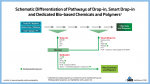
    23 01 13 schematic differentiation of pathways of drop in

    Schematic Differentiation of Pathways of Drop-in (PNG)

    Markets & Economy

    1 Page
    189 Downloads

    189 Downloads  

    2023-02

    FREE


    189
    Downloads

    Direct Download

    Report on the global bio-based polymer market 2022 – A deep and comprehensive insight into this dynamically growing market

    The year 2022 was a promising year for bio-based polymers: Bio-based epoxy resin production is on the rise, PTT regained attractiveness after several years of constant capacities and PE and PP made from bio-based naphtha are being further established with growing volumes. Increased capacities for PLA are ongoing, after being sold out in 2019. Current and future expansions for bio-based polyamides as well as PHAs are on the horizon. And also, bio-based PET is getting back in the game.


    DOI No.: https://doi.org/10.52548/CMZD8323

  • Direct Download
    23 01 13 shares of the produced bio based polymers in different market sements in 2022

    Shares of the produced bio-based polymers in different market sements in 2022 (PNG)

    Markets & Economy

    1 Page
    312 Downloads

    312 Downloads  

    2023-02

    FREE


    312
    Downloads

    Direct Download

    Report on the global bio-based polymer market 2022 – A deep and comprehensive insight into this dynamically growing market

    The year 2022 was a promising year for bio-based polymers: Bio-based epoxy resin production is on the rise, PTT regained attractiveness after several years of constant capacities and PE and PP made from bio-based naphtha are being further established with growing volumes. Increased capacities for PLA are ongoing, after being sold out in 2019. Current and future expansions for bio-based polyamides as well as PHAs are on the horizon. And also, bio-based PET is getting back in the game.


    DOI No.: https://doi.org/10.52548/CMZD8323

  • Direct Download
    23 01 16 plastics production 1950–2021

    Plastics production 1950–2021 (PNG)

    Markets & Economy

    1 Page
    484 Downloads

    484 Downloads  

    2023-02

    FREE


    484
    Downloads

    Direct Download

    Report on the global bio-based polymer market 2022 – A deep and comprehensive insight into this dynamically growing market

    The year 2022 was a promising year for bio-based polymers: Bio-based epoxy resin production is on the rise, PTT regained attractiveness after several years of constant capacities and PE and PP made from bio-based naphtha are being further established with growing volumes. Increased capacities for PLA are ongoing, after being sold out in 2019. Current and future expansions for bio-based polyamides as well as PHAs are on the horizon. And also, bio-based PET is getting back in the game.


    DOI No.: https://doi.org/10.52548/CMZD8323

  • Select
    licence
    Cover - Bio-based Building Blocks and Polymers - Global Capacities, Production and Trends 2022-2027

    Bio-based Building Blocks and Polymers – Global Capacities, Production and Trends 2022-2027 (PDF)

    Markets & Economy

    387 Pages


    2023-02

    500 € – 1,000 €Price range: 500 € through 1,000 € ex. tax

    Plus 19% MwSt.
    Press
    release
    Select
    licence

    Report on the global bio-based polymer market 2022 – A deep and comprehensive insight into this dynamically growing market

    The year 2022 was a promising year for bio-based polymers: Bio-based epoxy resin production is on the rise, PTT regained attractiveness after several years of constant capacities and PE and PP made from bio-based naphtha are being further established with growing volumes. Increased capacities for PLA are ongoing, after being sold out in 2019. Current and future expansions for bio-based polyamides as well as PHAs are on the horizon. And also, bio-based PET is getting back in the game.


    DOI No.: https://doi.org/10.52548/CMZD8323

  • Direct Download
    23 01 26 polymers and bio based shares worldwide 2020 2022

    Polymers and Bio-Based Shares – Worldwide 2020-2022 (PNG)

    Markets & Economy

    1 Page
    384 Downloads

    384 Downloads  

    2023-02

    FREE


    384
    Downloads

    Direct Download

    Report on the global bio-based polymer market 2022 – A deep and comprehensive insight into this dynamically growing market

    The year 2022 was a promising year for bio-based polymers: Bio-based epoxy resin production is on the rise, PTT regained attractiveness after several years of constant capacities and PE and PP made from bio-based naphtha are being further established with growing volumes. Increased capacities for PLA are ongoing, after being sold out in 2019. Current and future expansions for bio-based polyamides as well as PHAs are on the horizon. And also, bio-based PET is getting back in the game.


    DOI No.: https://doi.org/10.52548/CMZD8323

  • Direct Download
    23 02 07 bio based building blocks and polymers 2022 2027 cover shop

    Bio-based Building Blocks and Polymers – Global Capacities, Production and Trends 2022-2027 – Short Version (PDF)

    Markets & Economy

    28 Pages
    1957 Downloads
    1957 Downloads  

    2023-02

    FREE


    1957
    Downloads

    Direct Download

    Report on the global bio-based polymer market 2022 – A deep and comprehensive insight into this dynamically growing market

    The year 2022 was a promising year for bio-based polymers: Bio-based epoxy resin production is on the rise, PTT regained attractiveness after several years of constant capacities and PE and PP made from bio-based naphtha are being further established with growing volumes. Increased capacities for PLA are ongoing, after being sold out in 2019. Current and future expansions for bio-based polyamides as well as PHAs are on the horizon. And also, bio-based PET is getting back in the game.


    DOI No.: https://doi.org/10.52548/CMZD8323

Renewable Carbon Types

Publications

Topics

  • 1
  • …
  • 7
  • 8
  • 9
  • 10
  • 11
  • …
  • 26

nova-Logo
contact@nova-institut.de
www.nova-institute.eu

nova-Institut GmbH
Leyboldstr. 16
50354 Hürth / Germany

  • Renewable Carbon
  • Events
  • Publications
  • Graphics
  • News
  • Business Directory
  • Newsletter
  • nova-Institute
  • My account
  • Legal Information
  • Terms and Conditions
  • Data protection regulation
© 2025 nova-Institut GmbH
Renewable Carbon Publications - Logo

Login

Lost your password?