Showing 121–140 of 365
-
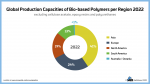
Global Production Capacities of Bio-based Polymers per region 2022 (PNG)
Markets & Economy
1 Page
275 Downloads
275 Downloads
2023-02
FREE
275
DownloadsReport on the global bio-based polymer market 2022 – A deep and comprehensive insight into this dynamically growing market
The year 2022 was a promising year for bio-based polymers: Bio-based epoxy resin production is on the rise, PTT regained attractiveness after several years of constant capacities and PE and PP made from bio-based naphtha are being further established with growing volumes. Increased capacities for PLA are ongoing, after being sold out in 2019. Current and future expansions for bio-based polyamides as well as PHAs are on the horizon. And also, bio-based PET is getting back in the game.
DOI No.: https://doi.org/10.52548/CMZD8323
-
555 Downloads
2023-02
FREE
555
DownloadsReport on the global bio-based polymer market 2022 – A deep and comprehensive insight into this dynamically growing market
The year 2022 was a promising year for bio-based polymers: Bio-based epoxy resin production is on the rise, PTT regained attractiveness after several years of constant capacities and PE and PP made from bio-based naphtha are being further established with growing volumes. Increased capacities for PLA are ongoing, after being sold out in 2019. Current and future expansions for bio-based polyamides as well as PHAs are on the horizon. And also, bio-based PET is getting back in the game.
DOI No.: https://doi.org/10.52548/CMZD8323
-
189 Downloads
2023-02
FREE
189
DownloadsReport on the global bio-based polymer market 2022 – A deep and comprehensive insight into this dynamically growing market
The year 2022 was a promising year for bio-based polymers: Bio-based epoxy resin production is on the rise, PTT regained attractiveness after several years of constant capacities and PE and PP made from bio-based naphtha are being further established with growing volumes. Increased capacities for PLA are ongoing, after being sold out in 2019. Current and future expansions for bio-based polyamides as well as PHAs are on the horizon. And also, bio-based PET is getting back in the game.
DOI No.: https://doi.org/10.52548/CMZD8323
-
Shares of the produced bio-based polymers in different market sements in 2022 (PNG)
Markets & Economy
1 Page
312 Downloads
312 Downloads
2023-02
FREE
312
DownloadsReport on the global bio-based polymer market 2022 – A deep and comprehensive insight into this dynamically growing market
The year 2022 was a promising year for bio-based polymers: Bio-based epoxy resin production is on the rise, PTT regained attractiveness after several years of constant capacities and PE and PP made from bio-based naphtha are being further established with growing volumes. Increased capacities for PLA are ongoing, after being sold out in 2019. Current and future expansions for bio-based polyamides as well as PHAs are on the horizon. And also, bio-based PET is getting back in the game.
DOI No.: https://doi.org/10.52548/CMZD8323
-
485 Downloads
2023-02
FREE
485
DownloadsReport on the global bio-based polymer market 2022 – A deep and comprehensive insight into this dynamically growing market
The year 2022 was a promising year for bio-based polymers: Bio-based epoxy resin production is on the rise, PTT regained attractiveness after several years of constant capacities and PE and PP made from bio-based naphtha are being further established with growing volumes. Increased capacities for PLA are ongoing, after being sold out in 2019. Current and future expansions for bio-based polyamides as well as PHAs are on the horizon. And also, bio-based PET is getting back in the game.
DOI No.: https://doi.org/10.52548/CMZD8323
-
Bio-based Building Blocks and Polymers – Global Capacities, Production and Trends 2022-2027 (PDF)
Markets & Economy
387 Pages
2023-02
500 € – 1,000 €Price range: 500 € through 1,000 € ex. tax
Plus 19% MwSt.Press
release Select
licenceReport on the global bio-based polymer market 2022 – A deep and comprehensive insight into this dynamically growing market
The year 2022 was a promising year for bio-based polymers: Bio-based epoxy resin production is on the rise, PTT regained attractiveness after several years of constant capacities and PE and PP made from bio-based naphtha are being further established with growing volumes. Increased capacities for PLA are ongoing, after being sold out in 2019. Current and future expansions for bio-based polyamides as well as PHAs are on the horizon. And also, bio-based PET is getting back in the game.
DOI No.: https://doi.org/10.52548/CMZD8323
-
384 Downloads
2023-02
FREE
384
DownloadsReport on the global bio-based polymer market 2022 – A deep and comprehensive insight into this dynamically growing market
The year 2022 was a promising year for bio-based polymers: Bio-based epoxy resin production is on the rise, PTT regained attractiveness after several years of constant capacities and PE and PP made from bio-based naphtha are being further established with growing volumes. Increased capacities for PLA are ongoing, after being sold out in 2019. Current and future expansions for bio-based polyamides as well as PHAs are on the horizon. And also, bio-based PET is getting back in the game.
DOI No.: https://doi.org/10.52548/CMZD8323
-
Bio-based Building Blocks and Polymers – Global Capacities, Production and Trends 2022-2027 – Short Version (PDF)
Markets & Economy
28 Pages
1957 Downloads
1957 Downloads
2023-02
FREE
1957
DownloadsReport on the global bio-based polymer market 2022 – A deep and comprehensive insight into this dynamically growing market
The year 2022 was a promising year for bio-based polymers: Bio-based epoxy resin production is on the rise, PTT regained attractiveness after several years of constant capacities and PE and PP made from bio-based naphtha are being further established with growing volumes. Increased capacities for PLA are ongoing, after being sold out in 2019. Current and future expansions for bio-based polyamides as well as PHAs are on the horizon. And also, bio-based PET is getting back in the game.
DOI No.: https://doi.org/10.52548/CMZD8323
-
595 Downloads
2022-10
FREE
Free Shipping595
DownloadsThe new nova-Institute’s market report commissioned by the Bio-based Industries Consortium (BIC) shows macroeconomic effects of the European Bioeconomy in the period from 2008 to 2019. Using data from Eurostat and, where required, nova-Institute’s estimated bio-based shares, turnover and employment numbers of the bioeconomic sectors have been calculated. Even though the latest numbers no longer include the UK, the EU’s bioeconomy turnover remained stable, which has resulted in an increase of around 25% since 2008.
-
Overall turnover and employment of the bioeconomy and its bio-based industries in the EU-27 in 2019
Markets & Economy
1 Page
126 Downloads
126 Downloads
2022-10
FREE
126
DownloadsThe new nova-Institute’s market report commissioned by the Bio-based Industries Consortium (BIC) shows macroeconomic effects of the European Bioeconomy in the period from 2008 to 2019. Using data from Eurostat and, where required, nova-Institute’s estimated bio-based shares, turnover and employment numbers of the bioeconomic sectors have been calculated. Even though the latest numbers no longer include the UK, the EU’s bioeconomy turnover remained stable, which has resulted in an increase of around 25% since 2008.
This graphic shows the overall turnover and employment of the bioeconomy and its bio-based industries in the EU-27 in 2019.
-
nova-paper #16: The Biomass Utilisation Factor (BUF)
Markets & Economy, Policy, Sustainability & Health
62 Pages
1458 Downloads
1458 Downloads
2022-06
FREE
1458
DownloadsThe Biomass Utilisation Factor (BUF) is a new metric combining cascading use and production efficiency into one indicator to investigate the circularity of materials for the circular bioeconomy. Cascading use captures the repeated use of the original biomass, either for the same or a different purpose. Production efficiency looks at how much of the biomass input is actually transformed into useful products or materials.
The BUF can serve not only as an indicator for the circular economy principle of keeping materials in use, but also act as an efficient tool for stakeholders and policy makers to identify options that maximize biomass utilisation and keep materials in use for longer. In light of recent political developments in Europe, the BUF can serve as a tool that provides additional insights for achieving sustainable carbon cycles or help to respect the cascading principle of biomass utilisation.
-
Die neue Tugend: Kunststoff im Kreislauf (PDF)
Markets & Economy, Policy, Sustainability & Health
1 Page
292 Downloads
292 Downloads
2022-05
FREE
292
DownloadsRohstoffe werden knapp, sowohl Metalle wie auch Mineralien. Nur erneuerbarer Kohlenstoff ist praktisch unbegrenzt verfügbar. Daher werden Kunststoffe in Zukunft noch wichtiger sein als heute, und deshalb müssen sie so nachhaltig wie möglich gestaltet werden: aus erneuerbarem Kohlenstoff und voll recycelbar.
-
Biokomposite bieten Alternativen aus erneuerbaren Materialien (PDF)
Markets & Economy
6 Pages
205 Downloads
205 Downloads
2022-05
FREE
205
DownloadsZahlreiche Bioverbundwerkstoffe können heutzutage problemlos in einem breiten Spektrum von Anwendungen eingesetzt werden und haben als gleichwertige Alternative zu herkömmlichen Kunststoffen den Massenmarkt erreicht.
-
Augen auf bei Plastikverboten – zurück zur wissenschaftsbasierten Materialpolitik (PDF)
Markets & Economy
2 Pages
97 Downloads
97 Downloads
2022-05
FREE
97
DownloadsZahlreiche Bioverbundwerkstoffe können heutzutage problemlos in einem breiten Spektrum von Anwendungen eingesetzt werden und haben als gleichwertige Alternative zu herkömmlichen Kunststoffen den Massenmarkt erreicht.
-
Biocomposites offer alternatives from renewable materials (PDF)
Markets & Economy
6 Pages
679 Downloads
679 Downloads
2022-05
FREE
679
DownloadsNowadays, numerous biocomposites can easily be used in a wide range of applications and have reached the mass market as an equivalent alternative to conventional plastics. The second part of the document is in English.
-
Renewable Materials Conference, 10-12 May 2022 (Proceedings)
Markets & Economy, Policy, Sustainability & Health, Technology
252 Downloads
252 Downloads
2022-05
FREE
Plus 19% MwSt.252
DownloadsThe proceedings of the Renewable Materials Conference (10-12 May 2022, https://renewable-materials.eu) contain conference presentations, the conference journal, and the press release of the three winners of the innovation award “Renewable Material of the Year”!
-
Conference on CO2-based Fuels and Chemicals 2022 Proceedings
Markets & Economy, Policy, Sustainability & Health, Technology
108 Downloads
108 Downloads
2022-04
FREE
Plus 19% MwSt.108
DownloadsThe proceedings of the Conference on CO2-based Fuels and Chemicals 2022 (23-24 March 2022, https://co2-chemistry.eu) contain 26 presentations, the conference journal, and the press release of the three winners of the Innovation Award “Best CO2 Utilisation 2022“.
-
Mimicking Nature The PHA Industry Landscape Latest trends and 28 producer profiles
Markets & Economy
59 Pages
2022-03
1,500 € – 8,000 €Price range: 1,500 € through 8,000 € ex. tax
Plus 19% MwSt.Select
licenceNatural PHAs are a class of materials that exist in nature for over millions of years. These materials are both bio-based and biodegradable, similar to other natural materials such as cellulose, proteins and starch. Natural PHAs are produced by an extensive variety of microorganisms through bacterial fermentation. Due to its high performance, biocompatibility, biodegradability and green credentials, the PHA family has a large design space and accommodates a wide range of market applications, as a broad variety of different polymers can be produced and blended. The potential of PHAs is enormous.
The report is a must-read for all those interested in the very latest in PHAs, as developers, producers or, above all, users. The information on the companies described has been checked with each of them and is state-of-the-art for February 2022.
Author of “Mimicking Nature” is Prof. Jan Ravenstijn, who has been working intensively on the topic of PHAs for 20 years, is the author of numerous publications and co-founder of the PHA industry association GO!PHA (www.gopha.org). The report is a joint publication of GO!PHA and nova-Institute (www.nova-institute.eu). -
International Conference on Cellulose Fibres 2022 Proceedings
Markets & Economy, Policy, Sustainability & Health, Technology
172 Downloads
172 Downloads
2022-02
FREE
Plus 19% MwSt.172
DownloadsThe proceedings of the International Conference on Cellulose Fibres 2022 (2-3 February 2022, https://cellulose-fibres.eu) contain 26 presentations, the conference journal, and the press release of the three winners of the Cellulose Fibre Innovation of the Year 2021 Award!
-
nova Price Indices for Fossil Resources, Metals and Biomass (February 2022) (PNG)
Markets & Economy
1 Page
435 Downloads
435 Downloads
2022-02
FREE
435
DownloadsSummarised in three price index curves, this chart shows the price development of fossil, biogenic and metallic raw materials since 1980.
More information available at:
https://renewable-carbon.eu/news/higher-price-increases-for-fossils-nova-price-indices-for-fossil-resources-metals-and-biomass-1980-2021


![Renewable Materials Conference, 10-12 May 2022 (Proceedings) [Digital]](https://renewable-carbon.eu/publications/wp-content/uploads/2020/05/21-01-07_RC-Publications-Cover-Proceedings_RMC-100x141.png)
![Conference on CO2-based Fuels and Chemicals 2022 Proceedings [Digital]](https://renewable-carbon.eu/publications/wp-content/uploads/2020/05/21-01-07_RC-Publications-Cover-Proceedings_CO2-based-100x141.png)

![International Conference on Cellulose Fibres 2022 Proceedings [Digital]](https://renewable-carbon.eu/publications/wp-content/uploads/2020/05/21-01-07_RC-Publications-Cover-Proceedings_Cellulose-Fibres-100x141.png)