Showing 121–140 of 526
-
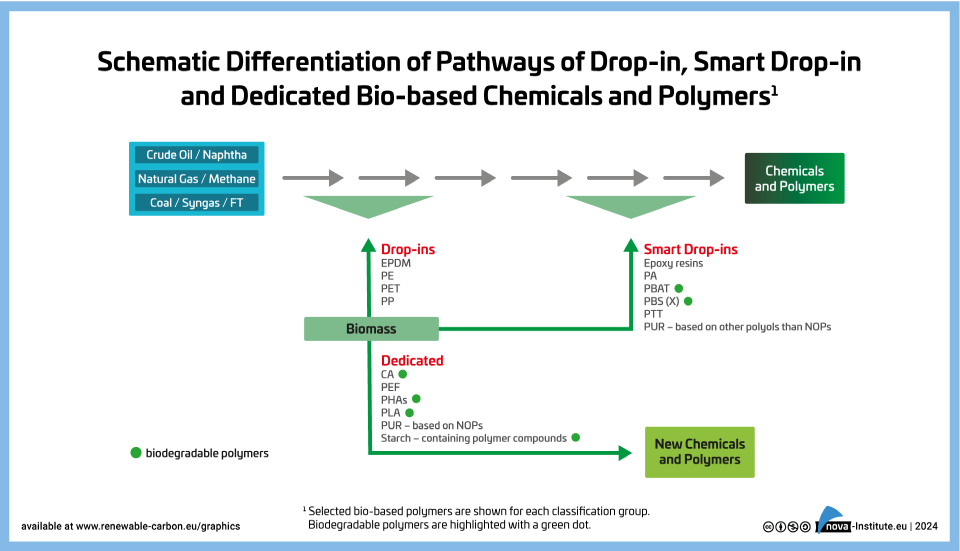
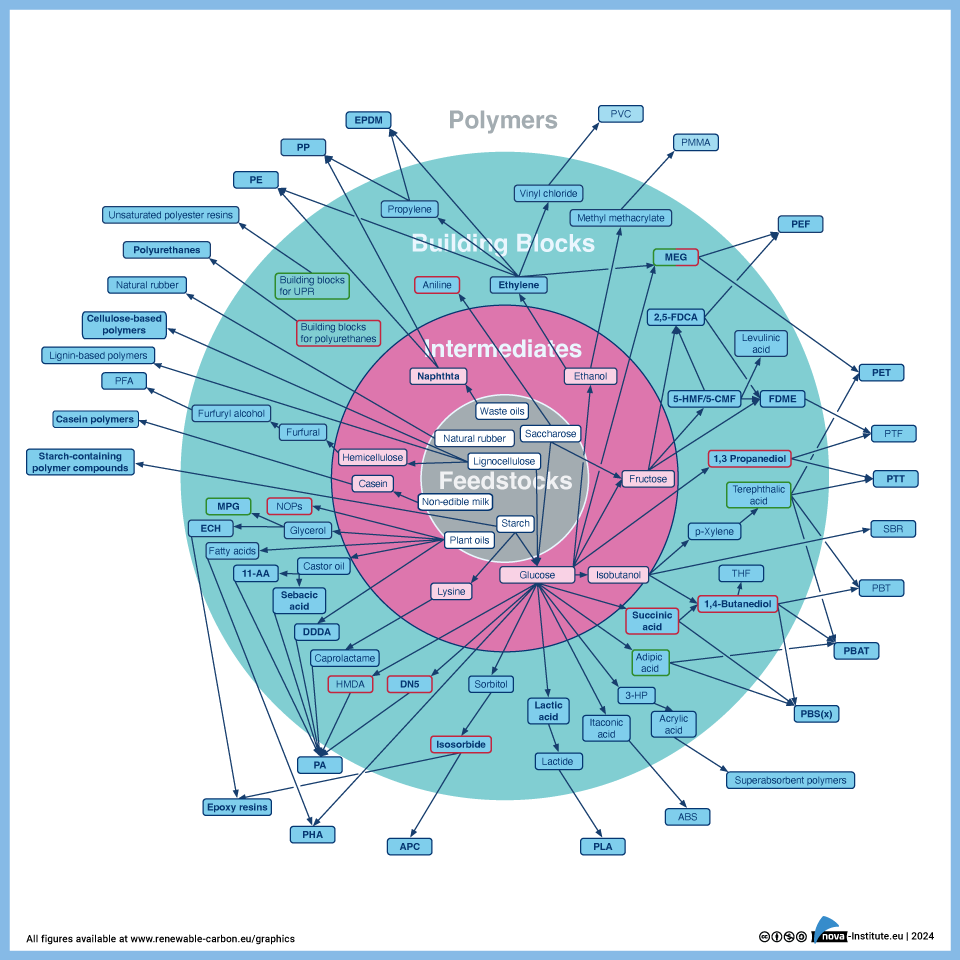
Schematic Differentiation of Pathways of Drop-in, Smart Drop-in and Dedicated Bio-based Chemicals and Polymers (PNG)
Markets & Economy
1 Page
221 Downloads
221 Downloads
2024-03
FREE
221
Downloads -
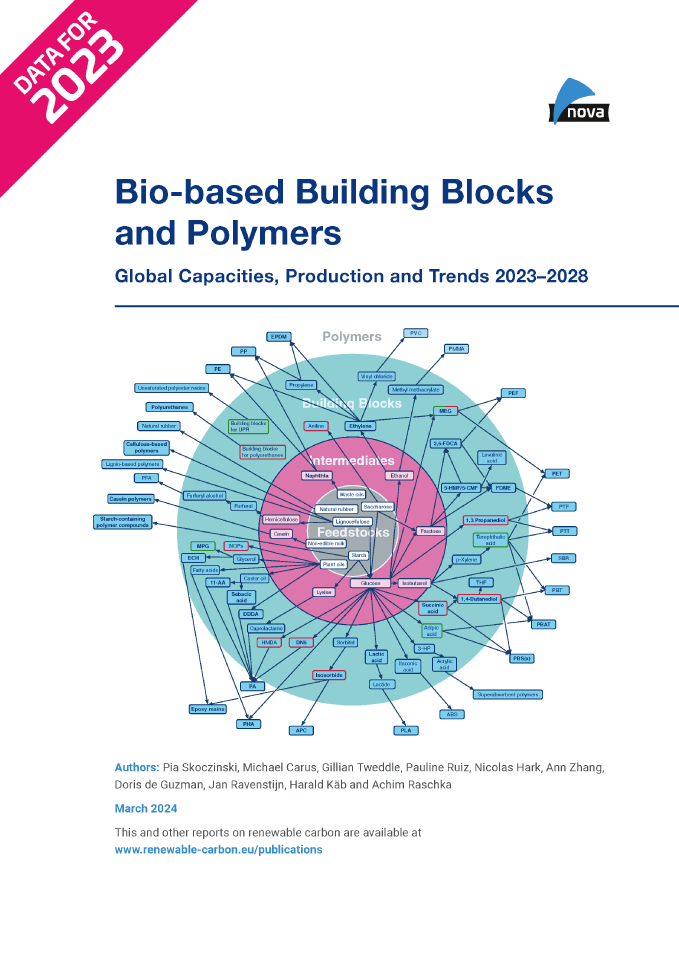
Bio-based Building Blocks and Polymers – Global Capacities, Production and Trends 2023–2028 (PDF)
Markets & Economy
438 Pages
2024-03
1,000 € – 3,000 €Price range: 1,000 € through 3,000 € ex. tax
Plus 19% MwSt.Select
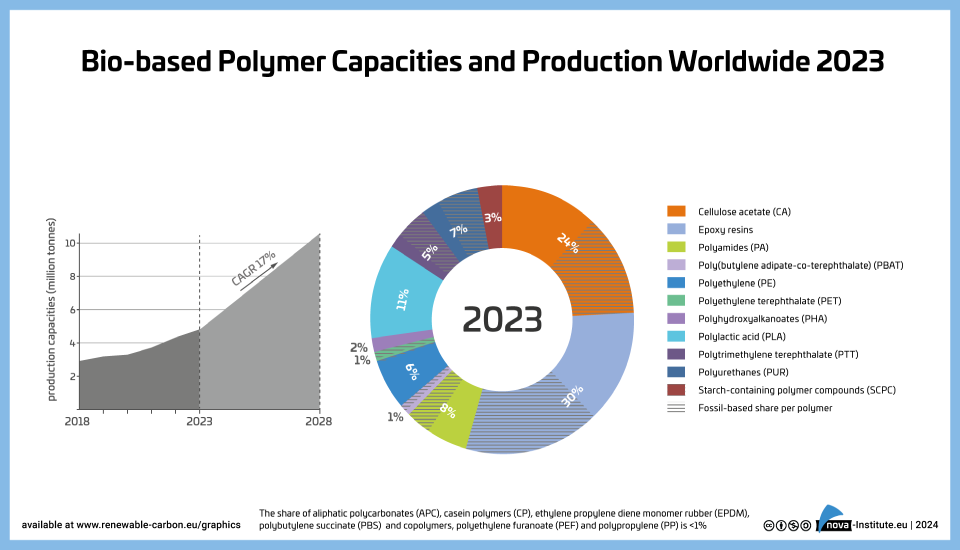
licenceNew report released on the global bio‑based polymer market 2023 – a deep and comprehensive insight into a dynamically growing market
The year 2023 was a promising year for bio‑based polymers: PLA capacities have been increased by almost 50 %, and at the same time polyamide capacities are steadily increasing, as well as epoxy resin production. Capacities for 100 % bio-based PE have been expanded and PE and PP made from bio‑based naphtha are being further established with growing volumes. Current and future expansions for PHAs are still on the horizon. After hinting at a comeback in 2022 bio-based PET production dropped in 2023 by 50 %.
DOI No.: https://doi.org/10.52548/VXTH2416
-
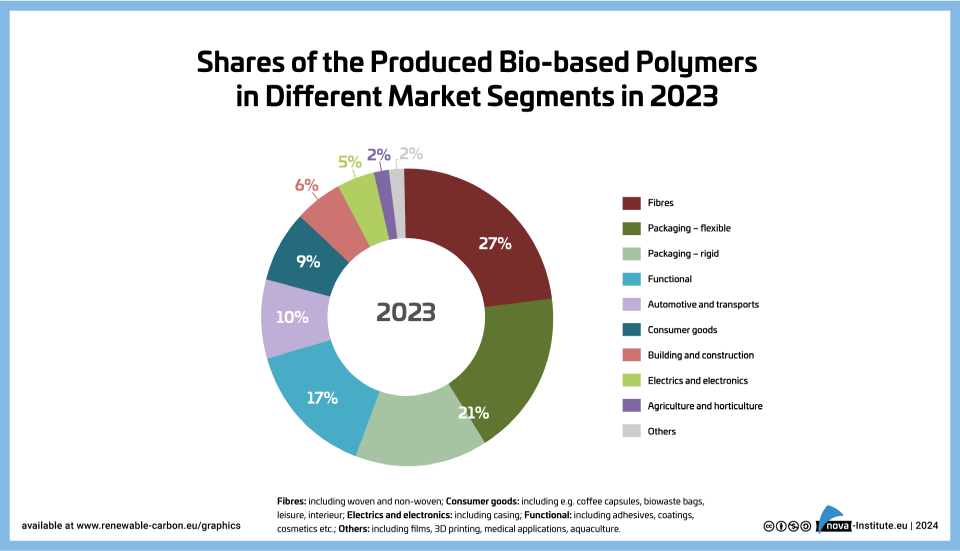
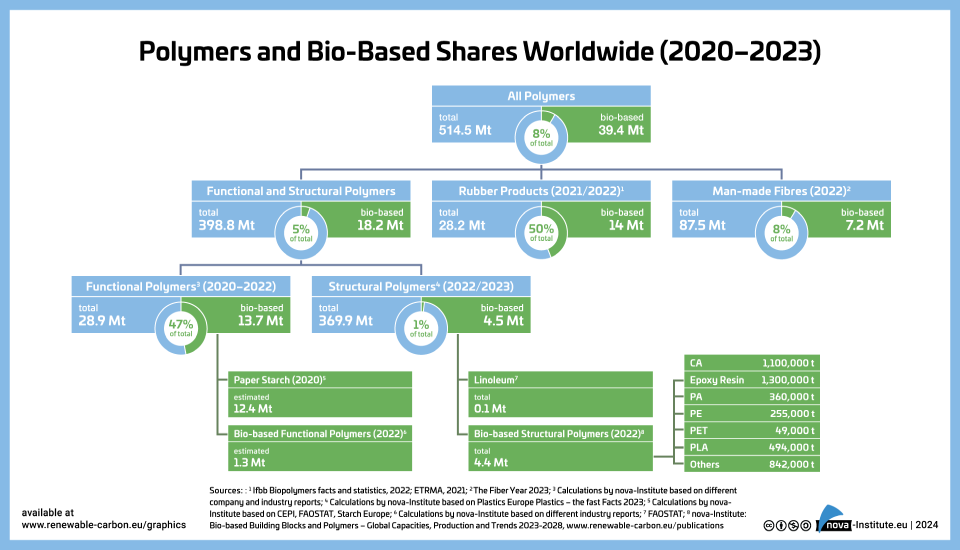
Shares of Produced bio-based polymers in different market segments (PNG)
Markets & Economy
1 Page
308 Downloads
308 Downloads
2024-03
FREE
308
Downloads -
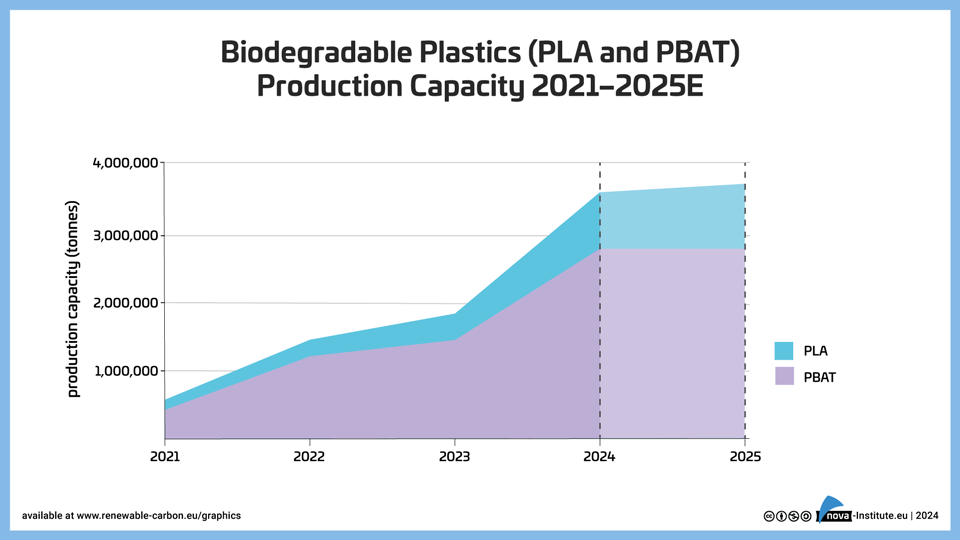
Bio-based Biodegradable Polymers Worldwide Production Capacities 2018-2028 (PNG)
Markets & Economy
1 Page
320 Downloads
320 Downloads
2024-03
FREE
320
Downloads -
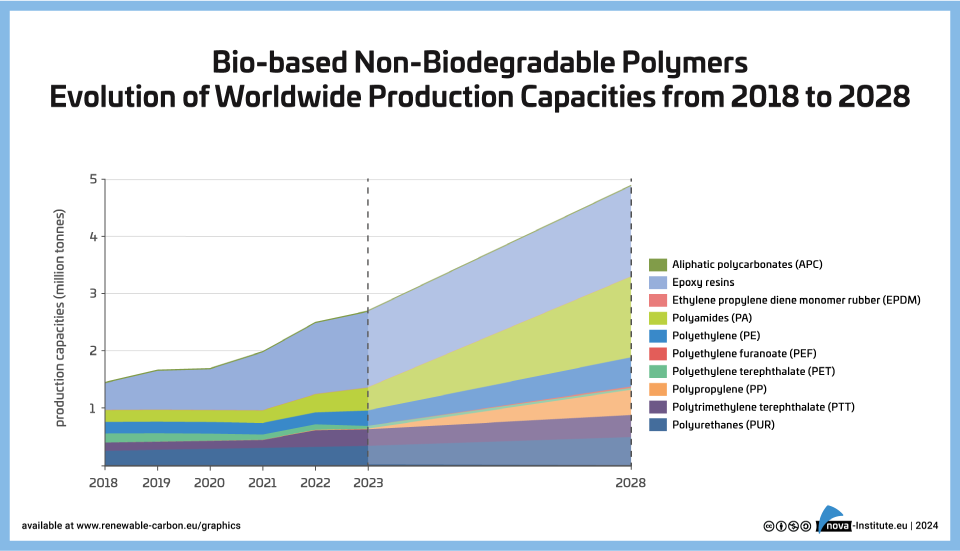
Bio-based Non-Biodegradable Polymers Evolution of Worldwide Production Capacities (PNG)
Markets & Economy
1 Page
185 Downloads
185 Downloads
2024-03
FREE
185
Downloads -
272 Downloads
2024-03
FREE
272
Downloads -
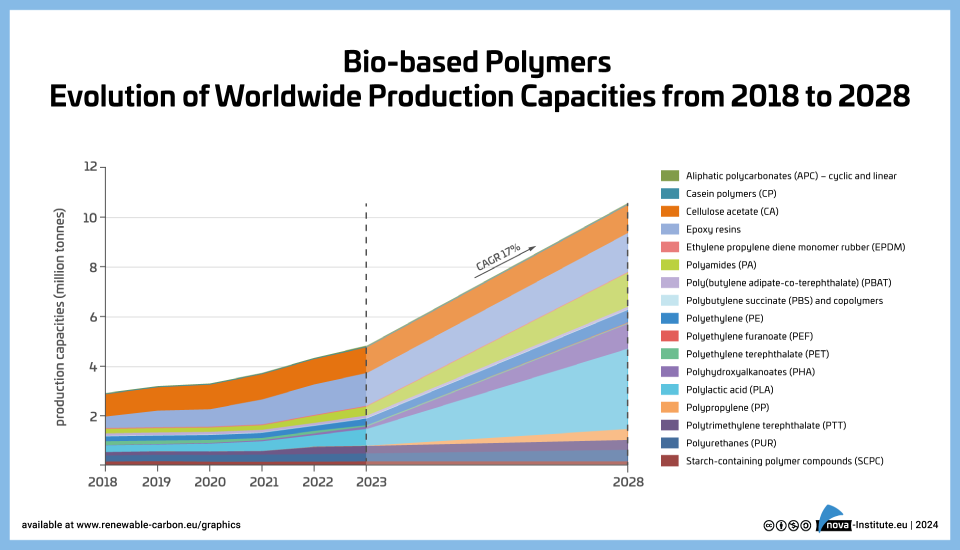
Bio-based Polymers – Evolution of worldwide production capacities from 2018 to 2028 (PNG)
Markets & Economy
1 Page
286 Downloads
286 Downloads
2024-03
FREE
286
Downloads -
311 Downloads
2024-03
FREE
311
Downloads -
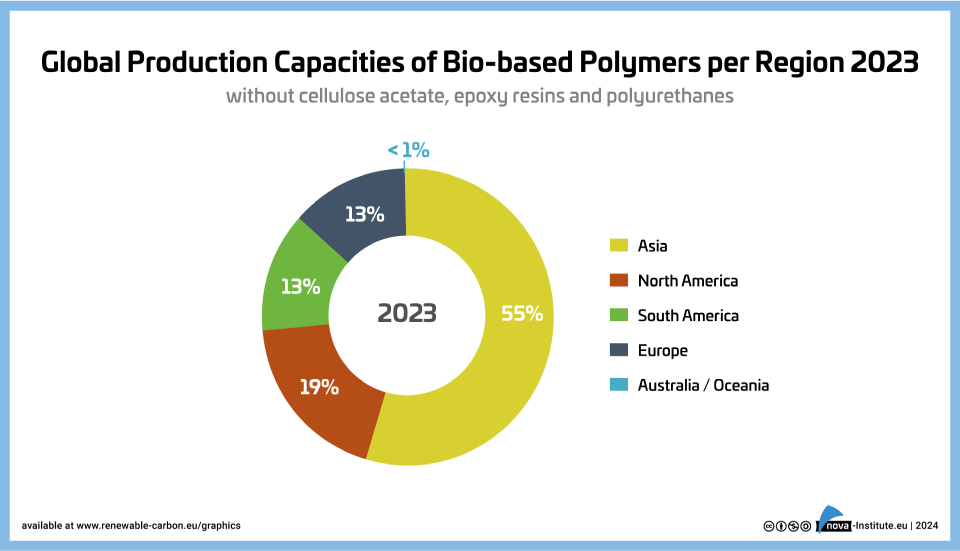
Global Production Capacities of Bio-based Polymers per Region 2022 (PNG)
Markets & Economy
1 Page
160 Downloads
160 Downloads
2024-03
FREE
160
Downloads -
EU27+3 Advanced Recycling Waste Input Capacity (PNG)
Markets & Economy, Technology
1 Page
139 Downloads
139 Downloads
2024-03
FREE
139
DownloadsInstalled input capacities for different advanced recycling technologies in EU27+3.
-
Installed and Future Advanced Recycling Production Capacities EU 27+3 (PNG)
Markets & Economy, Technology
1 Page
179 Downloads
179 Downloads
2024-03
FREE
179
DownloadsInstalled and future production capacities of naphtha, monomers and polymers through advanced recycling in the EU27+3.
-
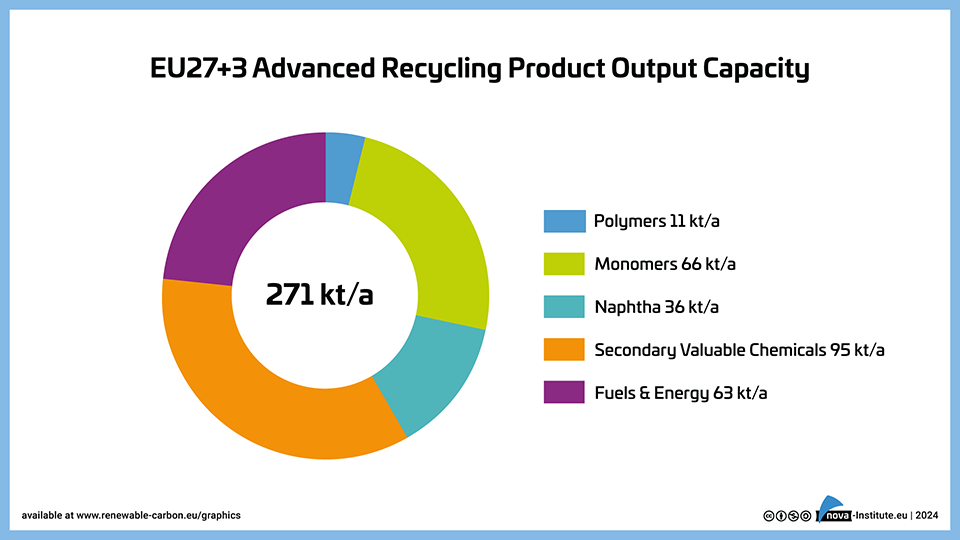
EU27+3 Advanced Recycling Product Output Capacity (PNG)
Markets & Economy, Technology
1 Page
135 Downloads
135 Downloads
2024-03
FREE
135
Downloads -
Renewable Carbon Initiative (RCI) Webinar slides – February 2024 (PDF)
Policy, Sustainability & Health
61 Pages
1768 Downloads
1768 Downloads
2024-02
FREE
Free Shipping1768
DownloadsThis document contains a generic set of slides to introduce the concept of renewable carbon and the Renewable Carbon Initiative. The focus of this webinar was the latest scientific background report: “Non-level Playing Field for Renewable Materials vs. Fossil in Life Cycle Assessments – Critical aspects of the JRC Plastics LCA methodology and its policy implications”.
In addition, three RCI member companies shared their expertise on renewable carbon, defossilisation and sustainable carbon cycles.
AllocNow (speaker: Daniel Bochnitschek) talked about how the increasing demand for sustainable and low carbon products is driving the need for specific and comprehensive information on product carbon footprints. AllocNow discussed why standardisation of sustainability accounting methodologies is critical and how a data-driven approach can help create transparency at scale.
Econic Technologies Ltd. (speaker: Liz Manning) spoke about the opportunities and challenges of quantifying the sustainability impact of key products in complex manufacturing supply chains.
SCS Global Services (speakers: Miguel Ruiz and Jéssica Marcon Bressanin) highlighted its certification activities, focusing on biofuels and circular materials schemes, as well as greenhouse gas accounting methodologies.
More information at https://renewable-carbon-initiative.com/media/library
-
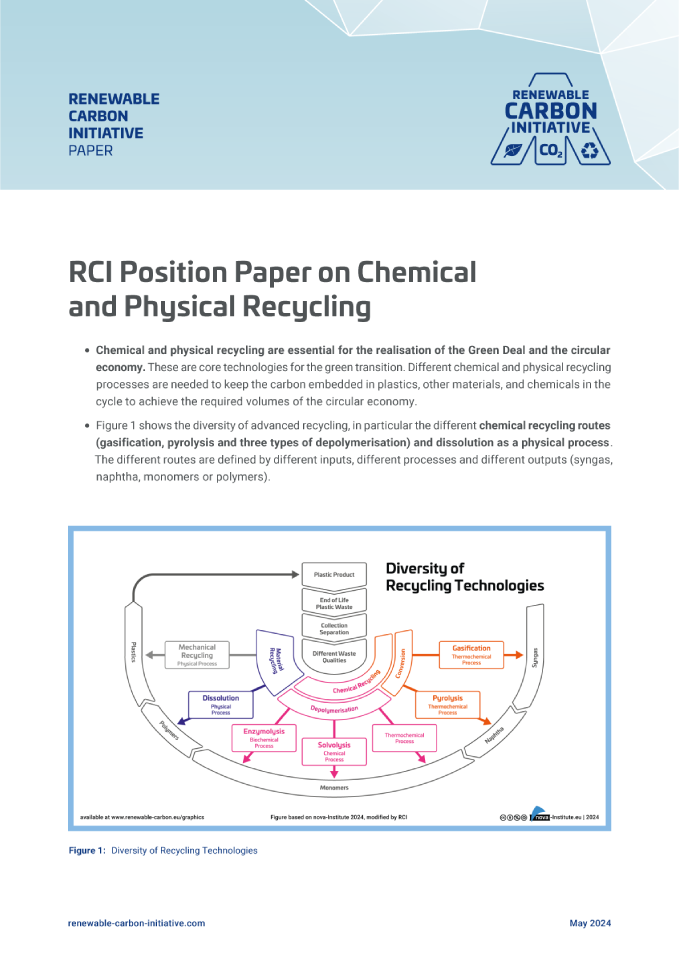
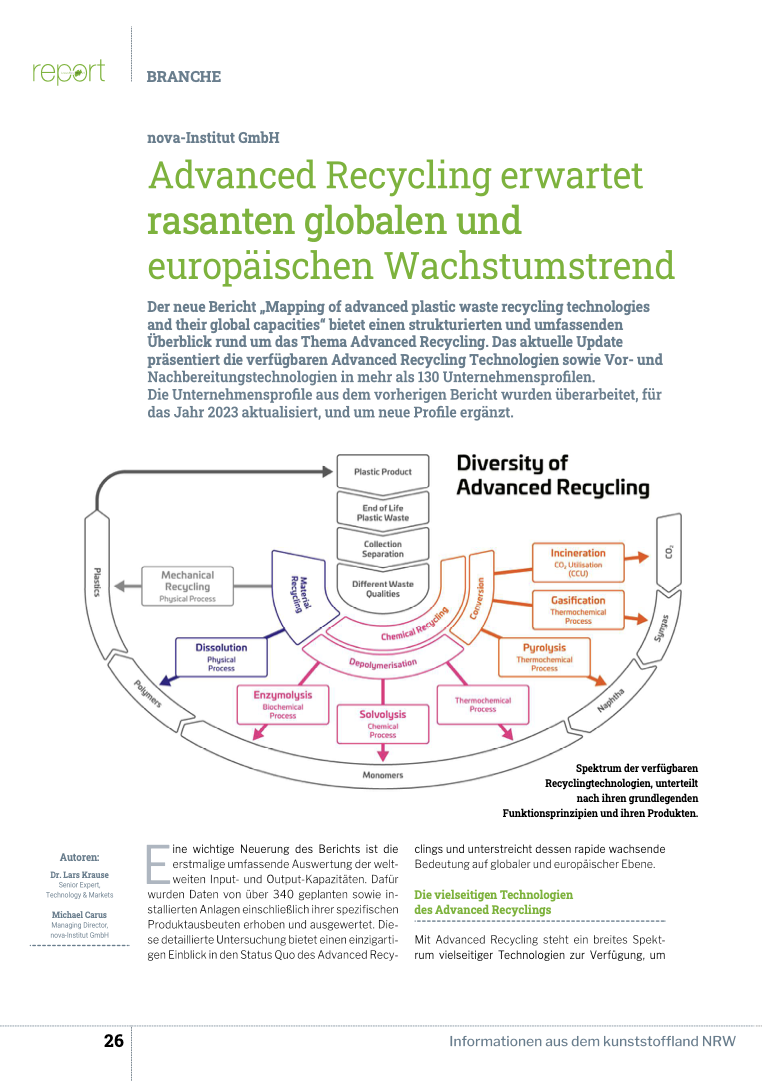
Mapping of Advanced Plastic Waste Recycling Technologies and their Global Capacities – Short Version (PDF)
Markets & Economy, Technology
12 Pages
2206 Downloads
2206 Downloads
2024-02
FREE
2206
DownloadsAdvanced recycling technologies are developing at a fast pace, with new players constantly appearing on the market, from start-ups to giants and everything in between – new plants are being built, new capacities are being achieved, and new partnerships are established. Due to these developments, it is difficult to keep track of everything. The report “Mapping of advanced plastic waste recycling technologies and their global capacities” aims to clear up this jungle of information providing a structured, in-depth overview and insight. It has an exclusive focus on profiling available technologies and providers of advanced recycling including the addition of new technologies and updated/revised profiles. Furthermore, for the first time a comprehensive evaluation of the global input and output capacities was carried out for which more than 340 planned as well as installed and operating plants including their specific product yields were mapped.
Further information:
The new report “Mapping of advanced plastic waste recycling technologies and their global capacities” differs from the old report “Chemical Recycling – Status, Trends and Challenges” as follows:- All technology provider profiles from the old report included + updated to 2023.
- Overall >120 technologies and providers (vs. >70 technologies and providers in the old report)
- Global capacities
In summary, this report is suitable for interested readers who have already dealt with the advanced recycling topic and are looking for an up-to-date overview of all identified providers and a detailed description of the technologies.
-
Mapping of Advanced Plastic Waste Recycling Technologies and their Global Capacities (PDF)
Markets & Economy, Technology
276 Pages
2024-02
3,000 € – 10,000 €Price range: 3,000 € through 10,000 € ex. tax
Plus 19% MwSt.Select
licenceAdvanced recycling technologies are developing at a fast pace, with new players constantly appearing on the market, from start-ups to giants and everything in between – new plants are being built, new capacities are being achieved, and new partnerships are established. Due to these developments, it is difficult to keep track of everything. The report “Mapping of advanced plastic waste recycling technologies and their global capacities” aims to clear up this jungle of information providing a structured, in-depth overview and insight. It has an exclusive focus on profiling available technologies and providers of advanced recycling including the addition of new technologies and updated/revised profiles. Furthermore, for the first time a comprehensive evaluation of the global input and output capacities was carried out for which more than 340 planned as well as installed and operating plants including their specific product yields were mapped.
Further information:
The new report “Mapping of advanced plastic waste recycling technologies and their global capacities” differs from the old report “Chemical Recycling – Status, Trends and Challenges” as follows:- All technology provider profiles from the old report included + updated to 2023.
- Overall >120 technologies and providers (vs. >70 technologies and providers in the old report)
- Global capacities
In summary, this report is suitable for interested readers who have already dealt with the advanced recycling topic and are looking for an up-to-date overview of all identified providers and a detailed description of the technologies.
DOI No.: https://doi.org/10.52548/WQHT8696
-
RCI’s Internal Survey: „How to enable the transition from fossil to renewable carbon in the chemical and material sector“ (January 2024)
Policy, Sustainability & Health
3 Pages
665 Downloads
665 Downloads
2024-01
FREE
665
DownloadsIn a comprehensive member survey in summer 2023, the Renewable Carbon Initiative (RCI) has collected ideas and opinions on what is needed to enable the transition from fossil to renewable carbon in Europe. The feedback paints a clear picture and is a call to action.
The European chemicals and materials sector is under pressure. RCI members, representing a wide range of these sectors, see many common elements in the key challenges and how to address them. High energy and raw material prices, as well as the need to defossilise carbon demand to meet CO2 emission targets, particularly in so-called “Scope 3” emissions, are some of the issues frequently raised.
-
1303 Downloads
2024-01
FREE
1303
Downloads -
Nora and her flyphone on renewable carbon (Comic)
Policy, Sustainability & Health
2 Pages
856 Downloads
856 Downloads
2024-01
FREE
856
Downloads -
RCI’s scientific background report: “Non-level playing field for renewable materials vs. fossil in Life Cycle Assessments” (January 2024)
Policy, Sustainability & Health
44 Pages
1550 Downloads
1550 Downloads
2024-01
FREE
1550
DownloadsCritical aspects of the JRC Plastics LCA methodology and its policy implications
This RCI Scientific Background Report was mainly motivated by a study published by JRC in 2021 with the title: “LCA of alternative feedstocks for plastic products”, commonly referred to as the JRC Plastics LCA Method (Nessi et al. 2021).
Alternative feedstocks refer to the same three feedstocks that RCI defines as renewable carbon: biomass, CO2 utilisation and recycling. The study describes a methodology developed by the JRC to compare the environmental performance of alternative feedstocks with fossil-based plastic products. However, the methodology has also been subject to criticism from various stakeholders, mainly from the bio-based sector, eliciting responses from the JRC.
This RCI report is mainly aiming to provide additional context to highlight issues that might arise with implementation of the JRC Plastics LCA methodology, and dives deeper into five aspects:
- The fossil footprint is likely underestimated, not transparent and lacks regional differentiation
- Renewable feedstocks are more cirtically evaluated than fossil feedstocks
- Methodological inconsistency and different regulatory support between energy and material use of renewable feedstocks
- Biogenic/Atmospheric carbon uptake cannot be transparently visualised at factory in PEF / JRC Plastics LCA methodologies
- The methodology should acknowledge the wider interface of sustainability assessment, policy design and landscape
The report contains several recommendations to remedy the above-mentioned aspects.
DOI No.: https://doi.org/10.52548/KOTY2900
-
Advanced Recycling Conference 2023 (Proceedings)
Markets & Economy, Policy, Sustainability & Health, Technology
6 Downloads
6 Downloads
2023-12
FREE
Plus 19% MwSt.6
DownloadsThe proceedings of the Advanced Recycling Conference 2023 (28-29 November, https://advanced-recycling.eu) contain conference presentations, the conference journal, sponsor documents and the press release. Download of the conference journal incl. the program.