Showing 101–120 of 365
-
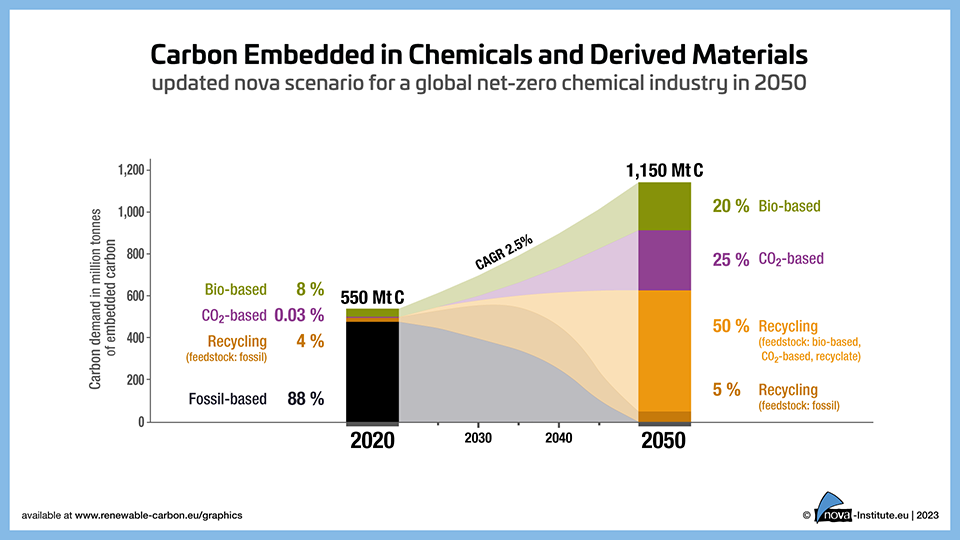
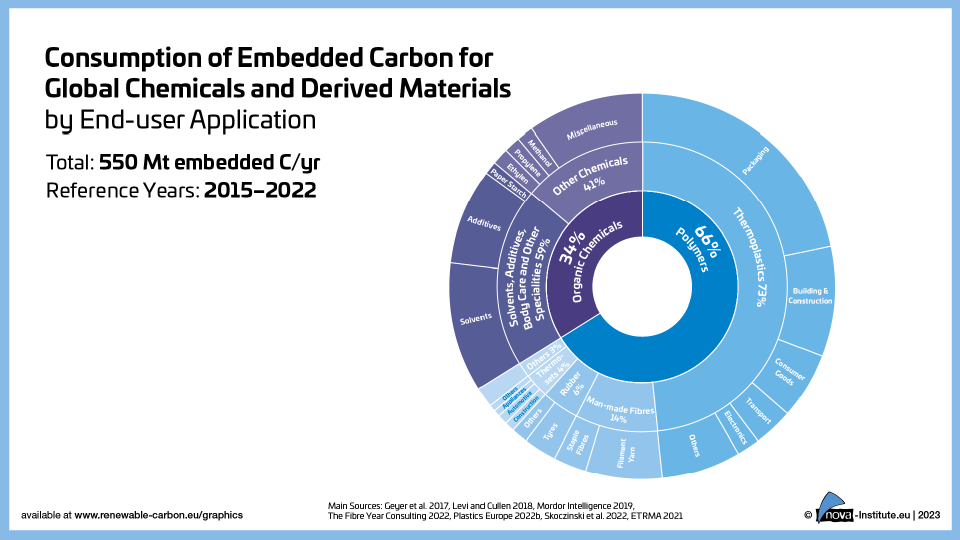
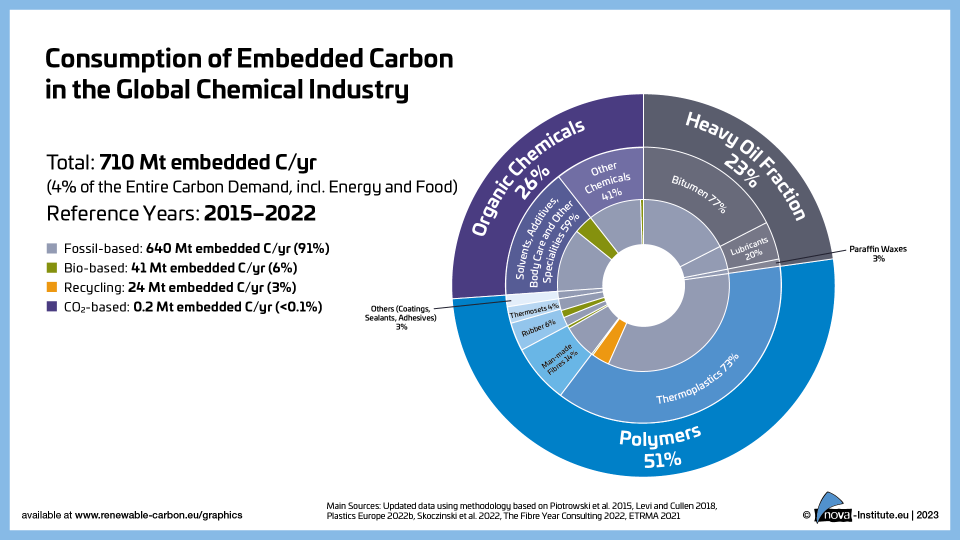
Consumption of Embedded Carbon in the Global Chemical Industry (PNG)
Markets & Economy, Policy
1 Page
138 Downloads
138 Downloads
2023-07
FREE
Free Shipping138
DownloadsFigure from the RCI Carbon Flows Report 2023
-
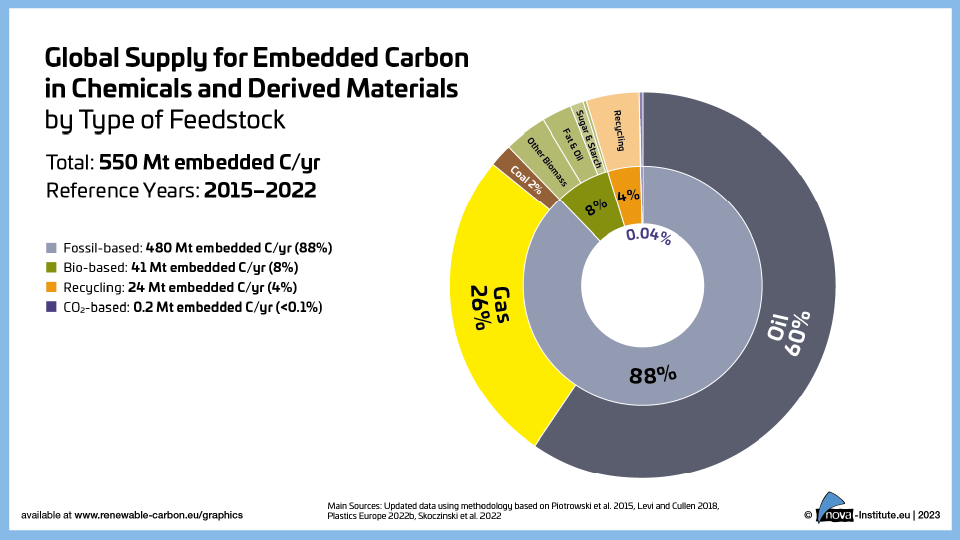
Global Supply for Embedded Carbon in Chemicals and Derived Materials by Type of Feedstock (PNG)
Markets & Economy, Policy
1 Page
177 Downloads
177 Downloads
2023-07
FREE
Free Shipping177
DownloadsFigure from the RCI Carbon Flows Report 2023
-
Consumption of Embedded Carbon for Global Chemicals and Derived Materials by End-user Application (PNG)
Markets & Economy, Policy
1 Page
123 Downloads
123 Downloads
2023-07
FREE
Free Shipping123
DownloadsFigure from the RCI Carbon Flows Report 2023
-
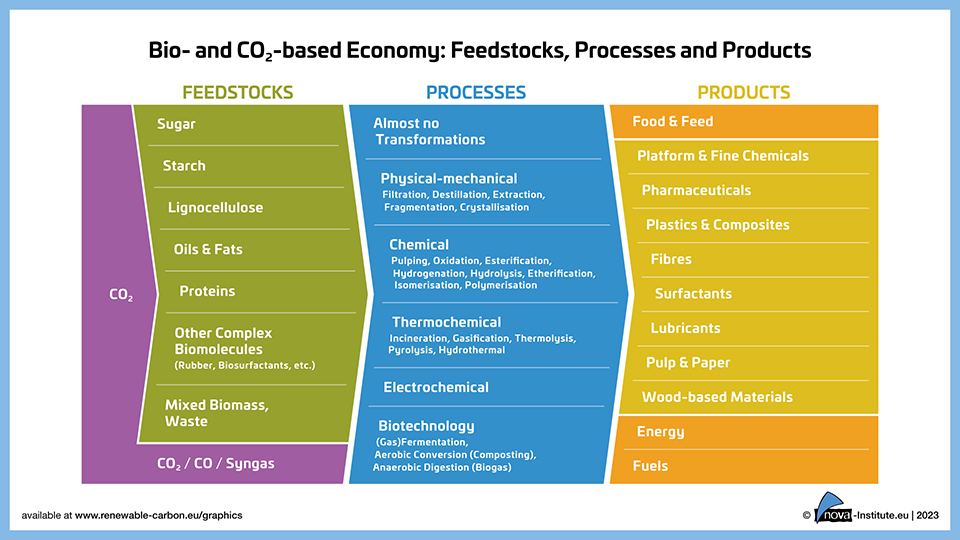
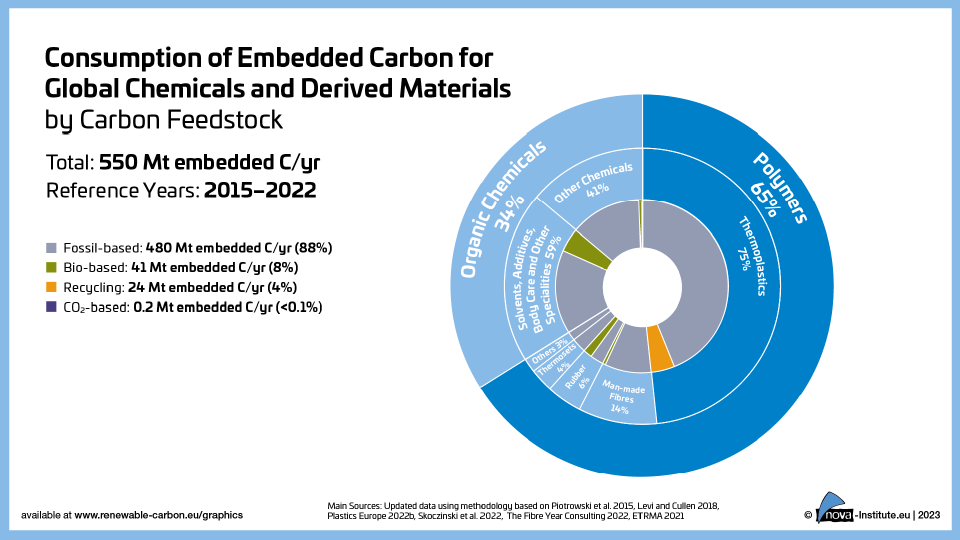
Consumption of Embedded Carbon for Global Chemicals and Derived Materials by Carbon Feedstock (PNG)
Markets & Economy, Policy
1 Page
117 Downloads
117 Downloads
2023-07
FREE
Free Shipping117
DownloadsFigure from the RCI Carbon Flows Report 2023
-
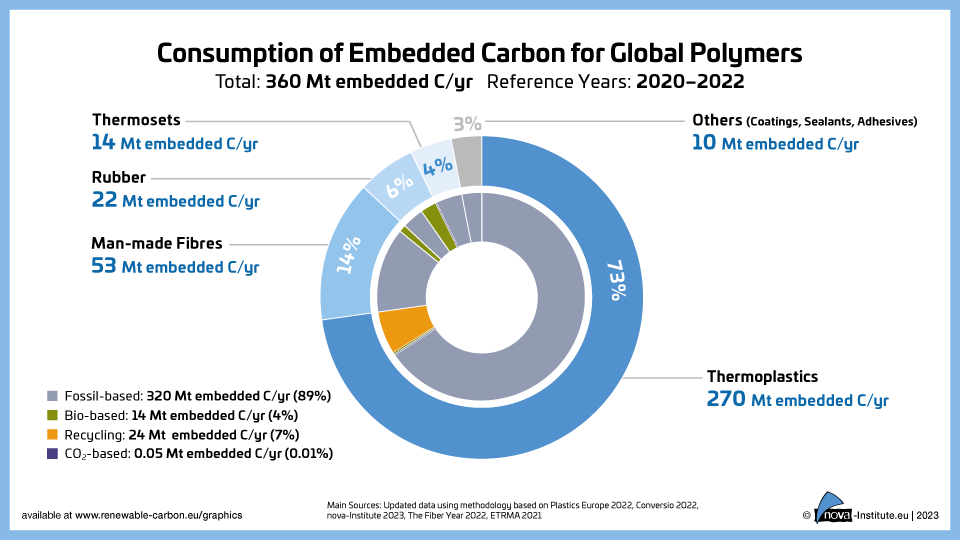
Consumption of Embedded Carbon for Global Polymers (PNG)
Markets & Economy, Policy
1 Page
130 Downloads
130 Downloads
2023-07
FREE
Free Shipping130
DownloadsFigure from the RCI Carbon Flows Report 2023
-
Traffic Light Sustainability Risk Evaluation of Bio-based Feedstocks (PNG)
Markets & Economy, Policy, Sustainability & Health, Technology
1 Page
299 Downloads
299 Downloads
2023-06
FREE
299
Downloads -
Corn and its Applications (PNG)
Markets & Economy, Policy, Sustainability & Health, Technology
1 Page
124 Downloads
124 Downloads
2023-06
FREE
124
Downloads -
Rapeseed and its Applications (PNG)
Markets & Economy, Policy, Sustainability & Health, Technology
1 Page
97 Downloads
97 Downloads
2023-06
FREE
97
Downloads -
Yield of Fermentable Sugars (PNG)
Markets & Economy, Policy, Sustainability & Health, Technology
1 Page
152 Downloads
152 Downloads
2023-06
FREE
152
Downloads -
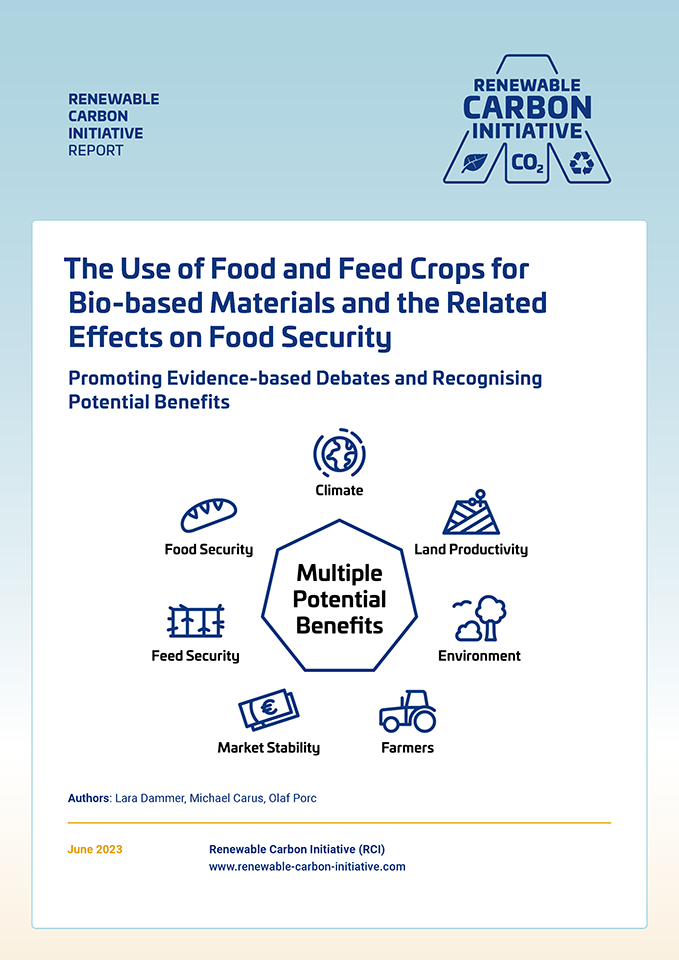
Graphic of the scientific paper „The Use of Food and Feed Crops for Bio-based Materials and the Related Effects on Food Security“ (PNG)
Markets & Economy, Policy, Sustainability & Health, Technology
1 Page
114 Downloads
114 Downloads
2023-06
FREE
114
DownloadsPromoting Evidence-based Debates and Recognising Potential Benefits
The graphic shows the multiple potential benefits of using food and feed crops for bio-based materials, in terms of climate, land productivity, environment, farmers, market stability, feed security and food security.
- The climate wins – Bio-based materials are part of the solution to achieve climate change mitigation.
- Land productivity wins – The competition between applications is not for the type of crop grown, but for the land
- The environment wins – due to increased resource efficiency and productivity of food and feed crops.
- Farmers win – because they have more options for selling stock to different markets.
- Market stability wins – due to increased global availability of food and feed crops.
- Feed security wins – due to the high value of the protein-rich co-products of food and feed crops.
- Food security wins – due to the increased overall availability of edible crops that can be stored and flexibly distributed.
-
RCI’s scientific background report: “The use of food and feed crops for bio-based materials and the related effects on food security – Promoting evidence-based debates and recognising potential benefits” (June 2023) Long Version
Markets & Economy, Policy, Sustainability & Health, Technology
36 Pages
1713 Downloads
1713 Downloads
2023-06
FREE
1713
DownloadsPromoting Evidence-based Debates and Recognising Potential Benefits
This scientific paper highlights new insights into a hotly debated topic and urges for careful and evidence-based debates.
The paper aims to show that the well-known biomass debate is flawed, subjective and not fully based on evidence. What is detrimental to food security are, according to the World Food Programme in 2023, climate change, conflict, extreme inequalities in wealth distribution, heavy dependence on food imports from industrial countries, overconsumption of meat, losses along the value chain and the impact of the COVID pandemic. Competition between biomass uses is not mentioned among the relevant causes.
The use of biomass for industrial applications, does have the potential to replace fossil feedstocks and thus contribute to the urgently needed reduction of fossil carbon emissions into our atmosphere to mitigate climate change.
While not denying the dire need to combat world hunger, the authors of the paper argue that using food and feed crops for chemicals and materials will not necessarily exacerbate food insecurity, and in fact has the potential to cause multiple benefits for local and global food security, climate mitigation and other factors:
- The climate wins – Bio-based materials are part of the solution to achieve climate change mitigation.
- Land productivity wins – The competition between applications is not for the type of crop grown, but for the land.
- The environment wins – due to increased resource efficiency and productivity of food and feed crops.
- Farmers win – because they have more options for selling stock to different markets.
- Market stability wins – due to increased global availability of food and feed crops.
- Feed security wins – due to the high value of the protein-rich co-products of food and feed crops.
- Food security wins – due to the increased overall availability of edible crops that can be stored and flexibly distributed.
DOI No.: https://doi.org/10.52548/WQXU7327
-
Wholesale Prices of Bioethanol and Wheat (PNG)
Markets & Economy, Policy, Sustainability & Health, Technology
1 Page
84 Downloads
84 Downloads
2023-06
FREE
84
Downloads -
Global Harvested Agricultural and Grazed Biomass Demand by Sectors (PNG)
Markets & Economy, Policy, Sustainability & Health, Technology
1 Page
149 Downloads
149 Downloads
2023-06
FREE
149
Downloads -
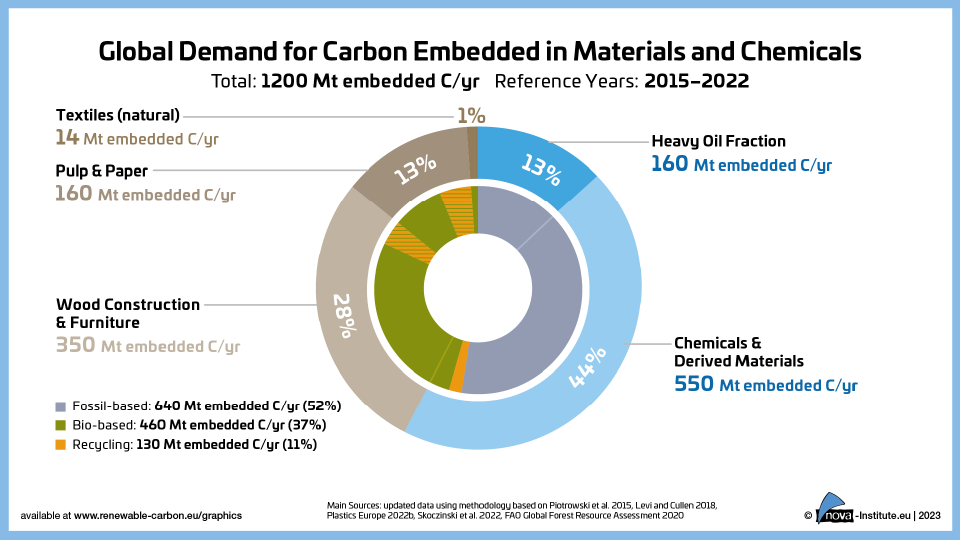
Embedded Carbon Demand for Main Sector (PNG)
Markets & Economy, Policy, Sustainability & Health, Technology
1 Page
141 Downloads
141 Downloads
2023-06
FREE
141
Downloads -
Renewable Materials Conference 2023 Proceedings
Markets & Economy, Policy, Sustainability & Health, Technology
228 Downloads
228 Downloads
2023-06
FREE
Plus 19% MwSt.228
DownloadsThe proceedings of the Renewable Materials Conference 2023 (23-25 May 2023, https://renewable-materials.eu) contain all released presentations of three conference days, the conference journal, and the press release of the three winners of the Innovation Award “Renewable Material of the Year 2023“.
-
Cellulose Fibres Conference 2023 (Proceedings, PDF)
Markets & Economy, Policy, Sustainability & Health, Technology
2023-03
50 € ex. tax
Plus 19% MwSt.Press
release Add to
cartThe unique conference focused on cellulose fibres – in textiles, hygiene products and packaging!
The Cellulose Fibres 2023 Conference Proceedings (https://cellulose-fibres.eu, 8-9 March 2023, Cologne, hybrid) include all released conference presentations, the conference journal, sponsor documents, a Fiber2Fashion Knowledgepaper and the conference press release.
-
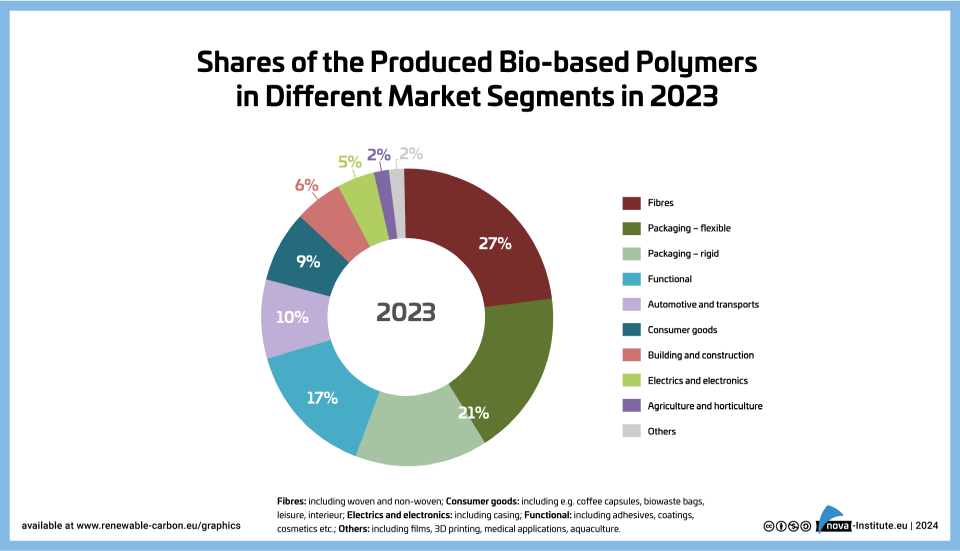
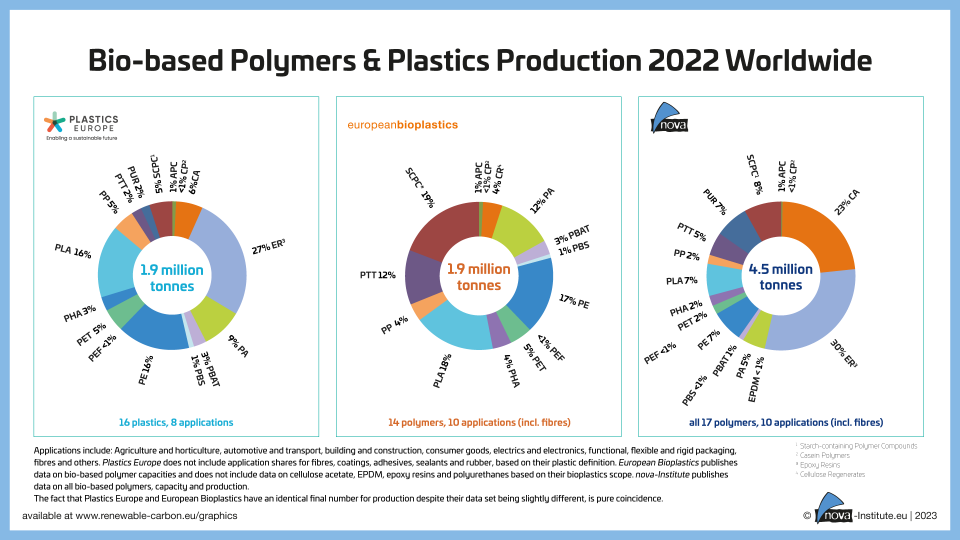
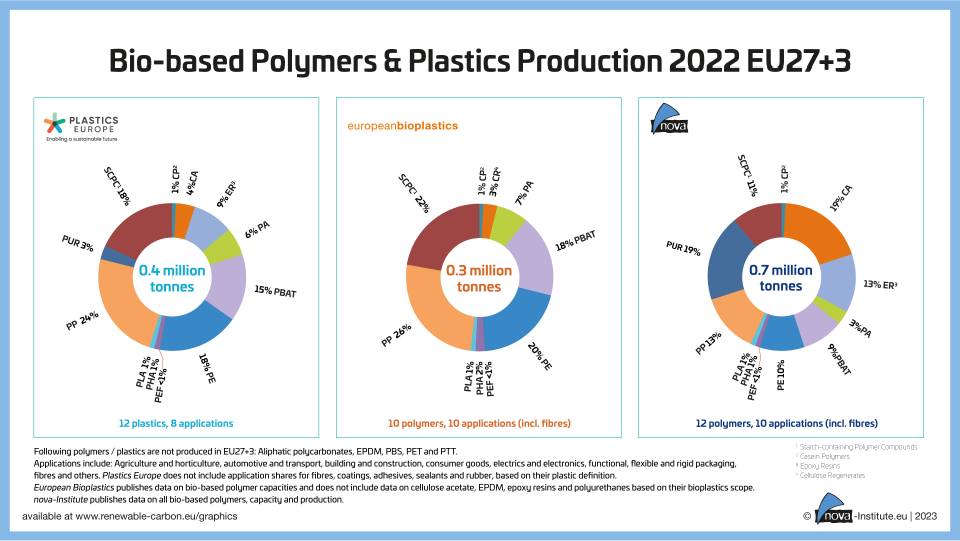
Shares of the produced bio-based polymers in different market sements in 2022 (PNG)
Markets & Economy
1 Page
312 Downloads
312 Downloads
2023-02
FREE
312
DownloadsReport on the global bio-based polymer market 2022 – A deep and comprehensive insight into this dynamically growing market
The year 2022 was a promising year for bio-based polymers: Bio-based epoxy resin production is on the rise, PTT regained attractiveness after several years of constant capacities and PE and PP made from bio-based naphtha are being further established with growing volumes. Increased capacities for PLA are ongoing, after being sold out in 2019. Current and future expansions for bio-based polyamides as well as PHAs are on the horizon. And also, bio-based PET is getting back in the game.
DOI No.: https://doi.org/10.52548/CMZD8323
-
485 Downloads
2023-02
FREE
485
DownloadsReport on the global bio-based polymer market 2022 – A deep and comprehensive insight into this dynamically growing market
The year 2022 was a promising year for bio-based polymers: Bio-based epoxy resin production is on the rise, PTT regained attractiveness after several years of constant capacities and PE and PP made from bio-based naphtha are being further established with growing volumes. Increased capacities for PLA are ongoing, after being sold out in 2019. Current and future expansions for bio-based polyamides as well as PHAs are on the horizon. And also, bio-based PET is getting back in the game.
DOI No.: https://doi.org/10.52548/CMZD8323
-
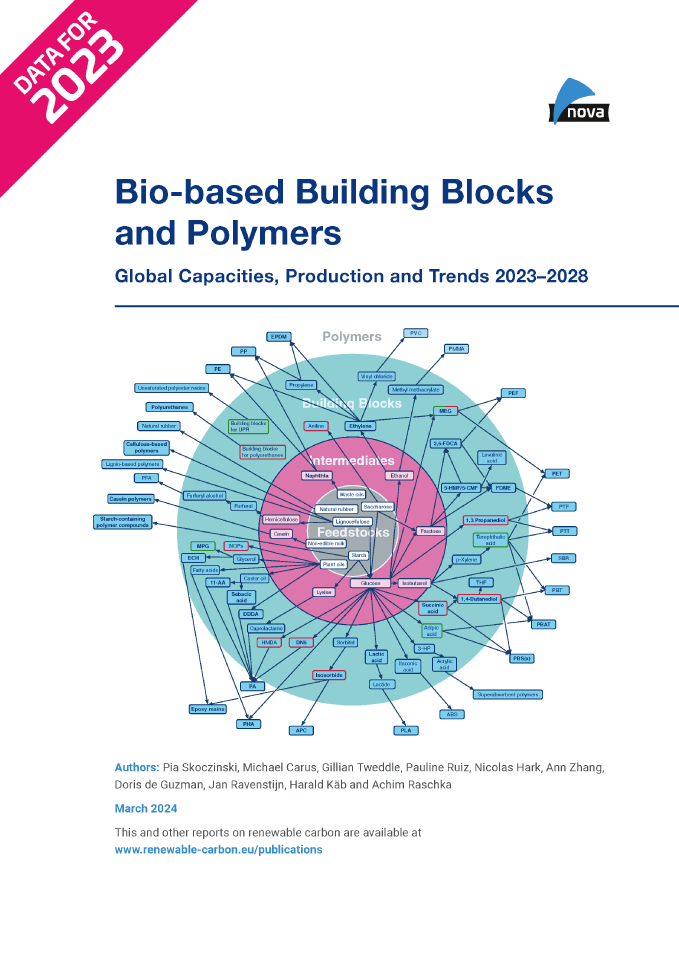
Bio-based Building Blocks and Polymers – Global Capacities, Production and Trends 2022-2027 (PDF)
Markets & Economy
387 Pages
2023-02
500 € – 1,000 €Price range: 500 € through 1,000 € ex. tax
Plus 19% MwSt.Press
release Select
licenceReport on the global bio-based polymer market 2022 – A deep and comprehensive insight into this dynamically growing market
The year 2022 was a promising year for bio-based polymers: Bio-based epoxy resin production is on the rise, PTT regained attractiveness after several years of constant capacities and PE and PP made from bio-based naphtha are being further established with growing volumes. Increased capacities for PLA are ongoing, after being sold out in 2019. Current and future expansions for bio-based polyamides as well as PHAs are on the horizon. And also, bio-based PET is getting back in the game.
DOI No.: https://doi.org/10.52548/CMZD8323
-
384 Downloads
2023-02
FREE
384
DownloadsReport on the global bio-based polymer market 2022 – A deep and comprehensive insight into this dynamically growing market
The year 2022 was a promising year for bio-based polymers: Bio-based epoxy resin production is on the rise, PTT regained attractiveness after several years of constant capacities and PE and PP made from bio-based naphtha are being further established with growing volumes. Increased capacities for PLA are ongoing, after being sold out in 2019. Current and future expansions for bio-based polyamides as well as PHAs are on the horizon. And also, bio-based PET is getting back in the game.
DOI No.: https://doi.org/10.52548/CMZD8323


![Renewable Materials Conference 2023 Proceedings [Digital]](https://renewable-carbon.eu/publications/wp-content/uploads/2020/05/21-01-07_RC-Publications-Cover-Proceedings_RMC-100x141.png)
![Cellulose Fibres Conference 2023 (Proceedings, PDF) [Digital]](https://renewable-carbon.eu/publications/wp-content/uploads/2020/05/21-01-07_RC-Publications-Cover-Proceedings_Cellulose-Fibres-100x141.png)