Skip to content
Renewable Carbon Publications - LogoRenewable Carbon Publications - Logo
  • Publications
  • Contact
0

No products in the cart.

  • Renewable Carbon
    • Renewable Carbon
    • Events
    • Publications
    • Graphics
    • News
    • Business Directory
    • Newsletter
    • nova-Institute
  • Publications
  • Contact

Renewable Carbon Publications - LogoRenewable Carbon Publications - Logo
0

No products in the cart.

nova provides studies on
all renewable carbon relevant
topics such as

25 12 03 shop slider 4 cover bio-based & CO₂-based polymers
as well as chemical recycling
25 12 03 shop slider advanced recycling figure 2025 25 12 03 shop slider advanced recycling cover Report on
Global Advanced
Plastic Recycling
Capacities

More details
25 05 14 shop slider bio based hg Data for 2024:
25 05 14 slider publications bio based cover Report on Bio-based
Building Blocks and
Polymers
More details
nova Networking and Knowledge Download PDF here Networking Opportunities
Recent Reports
Expert Information
nova-Institute Logo Networking and Knowledge Flyer 2024 Everything at a glance
  • Renewable Carbon Publications
  • Page 2
Grid view List view

Showing 21–40 of 83

  • Download Statistics
  • Direct Download
    2175660e f28b 4333 bc65 1302311814c2

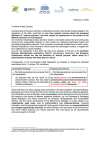
    Letter to the Commission on the definition of natural polymers in the REACH microplastics restriction

    Policy, Sustainability & Health

    4 Pages
    493 Downloads

    493 Downloads  

    2023-02

    FREE


    493
    Downloads

    Direct Download

    Six leading associations and stakeholders from the chemicals, polymers and plastics sectors – namely BioChem Europe (a sector group of Cefic), EDANA, EuropaBio, European BioPlastics, GO!PHA and Renewable Carbon Initiative) – express in this letter their specific concerns about the proposed definition of “natural polymers” and its impact on biopolymers in the context of the REACH restriction on microplastics.

    Under the coordination of the Renewable Carbon Initiative (RCI) they ask the European Commission in a letter “that in the adoption of the text of the Synthetic Polymer Microparticles restrictions (REACH Microplastics Restriction), the European Commission should not use the definition of ‘natural polymer’ which refers to a polymerisation process that takes place in nature.“

  • Select
    licence
    Cover - Bio-based Building Blocks and Polymers - Global Capacities, Production and Trends 2022-2027

    Bio-based Building Blocks and Polymers – Global Capacities, Production and Trends 2022-2027 (PDF)

    Markets & Economy

    387 Pages


    2023-02

    500 € – 1,000 €Price range: 500 € through 1,000 € ex. tax

    Plus 19% MwSt.
    Press
    release
    Select
    licence

    Report on the global bio-based polymer market 2022 – A deep and comprehensive insight into this dynamically growing market

    The year 2022 was a promising year for bio-based polymers: Bio-based epoxy resin production is on the rise, PTT regained attractiveness after several years of constant capacities and PE and PP made from bio-based naphtha are being further established with growing volumes. Increased capacities for PLA are ongoing, after being sold out in 2019. Current and future expansions for bio-based polyamides as well as PHAs are on the horizon. And also, bio-based PET is getting back in the game.


    DOI No.: https://doi.org/10.52548/CMZD8323

  • Direct Download
    23 02 07 bio based building blocks and polymers 2022 2027 cover shop

    Bio-based Building Blocks and Polymers – Global Capacities, Production and Trends 2022-2027 – Short Version (PDF)

    Markets & Economy

    28 Pages
    1976 Downloads

    1976 Downloads  

    2023-02

    FREE


    1976
    Downloads

    Direct Download

    Report on the global bio-based polymer market 2022 – A deep and comprehensive insight into this dynamically growing market

    The year 2022 was a promising year for bio-based polymers: Bio-based epoxy resin production is on the rise, PTT regained attractiveness after several years of constant capacities and PE and PP made from bio-based naphtha are being further established with growing volumes. Increased capacities for PLA are ongoing, after being sold out in 2019. Current and future expansions for bio-based polyamides as well as PHAs are on the horizon. And also, bio-based PET is getting back in the game.


    DOI No.: https://doi.org/10.52548/CMZD8323

  • Select
    licence
    mapping of advanced recycling - technologies for plastics waste

    Mapping of advanced recycling – Providers, technologies, and partnerships

    Technology

    201 Pages


    2022-06

    2,500 € – 10,000 €Price range: 2,500 € through 10,000 € ex. tax

    Plus 19% MwSt.
    Press
    release
    Select
    licence

    Advanced recycling technologies are developing at a fast pace, with new players constantly appearing on the market, from start-ups to giants and everything in between – new plants are being built, new capacities are being achieved, and new partnerships are established. Due to these developments, it is difficult to keep track of everything. The report “Mapping of advanced recycling technologies for plastics waste” aims to clear up this jungle of information providing a structured, in-depth overview and insight. It has an exclusive focus on profiling available technologies and providers of advanced recycling including the addition of new technologies and updated/revised profiles.


    Further information:

    The new report “Mapping of advanced recycling – Providers, technologies, and partnerships” differs from the old report “Chemical Recycling – Status, Trends and Challenges” as follows:

    • All technology provider profiles from the old report included + updated to 2022.
    • Overall >100 technologies and providers (vs. >70 technologies and providers in the old report)
    • Extensive introductory part on polymer types, demand of different polymer types, waste fractions, political framework, position papers, technologies, LCAs, associations and waste management companies are no longer included in this report

    In summary, this report is suitable for interested readers who have already dealt with the advanced recycling topic and are looking for an up-to-date overview of all identified providers and a detailed description of the technologies.


    DOI No.: https://doi.org/10.52548/ITZE5668


    P.S.: All you want to know about advanced recycling technologies and renewable chemicals, building-blocks, monomers, and polymers based on recycling: Hear about it at the Advanced Recycling Conference (ARC), 28-29 November 2023, Cologne, Germany (hybrid event).

  • Direct Download
    mapping of advanced recycling - technologies for plastics waste

    Mapping of advanced recycling – Providers, technologies, and partnerships – Short Version (PDF)

    Technology

    8 Pages
    1426 Downloads

    1426 Downloads  

    2022-06

    FREE

    Free Shipping
     

    1426
    Downloads

    Direct Download

    Advanced recycling technologies are developing at a fast pace, with new players constantly appearing on the market, from start-ups to giants and everything in between – new plants are being built, new capacities are being achieved, and new partnerships are established. Due to these developments, it is difficult to keep track of everything. The report “Mapping of advanced recycling technologies for plastics waste” aims to clear up this jungle of information providing a structured, in-depth overview and insight. It has an exclusive focus on profiling available technologies and providers of advanced recycling including the addition of new technologies and updated/revised profiles.

    P.S.: All you want to know about advanced recycling technologies and renewable chemicals, building-blocks, monomers, and polymers based on recycling: Hear about it at the Advanced Recycling Conference (ARC), 28-29 November 2023, Cologne, Germany (hybrid event).

  • Select
    licence
    22 03 07 mimicking nature – the pha industry landscape shop

    Mimicking Nature The PHA Industry Landscape Latest trends and 28 producer profiles

    Markets & Economy

    59 Pages


    2022-03

    1,500 € – 8,000 €Price range: 1,500 € through 8,000 € ex. tax

    Plus 19% MwSt.
     
    Select
    licence

    Natural PHAs are a class of materials that exist in nature for over millions of years. These materials are both bio-based and biodegradable, similar to other natural materials such as cellulose, proteins and starch. Natural PHAs are produced by an extensive variety of microorganisms through bacterial fermentation. Due to its high performance, biocompatibility, biodegradability and green credentials, the PHA family has a large design space and accommodates a wide range of market applications, as a broad variety of different polymers can be produced and blended. The potential of PHAs is enormous.

    The report is a must-read for all those interested in the very latest in PHAs, as developers, producers or, above all, users. The information on the companies described has been checked with each of them and is state-of-the-art for February 2022.
    Author of “Mimicking Nature” is Prof. Jan Ravenstijn, who has been working intensively on the topic of PHAs for 20 years, is the author of numerous publications and co-founder of the PHA industry association GO!PHA (www.gopha.org). The report is a joint publication of GO!PHA and nova-Institute (www.nova-institute.eu).

    DOI No: https://doi.org/10.52548/FUAQ6608

  • Direct Download
    21 10 solutions made from renewable materials biocomposites thumbnail

    Solution made from renewable materials (PDF)

    Markets & Economy, Technology

    2 Pages
    840 Downloads

    840 Downloads  

    2021-11

    FREE


    840
    Downloads

    Direct Download

    Today, the various biocomposites can be easily used in a wide range of applications and have reached the mass market as an alternative to conventional plastics. The annual growth of biocomposite granulates has been estimated be 5 % by nova-Institut for 2020 to 2028 (CAGR). What are biocomposites? Basically, any material that consists of natural fibres or particles and a binder (e.g., polymer, resin) can be called a biocomposite. Biocomposites are a collective term for natural fibre-reinforced materials that are partly or entirely of biogenic origin. The report shows a full list of all biocomposite granulate producers in Europe.

  • Select
    licence
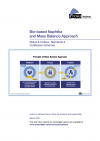
    Cover-bio based naphtha and mass balance approach shop

    Bio-based Naphtha and Mass Balance Approach – Status & Outlook, Standards & Certification Schemes

    Markets & Economy

    48 Pages


    2021-03

    850 € – 3,500 €Price range: 850 € through 3,500 € ex. tax

    Plus 19% MwSt.
    Free Shipping
    Press
    release
    Select
    licence

    New report on alternative, non-fossil naphtha with the first comprehensive overview of technology, producers, plants and users

    Bio-based naphtha has been available on the market for a few years now. In Europe, about 150,000 tonnes are already used annually, mainly for polymer production. As soon as the political-economic framework conditions are right, this number could quickly increase to several million tonnes, which have flowed into the HVO (hydrotreated or hydrogenated vegetable oils) biodiesel market so far. These fuels differ only slightly from fossil-based naphtha in their chemical composition. The report presents 17 companies worldwide with capacities ranging from a few thousand tonnes per year to 3 million tonnes. There are currently plans for 50 new or expanded plants.

  • Direct Download
    Cover-bio based naphtha and mass balance approach shop

    Bio-based Naphtha and Mass Balance Approach – Status & Outlook, Standards & Certification Schemes – Short Version

    Markets & Economy

    6 Pages
    916 Downloads

    916 Downloads  

    2021-03

    FREE

    Free Shipping
     

    916
    Downloads

    Direct Download

    New report on alternative, non-fossil naphtha with the first comprehensive overview of technology, producers, plants and users

    Bio-based naphtha has been available on the market for a few years now. In Europe, about 150,000 tonnes are already used annually, mainly for polymer production. As soon as the political-economic framework conditions are right, this number could quickly increase to several million tonnes, which have flowed into the HVO (hydrotreated or hydrogenated vegetable oils) biodiesel market so far. These fuels differ only slightly from fossil-based naphtha in their chemical composition. The report presents 17 companies worldwide with capacities ranging from a few thousand tonnes per year to 3 million tonnes. There are currently plans for 50 new or expanded plants.

  • Select
    licence
    Placeholder

    Bio-based Building Blocks and Polymers – Global Capacities, Production and Trends 2020 – 2025

    Markets & Economy

    338 Pages


    2021-01

    100 € – 500 €Price range: 100 € through 500 € ex. tax

    Plus 19% MwSt.
    Press
    release
    Select
    licence

    Report on the global bio-based polymer market 2020 – A deep and comprehensive insight into this dynamic market

    The year 2020 was a promising year for bio-based polymers: Sold out PLA in 2019 has led to the installation of increased capacities, PE and PP made from bio-based naphtha are breaking ground and future expansion for bio-based polyamides as well as for PBAT, PHAs and casein polymers is on the horizon. A lower production is only observed for bio-based PET.

  • Select
    licence
    Placeholder

    Carbon dioxide (CO2) as chemical feedstock for polymers – technologies, polymers, developers and producers

    Markets & Economy

    100 Pages


    2021-01

    500 € – 1,000 €Price range: 500 € through 1,000 € ex. tax

    Plus 19% MwSt.
    Press
    release
    Select
    licence

    Completely revised and extended third version of nova’s technology and trend report “Carbon Dioxide (CO2) as Chemical Feedstock for Polymers – Technologies, Polymers, Developers and Producers” available

    The nova report addresses the polymer industry, brands, technology scouts, investors, and policy makers. The report provides 100 pages of information around CO2 utilisation for chemical building blocks and polymers.

  • Direct Download
    Placeholder

    Carbon dioxide (CO2) as chemical feedstock for polymers – technologies, polymers, developers and producers − Short Version

    Markets & Economy

    12 Pages
    2410 Downloads

    2410 Downloads  

    2021-01

    FREE

    Plus 19% MwSt.
     

    2410
    Downloads

    Direct Download

    Completely revised and extended third version of nova’s technology and trend report “Carbon Dioxide (CO2) as Chemical Feedstock for Polymers – Technologies, Polymers, Developers and Producers” available

    The nova report addresses the polymer industry, brands, technology scouts, investors, and policy makers. The report provides 100 pages of information around CO2 utilisation for chemical building blocks and polymers.

  • Direct Download
    Placeholder

    Bio-based Building Blocks and Polymers – Global Capacities, Production and Trends 2020 – 2025 – Short Version

    Markets & Economy

    16 Pages
    2999 Downloads

    2999 Downloads  

    2021-01

    FREE

    Plus 19% MwSt.
     

    2999
    Downloads

    Direct Download

    Report on the global bio-based polymer market 2020 – A deep and comprehensive insight into this dynamic market

    The year 2020 was a promising year for bio-based polymers: Sold out PLA in 2019 has led to the installation of increased capacities, PE and PP made from bio-based naphtha are breaking ground and future expansion for bio-based polyamides as well as for PBAT, PHAs and casein polymers is on the horizon. A lower production is only observed for bio-based PET.

  • Select
    licence
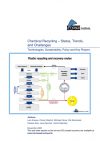
    Chemical Recycling – Status, Trends and Challenges. Technologies, Sustainability, Policy and Key Players

    Chemical Recycling – Status, Trends and Challenges. Technologies, Sustainability. Policy and Key Players

    Markets & Economy, Technology

    190 Pages


    2020-11

    500 € – 1,500 €Price range: 500 € through 1,500 € ex. tax

    Plus 19% MwSt.
    Press
    release
    Select
    licence

    New market and technology report: Chemical Recycling – Status, Trends, and Challenges – Technologies, Sustainability, Policy and Key Players

    nova’s new market and technology report „Chemical Recycling – Status, Trends, and Challenges” is addressed to the chemical and plastic industry, brands, technology scouts, investors, and policy makers. On 190 pages the report provides information around chemical recycling including 21 figures and 10 tables. 

    The report provides deep insights into current developments in order to assert a position in the current discussion based on clear definitions and categorisations of all technologies. More than 70 companies and research institutes, which developed and offer chemical recycling technologies, are presented in the report. Each company is listed with its technologies and status, investment and cooperation partners. Additionally, the report provides an overview of waste policy in the European Union. And finally, 10 companies and research institutes were interviewed to receive first-hand information around the topic of chemical recycling.

    Further information:

    The old report “Chemical Recycling – Status, Trends and Challenges” differs from the new report “Mapping of advanced recycling – Providers, technologies, and partnerships” as follows:

    •  >70 technologies and providers (vs. >100 technologies and providers in the new report)
    • Profiles only with updated information of 2020
    • The extensive introductory part on polymer types, demand of different polymer types, waste fractions, political framework, position papers, technologies, LCAs, associations and waste management companies are included in this report

    In summary, this report is suitable for interested readers who have not yet dealt with advanced recycling and are searching for a introduction into the topic while an up-to-date overview of all identified providers is less important.


    P.S.: All you want to know about advanced recycling technologies and renewable chemicals, building-blocks, monomers, and polymers based on recycling: Hear about it at the Advanced Recycling Conference (ARC), 28–29 November 2023, Cologne, Germany (hybrid event).

  • Direct Download
    Placeholder

    8th Conference on CO2 as Feedstock for Fuels, Chemistry and Polymers 2020 Proceedings

    Markets & Economy


    95 Downloads

    95 Downloads  

    2020-03

    FREE

    Plus 19% MwSt.
    Free Shipping
     

    95
    Downloads

    Direct Download
  • Direct Download
    Bio-based Building Blocks and Polymers – Global Capacities, Production and Trends 2019 – 2024

    Bio-based Building Blocks and Polymers – Global Capacities, Production and Trends 2019 – 2024 − Short version

    Markets & Economy

    16 Pages
    2540 Downloads

    2540 Downloads  

    2020-02

    FREE


    2540
    Downloads

    Direct Download
  • Direct Download
    Bio-based Building Blocks and Polymers – Global Capacities, Production and Trends 2019 – 2024

    Bio-based Building Blocks and Polymers – Global Capacities, Production and Trends 2019 – 2024 − Content

    Markets & Economy

    10 Pages
    1537 Downloads

    1537 Downloads  

    2020-01

    FREE


    1537
    Downloads

    Direct Download
  • Select
    licence
    Placeholder

    Bio-based Building Blocks and Polymers – Global Capacities, Production and Trends 2019 – 2024

    Markets & Economy

    379 Pages


    2020-01

    100 € – 500 €Price range: 100 € through 500 € ex. tax

    Plus 19% MwSt.
    Press
    release
    Select
    licence

    The global bio-based polymer market 2019 – A revised view on a turbulent and growing market

    Turbulent times for bio-based polymers in 2019: PLA sold out despite expansion, as did PHA. Bio-based PP available for the first time, increased production of PBAT, PBS, bio-based PE, starch-containing polymer compounds and epoxy resins. Lower production is seen particularly in bio-based PET. At the same time, there is a lack of support from policy makers, who are taking bio-based and biodegradable plastics into collective punishment with fossil plastics in the Plastic Policy.

    The new market and trend report “Bio-based Building Blocks and Polymers – Global Capacities, Production and Trends 2019-2024” from the German nova-Institute shows capacities and production data for all bio-based polymers in the year 2019 and a forecast for 2024. In 2019, the total production volume of bio-based polymers was 3.8 million tonnes, which is 1% of the production volume of fossil-based polymers and about 3% more than in 2018 – this CAGR is expected to continue until 2024. The major biomass feedstock used for bio-based polymer production are biogenic by-products (46%), especially the by-product glycerol from the biodiesel production, used for epoxy resin production.

  • Direct Download
    Open Letter to the JRC How can the environmental effects of bio-based polymers be compared with those of petrochemical polymers on equal footing?

    Open Letter to the JRC How can the environmental effects of bio-based polymers be compared with those of petrochemical polymers on equal footing? − Full version

    Sustainability & Health

    6 Pages
    796 Downloads

    796 Downloads  

    2019-09

    FREE


    796
    Downloads

    Direct Download
  • Direct Download
    Open Letter to DG Environment – Which polymers are “natural polymers” in the sense of the single-use plastic ban?

    Open Letter to DG Environment – Which polymers are “natural polymers” in the sense of the single-use plastic ban? − Full version

    Sustainability & Health

    7 Pages
    820 Downloads
    820 Downloads  

    2019-09

    FREE


    820
    Downloads

    Direct Download

Renewable Carbon Types

Publications

Topics

  • 1
  • 2
  • 3
  • 4
  • 5

nova-Logo
contact@nova-institut.de
www.nova-institute.eu

nova-Institut GmbH
Leyboldstr. 16
50354 Hürth / Germany

  • Renewable Carbon
  • Events
  • Publications
  • Graphics
  • News
  • Business Directory
  • Newsletter
  • nova-Institute
  • My account
  • Legal Information
  • Terms and Conditions
  • Data protection regulation
  • Withdrawal of Contract
© 2026 nova-Institut GmbH
Renewable Carbon Publications - Logo

Login

Lost your password?