Showing 201–220 of 526
-
Importance of mass balance and free attribution (MBFA) for the conversion of the chemical sector to alternative carbon sources (October 2022)
Policy, Sustainability & Health
4 Pages
768 Downloads
768 Downloads
2022-12
FREE
Free Shipping768
DownloadsA position paper of the Renewable Carbon Initiative
This position paper highlights the importance of mass balance and free attribution “MBFA” as one possible way to incentivise the transformation of the chemical sector away from fossil and on towards renewable carbon.
The term “mass balance” has become established to describe systems in which biomass, CO2 and secondary materials are used as a feedstock, but is not or not fully physically traced to the end product . It is common practice in many value chains in which large scale capacities are involved in one or more steps of the value chain that require mixing the sustainable with conventional material to fill the capacity. The approach makes it possible to substitute large quantities of fossil raw materials and attractive renewable content shares can be attributed to desired materials or products for which demand on the market exists. This incentivises a stepwise continuous transformation to increase the share of renewable carbon in particular for the large-scale chemical industry
However, the term “mass balance” is somewhat unfortunate because it is too general, and does not mention the essence of the method: the free attribution of the bio-based, CO2-based or chemically recycled share in the feedstock mix to certain selected end products.
The RCI recommends to only speak of “mass balance and free attribution (MBFA)” when talking about such cases, as this is how the complete method and its two central parts are referred to. This is transparent and honest, building trust from customers, end consumers and society in general. Both, mass balance and the free attribution are based on solid and established certifications.
Besides terminology, there is still a need for regulatory harmonisation between the schemes of the existing certification systems. MBFA cannot only be applied for bio-based feedstock, but also for CO/CO2 or feedstock from chemical recycling, both will gain strongly in importance in the coming years. Every MBFA scheme should cover these three renewable feedstocks: biomass, CO/CO2 and recycling.
-
Advanced Recycling Conference 2022 (Proceedings)
Markets & Economy, Policy, Sustainability & Health, Technology
129 Downloads
129 Downloads
2022-11
FREE
Plus 19% MwSt.129
DownloadsThe proceedings of the Advanced Recycling Conference 2022 (14-15 November 2022, hybrid, https://advanced-recycling.eu) contain conference presentations, the conference journal, sponsor documents and the press release.
-
Circular EconomyPLUS: Recommendations for action for a German Circular Economy Strategy
Policy
15 Pages
120 Downloads
120 Downloads
2022-11
FREE
Free Shipping120
DownloadsA contribution to the discussion on a circular economy for plastics moderated by PlasticsEurope Deutschland e. V.
With the necessary transformation into a circular economy with plastics, the plastics industry is facing a far-reaching paradigm shift. Plastics Europe would like to drive this change forward. In the first half of 2022, as part of an initiative by Plastics Europe Deutschland, leading experts in the field of circular economy with plastics have developed recommendations for action for the German circular economy strategy announced in the latest coalition agreement in 2021 after intensive consultations. Plastics Europe Deutschland took the role of a moderator in this discussion process in order to guarantee recommendations for action on a technical and scientific basis.
With this paper we would like to initiate a discussion process and actively accompany the circular economy strategy and thus also the transformation path for our industry.
-
RCI’s position paper: “Draft EU policy framework on bio-based, biodegradable and compostable plastics” (October 2022)
Policy, Sustainability & Health
5 Pages
537 Downloads
537 Downloads
2022-10
FREE
Free Shipping537
DownloadsThe Commission is currently preparing a “Policy framework on bio-based, biodegradable and compostable plastics.” The framework was announced in the Circular Economy Action Plan and is part of the Plastics Strategy for Circular Economy. It aims at developing guidance on the “sourcing, labelling and use of bio-based plastics, based on assessing where the use of bio-based feedstock results in genuine environmental benefits, going beyond reduction in using fossil resources” and on the “use of biodegradable or compostable plastics, based on an assessment of the applications where such use can be beneficial to the environment, and of the criteria for such applications”. While publication is planned for late 2022, the Renewable Carbon Initiative took the opportunity to comment on the draft from summer 2022.
-
KreislaufwirtschaftPLUS: Handlungsempfehlungen für eine nationale Kreislaufwirtschaftsstrategie (PDF)
Policy
15 Pages
131 Downloads
131 Downloads
2022-10
FREE
Free Shipping131
DownloadsEin Diskussionsbeitrag für eine Kreislaufwirtschaft mit Kunststoffen moderiert von PlasticsEurope Deutschland e.V.
Mit der erforderlichen Transformation in eine Kreislaufwirtschaft mit Kunststoffen steht die Kunststoffbranche vor einem tiefgreifenden Paradigmenwechsel. Wir möchten diesen Wandel gerne vorantreiben. In der ersten Jahreshälfte 2022 haben im Rahmen einer Initiative von PlasticsEurope Deutschland e. V. ausgewiesene und führende Experten im Bereich der Kreislaufwirtschaft mit Kunststoffen in intensiven Beratungen Handlungsempfehlungen für die im Koalitionsvertrag angekündigte Nationale Kreislaufwirtschaftsstrategie erarbeitet. Plastics Europe Deutschland nahm in diesem Erörterungsprozess ausschließlich eine Moderatorenrolle ein, um Handlungsempfehlungen auf technisch-wissenschaftlicher Basis zu gewährleisten.
Mit diesem Papier möchten wir einen Diskussionsprozess anstoßen und die Kreislaufwirtschaftsstrategie und somit auch den Transformationspfad aktiv begleiten.
-
596 Downloads
2022-10
FREE
Free Shipping596
DownloadsThe new nova-Institute’s market report commissioned by the Bio-based Industries Consortium (BIC) shows macroeconomic effects of the European Bioeconomy in the period from 2008 to 2019. Using data from Eurostat and, where required, nova-Institute’s estimated bio-based shares, turnover and employment numbers of the bioeconomic sectors have been calculated. Even though the latest numbers no longer include the UK, the EU’s bioeconomy turnover remained stable, which has resulted in an increase of around 25% since 2008.
-
Overall turnover and employment of the bioeconomy and its bio-based industries in the EU-27 in 2019
Markets & Economy
1 Page
127 Downloads
127 Downloads
2022-10
FREE
127
DownloadsThe new nova-Institute’s market report commissioned by the Bio-based Industries Consortium (BIC) shows macroeconomic effects of the European Bioeconomy in the period from 2008 to 2019. Using data from Eurostat and, where required, nova-Institute’s estimated bio-based shares, turnover and employment numbers of the bioeconomic sectors have been calculated. Even though the latest numbers no longer include the UK, the EU’s bioeconomy turnover remained stable, which has resulted in an increase of around 25% since 2008.
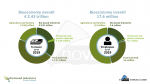
This graphic shows the overall turnover and employment of the bioeconomy and its bio-based industries in the EU-27 in 2019.
-
Erneuerbarer Kohlenstoff – Schlüssel zur Zukunft (PDF)
Policy, Sustainability & Health, Technology
2 Pages
346 Downloads
346 Downloads
2022-07
FREE
Free Shipping346
DownloadsDie chemische Industrie steht aktuell vor einer Vielzahl an Herausforderungen, aus denen eine neue, nachhaltige Chemie erwachsen kann – wenn die große Transformation in den nächsten Jahrzehnten gelingt. Und das muss sie!
Quelle: „Erneuerbarer Kohlenstoff – Schlüssel zur Zukunft“ – aus CHEManager 7/2022
https://www.chemanager-online.com/news/erneuerbarer-kohlenstoff-schluessel-zur-zukunft -
nova-paper #16: The Biomass Utilisation Factor (BUF)
Markets & Economy, Policy, Sustainability & Health
62 Pages
1466 Downloads
1466 Downloads
2022-06
FREE
1466
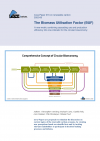
DownloadsThe Biomass Utilisation Factor (BUF) is a new metric combining cascading use and production efficiency into one indicator to investigate the circularity of materials for the circular bioeconomy. Cascading use captures the repeated use of the original biomass, either for the same or a different purpose. Production efficiency looks at how much of the biomass input is actually transformed into useful products or materials.
The BUF can serve not only as an indicator for the circular economy principle of keeping materials in use, but also act as an efficient tool for stakeholders and policy makers to identify options that maximize biomass utilisation and keep materials in use for longer. In light of recent political developments in Europe, the BUF can serve as a tool that provides additional insights for achieving sustainable carbon cycles or help to respect the cascading principle of biomass utilisation.
-
Augen auf bei Plastikverboten – zurück zur wissenschaftsbasierten Materialpolitik (PDF)
Markets & Economy
2 Pages
98 Downloads
98 Downloads
2022-05
FREE
98
DownloadsZahlreiche Bioverbundwerkstoffe können heutzutage problemlos in einem breiten Spektrum von Anwendungen eingesetzt werden und haben als gleichwertige Alternative zu herkömmlichen Kunststoffen den Massenmarkt erreicht.
-
Biocomposites offer alternatives from renewable materials (PDF)
Markets & Economy
6 Pages
684 Downloads
684 Downloads
2022-05
FREE
684
DownloadsNowadays, numerous biocomposites can easily be used in a wide range of applications and have reached the mass market as an equivalent alternative to conventional plastics. The second part of the document is in English.
-
Die neue Tugend: Kunststoff im Kreislauf (PDF)
Markets & Economy, Policy, Sustainability & Health
1 Page
293 Downloads
293 Downloads
2022-05
FREE
293
DownloadsRohstoffe werden knapp, sowohl Metalle wie auch Mineralien. Nur erneuerbarer Kohlenstoff ist praktisch unbegrenzt verfügbar. Daher werden Kunststoffe in Zukunft noch wichtiger sein als heute, und deshalb müssen sie so nachhaltig wie möglich gestaltet werden: aus erneuerbarem Kohlenstoff und voll recycelbar.
-
Biokomposite bieten Alternativen aus erneuerbaren Materialien (PDF)
Markets & Economy
6 Pages
207 Downloads
207 Downloads
2022-05
FREE
207
DownloadsZahlreiche Bioverbundwerkstoffe können heutzutage problemlos in einem breiten Spektrum von Anwendungen eingesetzt werden und haben als gleichwertige Alternative zu herkömmlichen Kunststoffen den Massenmarkt erreicht.
-
Renewable Materials Conference, 10-12 May 2022 (Proceedings)
Markets & Economy, Policy, Sustainability & Health, Technology
254 Downloads
254 Downloads
2022-05
FREE
Plus 19% MwSt.254
DownloadsThe proceedings of the Renewable Materials Conference (10-12 May 2022, https://renewable-materials.eu) contain conference presentations, the conference journal, and the press release of the three winners of the innovation award “Renewable Material of the Year”!
-
Conference on CO2-based Fuels and Chemicals 2022 Proceedings
Markets & Economy, Policy, Sustainability & Health, Technology
110 Downloads
110 Downloads
2022-04
FREE
Plus 19% MwSt.110
DownloadsThe proceedings of the Conference on CO2-based Fuels and Chemicals 2022 (23-24 March 2022, https://co2-chemistry.eu) contain 26 presentations, the conference journal, and the press release of the three winners of the Innovation Award “Best CO2 Utilisation 2022“.
-
Mimicking Nature The PHA Industry Landscape Latest trends and 28 producer profiles
Markets & Economy
59 Pages
2022-03
1,500 € – 8,000 €Price range: 1,500 € through 8,000 € ex. tax
Plus 19% MwSt.Select
licenceNatural PHAs are a class of materials that exist in nature for over millions of years. These materials are both bio-based and biodegradable, similar to other natural materials such as cellulose, proteins and starch. Natural PHAs are produced by an extensive variety of microorganisms through bacterial fermentation. Due to its high performance, biocompatibility, biodegradability and green credentials, the PHA family has a large design space and accommodates a wide range of market applications, as a broad variety of different polymers can be produced and blended. The potential of PHAs is enormous.
The report is a must-read for all those interested in the very latest in PHAs, as developers, producers or, above all, users. The information on the companies described has been checked with each of them and is state-of-the-art for February 2022.
Author of “Mimicking Nature” is Prof. Jan Ravenstijn, who has been working intensively on the topic of PHAs for 20 years, is the author of numerous publications and co-founder of the PHA industry association GO!PHA (www.gopha.org). The report is a joint publication of GO!PHA and nova-Institute (www.nova-institute.eu). -
International Conference on Cellulose Fibres 2022 Proceedings
Markets & Economy, Policy, Sustainability & Health, Technology
174 Downloads
174 Downloads
2022-02
FREE
Plus 19% MwSt.174
DownloadsThe proceedings of the International Conference on Cellulose Fibres 2022 (2-3 February 2022, https://cellulose-fibres.eu) contain 26 presentations, the conference journal, and the press release of the three winners of the Cellulose Fibre Innovation of the Year 2021 Award!
-
RCI’s scientific background report: “Renewable carbon as a guiding principle for sustainable carbon cycles” (February 2022)
Policy, Sustainability & Health
41 Pages
2973 Downloads
2973 Downloads
2022-02
FREE
2973
DownloadsWhy it is right to choose renewable carbon as a guiding principle for sustainable development in the chemicals and materials sectors.
The Renewable Carbon Initiative (RCI) publishes this fundamental strategy paper on the defossilisation of the chemical and material industry with eleven policy recommendations. The Renewable Carbon Initiative is an interest group of more than 30 well-known companies from the wide field of the chemical and material value chains. (www.renewable-carbon-initiative.com)Read more here: https://renewable-carbon-initiative.com/media/press/?id=315
DOI No.: https://doi.org/10.52548/QUHG1295
-
The Climate Change Mitigation Star: A Sixfold Challenge (PNG)
Policy, Sustainability & Health
1 Page
178 Downloads
178 Downloads
2022-02
FREE
178
DownloadsWhy it is right to choose renewable carbon as a guiding principle for sustainable development in the chemicals and materials sectors.
The Renewable Carbon Initiative (RCI) publishes this fundamental strategy paper on the defossilisation of the chemical and material industry with eleven policy recommendations. The Renewable Carbon Initiative is an interest group of more than 30 well-known companies from the wide field of the chemical and material value chains. (www.renewable-carbon-initiative.com)Read more here: https://renewable-carbon-initiative.com/media/press/?id=315
-
nova Price Indices for Fossil Resources, Metals and Biomass (February 2022) (PNG)
Markets & Economy
1 Page
436 Downloads
436 Downloads
2022-02
FREE
436
DownloadsSummarised in three price index curves, this chart shows the price development of fossil, biogenic and metallic raw materials since 1980.
More information available at:
https://renewable-carbon.eu/news/higher-price-increases-for-fossils-nova-price-indices-for-fossil-resources-metals-and-biomass-1980-2021


![Renewable Materials Conference, 10-12 May 2022 (Proceedings) [Digital]](https://renewable-carbon.eu/publications/wp-content/uploads/2020/05/21-01-07_RC-Publications-Cover-Proceedings_RMC-100x141.png)
![Conference on CO2-based Fuels and Chemicals 2022 Proceedings [Digital]](https://renewable-carbon.eu/publications/wp-content/uploads/2020/05/21-01-07_RC-Publications-Cover-Proceedings_CO2-based-100x141.png)

![International Conference on Cellulose Fibres 2022 Proceedings [Digital]](https://renewable-carbon.eu/publications/wp-content/uploads/2020/05/21-01-07_RC-Publications-Cover-Proceedings_Cellulose-Fibres-100x141.png)