Skip to content
Renewable Carbon Publications - LogoRenewable Carbon Publications - Logo
  • Publications
  • Contact
0

No products in the cart.

  • Renewable Carbon
    • Renewable Carbon
    • Events
    • Publications
    • Graphics
    • News
    • Business Directory
    • Newsletter
    • nova-Institute
  • Publications
  • Contact

Renewable Carbon Publications - LogoRenewable Carbon Publications - Logo
0

No products in the cart.

  • Renewable Carbon Publications
  • Markets & Economy
  • Page 9
Grid view List view

Showing 161–180 of 377

  • Download Statistics
  • Direct Download
    21 09 14 scenario for the plastic industry 2050 thumbnail

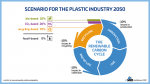
    Scenario for the Plastic Industry 2050 (PNG)

    Markets & Economy, Policy, Sustainability & Health, Technology

    1 Page
    1562 Downloads

    1562 Downloads  

    2021-10

    FREE


    1562
    Downloads

    Direct Download

    The plastics industry of the future will be decoupled from petrochemicals and will meet its carbon needs primarily from recycling. This alone will not close the renewable carbon cycle. The unavoidable losses will then be closed by bio- and CO2-based polymers.

  • Direct Download
    21 05 19 global carbon demand 2020 and 2050 thumbnail

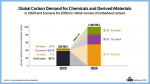
    Global Carbon Demand for Chemicals and Derived Materials (PNG)

    Markets & Economy, Policy, Sustainability & Health, Technology

    1 Page
    1380 Downloads

    1380 Downloads  

    2021-10

    FREE


    1380
    Downloads

    Direct Download

    Global Carbon Demand for Chemicals and Derived Materials in 2020 and Scenario for 2050 in million of embedded carbon.

  • Direct Download
    ar nova web thumbnail

    Biokomposite: überzeugende Lösungen aus erneuerbaren Materialien

    Markets & Economy, Technology

    3 Pages
    435 Downloads

    435 Downloads  

    2021-09

    FREE


    435
    Downloads

    Direct Download

    Heute können die verschiedenen Bioverbundwerkstoffe problemlos in einem breiten Spektrum von Anwendungen eingesetzt werden und haben als Alternative zu herkömmlichen Kunststoffen den Massenmarkt erreicht. Das jährliche Wachstum der Biokomposit-Granulate wird von nova-Institut von 2020 bis 2028 auf 5 % (CAGR) geschätzt. Der Bericht zeigt zudem die 20 führenden Produzenten von Biokompost-Granulaten in Europa.

  • Direct Download
    21 06 18 nova price indices for fossil metal and renewable raw materials 1980 2021 shop thumbnail

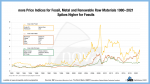
    nova price indices (June 2021) (PNG)

    Markets & Economy

    1 Page
    503 Downloads

    503 Downloads  

    2021-06

    FREE


    503
    Downloads

    Direct Download
  • Direct Download
    Renewable Materials Conference, 18-20 May 2021 (Proceedings) [Digital]

    Renewable Materials Conference, 18-20 May 2021 (Proceedings)

    Markets & Economy, Policy, Sustainability & Health


    208 Downloads

    208 Downloads  

    2021-06

    FREE

    Plus 19% MwSt.
    Free Shipping
     

    208
    Downloads

    Direct Download

    The proceedings of the Renewable Materials Conference (18-20 May 2021, https://renewable-materials.eu) contain conference presentations, the conference journal, and the press release of the three winners of the innovation award “Renewable Material of the Year”!


  • Direct Download
    21 05 11 nova biosinn engl

    BioSinn Presentation Final Conference 30 April 2021 (PDF)

    Markets & Economy, Policy

    141 Pages
    440 Downloads

    440 Downloads  

    2021-05

    FREE


    440
    Downloads

    Direct Download

    BioSinn Presentation Final Conference 30 April 2021. Photos: nova-Institute unless otherwise stated.

  • Direct Download
    21 05 21 cover biosinn factsheets products for which biodegradation makes sense

    BioSinn – Products for which biodegradation makes sense (PDF)

    Markets & Economy, Policy

    134 Pages
    2650 Downloads

    2650 Downloads  

    2021-05

    FREE


    2650
    Downloads

    Direct Download

    In the project “BioSinn – Products for which biodegradation makes sense”, which was funded by the Federal Ministry of Food and Agriculture (funding code 2219NR197), experts from the nova-Institute in Hürth near Cologne investigated whether there are applications and products for which biodegradation is a sensible or even the best end-of-life option. The selection criteria were that collecting the products (or their remaining parts), separating them from other organic waste or material recycling is not possible, economically not feasible or does not take place in practice. Further criteria were that the input of microplastics into the environment can be avoided through the use of biodegradable materials or that indirect positive effects, a relevant secondary benefit, can be achieved through the use of biodegradable materials.

    The result of the project is a brochure for decision-makers from industry and politics but also for the general public, with 25 fact sheets and extensive background information on biodegradation. For each product, it explains to what extent biodegradation is a sensible and feasible option and what technical substitution options are available for a more sustainable use of materials. In addition, political framework conditions and regulations were highlighted and evaluated on a product-specific basis. For the first time, the market volumes for Germany and the EU were also surveyed and estimated. The total volume of the 25 applications in Germany is about 170,000 tonnes and in the European Union even about 1 million tonnes, of which the largest share ends up in the environment. Here, the use of biodegradable materials would bring considerable environmental benefits.

  • Direct Download
    21 05 21 biosinn market volumes germany

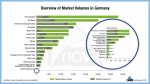
    BioSinn Applications – Overview of Market Volumes in Germany (PNG)

    Markets & Economy

    1 Page
    175 Downloads

    175 Downloads  

    2021-05

    FREE


    175
    Downloads

    Direct Download

    Within the BioSinn project nova-Institute compiled the market volumes of the 25 applications and estimated the loss into the environment.

  • Direct Download
    21 05 21 biosinn marktvolumen d steckbriefe 960

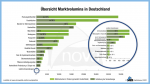
    BioSinn Produkte / Anwendungen – Übersicht der Marktvolumina in Deutschland (PNG)

    Markets & Economy

    1 Page
    192 Downloads

    192 Downloads  

    2021-05

    FREE


    192
    Downloads

    Direct Download

    Im BioSinn Projekt hat das nova-Institut die Marktvolumina für 25 Produkte und Anwendungen zusammengetragen und die Verlustmenge in die Natur geschätzt.

  • Direct Download
    21 05 12 nova biosinn deutsch nh

    BioSinn Präsentation Abschlusskonferenz 28. April 2021 (deutsch) (PDF)

    Markets & Economy, Policy

    141 Pages
    310 Downloads

    310 Downloads  

    2021-05

    FREE


    310
    Downloads

    Direct Download

    BioSinn Präsentation Abschlusskonferenz 28. April 2021 (deutsch). Fotos: nova-Institute sofern nicht andern angegeben.

  • Direct Download
    21 05 20 cover biosinn steckbriefe sinnvoll biologisch abbaubarer produkte auf basis von nachwachsenden rohstoffen

    BioSinn – Steckbriefe sinnvoll biologisch abbaubarer Produkte auf Basis von nachwachsenden Rohstoffen

    Markets & Economy, Policy

    137 Pages
    1823 Downloads

    1823 Downloads  

    2021-04

    FREE


    1823
    Downloads

    Direct Download

    Im Projekt „BioSinn – Steckbriefe sinnvoller biologisch abbaubarer Produkte“, welches durch das Bundesministerium für Ernährung und Landwirtschaft gefördert wurde (Förderkennzeichen 2219NR197), wurde von Expertinnen und Experten des nova-Instituts aus Hürth bei Köln untersucht, ob es Anwendungen und Produkte gibt, für die der biologische Abbau eine sinnvolle oder sogar die beste End-of-Life-Option darstellt. Dabei waren die Auswahlkriterien, dass das Einsammeln der Produkte (oder ihrer Überbleibsel), die Abtrennung der Produkte von sonstigem organischem Abfall oder ein stoffliches Recycling nicht möglich, ökonomisch nicht realisierbar ist bzw. in der Praxis nicht stattfindet. Andere Kriterien waren, dass durch die Verwendung biologisch abbaubarer Materialien der Eintrag von Mikroplastik in die Umwelt vermieden werden kann oder dass durch die Verwendung biologisch abbaubarer Materialien indirekte positive Effekte, ein relevanter Sekundärnutzen erzielt werden kann.
    Das Ergebnis des Projektes ist eine Broschüre für Entscheidungsträger aus Industrie und Politik aber auch für die breite Öffentlichkeit, mit 25 Produktsteckbriefen und umfangreicher Hintergrundinformation zum Thema biologischer Abbau. Für jedes Produkt wird erklärt, inwiefern der biologische Abbau eine sinnvolle und machbare Option ist und welche technischen Substitutionsmöglichkeiten es für einen nachhaltigeren Materialeinsatz gibt. Zudem wurden politische Rahmenbedingungen und Regularien beleuchtet und produktspezifisch ausgewertet. Erstmalig wurden auch die Marktvolumina für Deutschland und die EU erhoben und abgeschätzt. Das Gesamtvolumen der 25 Anwendungen liegt in Deutschland bei rund 170.000 Tonnen und in der Europäischen Union sogar bei etwa 1 Million Tonnen, von denen der größte Anteil in die Umwelt gelangt. Hier würde der Einsatz biologisch abbaubarer Materialien erhebliche Umweltvorteile bringen. (Stand: April 2021, Update Mai 2021)

  • Direct Download
    21 04 09 world plastic production 2018 and 2050 shop

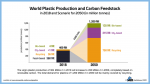
    World Plastic Production and Carbon Feedstock – in 2018 and Scenario for 2050 (in million tonnes)

    Markets & Economy


    1398 Downloads

    1398 Downloads  

    2021-04

    FREE

    Plus 19% MwSt.
     

    1398
    Downloads

    Direct Download
  • Direct Download
    21 04 09 products from the chemicals and derived materials sector in our daily lives thumbnail

    Products from the Chemical and Derived Material Sector in our Daily Lives (PNG)

    Markets & Economy

    1 Page
    154 Downloads

    154 Downloads  

    2021-04

    FREE


    154
    Downloads

    Direct Download

    Commodities from the chemical and derived material sector surround us in manifold ways.

  • Direct Download
    21 04 19 global carbon demand for organic chemicals and derived materials by type of feedstock thumbnail

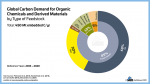
    Global Carbon Demand for Organic Chemicals and Derived Materials by Type of Feedstock (PNG)

    Markets & Economy

    1 Page
    242 Downloads
    242 Downloads  

    2021-04

    FREE


    242
    Downloads

    Direct Download

    Current global demand for carbon embedded in organic chemicals and derived materials by type of carbon feedstock.

  • Direct Download
    21 04 20 global carbon demand for organic chemicals and derived materials by end user application thumbnail

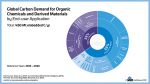
    Global Carbon Demand for Organic Chemicals and Derived Materials by End-user Application (PNG)

    Markets & Economy

    1 Page
    140 Downloads

    140 Downloads  

    2021-04

    FREE


    140
    Downloads

    Direct Download

    Amount of carbon embedded in products from the global organic chemicals and derived materials by end-user application.

  • Direct Download
    21 04 20 global carbon demand for organic chemicals and derived materials by product group thumbnail

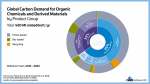
    Global Carbon Demand for Organic Chemicals and Derived Materials by Product Group (PNG)

    Markets & Economy

    1 Page
    152 Downloads

    152 Downloads  

    2021-04

    FREE


    152
    Downloads

    Direct Download

    Type of feedstock for embedded carbon in each product group.

  • Direct Download
    21 04 08 annual production value of organic chemicals in the eu 27 + uk thumbnail

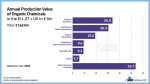
    Annual Production Value of Organic Chemicals in the EU-27 + UK (PNG)

    Markets & Economy

    1 Page
    91 Downloads

    91 Downloads  

    2021-04

    FREE


    91
    Downloads

    Direct Download

    Production value of organic chemicals in the EU-27 + UK in 2018 by end-user application.

  • Direct Download
    21 04 guidance for a biorefinery roadmap for thailand thumbnail

    Guidance for a biorefining roadmap for Thailand

    Markets & Economy, Policy, Sustainability & Health, Technology

    55 Pages
    169 Downloads

    169 Downloads  

    2021-04

    FREE


    169
    Downloads

    Direct Download

    OECD SCIENCE, TECHNOLOGY AND INDUSTRY POLICY PAPERS
    April 2021 No. 110

    Biorefineries present an alternative to fossil-based production, and can create employment, wealth and the ecosystem needed to make them function. Thailand is establishing a bioeconomy with widespread biorefining as a strategy for future economic growth. There is political will to establish in Thailand, if feasible, small, decentralised biorefineries to which farmers can locally deliver biomass as feedstock, which can then be processed into bio-based products. This would help to relieve rural poverty, which is still a problem in some areas of Thailand despite progress. Developing a biorefining roadmap will help to assess the feasibility of such an initiative.


  • Direct Download
    Cover-bio based naphtha and mass balance approach shop

    Bio-based Naphtha and Mass Balance Approach – Status & Outlook, Standards & Certification Schemes – Short Version

    Markets & Economy

    6 Pages
    905 Downloads

    905 Downloads  

    2021-03

    FREE

    Free Shipping
     

    905
    Downloads

    Direct Download

    New report on alternative, non-fossil naphtha with the first comprehensive overview of technology, producers, plants and users

    Bio-based naphtha has been available on the market for a few years now. In Europe, about 150,000 tonnes are already used annually, mainly for polymer production. As soon as the political-economic framework conditions are right, this number could quickly increase to several million tonnes, which have flowed into the HVO (hydrotreated or hydrogenated vegetable oils) biodiesel market so far. These fuels differ only slightly from fossil-based naphtha in their chemical composition. The report presents 17 companies worldwide with capacities ranging from a few thousand tonnes per year to 3 million tonnes. There are currently plans for 50 new or expanded plants.

  • Select
    licence
    Cover-bio based naphtha and mass balance approach shop

    Bio-based Naphtha and Mass Balance Approach – Status & Outlook, Standards & Certification Schemes

    Markets & Economy

    48 Pages


    2021-03

    850 € – 3,500 €Price range: 850 € through 3,500 € ex. tax

    Plus 19% MwSt.
    Free Shipping
    Press
    release
    Select
    licence

    New report on alternative, non-fossil naphtha with the first comprehensive overview of technology, producers, plants and users

    Bio-based naphtha has been available on the market for a few years now. In Europe, about 150,000 tonnes are already used annually, mainly for polymer production. As soon as the political-economic framework conditions are right, this number could quickly increase to several million tonnes, which have flowed into the HVO (hydrotreated or hydrogenated vegetable oils) biodiesel market so far. These fuels differ only slightly from fossil-based naphtha in their chemical composition. The report presents 17 companies worldwide with capacities ranging from a few thousand tonnes per year to 3 million tonnes. There are currently plans for 50 new or expanded plants.

Renewable Carbon Types

Publications

Topics

  • 1
  • …
  • 7
  • 8
  • 9
  • 10
  • 11
  • …
  • 19

nova-Logo
contact@nova-institut.de
www.nova-institute.eu

nova-Institut GmbH
Leyboldstr. 16
50354 Hürth / Germany

  • Renewable Carbon
  • Events
  • Publications
  • Graphics
  • News
  • Business Directory
  • Newsletter
  • nova-Institute
  • My account
  • Legal Information
  • Terms and Conditions
  • Data protection regulation
© 2026 nova-Institut GmbH
Renewable Carbon Publications - Logo

Login

Lost your password?