Showing 221–240 of 460
-
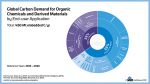
Global Carbon Demand for Organic Chemicals and Derived Materials by End-user Application (PNG)
Markets & Economy
1 Page
139 Downloads
139 Downloads
2021-04
FREE
139
DownloadsAmount of carbon embedded in products from the global organic chemicals and derived materials by end-user application.
-
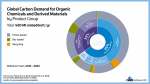
Global Carbon Demand for Organic Chemicals and Derived Materials by Product Group (PNG)
Markets & Economy
1 Page
150 Downloads
150 Downloads
2021-04
FREE
150
DownloadsType of feedstock for embedded carbon in each product group.
-
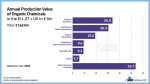
Annual Production Value of Organic Chemicals in the EU-27 + UK (PNG)
Markets & Economy
1 Page
89 Downloads
89 Downloads
2021-04
FREE
89
DownloadsProduction value of organic chemicals in the EU-27 + UK in 2018 by end-user application.
-
Products from the Chemical and Derived Material Sector in our Daily Lives (PNG)
Markets & Economy
1 Page
151 Downloads
151 Downloads
2021-04
FREE
151
DownloadsCommodities from the chemical and derived material sector surround us in manifold ways.
-
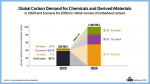
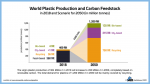
Global Carbon Demand for Organic Chemicals and Derived Materials by Type of Feedstock (PNG)
Markets & Economy
1 Page
240 Downloads
240 Downloads
2021-04
FREE
240
DownloadsCurrent global demand for carbon embedded in organic chemicals and derived materials by type of carbon feedstock.
-
Bioeconomy is not alone – from Bioeconomy to Carbon Management
Policy, Sustainability & Health, Technology
2 Pages
201 Downloads
201 Downloads
2021-04
FREE
Free Shipping201
DownloadsThe bioeconomy faces great expectations and hopes in the fight against climate change, and at the same time is viewed critically. The biggest problems in building a strong bioeconomy are direct and indirect land use changes, which have significant impacts on biodiversity, climate change, and food security.
-
Guidance for a biorefining roadmap for Thailand
Markets & Economy, Policy, Sustainability & Health, Technology
55 Pages
168 Downloads
168 Downloads
2021-04
FREE
168
DownloadsOECD SCIENCE, TECHNOLOGY AND INDUSTRY POLICY PAPERS
April 2021 No. 110Biorefineries present an alternative to fossil-based production, and can create employment, wealth and the ecosystem needed to make them function. Thailand is establishing a bioeconomy with widespread biorefining as a strategy for future economic growth. There is political will to establish in Thailand, if feasible, small, decentralised biorefineries to which farmers can locally deliver biomass as feedstock, which can then be processed into bio-based products. This would help to relieve rural poverty, which is still a problem in some areas of Thailand despite progress. Developing a biorefining roadmap will help to assess the feasibility of such an initiative.
-
Bio-based Naphtha and Mass Balance Approach – Status & Outlook, Standards & Certification Schemes – Short Version
Markets & Economy
6 Pages
901 Downloads
901 Downloads
2021-03
FREE
Free Shipping901
DownloadsNew report on alternative, non-fossil naphtha with the first comprehensive overview of technology, producers, plants and users
Bio-based naphtha has been available on the market for a few years now. In Europe, about 150,000 tonnes are already used annually, mainly for polymer production. As soon as the political-economic framework conditions are right, this number could quickly increase to several million tonnes, which have flowed into the HVO (hydrotreated or hydrogenated vegetable oils) biodiesel market so far. These fuels differ only slightly from fossil-based naphtha in their chemical composition. The report presents 17 companies worldwide with capacities ranging from a few thousand tonnes per year to 3 million tonnes. There are currently plans for 50 new or expanded plants.
-
Bio-based Naphtha and Mass Balance Approach – Status & Outlook, Standards & Certification Schemes
Markets & Economy
48 Pages
2021-03
850 € – 3,500 €Price range: 850 € through 3,500 € ex. tax
Plus 19% MwSt.Free ShippingPress
release Select
licenceNew report on alternative, non-fossil naphtha with the first comprehensive overview of technology, producers, plants and users
Bio-based naphtha has been available on the market for a few years now. In Europe, about 150,000 tonnes are already used annually, mainly for polymer production. As soon as the political-economic framework conditions are right, this number could quickly increase to several million tonnes, which have flowed into the HVO (hydrotreated or hydrogenated vegetable oils) biodiesel market so far. These fuels differ only slightly from fossil-based naphtha in their chemical composition. The report presents 17 companies worldwide with capacities ranging from a few thousand tonnes per year to 3 million tonnes. There are currently plans for 50 new or expanded plants.
-
Bio-based Naphtha and Mass Balance Approach – Status & Outlook, Standards & Certification Schemes – Graphics: Cover (PNG)
Markets & Economy
441 Downloads
441 Downloads
2021-03
FREE
Free Shipping441
DownloadsNew report on alternative, non-fossil naphtha with the first comprehensive overview of technology, producers, plants and users
Bio-based naphtha has been available on the market for a few years now. In Europe, about 150,000 tonnes are already used annually, mainly for polymer production. As soon as the political-economic framework conditions are right, this number could quickly increase to several million tonnes, which have flowed into the HVO (hydrotreated or hydrogenated vegetable oils) biodiesel market so far. These fuels differ only slightly from fossil-based naphtha in their chemical composition. The report presents 17 companies worldwide with capacities ranging from a few thousand tonnes per year to 3 million tonnes. There are currently plans for 50 new or expanded plants.
-
2nd International Conference on Cellulose Fibres Proceedings 2021
Markets & Economy, Policy, Sustainability & Health, Technology
102 Downloads
102 Downloads
2021-02
FREE
Plus 19% MwSt.Free Shipping102
DownloadsThe proceedings of the 2nd International Conference on Cellulose Fibres (2-3 February 2021, https://cellulose-fibres.eu) contain 26 presentations, the conference journal, and the press release of the three winners of the Cellulose Fibre Innovation of the Year 2021 Award!
-
193 Downloads
2021-02
FREE
193
DownloadsIn einem komplementären Ansatz liefert chemisches Recycling zusätzliche Optionen, die das derzeitige Recyclingsystem verbessern und erweitern können.
-
Carbon economy – Studies on support to research and innovation policy in the area of bio-based products and services
Markets & Economy, Policy, Sustainability & Health, Technology
384 Pages
650 Downloads
650 Downloads
2021-02
FREE
Free Shipping650
DownloadsNova-Institute, together with COWI and Utrecht University published a report on the role of carbon in the global, European and regional economy for the Directorate-General for Research and Innovation (European Commission).
The report herein contains five Work Packages (WPs) that embody the requirements set out in the European Commission’s “Studies on support to R&I policy in the area of bio-based products and services – Carbon Economy (Lot 1).” The main aim of the project was to map out the current pathways available for the transition towards a low carbon economy as well as the barriers that hinder this transition. Based on the conclusions and key findings from the WPs, the authors set the scene for the future of the bio-based sector with a particular focus on ten case studies of regions and cities across the EU (WP4), an evaluation of promising innovations and novel technologies for the realisation of such an economy and a sweeping regulatory analysis containing Q1 2020 updates (WP3) on EU directives and regulations that pertain to the low carbon economy. This attention to the local level as well as the broader policy sphere is supported by a scientific understanding of the low carbon economy (WP1), potential future scenarios towards 2050 (WP2) as well as clear dissemination of the findings across the entire study (WP5). In the frame of the study an animated educational video was produced. The final study report contains an executive summary followed by each Work Package in its entirety, which can also be treated as stand-alone reports in their own right.
Further information at: https://op.europa.eu/en/publication-detail/-/publication/8c4de15d-a17d-11eb-b85c-01aa75ed71a1
-
Bio-based Building Blocks and Polymers – Global Capacities, Production and Trends 2020 – 2025 – Graphics: Figure 5 (PNG)
Markets & Economy
336 Downloads
336 Downloads
2021-01
FREE
Plus 19% MwSt.336
Downloads -
Bio-based Building Blocks and Polymers – Global Capacities, Production and Trends 2020 – 2025 – Graphics: Figure 6 (PNG)
Markets & Economy
492 Downloads
492 Downloads
2021-01
FREE
Plus 19% MwSt.492
Downloads -
Bio-based Building Blocks and Polymers – Global Capacities, Production and Trends 2020 – 2025 – Graphics: Figure 7 (PNG)
Markets & Economy
449 Downloads
449 Downloads
2021-01
FREE
Plus 19% MwSt.449
Downloads -
Bio-based Building Blocks and Polymers – Global Capacities, Production and Trends 2020 – 2025 – Graphics: Figure 8 (PNG)
Markets & Economy
381 Downloads
381 Downloads
2021-01
FREE
Plus 19% MwSt.381
Downloads -
Bio-based Building Blocks and Polymers – Global Capacities, Production and Trends 2020 – 2025 – Graphics: Figure 9 (PNG)
Markets & Economy
330 Downloads
330 Downloads
2021-01
FREE
Plus 19% MwSt.330
Downloads -
Bio-based Building Blocks and Polymers – Global Capacities, Production and Trends 2020 – 2025 – Graphics: Figure 10 (PNG)
Markets & Economy
370 Downloads
370 Downloads
2021-01
FREE
Plus 19% MwSt.370
Downloads -
Bio-based Building Blocks and Polymers – Global Capacities, Production and Trends 2020 – 2025
Markets & Economy
338 Pages
2021-01
100 € – 500 €Price range: 100 € through 500 € ex. tax
Plus 19% MwSt.Press
release Select
licenceReport on the global bio-based polymer market 2020 – A deep and comprehensive insight into this dynamic market
The year 2020 was a promising year for bio-based polymers: Sold out PLA in 2019 has led to the installation of increased capacities, PE and PP made from bio-based naphtha are breaking ground and future expansion for bio-based polyamides as well as for PBAT, PHAs and casein polymers is on the horizon. A lower production is only observed for bio-based PET.


![2nd International Conference on Cellulose Fibres Proceedings 2021 [Digital]](https://renewable-carbon.eu/publications/wp-content/uploads/2020/05/21-01-07_RC-Publications-Cover-Proceedings_Cellulose-Fibres-100x141.png)


![Bio-based Building Blocks and Polymers – Global Capacities, Production and Trends 2020 – 2025 [Digital]](https://renewable-carbon.eu/publications/wp-content/uploads/2021/01/Bio-based-building-blocks-2025-100x141.png)