- Siemens becomes preferred automation and digitalization partner
- Agreement aims at jointly accelerating the energy transition and covers broad scope of Siemens Xcelerator portfolio
- Siemens supports CAPHENIA from pilot plant to commercial scale-up
Siemens and the cleantech company CAPHENIA have entered a partnership to scale the production of Sustainable Aviation Fuel (SAF). SAF is a synthetic kerosene made from renewable feedstocks that can reduce CO₂ emissions by up to 80 percent compared to fossil kerosene. As preferred automation and digitalization partner, Siemens will provide digitalization and automation solutions for CAPHENIA’s plasma technology, which converts bio-methane into synthesis gas. The goal is a standardized concept that enables the global rollout of commercial production facilities.

CAPHENIA’s technology uses a plasma process to split bio-methane into synthesis gas at temperatures of around 1,500 degrees Celsius. CAPHENIA’s Plasma Boudouard Reactor (PBR) is a globally unique 3-in-1 zone reactor that integrates three established chemical reactions in one system. The resulting synthesis gas can then be further processed into SAF, renewable diesel, or chemical products—without by-products and with minimal energy losses.
A key advantage: the heat released when cooling the synthesis gas is used to preheat the incoming bio-methane. This results in a process efficiency of more than 86 percent, representing significantly higher energy efficiency than is possible with conventional methods.
“Decarbonizing aviation cannot be achieved without synthetic fuels. Demand for SAF is growing exponentially, yet production capacity urgently needs to be ramped up,” said Christian Gückel, Head of Vertical Chemicals at Siemens Digital Industries. “This is exactly where Siemens comes in: with our digitalization and automation solutions, we are making CAPHENIA’s technology industrially scalable and thus accelerating its global market ramp-up.”
“This partnership shows how technology leaders are working together to drive forward the energy transition. Siemens brings the portfolio and expertise to standardize and digitalize our plants. But the real point is this: the market for sustainable aviation fuels will not grow evenly—it will fragment. Those who scale quickly, those who are industrial-ready, those who have the right partners will lead. Together, we are not only laying the foundation for the international ramp-up of our PBR technology – we want to lead it,” said Dr. Mark Misselhorn, founder and CEO of CAPHENIA.
Digitalization as key to scaling
Under the agreement, Siemens becomes CAPHENIA’s preferred supplier and technology partner, offering comprehensive solutions from its Siemens Xcelerator portfolio, including process control systems, drive technology, measurement technology, and process simulation software. Digital twins will make it possible to optimize operating parameters before physical commissioning and to manage processes consistently across different sites.
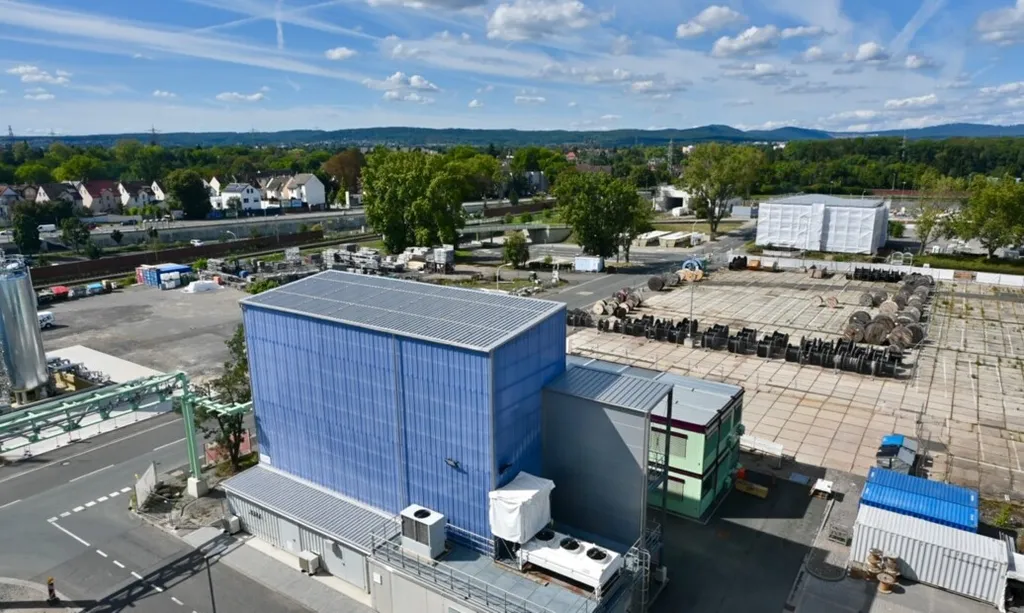
Siemens is supporting CAPHENIA from its pilot plant at industrial park Höchst (Frankfurt, Germany) through to commercial scale-up. The goal is to develop a standardized automation and digitalization template for CAPHENIA’s Plasma Boudouard Reactor (PBR) that is modularly scalable and can be adapted to different locations. This is intended to accelerate the rapid rollout of new plants in the coming years and significantly reduce commissioning time.
Growing demand for synthetic jet fuels
Demand for SAF is rising rapidly, driven by regulatory requirements. The EU Renewable Energy Directive (RED) mandates binding blending quotas, with penalties for non-compliance. The scale of the challenge is enormous: by 2050, the global aviation industry will need around 500 million tons of SAF annually. Currently, SAF covers less than one percent of global kerosene demand. Efficient and scalable production technologies are essential to close this gap.
Links
- Siemens’ portfolio for the chemical industry
- White paper on CAPHENIA’s plasma-Boudouard reactor technology
About Siemens Digital Industries
Siemens Digital Industries (DI) empowers companies of all sizes within the process and discrete manufacturing industries to accelerate their digital and sustainability transformation across the entire value chain. Siemens’ cutting-edge automation and software portfolio revolutionizes the design, realization and optimization of products and production. And with Siemens Xcelerator – the open digital business platform – this process is made even easier, faster, and scalable. Together with our partners and ecosystem, Siemens Digital Industries enables customers to become a sustainable Digital Enterprise. Siemens Digital Industries has a workforce of around 70,000 people worldwide.
About Siemens AG
Siemens AG (Berlin and Munich) is a leading technology company focused on industry, infrastructure, mobility, and healthcare. The company’s purpose is to create technology to transform the everyday, for everyone. By combining the real and the digital worlds, Siemens empowers customers to accelerate their digital and sustainability transformations, making factories more efficient, cities more livable, and transportation more sustainable. A leader in industrial AI, Siemens leverages its deep domain know-how to apply AI – including generative AI – to real-world applications, making AI accessible and impactful for customers across diverse industries. Siemens also owns a majority stake in the publicly listed company Siemens Healthineers, a leading global medical technology provider pioneering breakthroughs in healthcare. For everyone. Everywhere. Sustainably. In fiscal 2025, which ended on September 30, 2025, the Siemens Group generated revenue of €78.9 billion and net income of €10.4 billion. As of September 30, 2025, the company employed around 318,000 people worldwide on the basis of continuing operations. Further information is available on the Internet at www.siemens.com.
About CAPHENIA
‘Turning CO₂ into fuel’ – CAPHENIA GmbH is a cleantech company founded in 2018 with a clear mission: to create a CO₂-neutral future for mobility through competitive sustainable fuels.
At the heart of the technology is the Plasma Boudouard Reactor (PBR) – a globally unique, precisely controllable 3-in-1 zone reactor. The process uses electricity, biomethane, and CO₂ as input materials and splits methane into its components carbon and hydrogen using plasma. The highly efficient process produces synthesis gas without by-products and with minimal energy losses. The synthesis gas is then further processed into synthetic fuels or chemical products. CAPHENIA protects this technology with more than 250 patents worldwide.
With its patented power-and-biogas-to-liquid (PBtL) process, CAPHENIA converts renewable resources into high-quality synthetic fuels. The reactors are designed for full scalability and enable the rapid, large-volume production of renewable fuels.
CAPHENIA is supported by renowned investment and development partners as well as an advisory board of leading industry and business representatives. The development is funded by the Federal Ministry for Economic Affairs and Climate Protection (BMWi), the Bavarian State Ministry of Economic Affairs, Regional Development and Energy, and the Hessian Ministry of Economics, Energy, Transport, Housing, and Rural Affairs.
The ‘Germany I’ pilot plant in the Höchst Industrial Park near Frankfurt am Main will go into operation in 2026 and demonstrate the technology on an industrial scale. This will enable a rapid ramp-up to commercial production.
CAPHENIA is led by founder and CEO Dr. Mark Misselhorn.
Source
Siemens, press release, 2026-02-25.
Supplier
Bayerisches Staatsministerium für Umwelt und Verbraucherschutz (STMUV)
Bundesministerium für Wirtschaft und Energie (BMWI)
Caphenia
Hessisches Ministerium für Wirtschaft, Energie, Verkehr und Landesentwicklung
Siemens AG
Share
Renewable Carbon News – Daily Newsletter
Subscribe to our daily email newsletter – the world's leading newsletter on renewable materials and chemicals