A new research project aims to study the biodegradation of particles from compostable plastic films under realistic conditions in soil. The recently launched German Austrian joint project “Continued biodegradation of fragments from certified compostable plastic films in soil under real conditions” seeks to gain scientifically sound insights into how fast fragments of such films, which may enter the soil via compost, biodegrade in that environment. The project marks another important step towards a deeper understanding of the biodegradability of compostable plastic films and their behavior in the environment.
Background: Compostable plastics in the biological cycle
Certified compostable biowaste collection bags are used in many households. They facilitate the hygienic collection of organic kitchen waste and transporting it to the biowaste bin. In Austria, very lightweight plastic carrier bags are required to be compostable since 2020. Initially used for shopping and transporting loose fruits and vegetables, these bags can also help keep food fresh for longer and ultimately be used for collecting and disposing of biowaste. In Germany, compostable biowaste bags are permitted for the collection and disposal of biowaste, provided there are no deviating regulations from public waste management authorities and the bags meet the requirements of the Biowaste Ordinance. This includes, among other things, that the bags must biodegrade within six weeks of treatment in composting facilities and disintegrate into fragments smaller than two millimeters. Compliance with these criteria must be demonstrated through an independent certification process, e.g., “DINplus Bioabfall-Beutel,” based on the standard DIN EN 13432.
Project goal: Investigating biological degradation in soil
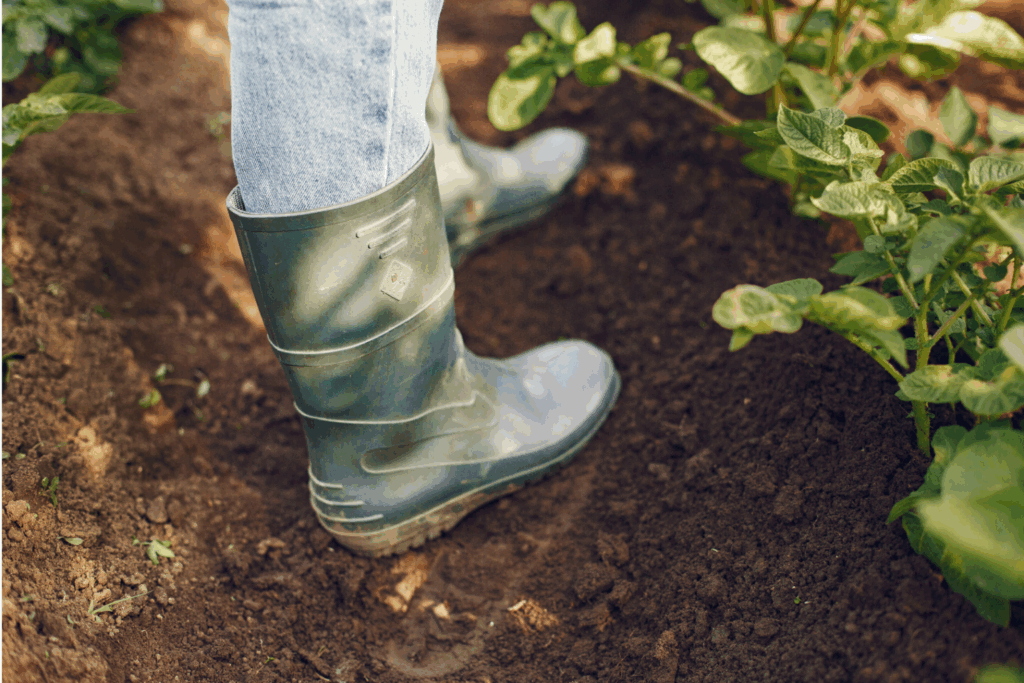
The research project will investigate the extent to which film fragments that may remain in compost continue to biodegrade under real conditions in soil and will quantify their microbial conversion. To this end, certified industrially compostable films will be processed as part of routine operations at two biowaste treatment facilities, a composting plant in Austria and an anaerobic digestion plant with subsequent composting in Germany, producing composts containing corresponding fragments. These composts will then be applied to soil. Over an expected 24-month period, samples will be regularly taken to track the biodegradation of the remaining particles.
Collaboration between science and practice
The project brings together partners from science, material manufacturing, and biowaste treatment. Participating institutions include renowned research bodies from the University of Vienna, the University of Natural Resources and Life Sciences in Vienna (BOKU), and ETH Zurich. The project is jointly coordinated by the Austrian bündnis mikroplastikfrei and the German Initiative natürliche Kreislaufwirtschaft (INAK). An interdisciplinary advisory board with experts from waste management, compost and soil sectors, science, and policy is closely involved to ensure that the experiences of all relevant German and Austrian stakeholders are incorporated.
“Certified compostable plastics can offer an alternative to conventional plastics in certain applications, helping to reduce the input of persistent microplastics into compost and soil. However, it is essential to provide scientifically robust evidence showing how quickly any residues that may remain in the compost continue to biodegrade in the soil,” explains Katrin Schwede, INAK. “With this project, we are conducting a large-scale monitoring program to systematically investigate the fate and degradation of such fragments throughout the entire process from composting to soil.”
About the project
The research project investigates the continued biodegradation of certified compostable plastics in soil over a minimum of one year. Using state-of-the-art analytical methods and realistic conditions, the project aims to build a comprehensive understanding of biological degradation processes. The findings are expected to raise awareness of the possibilities and limitations of compostable plastics, inform compost users about their effects in soil, and provide a sound basis for future regulatory decisions.
About bündnis mikroplastikfrei
bündnis mikroplastikfrei is an international alliance of scientific institutions, companies, associations, and municipal administrations. It serves as a hub for expertise and exchange to develop strategies for reducing microplastics in the environment. The initiative is also one of the contributing partner organizations to the Austrian federal government’s Microplastics Action Plan 2022–2025.
About the Initiative natürliche Kreislaufwirtschaft
The Initiative natürliche Kreislaufwirtschaft e.V. (INAK) is an alliance of companies, scientists, waste managers, and certification bodies committed to promoting the use of biodegradable and compostable materials in suitable applications to prevent microplastic pollution and keep natural resources in closed loops.
Contacts
Daniel Steinit
bündnis mikroplastikfrei
E-Mail: steinitz@mikroplastikfrei.at
Katrin Schwede,
Initiative natürliche Kreislaufwirtschaft e.V. (INAK)
E-Mail: schwede@inak.bio
[1] C.A.R.M.E.N. e.V (2022).: N. Arbeck, J. Lehmann, N. Sporrer, U, Peintner, Witzenhausen-Institut für Abfall, Umwelt und Energie GmbH: Dr-Ing. M. Kern, H.-J. Siepenkothen: Abschlussbericht zum Modellprojekt, Praxistest Bio-Beutel – Kreislaufwirtschaft mit kompostierbaren Obst- und Gemüsebeuteln, https://www.carmen-ev.de/wp-content/uploads/2022/02/Abschlussbericht_Praxistest-Bio-Beutel.pdf
Source
Initiative natürliche Kreislaufwirtschaft (INAK), press release, 2026-04-21.
Supplier
bündnis mikroplastikfrei
Eidgenössische Technische Hochschule Zürich (ETH Zürich)
Initiative Natürliche Kreislaufwirtschaft INAK
Universität für Bodenkultur Wien (BOKU)
Share
Renewable Carbon News – Daily Newsletter
Subscribe to our daily email newsletter – the world's leading newsletter on renewable materials and chemicals