 Opening of the first commercial ‘traceless’ natural polymer plant in Germany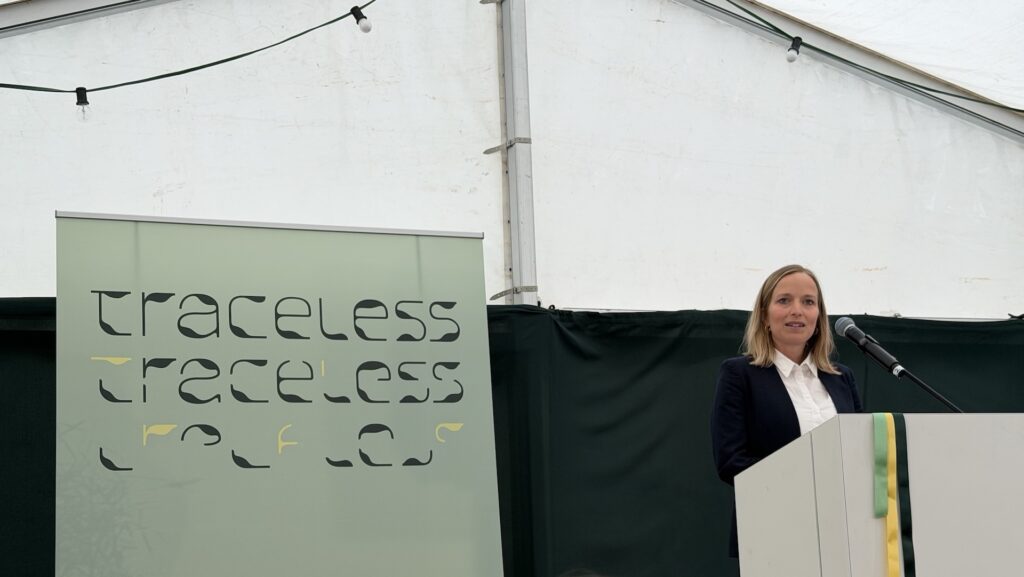
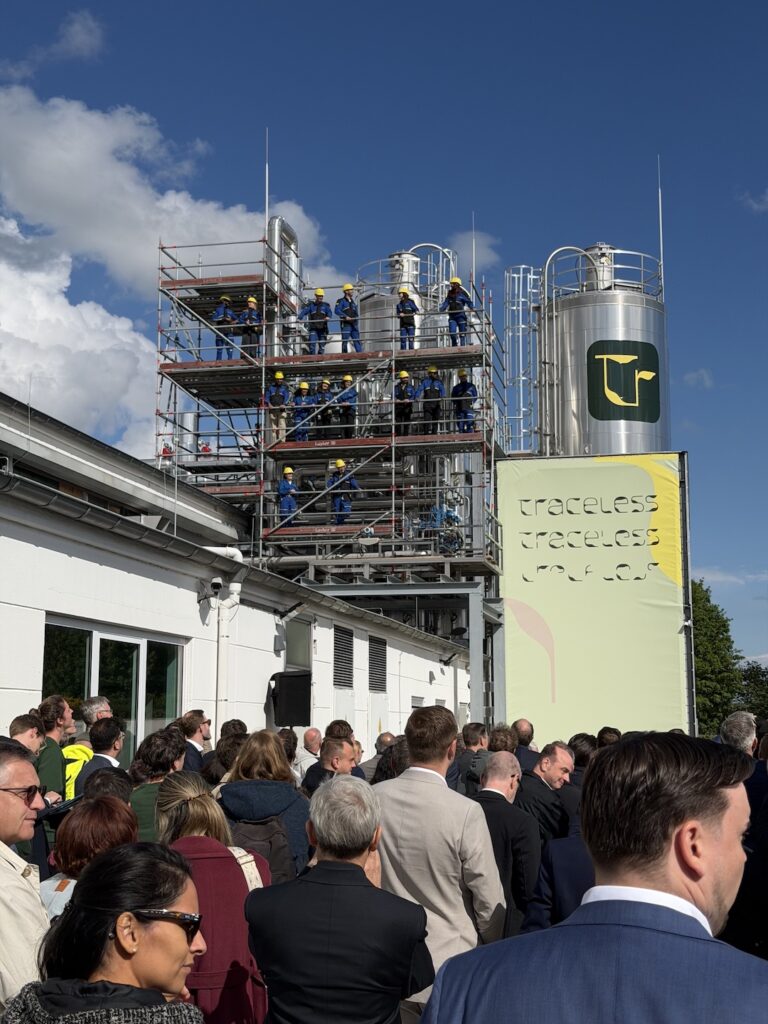
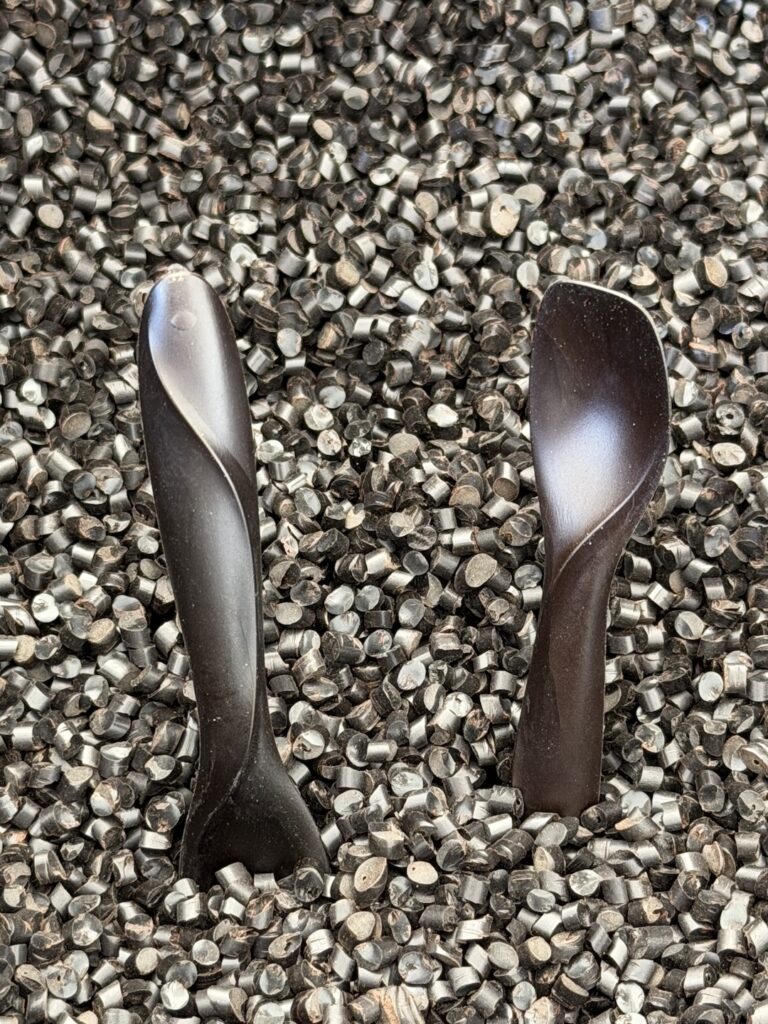
On 13 May 2026, CEO Dr Anne Lamp inaugurated the first ‘traceless’ plant in Hamburg-Harburg as part of a circular bioeconomy: 3,000 tonnes of natural and biodegradable polymers are produced annually from plant-based waste materials, which can replace fossil-based polymers in applications such as paper coating, ice cream spoons and many more. The biogenic residues come from beer brewing and bioethanol production. If all goes well, a plant with a capacity of 30,000 tonnes per year is set to follow.
This involves a new generation of materials – natural polymers – that can be processed thermoplastically on existing machinery. Traceless polymers are highly biodegradable, even in home compost, in soil or in the sea. They leave no trace, but instead re-enter the natural cycle after use. Traceless is not the only company producing such innovative natural polymers. But it is the first to begin commercial production as of today.
Those present at the opening included German Environment Minister Carsten Schneider, Marko Schuster, COO of Mondi – the first major buyer of paper coating – and Finnish investor Sakari Saarela of UB FIGG.
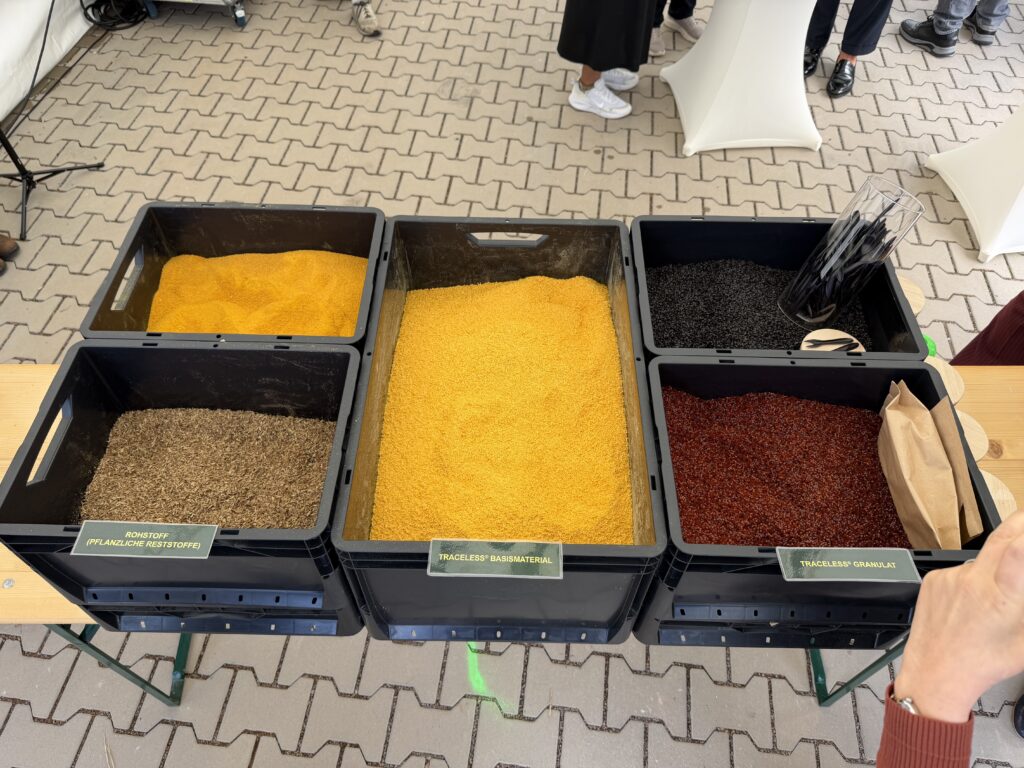
Traceless granules look just like conventional plastic granules and can be marketed as such, but according to the European Commission, they are not plastic because the polymer is derived from nature and can therefore be used in areas where plastics are not permitted.
Author
Michael Carus
Source
nova-Institute, original text, 2026-05-27.
Supplier
BMUKN Bundesministerium für Umwelt, Klimaschutz, Naturschutz und nukleare Sicherheit
Mondi Group
nova-Institut GmbH
traceless materials GmbH
UB Forest Industry Green Growth Fund (UB FIGG)
Share
Renewable Carbon News – Daily Newsletter
Subscribe to our daily email newsletter – the world's leading newsletter on renewable materials and chemicals