 Methane Emissions from Crude Oil and Gas Supply Chains Significantly Underestimated
A new study, commissioned by the Renewable Carbon Initiative (RCI) and carried out by LCA experts from nova-Institute, visualises that recent updates to leading life cycle inventory (LCI) databases, including ecoinvent versions 3.9 to 3.11 and Carbon Minds, have exposed a major underestimation of methane emissions across crude oil and natural gas supply. The new findings were identified through enhanced satellite data on venting, flaring, and fugitive leaks and resulted.
The revisions reveal stark inconsistencies in emission reporting across industry sources like the International Energy Agency (IEA) or International Association of Oil & Gas Producers (IOGP). For example, global methane emissions from oil production are now reported to be 15 times higher in International Energy Agency (IEA) data compared to IOGP figures, with discrepancies for Russia reaching 10-fold and for Saudi Arabia an astonishing 40-fold. Similar gaps exist for natural gas, where World Bank data show emissions up to 3.8 times higher than IOGP estimates in key producing countries.
Substantial impact on the carbon footprint of fossil-based chemicals
These data revisions mean that the carbon footprint of key fossil-based feedstocks and downstream products, as tracked in such LCI databases, has risen sharply over the past years. For instance, the climate impact attributed to naphtha – the most common olefin feedstock – has almost increased tenfold due to methane emissions.
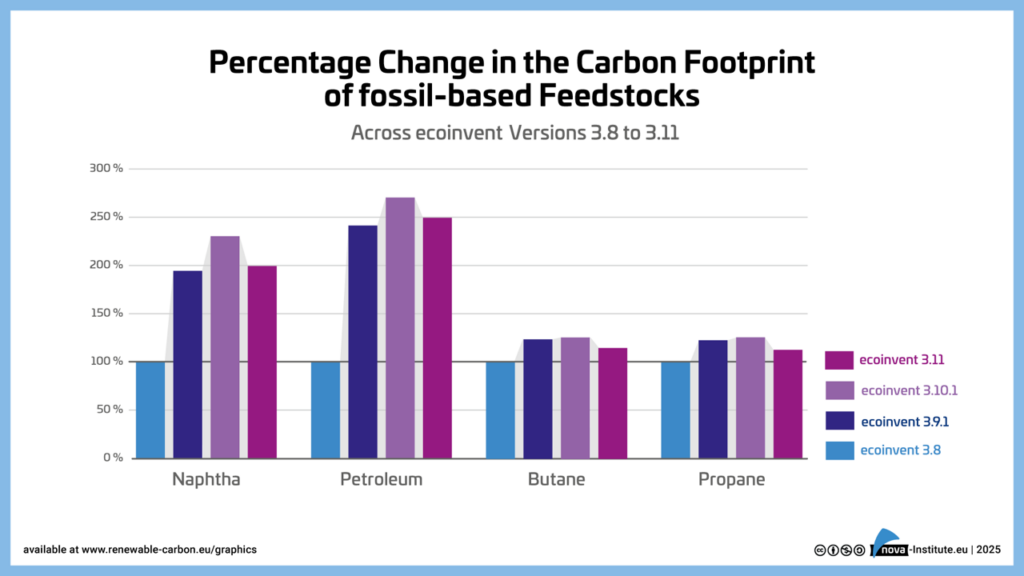
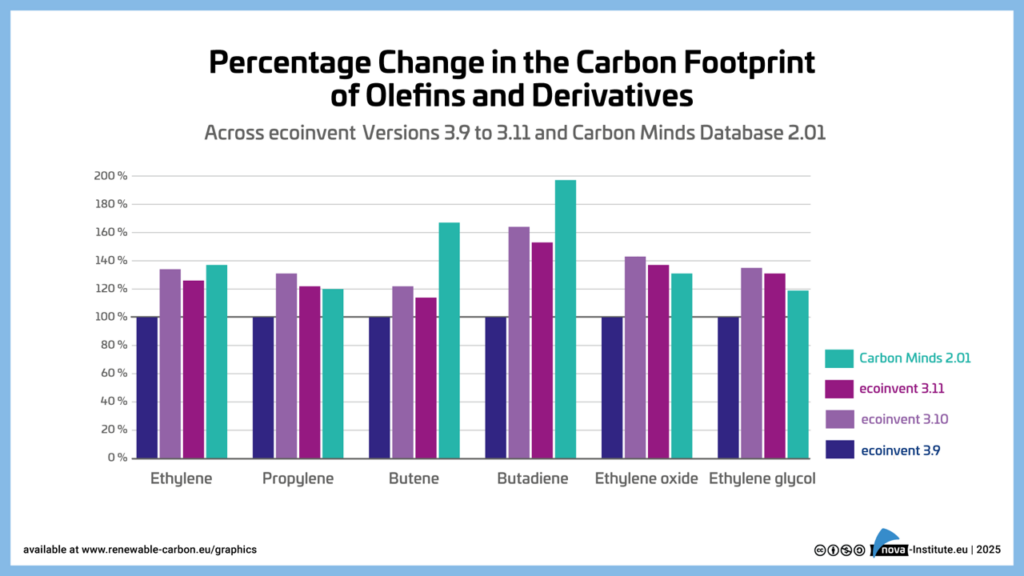
As a result, major petrochemical products have seen marked carbon footprint increases: for example, the footprint of naphtha almost doubled, ethylene and propylene footprints increased by roughly 30%, and the Butadiene footprint increased by 60-90% compared to previous LCA data. Plastics derived from these, including polyethylene (PE), polypropylene (PP), and polyethylene terephthalate (PET), now carry 20–30% higher carbon footprints.
Renewable Carbon alternatives linked to lower emissions
The updated database figures show that the climate advantage of renewable carbon-based products is even greater than thought. Recent case studies using the newest ecoinvent data now indicate a 40-50% lower carbon footprint for bio-based plastics compared to fossil-based ones – a significant increase from the previous estimate of approximately 30%. And this is before including biogenic carbon uptake, which pushes these advantages even higher.
Policy and Industry Implications
The report urges policymakers to rapidly integrate the updated LCI data into consideration for climate strategies and when assessing fossil-based products to renewable alternatives. Failure to do so risks misrepresenting the environmental costs of fossil-based chemicals, especially in EU legislation such as the Packaging and Packaging Waste Regulation (PPWR).
Core recommendations of the report include:
- Regularly update of LCI databases to reflect new scientific and technological developments
- Expand the scope of emissions tracking to include e.g. abandoned oil and gas fields
- Harmonise reporting across databases (ecoinvent, Sphera, PlasticsEurope)
- Encourage policy support for renewable carbon solutions to align industrial defossilisation with climate goals.
For more information on the study and its implications, please visit https://renewable-carbon.eu/publications/product/increased-methane-emissions-in-crude-oil-and-natural-gas-supply-implications-for-the-carbon-footprint-of-petrochemicals-an-rci-report-pdf/ or contact christopher.vomberg@nova-institut.de.
Disclaimer
RCI members are a diverse group of companies addressing the challenges of the transition to renewable carbon with different approaches. The opinions expressed in these publications may not reflect the exact individual policies and views of all RCI members.
About RCI
The Renewable Carbon Initiative (RCI) is a global network of more than 60 prominent companies dedicated to supporting and accelerating the transition from fossil carbon to renewable carbon (bio-based, CO2-based and recycled) for all organic chemicals and materials. Its work focuses on scientific background reports, position papers, advocacy and networking.
Source
Renewable Carbon Initiative, original text, 2025-10-09.
Supplier
International Association of Oil & Gas Producers (IOGP)
International Energy Agency (IEA)
nova-Institut GmbH
Renewable Carbon Initiative (RCI)
Share
Renewable Carbon News – Daily Newsletter
Subscribe to our daily email newsletter – the world's leading newsletter on renewable materials and chemicals