 Developing CO₂-Based PLGA for high performance packaging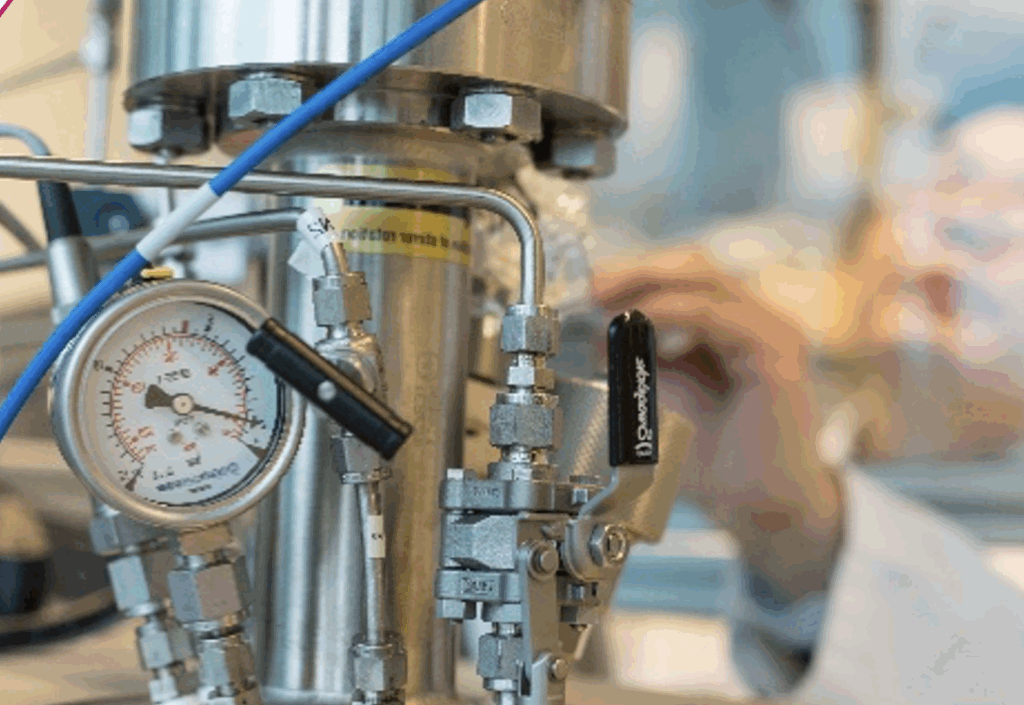
The HICCUPS project aims to efficiently convert biogenic CO₂ from wastewater treatment plants into bio-based polymers for packaging. Using an electrochemical process, CO₂ from sludge is transformed into monomers and polymerised into polylactic-co-glycolic acid (PLGA). This biodegradable polymer, with excellent barrier properties, offers a renewable alternative to fossil-based polyethylene. To showcase its potential, PLGA-based packaging materials, including coated paper for food packaging and moulded plastic, will be developed.
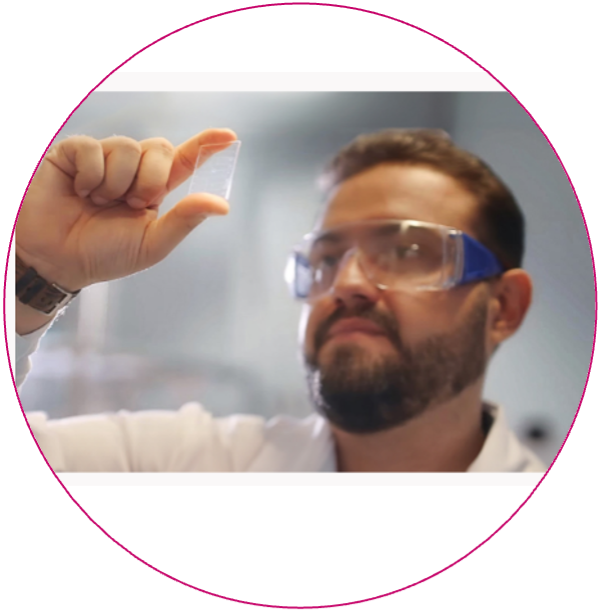
Derar Alkhateb is the WP3 leader. For HICCUPS he transforms CO2 based monomer to polymers.
Derar works as a scientist at Avantium focusing on polymers application development in the CorpTech department.
At Avantium, sustainability is in our DNA. Our innovative and high-quality materials drive the de-fossilization of the chemical industry and lead the transition to a circular economy.
What makes the polymer PLGA such an interesting choice for your team?
PLGA is an extremely interesting polymer because of its unique combination of barrier properties, biodegradability, and tunable properties. PLGA naturally degrades into lactic acid and glycolic acid with no toxic residues remaining. Additionally, CO2 based PLGA can have tunable properties by adjusting the ratio of lactic acid to glycolic acid you can control the barrier properties, degradation rate, mechanical properties, and thermal properties. The barrier properties of PLGA for oxygen are very good. The synergy between the strong barrier properties and good processability make PLGA a very promising material especially for high performance packaging. HICCUPS will widen the PLGA applications from the medical field to food packaging by demonstrating the successful application of PLGA as a thin single-layer paper barrier through dispersion and extrusion coating and as thermoformed films and trays.
What kinds of qualities are you trying to give this material — and what do you actually test for?
Avantium has developed an alternative PLGA polymer synthesis technique with reactive solvents that facilitate removal of water and in this way reduce the hydrolysis back reaction that limits the molecular weight. Additionally, these solvents can be easily recycled. Avantium has been successful in performing this reaction at lab scale. For PLGA properties the goal is to balance multiple key properties depending on what the polymer will be used for such as mechanical strength, thermal stability, processability, functionality, and biodegradability.
What are the challenges of PLGA synthesis and upscaling?
The typical PLGA synthesis route is ring-opening polymerization (ROP), which requires an extra reaction step resulting in making this process expensive with limited polymer properties. But with reactive solvents route that Avantium is working on, we will be able to overcome (ROP) challenges upon upscaling to multiple kilograms scale at the same time improving the final PLGA product properties resulting in a wide range of applications that were not possible with the traditional route.
This version of PLGA starts with CO₂ — how does that affect the final product?
Making PLGA from CO2 derived monomers , aims to offer the full route all the way from CO2 since the combination of CO2 utilization and the production of a versatile new type of plastic is the most attractive by maintaining PLGA’s excellent biodegradability, mechanical properties, and ease of processing enables wide variety of applications.
What makes PLGA a good coating material?
The main challenges in the current market solutions are limited barrier properties and limited recyclability of coated paper streams. HICCUPS PLGA overcomes these shortcomings to the market which combine the required food barrier properties together with the recyclability. Additionally, PLGA is a good material for coating because of many factors such as biodegradability, tunable polymer where degradation rate and other properties can be controlled. PLGA is good film former, makes smooth, uniform coating and versatile where it can be applied by various coating techniques.
How could this material help tackle big issues like biodegradability or plastic waste?
By using PLGA, which has excellent barrier properties, we can provide the necessary properties with PLGA monomaterial and thus, avoid using multilayer barriers or thick barrier layers. Therefore, the target for the developed PLGA-coated paper products is that it can be recycled without any adaptation in current paper recycling streams. The same target applies for the ability to mechanically/chemically recycle the PLGA plastic products (e.g., trays). It is unfortunately unavoidable that some PLGA might end up in nature, the HICCUPS project intends to show that the high biodegradability of PLGA will also result in a fast depletion of PLGA in soil and marine environments.
Funded by the European Union. Views and opinions expressed are however those of the author(s) only and do not reflect those of the European Union. Neither the European Union nor the granting authority can be held responsible for them. The project is supported by the Circular Bio-based Europe Joint Undertaking and its members.
The project is supported by the Circular Bio-based Europe Joint Undertaking and its members.
Source
Project HICCUPS, press release, 2026-01-16.
Supplier
ACCIONA Infrastructure
Aqualung CarbonCapture
Avantium Technologies B.V.
Bio-based Industries Consortium (BIC)
Circular Bio-based Europe Joint Undertaking (CBE JU)
European Commission
European Union
FUNDITEC
HICCUPS
INRAE
nova-Institut GmbH
SINTEF
Technical Research Centre of Finland (VTT)
Unife International – University of Ferrara
Walki Group
Share
Renewable Carbon News – Daily Newsletter
Subscribe to our daily email newsletter – the world's leading newsletter on renewable materials and chemicals