 Monthly news from the Renewable Carbon Initiative (RCI), September 2025
This month, RCI published a new study visualising the impact of underestimated methane emissions from fossil feedstocks in recent life-cycle assessment database updates and was officially appointed as a member of the Ecodesign Forum. RCI also highlights key outcomes from the Renewable Materials Conference 2025, upcoming RCI roundtables, and the latest new members and partners driving the renewable carbon transition.
New RCI Study Visualises Impact of Underestimated Methane Emissions from Fossil Feedstocks in Recent Life-Cycle Assessment Database Updates
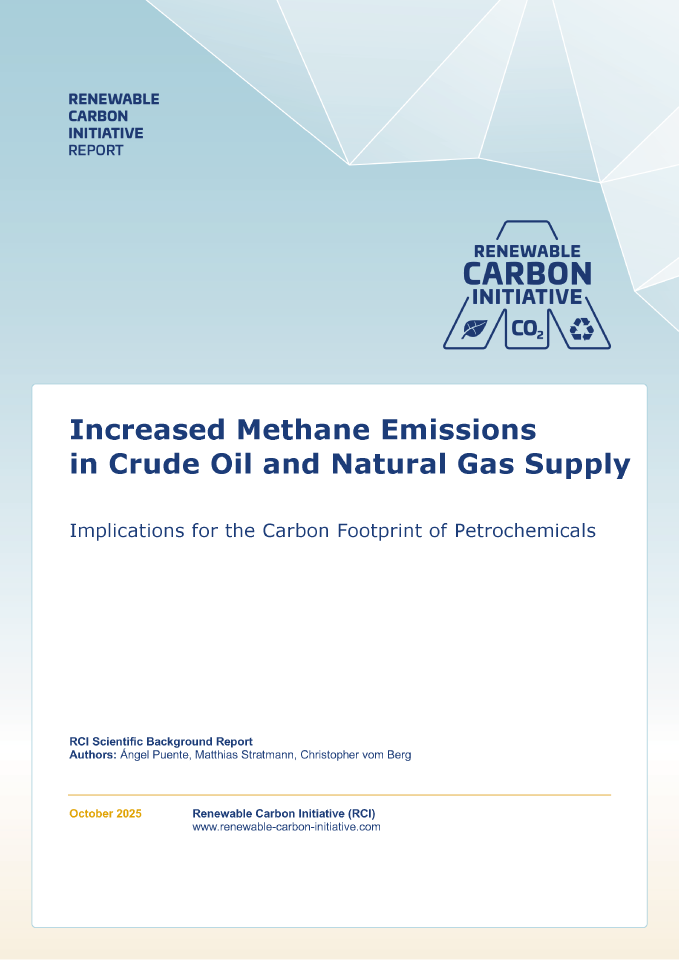
A new study, commissioned by RCI and conducted by LCA experts of nova-Institute, visualises the impact of underestimated methane emissions from crude oil and gas supply chains. Recent database updates, informed by enhanced satellite tracking, show discrepancies of up to 40 times higher emissions in some regions than previously reported.
This has a major impact on the carbon footprint of common chemicals and plastics. For instance, the climate impact of naphtha has increased nearly tenfold, and common plastics like PE, PP, and PET now carry 20–30% higher footprints. Consequently, the climate advantage of bio-based plastics is even greater, now showing a 40-50% lower carbon footprint compared to their fossil counterparts.
The findings underscore a need for regular updates of LCI databases, ensuring the scope of tracked environmental impacts of fossil feedstocks is fully captured, and continuous harmonisation of reporting across databases. For policymakers, the report provides another piece of the puzzle in favour of defossilisation, and is a call for regulatory support of the transition to renewable carbon sources.
Find the scientific background report here: https://renewable-carbon.eu/publications/product/increased-methane-emissions-in-crude-oil-and-natural-gas-supply-implications-for-the-carbon-footprint-of-petrochemicals-an-rci-report-pdf/
RCI is officially a member of the Ecodesign Forum
The RCI was appointed as a member of the Ecodesign Forum, the expert group for the Ecodesign for Sustainable Products Regulation. The RCI had applied to the public call for the selection of members of this expert group and is now looking forward to supporting the European Commission in shaping the implementation of the ESPR. This appointment provides an important opportunity for the RCI to contribute its expertise and advocate for renewable carbon solutions in the development of sustainable product policies.
The Renewable Materials Conference 2025
The Renewable Materials Conference (RMC) in Siegburg on 22 to 24 September (organized by nova-Institute) gathered 408 participants from 29 countries to advance defossilisation and renewable carbon. The event highlighted the accelerating shift from fossil carbon to renewable carbon (biomass, CO₂ use, chemical recycling), showing that renewable carbon is moving from ambition to implementation across industry, policy, and finance.
Key sessions
- A full day focusing on setting the frame for renewable carbon of presentations, with DG ENV signalling a positive shift at support for bio-based materials at EU level, Dutch ministries working on implementing their national vision on sustainable carbon, repeated calls for stronger support of CCU-based chemicals and materials, and the financing sector increasingly supporting the transition.
- The Future of the European Chemical Industry: A high-level panel discussion with renowned experts from industry and policy, discussing pathways for a defossilised, yet still competitive European chemical industry.
- Panelists include: Joel Tickner (Change Chemistry), Jean-Paul Lange (University of Twente), Sucheta Govil (Board of Directors, Mondi), Lars Börger (nova-Institute), Eric De Deckere (CEFIC), Algreit Dume (DG GROW), Wibke Lölsberg (BASF), Reinier Grimbergen (Blue Circle Olefins) and Samir Somaiya (Godavari Biorefineries).
- Refining the Path to Net Zero with SBTi: A workshop hosted by Kim Schoppink (SBTi) about improvements of the revised Corporate Net Zero Standard for measurable corporate net-zero targets and discussing how embedded renewable carbon can be better visualised and supported within the framework.
- Facilitating Change – Policy for a Renewable Carbon Transition: Another workshop focusing on policy proposals and incentives for scaling renewable carbon, with three different presentations on recommendations developed by RCI, thought-provoking discussions by the Dutch government, and a detailed proposal by the company Südzucker, proposing a system named Carbon Utilisation Trading System (CUTS) with the aim to support renewable carbon, analogue to the EU ETS.
- Biomass Availability – World and Europe: A third workshop discussing the RCI report on CAPRI and TiMBA modelling, assessing biomass availability for renewable carbon
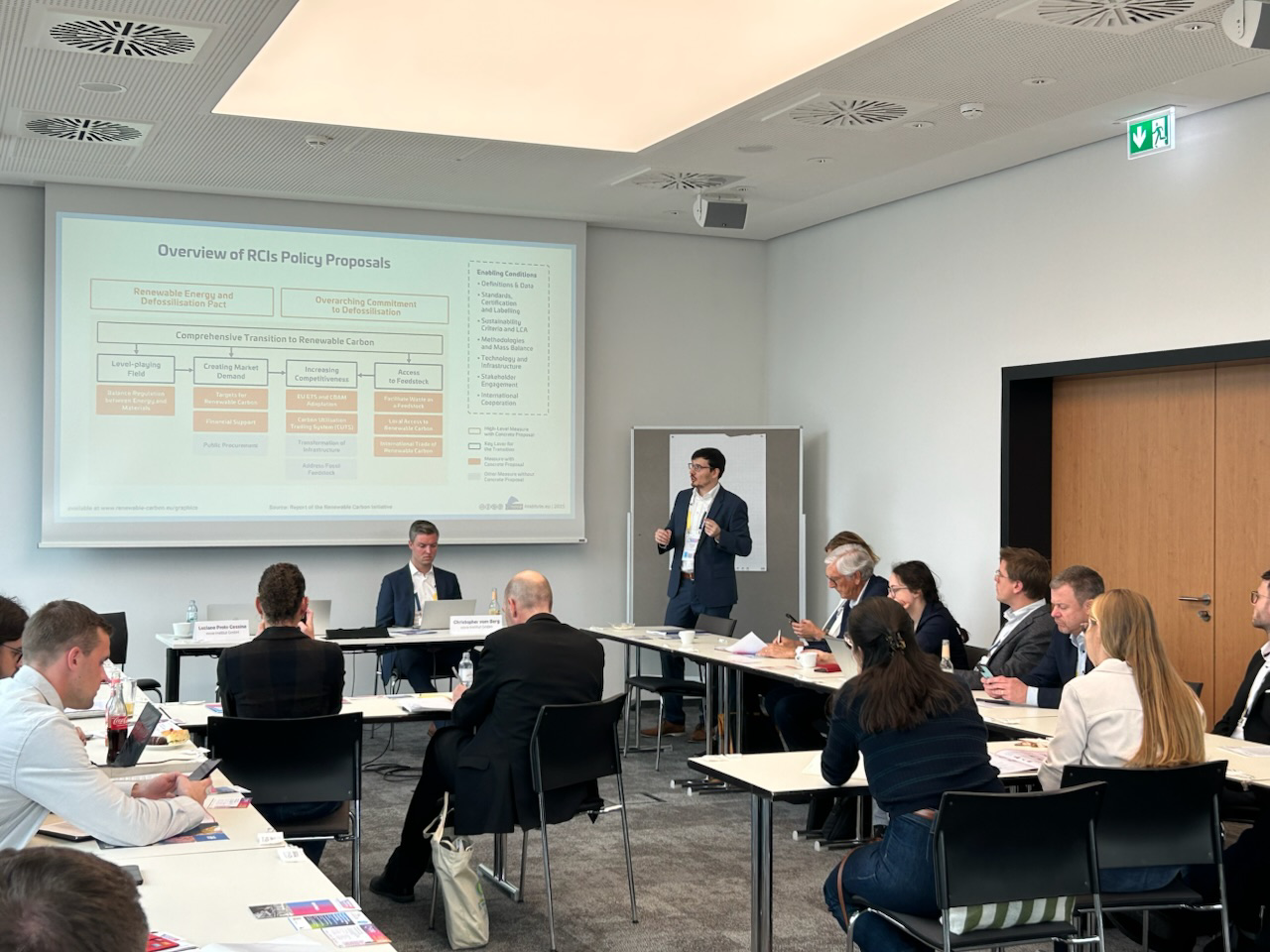
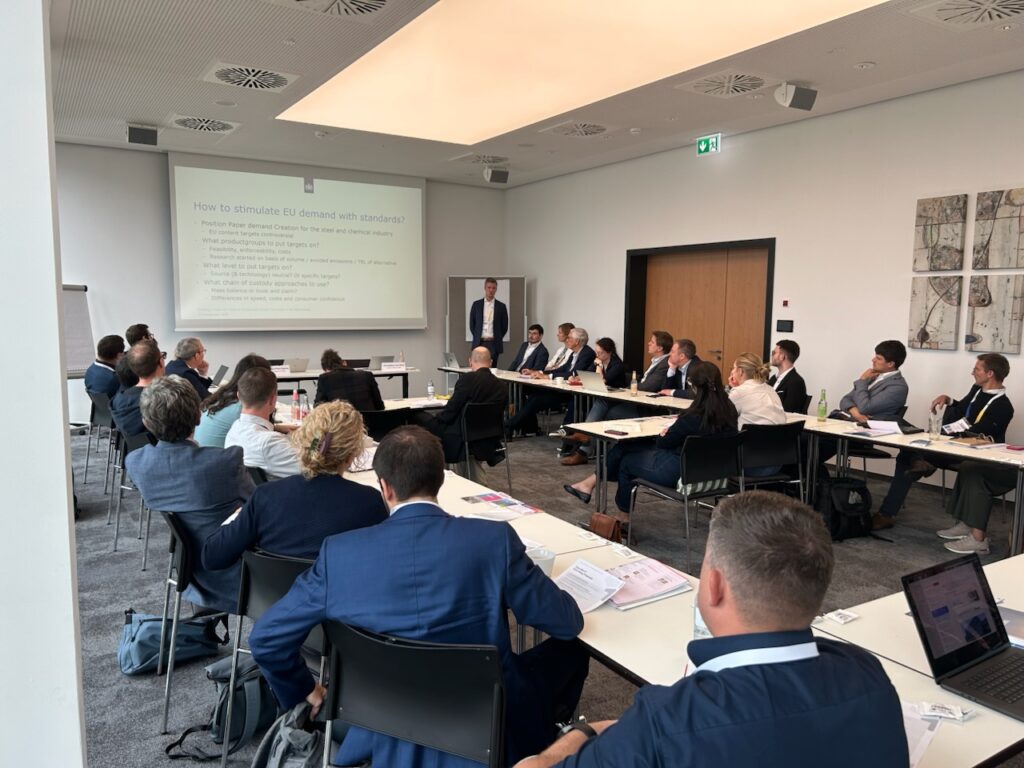
Policy engagement
High-level participation from the policy sector included the Dutch Ministry of Climate Policy & Green Growth and the Dutch Ministry of Infrastructure and Water Management, DG ENV & DG GROW, and the JRC, underlining that renewable carbon is now firmly anchored in EU policymaking and regulation.
More info: https://renewable-materials.eu
3rd RCI Roundtable hosted by RCI member IKEA, 21 October 2025
The Renewable Carbon Initiative (RCI) has launched a new member-driven roundtable format to encourage structured, science-based dialogue on critical renewable carbon topics.
The second session by Beckers on 16 September focused on the ecoinvent database update from 3.10 to 3.11 and its impact on bio-materials carbon footprint calculation.
The next RCI roundtable will take place on 21 October, 14:00–15:00 CEST, hosted by IKEA. The session will focus on “Biogenic Carbon: Aligning PEF and the GHG Protocol”.
New Staff member
It is with great pleasure that we welcome the latest addition to the RCI Office, in the person of Anke Schwarzenberger.
Anke brings a unique and valuable profile, combining a PhD in Biology (University of Cologne, 2010) with specialized research in aquatic ecology, genetics, and ecotoxicology, with professional expertise in B2B communication. Her scientific background is perfectly aligned with her work on biodiversity and renewable carbon.
She has been an integral part of nova-Institute’s Communication department since 2023, most notably leading the RCI project on biodiversity, where she has a demonstrated history of leading communication efforts for prestigious Horizon Europe projects (including 3-CO, BioReCer, PEFerence, PYSOLO, and WaterProof). She also serves on the advisory board of the Renewable Materials Conference.
We are confident that her scientific accuracy and strategic communication skills will be a tremendous asset to the RCI team and our mission.
New RCI members
L’Oréal (FR) is a global leader in cosmetics, rooted in science and innovation for more than 115 years. Founded by a chemist, research remains at the core of the company to this day. With 4,000 scientists across 21 research centers worldwide, L’Oréal develops products that meet the highest standards of performance, safety, and quality, creating beauty experiences that cater to the diverse needs and aspirations of consumers around the globe.

Loop CO2 (US) transforms CO₂ into degradable, high-performance polymers powering debonding-on-demand adhesives and multifunctional coatings that deliver durability, responsiveness, and advanced surface functions. The simple polymer structure can be tailored to create low-VOC acrylics, BPA-free epoxies, biodegradable polyesters, and chemically recyclable polyurethanes.

Syklo (FI) is a circular economy company providing effective solutions to help businesses advance sustainable development. Syklo helps businesses recycle their waste and reduce the carbon footprint of their products. The company handles construction, demolition, and combustible waste, as well as commercial and industrial waste. They process waste into new, higher-value products. Syklo’s most important products are recycled plastic pellets and biocomposite. In addition, they invest in circular economy innovations and the development of the industry both domestically and internationally.
New RCI partner
The CCU-Alliantie (NL) is a Dutch initiative that brings together 15 organisations working across the entire carbon capture and utilisation value chain. Members include CO₂ emitters, users, transporters, and certification experts. Together, we aim to improve the policy and regulatory framework for CCU in the Netherlands and at the European level. By using CO₂ as a feedstock, the Alliance actively contributes to the development of carbondioxide removal and a climate-neutral and circular economy. The CCU-Alliantie advocates for fair market conditions and practical solutions to accelerate the deployment of CCU technologies.
Source
Renewable Carbon Initiative, original text, 2025-10-08.
Supplier
BASF Corporation (US)
BlueCircle Olefins
Change Chemistry (US)
DG ENV
DG GROW - European Cluster Collaboration Platform
European Chemical Industry Council (CEFIC)
European Union
Godavari Biorefineries Ltd.
Government of the Netherlands
Joint Research Centre (JRC)
Ministry of Infrastructure and Water Management NL
Mondi Group
nova-Institut GmbH
Renewable Carbon Initiative (RCI)
Science Based Targets Initiative (SBTi)
Südzucker AG
University of Twente (NL)
Share
Renewable Carbon News – Daily Newsletter
Subscribe to our daily email newsletter – the world's leading newsletter on renewable materials and chemicals