 Processes in Flow: AI’s Role in Resource-Efficient Production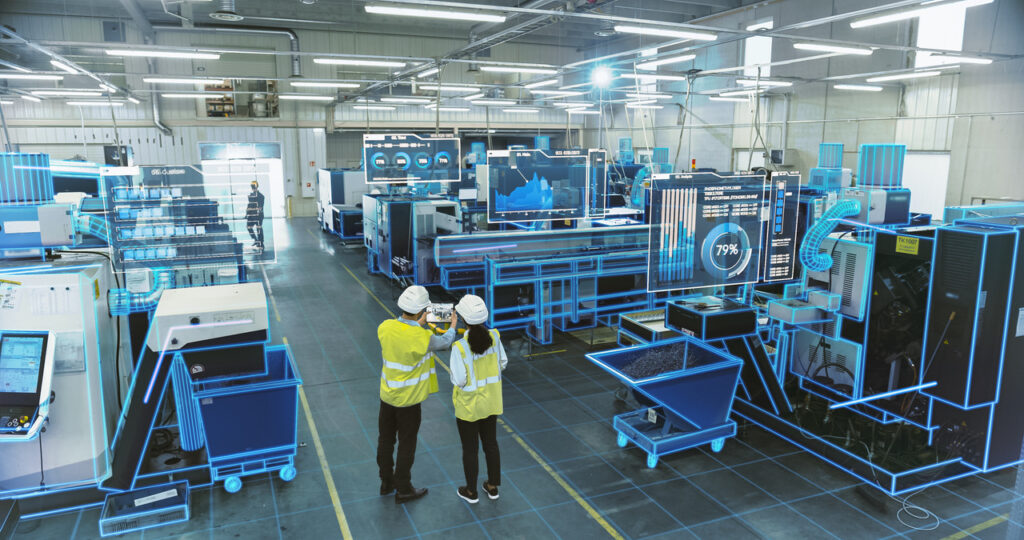
The chemical and materials industries face a dual challenge: resources must be used more efficiently, while fossil carbon sources need to be phased out. Artificial intelligence (AI) is emerging as a central tool that not only automates processes but also reshapes them. It creates transparency, increases productivity, and enables resource-efficient production from material development to recycling.
Traditionally, developing new materials has been a lengthy process. Today, AI-powered systems drastically accelerate this work. Algorithms can predict material properties, while digital twins simulate entire polymer structures. This enables the design of bio-based or CO₂-based materials with optimized characteristics – more durable, easier to recycle, or biodegradable. Applications range from DeepMind’s “GNoME,” which discovered millions of new crystal structures, to AI platforms at Covestro and Dow, which optimise foams and polymer blends for industrial applications.
Efficiency in Production and Processes
In manufacturing, AI enables precise control of parameters such as temperature, pressure, and flow rates. Sensors and learning systems adjust processes in real time to optimize the use of energy and raw materials. Predictive maintenance solutions extend machine lifetimes and prevent failures before they occur. BASF, for example, already uses AI to improve the efficiency of energy-intensive processes such as ammonia synthesis. Also, Siemens leverages AI-driven process automation and predictive maintenance to enhance efficiency and reliability in industrial plants. AVEVA (Schneider Electric) provides solutions like digital twins and engineering tools to enhance efficiency and sustainability across industrial operations.
Recycling as an Intelligent Loop
Recycling is a field where AI unfolds particular strength. Smart sorting systems detect materials using cameras and spectroscopy, allowing waste streams to be separated with greater precision. Companies such as Recycleye, AMP Robotics or Greyparrot combine robotics with deep learning to secure the quality of recyclates. Chemical processes such as depolymerization or enzymatic recycling can also be optimised by AI – with the goal of converting waste back into high-value feedstocks.
Connected Value Chains
AI is increasingly applied not only in individual plants but also across entire value chains. Digital twins map supply chains, detect bottlenecks early, and enable dynamic production planning. By analysing market and weather data, demand forecasts can be improved, helping to avoid overproduction. Furthermore, AI fosters industrial symbiosis by linking waste streams to new input opportunities across sectors. By enhancing efficiency and sustainability while reinforcing resilience to global disruptions, this holistic perspective positions AI as a vital driver of more transparent, adaptive, and collaborative ecosystems.
Policy, Transparency, and Responsibility
AI is also gaining importance in sustainability assessments and policymaking. It supports lifecycle analyses, simulates regulatory scenarios, and enables adaptive policy design. Digital product passports add transparency and traceability across value chains. At the same time, clear safeguards are needed: only by addressing issues such as transparency, data security, and ethical responsibility can AI deliver on its full potential. In the materials industry, AI-based evaluations are already being used to assess the recyclability of new materials and to guide the development of circular product strategies.
Outlook: AI as an Enabler of the Circular Economy
Keeping processes in flow means steering material streams intelligently, conserving resources, and accelerating innovation. AI is not just a tool but an enabler of a circular and regenerative economy. For companies in the chemical, materials, and recycling sectors, this opens new opportunities: more efficient processes, lower costs, new products, and more resilient value chains. The key will be to unlock these opportunities through collaboration with research, policymakers, and technology partners.
These topics will also be at the core of the AI Circular Economy Conference, taking place on 4-5 March 2026 in Cologne and online. The event will bring together leading experts from industry, research, and policy to explore how AI can accelerate the transition to circular and renewable material systems – and how businesses can seize the opportunities of this transformation.
Register for the AI Circular Economy Conference 2026, 4-5 March in Cologne (Germany) and online: https://ai-circulareconomy.eu
Call for abstracts is open until 26 October 2025: https://ai-circulareconomy.eu/call-for-abstracts/
Source
nova-Institute, original text, 2025-09-08.
Supplier
AMP Robotics
BASF Corporation (US)
Covestro AG
Dow Chemical Company
Greyparrot
Recycleye
Schneider Electric
Siemens AG
Share
Renewable Carbon News – Daily Newsletter
Subscribe to our daily email newsletter – the world's leading newsletter on renewable materials and chemicals