Skip to content
Renewable Carbon Publications - LogoRenewable Carbon Publications - Logo
  • Publications
  • Contact
0

No products in the cart.

  • Renewable Carbon
    • Renewable Carbon
    • Events
    • Publications
    • Graphics
    • News
    • Business Directory
    • Newsletter
    • nova-Institute
  • Publications
  • Contact

Renewable Carbon Publications - LogoRenewable Carbon Publications - Logo
0

No products in the cart.

  • Renewable Carbon Publications
  • Sustainability & Health
  • Page 8
Grid view List view

Showing 141–160 of 237

  • Download Statistics
  • Direct Download
    21 05 19 global carbon demand 2020 and 2050 thumbnail

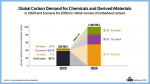
    Global Carbon Demand for Chemicals and Derived Materials (PNG)

    Markets & Economy, Policy, Sustainability & Health, Technology

    1 Page
    1367 Downloads

    1367 Downloads  

    2021-10

    FREE


    1367
    Downloads

    Direct Download

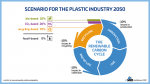
    Global Carbon Demand for Chemicals and Derived Materials in 2020 and Scenario for 2050 in million of embedded carbon.

  • Direct Download
    21 06 the renewable carbon initiative & nora bioplasticsmagazine thumbnail

    The Renewable Carbon Initiative – A new movement draws worldwide attention NORA and her FlyPhone on Renewable Carbon

    Policy, Sustainability & Health

    3 Pages
    310 Downloads

    310 Downloads  

    2021-08

    FREE


    310
    Downloads

    Direct Download

    A short history of the Renewable Carbon Initiative (RCI), goals and current activities – supplemented by a simple comic about the Renewable Carbon concept.

  • Direct Download
    21 08 04 comprehensive concept of circular economy thumbnail

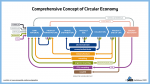
    Comprehensive Concept of a Circular Economy (PNG)

    Policy, Sustainability & Health

    1 Page
    958 Downloads

    958 Downloads  

    2021-08

    FREE


    958
    Downloads

    Direct Download

    The graphic shows the value chain from the carbon-containing raw material to the end of the product’s life and all the possible paths to drive all the material flows that arise in the process in a circle. The waste hierarchy also becomes clear.

  • Direct Download
    vdi kaffeekapsel von golden compound - cover

    Die heimkompostierbare Kaffeekapsel von Golden Compound im Vergleich zur Kaffeekapsel aus Aluminium

    Sustainability & Health

    8 Pages
    143 Downloads

    143 Downloads  

    2021-08

    FREE


    143
    Downloads

    Direct Download
  • Direct Download
    vdi coffee capsule of golden compound - cover

    The home compostable coffee capsule of Golden Compound in comparison with coffee capsules made from Aluminium

    Sustainability & Health

    8 Pages
    265 Downloads

    265 Downloads  

    2021-08

    FREE


    265
    Downloads

    Direct Download
  • Direct Download
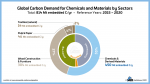
    21 06 08 global carbon demand for chemicals and materials by sectors 2015–2020 thumbnail

    Global Carbon Demand for Chemicals and Materials by Sectors (PDF)

    Sustainability & Health

    1 Page
    544 Downloads

    544 Downloads  

    2021-06

    FREE


    544
    Downloads

    Direct Download

    This figure shows the global carbon demand for chemicals and materials by sector. It shows how the chemical sector and its derived materials such as plastics, rubber or synthetic fibres account for over 50% of the world’s embedded carbon. Of this, most of the carbon comes from fossil resources. However, the graph shows that the largest share of embedded carbon in materials comes from biogenic sources at around 50 %.
    This is mainly found in fully bio-based sectors such as wood in construction and furniture, pulp and paper, and natural fibres.

  • Direct Download
    21 06 08 global carbon demand for chemicals and materials by sectors 2015–2020 thumbnail

    Global Carbon Demand for Chemicals and Materials by Sectors (PNG)

    Sustainability & Health

    1 Page
    362 Downloads

    362 Downloads  

    2021-06

    FREE


    362
    Downloads

    Direct Download

    This figure shows the global carbon demand for chemicals and materials by sector. It shows how the chemical sector and its derived materials such as plastics, rubber or synthetic fibres account for over 50% of the world’s embedded carbon. Of this, most of the carbon comes from fossil resources. However, the graph shows that the largest share of embedded carbon in materials comes from biogenic sources at around 50 %.
    This is mainly found in fully bio-based sectors such as wood in construction and furniture, pulp and paper, and natural fibres.

  • Direct Download
    21 06 09 embedded carbon demand for main sector thumbnail

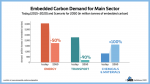
    Embedded Carbon Demand for Main Sector – Today and 2050 (PNG)

    Sustainability & Health

    1 Page
    204 Downloads

    204 Downloads  

    2021-06

    FREE


    204
    Downloads

    Direct Download

    This graph shows how the global carbon demand for the most important sectors could develop by 2050. On the one hand, it shows the steadily growing demand for carbon in the chemical and materials sectors and, on the other hand, the declining demand in the energy and transport sectors, driven by ongoing decarbonisation.

  • Direct Download
    21 06 09 embedded carbon demand for main sector thumbnail

    Embedded Carbon Demand for Main Sector – Today and 2050 (PDF)

    Sustainability & Health

    1 Page
    246 Downloads

    246 Downloads  

    2021-06

    FREE


    246
    Downloads

    Direct Download

    This graph shows how the global carbon demand for the most important sectors could develop by 2050. On the one hand, it shows the steadily growing demand for carbon in the chemical and materials sectors and, on the other hand, the declining demand in the energy and transport sectors, driven by ongoing decarbonisation.

  • Direct Download
    Renewable Materials Conference, 18-20 May 2021 (Proceedings) [Digital]

    Renewable Materials Conference, 18-20 May 2021 (Proceedings)

    Markets & Economy, Policy, Sustainability & Health


    206 Downloads

    206 Downloads  

    2021-06

    FREE

    Plus 19% MwSt.
    Free Shipping
     

    206
    Downloads

    Direct Download

    The proceedings of the Renewable Materials Conference (18-20 May 2021, https://renewable-materials.eu) contain conference presentations, the conference journal, and the press release of the three winners of the innovation award “Renewable Material of the Year”!


  • Direct Download
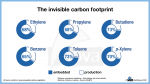
    21 05 11 the invisible carbon footprint

    The invisible carbon footprint (PNG)

    Policy, Sustainability & Health

    1 Page
    466 Downloads

    466 Downloads  

    2021-05

    FREE


    466
    Downloads

    Direct Download
  • Direct Download
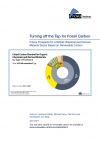
    21 04 20 turning off the tap for fossil carbon cover shop

    Turning off the Tap for Fossil Carbon – Future Prospects for a Global Chemical and Derived Material Sector Based on Renewable Carbon

    Policy, Sustainability & Health

    34 Pages
    3174 Downloads

    3174 Downloads  

    2021-04

    FREE

    Free Shipping
     

    3174
    Downloads

    Direct Download

    New study on the feedstock for global chemical and derived material sector and future prospects for the transition from fossil to renewable carbon sources

    In a new study, total carbon embedded in products from the chemical and derived material sector is examined on a global scale. This includes product groups like plastics, rubbers, textile fibres, detergents and personal care solutions. For the first time ever, total global amount of embedded carbon is calculated, visualized and connected to the different feedstocks. Furthermore, end-user applications are investigated and depicted. A 2050 scenario is introduced, which outlines future prospects to transition from fossil to renewable carbon sources. Solutions for the highly interconnected chemical industry are illustrated together with supporting policy measures. This report aims to raise awareness of the need for, and the technical, industrial and political feasibility of, the biggest transformation of the chemical and derived material sector since the industrial revolution.

  • Direct Download
    21 04 guidance for a biorefinery roadmap for thailand thumbnail

    Guidance for a biorefining roadmap for Thailand

    Markets & Economy, Policy, Sustainability & Health, Technology

    55 Pages
    168 Downloads

    168 Downloads  

    2021-04

    FREE


    168
    Downloads

    Direct Download

    OECD SCIENCE, TECHNOLOGY AND INDUSTRY POLICY PAPERS
    April 2021 No. 110

    Biorefineries present an alternative to fossil-based production, and can create employment, wealth and the ecosystem needed to make them function. Thailand is establishing a bioeconomy with widespread biorefining as a strategy for future economic growth. There is political will to establish in Thailand, if feasible, small, decentralised biorefineries to which farmers can locally deliver biomass as feedstock, which can then be processed into bio-based products. This would help to relieve rural poverty, which is still a problem in some areas of Thailand despite progress. Developing a biorefining roadmap will help to assess the feasibility of such an initiative.


  • Direct Download
    21 03 29 bioeconomy is not alone 960x680

    Bioeconomy is not alone – from Bioeconomy to Carbon Management

    Policy, Sustainability & Health, Technology

    2 Pages
    201 Downloads

    201 Downloads  

    2021-04

    FREE

    Free Shipping
     

    201
    Downloads

    Direct Download

    The bioeconomy faces great expectations and hopes in the fight against climate change, and at the same time is viewed critically. The biggest problems in building a strong bioeconomy are direct and indirect land use changes, which have significant impacts on biodiversity, climate change, and food security.

  • Direct Download
    2nd International Conference on Cellulose Fibres Proceedings 2021 [Digital]

    2nd International Conference on Cellulose Fibres Proceedings 2021

    Markets & Economy, Policy, Sustainability & Health, Technology


    102 Downloads

    102 Downloads  

    2021-02

    FREE

    Plus 19% MwSt.
    Free Shipping
     

    102
    Downloads

    Direct Download

    The proceedings of the 2nd International Conference on Cellulose Fibres (2-3 February 2021, https://cellulose-fibres.eu) contain 26 presentations, the conference journal, and the press release of the three winners of the Cellulose Fibre Innovation of the Year 2021 Award!


  • Direct Download
    ki0521049enn.en shop preview

    Carbon economy – Studies on support to research and innovation policy in the area of bio-based products and services

    Markets & Economy, Policy, Sustainability & Health, Technology

    384 Pages
    650 Downloads

    650 Downloads  

    2021-02

    FREE

    Free Shipping
     

    650
    Downloads

    Direct Download

    Nova-Institute, together with COWI and Utrecht University published a report on the role of carbon in the global, European and regional economy for the Directorate-General for Research and Innovation (European Commission).

    The report herein contains five Work Packages (WPs) that embody the requirements set out in the European Commission’s “Studies on support to R&I policy in the area of bio-based products and services – Carbon Economy (Lot 1).” The main aim of the project was to map out the current pathways available for the transition towards a low carbon economy as well as the barriers that hinder this transition. Based on the conclusions and key findings from the WPs, the authors set the scene for the future of the bio-based sector with a particular focus on ten case studies of regions and cities across the EU (WP4), an evaluation of promising innovations and novel technologies for the realisation of such an economy and a sweeping regulatory analysis containing Q1 2020 updates (WP3) on EU directives and regulations that pertain to the low carbon economy. This attention to the local level as well as the broader policy sphere is supported by a scientific understanding of the low carbon economy (WP1), potential future scenarios towards 2050 (WP2) as well as clear dissemination of the findings across the entire study (WP5). In the frame of the study an animated educational video was produced. The final study report contains an executive summary followed by each Work Package in its entirety, which can also be treated as stand-alone reports in their own right.

    Further information at: https://op.europa.eu/en/publication-detail/-/publication/8c4de15d-a17d-11eb-b85c-01aa75ed71a1

  • Direct Download
    Production of Cannabinoids via Extraction, Chemical Synthesis and Especially Biotechnology - Preview [Digital]

    Production of Cannabinoids via Extraction, Chemical Synthesis and Especially Biotechnology – Preview

    Markets & Economy, Sustainability & Health

    8 Pages
    347 Downloads

    347 Downloads  

    2021-01

    FREE

    Plus 19% MwSt.
     

    347
    Downloads

    Direct Download

    Huge market potential for CBD and other cannabinoids – how best to produce them?

    Cannabis removed from the UN prohibition schedule and CBD not considered as a narcotic drug – Two major decisions to drive further research to explore the full potential of one of the major and longest established medicinal plants

    The new report “Production of Cannabinoids via Extraction, Chemical Synthesis and Especially Biotechnology – Current Technologies, Potential & Drawbacks and Future Development” provides all information on production technologies, medical applications and political framework conditions. The Report will guide you through the complex synthesis of cannabinoids, state-of-the-art methods for extraction and production and will extensively show the major hidden potential and synergistic effects of biotechnological cannabinoid production. The report is aimed at experts in the pharmaceutical and biotech industry and provides deep insights into (bio)chemical reactions, processes and producers. The main authors are biotechnology experts and physicians from the nova-Institute, Dr. Pia Skoczinski and Dr. med. Franjo Grotenhermen, and the chemist Dr. rer. nat. Bernhard Beitzke, who has been advising the “European Industrial Hemp Association” (EIHA) as an expert for years. The 142-page technology report provides in-depth information on established and emerging biotechnological approaches on the production of cannabinoids, as well as an overview on the state-of-the-art production methods using plant extraction and chemical synthesis. An extensive description of pharmacological effects, therapeutic potential and medicinal applications for ∆9-tetrahydrocannabinol (∆9-THC) and cannabidiol (CBD), together with a short excursus on the EU regulatory framework for cannabinoids, conclude this comprehensive study. Additionally, 59 companies active in cannabinoid production are listed, from which 20 specialised in biotechnological production and chemical synthesis are described in detail.

  • Direct Download
    "Bioeconomy: More than Circular Economy"

    “Bioeconomy: More than Circular Economy” − Graphic

    Markets & Economy, Policy, Sustainability & Health

    1 Page
    3140 Downloads

    3140 Downloads  

    2021-01

    FREE


    3140
    Downloads

    Direct Download
  • Select
    licence
    Cover - Production of Cannabinoids via Extraction, Chemical Synthesis and Especially Biotechnology

    Production of Cannabinoids via Extraction, Chemical Synthesis and Especially Biotechnology

    Markets & Economy, Sustainability & Health

    148 Pages


    2021-01

    2,000 € – 10,000 €Price range: 2,000 € through 10,000 € ex. tax

    Plus 19% MwSt.
    Press
    release
    Select
    licence

    Huge market potential for CBD and other cannabinoids – how best to produce them?

    Cannabis removed from the UN prohibition schedule and CBD not considered as a narcotic drug – Two major decisions to drive further research to explore the full potential of one of the major and longest established medicinal plants

    The new report “Production of Cannabinoids via Extraction, Chemical Synthesis and Especially Biotechnology – Current Technologies, Potential & Drawbacks and Future Development” provides all information on production technologies, medical applications and political framework conditions. The Report will guide you through the complex synthesis of cannabinoids, state-of-the-art methods for extraction and production and will extensively show the major hidden potential and synergistic effects of biotechnological cannabinoid production. The report is aimed at experts in the pharmaceutical and biotech industry and provides deep insights into (bio)chemical reactions, processes and producers. The main authors are biotechnology experts and physicians from the nova-Institute, Dr. Pia Skoczinski and Dr. med. Franjo Grotenhermen, and the chemist Dr. rer. nat. Bernhard Beitzke, who has been advising the “European Industrial Hemp Association” (EIHA) as an expert for years. The 142-page technology report provides in-depth information on established and emerging biotechnological approaches on the production of cannabinoids, as well as an overview on the state-of-the-art production methods using plant extraction and chemical synthesis. An extensive description of pharmacological effects, therapeutic potential and medicinal applications for ∆9-tetrahydrocannabinol (∆9-THC) and cannabidiol (CBD), together with a short excursus on the EU regulatory framework for cannabinoids, conclude this comprehensive study. Additionally, 59 companies active in cannabinoid production are listed, from which 20 specialised in biotechnological production and chemical synthesis are described in detail.

  • Direct Download
    nova-Paper#14: Are new food and biomass technologies more sustainable? A review

    nova-Paper #14: Are new food and biomass technologies more sustainable? A review − Full version

    Sustainability & Health

    22 Pages
    631 Downloads

    631 Downloads  

    2020-11

    FREE


    631
    Downloads

    Direct Download

Renewable Carbon Types

Publications

Topics

  • 1
  • …
  • 6
  • 7
  • 8
  • 9
  • 10
  • …
  • 12

nova-Logo
contact@nova-institut.de
www.nova-institute.eu

nova-Institut GmbH
Leyboldstr. 16
50354 Hürth / Germany

  • Renewable Carbon
  • Events
  • Publications
  • Graphics
  • News
  • Business Directory
  • Newsletter
  • nova-Institute
  • My account
  • Legal Information
  • Terms and Conditions
  • Data protection regulation
© 2025 nova-Institut GmbH
Renewable Carbon Publications - Logo

Login

Lost your password?