Showing 161–180 of 242
-
Carbon economy – Studies on support to research and innovation policy in the area of bio-based products and services
Markets & Economy, Policy, Sustainability & Health, Technology
384 Pages
655 Downloads
655 Downloads
2021-02
FREE
Free Shipping655
DownloadsNova-Institute, together with COWI and Utrecht University published a report on the role of carbon in the global, European and regional economy for the Directorate-General for Research and Innovation (European Commission).
The report herein contains five Work Packages (WPs) that embody the requirements set out in the European Commission’s “Studies on support to R&I policy in the area of bio-based products and services – Carbon Economy (Lot 1).” The main aim of the project was to map out the current pathways available for the transition towards a low carbon economy as well as the barriers that hinder this transition. Based on the conclusions and key findings from the WPs, the authors set the scene for the future of the bio-based sector with a particular focus on ten case studies of regions and cities across the EU (WP4), an evaluation of promising innovations and novel technologies for the realisation of such an economy and a sweeping regulatory analysis containing Q1 2020 updates (WP3) on EU directives and regulations that pertain to the low carbon economy. This attention to the local level as well as the broader policy sphere is supported by a scientific understanding of the low carbon economy (WP1), potential future scenarios towards 2050 (WP2) as well as clear dissemination of the findings across the entire study (WP5). In the frame of the study an animated educational video was produced. The final study report contains an executive summary followed by each Work Package in its entirety, which can also be treated as stand-alone reports in their own right.
Further information at: https://op.europa.eu/en/publication-detail/-/publication/8c4de15d-a17d-11eb-b85c-01aa75ed71a1
-
Production of Cannabinoids via Extraction, Chemical Synthesis and Especially Biotechnology – Preview
Markets & Economy, Sustainability & Health
8 Pages
348 Downloads
348 Downloads
2021-01
FREE
Plus 19% MwSt.348
DownloadsHuge market potential for CBD and other cannabinoids – how best to produce them?
Cannabis removed from the UN prohibition schedule and CBD not considered as a narcotic drug – Two major decisions to drive further research to explore the full potential of one of the major and longest established medicinal plants
The new report “Production of Cannabinoids via Extraction, Chemical Synthesis and Especially Biotechnology – Current Technologies, Potential & Drawbacks and Future Development” provides all information on production technologies, medical applications and political framework conditions. The Report will guide you through the complex synthesis of cannabinoids, state-of-the-art methods for extraction and production and will extensively show the major hidden potential and synergistic effects of biotechnological cannabinoid production. The report is aimed at experts in the pharmaceutical and biotech industry and provides deep insights into (bio)chemical reactions, processes and producers. The main authors are biotechnology experts and physicians from the nova-Institute, Dr. Pia Skoczinski and Dr. med. Franjo Grotenhermen, and the chemist Dr. rer. nat. Bernhard Beitzke, who has been advising the “European Industrial Hemp Association” (EIHA) as an expert for years. The 142-page technology report provides in-depth information on established and emerging biotechnological approaches on the production of cannabinoids, as well as an overview on the state-of-the-art production methods using plant extraction and chemical synthesis. An extensive description of pharmacological effects, therapeutic potential and medicinal applications for ∆9-tetrahydrocannabinol (∆9-THC) and cannabidiol (CBD), together with a short excursus on the EU regulatory framework for cannabinoids, conclude this comprehensive study. Additionally, 59 companies active in cannabinoid production are listed, from which 20 specialised in biotechnological production and chemical synthesis are described in detail.
-
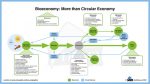
“Bioeconomy: More than Circular Economy” − Graphic
Markets & Economy, Policy, Sustainability & Health
1 Page
3153 Downloads
3153 Downloads
2021-01
FREE
3153
Downloads -
Production of Cannabinoids via Extraction, Chemical Synthesis and Especially Biotechnology
Markets & Economy, Sustainability & Health
148 Pages
2021-01
2,000 € – 10,000 €Price range: 2,000 € through 10,000 € ex. tax
Plus 19% MwSt.Press
release Select
licenceHuge market potential for CBD and other cannabinoids – how best to produce them?
Cannabis removed from the UN prohibition schedule and CBD not considered as a narcotic drug – Two major decisions to drive further research to explore the full potential of one of the major and longest established medicinal plants
The new report “Production of Cannabinoids via Extraction, Chemical Synthesis and Especially Biotechnology – Current Technologies, Potential & Drawbacks and Future Development” provides all information on production technologies, medical applications and political framework conditions. The Report will guide you through the complex synthesis of cannabinoids, state-of-the-art methods for extraction and production and will extensively show the major hidden potential and synergistic effects of biotechnological cannabinoid production. The report is aimed at experts in the pharmaceutical and biotech industry and provides deep insights into (bio)chemical reactions, processes and producers. The main authors are biotechnology experts and physicians from the nova-Institute, Dr. Pia Skoczinski and Dr. med. Franjo Grotenhermen, and the chemist Dr. rer. nat. Bernhard Beitzke, who has been advising the “European Industrial Hemp Association” (EIHA) as an expert for years. The 142-page technology report provides in-depth information on established and emerging biotechnological approaches on the production of cannabinoids, as well as an overview on the state-of-the-art production methods using plant extraction and chemical synthesis. An extensive description of pharmacological effects, therapeutic potential and medicinal applications for ∆9-tetrahydrocannabinol (∆9-THC) and cannabidiol (CBD), together with a short excursus on the EU regulatory framework for cannabinoids, conclude this comprehensive study. Additionally, 59 companies active in cannabinoid production are listed, from which 20 specialised in biotechnological production and chemical synthesis are described in detail.
-
nova-Paper #14: Are new food and biomass technologies more sustainable? A review − Full version
Sustainability & Health
22 Pages
631 Downloads
631 Downloads
2020-11
FREE
631
Downloads -
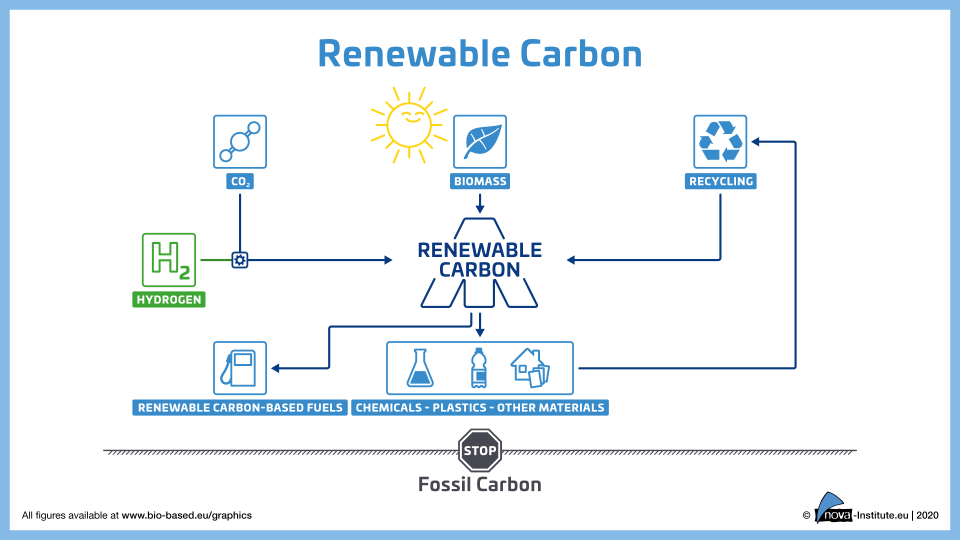
Renewable Carbon for a Sustainable Future − Graphic (September 2020) (PNG)
Markets & Economy, Policy, Sustainability & Health
1 Page
26 Downloads
26 Downloads
2020-09
FREE
Free Shipping26
Downloads -
Renewable Energy and Renewable Carbon for a Sustainable Future − Graphic
Markets & Economy, Policy, Sustainability & Health, Technology
1 Page
2000 Downloads
2000 Downloads
2020-09
FREE
2000
Downloads -
How much biomass do bio-based plastics need? − Article in bioplastics MAGAZINE
Markets & Economy, Policy, Sustainability & Health
2 Pages
1526 Downloads
1526 Downloads
2020-04
FREE
1526
Downloads -
Renewable Carbon is the Key to a Sustainable and Future-Oriented Chemical and Plastic Industry − Full version
Markets & Economy, Policy, Sustainability & Health
46 Pages
1525 Downloads
1525 Downloads
2020-03
FREE
1525
Downloads -
Can the European Union’s kerosene demand be met by the amount of biomass produced in the EU? − Full version
Markets & Economy, Policy, Sustainability & Health
2 Pages
264 Downloads
264 Downloads
2020-03
FREE
264
Downloads -
Kann der Kerosinbedarf der Europäischen Union durch in der EU produzierte Biomasse gedeckt werden? − Langfassung
Markets & Economy, Policy, Sustainability & Health
2 Pages
140 Downloads
140 Downloads
2020-03
FREE
140
Downloads -
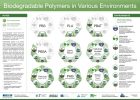
Biodegradable Polymers in Various Environments − Graphic (PNG, Version 2020)
Sustainability & Health
1 Page
948 Downloads
948 Downloads
2020-01
FREE
948
Downloads -
Biodegradable Polymers in Various Environments − Graphic (PDF, Version 2020)
Sustainability & Health
1 Page
2245 Downloads
2245 Downloads
2020-01
FREE
2245
Downloads -
1st International Conference on Cellulose Fibres Proceedings 2020
Markets & Economy, Policy, Sustainability & Health, Technology
145 Downloads
145 Downloads
2020-01
FREE
Plus 19% MwSt.Free Shipping145
Downloads -
Open Letter to the JRC How can the environmental effects of bio-based polymers be compared with those of petrochemical polymers on equal footing? − Full version
Sustainability & Health
6 Pages
795 Downloads
795 Downloads
2019-09
FREE
795
Downloads -
Open Letter to DG Environment – Which polymers are “natural polymers” in the sense of the single-use plastic ban? − Full version
Sustainability & Health
7 Pages
820 Downloads
820 Downloads
2019-09
FREE
820
Downloads -
HOMEcap: Avoiding waste through home composting − Full version
Sustainability & Health
8 Pages
168 Downloads
168 Downloads
2019-08
FREE
168
Downloads -
HOMEcap: Avoiding waste through home composting − Langfassung
Sustainability & Health
8 Pages
139 Downloads
139 Downloads
2019-08
FREE
139
Downloads -
Carbon Footprint and Sustainability of Different Natural Fibres for Biocomposites and Insulation Material − Full version (Update 2019)
Sustainability & Health
57 Pages
2324 Downloads
2324 Downloads
2019-08
FREE
2324
Downloads -
Bewertung der Grenz- und Richtwerte von THC (Tetrahydrocannabinol) in hanfhaltigen Lebensmitteln − Langfassung
Policy, Sustainability & Health
29 Pages
227 Downloads
227 Downloads
2019-06
FREE
227
Downloads


![Production of Cannabinoids via Extraction, Chemical Synthesis and Especially Biotechnology - Preview [Digital]](https://renewable-carbon.eu/publications/wp-content/uploads/2021/01/Cannabinoids-100x141.png)


![1st International Conference on Cellulose Fibres Proceedings 2020 [Digital]](https://renewable-carbon.eu/publications/wp-content/uploads/2020/05/21-01-07_RC-Publications-Cover-Proceedings_Cellulose-Fibres-100x141.png)