Showing 41–60 of 243
-
Sustainable textiles – the way forward (PDF)
Markets & Economy, Sustainability & Health
6 Pages
617 Downloads
617 Downloads
2025-02
FREE
Free Shipping617
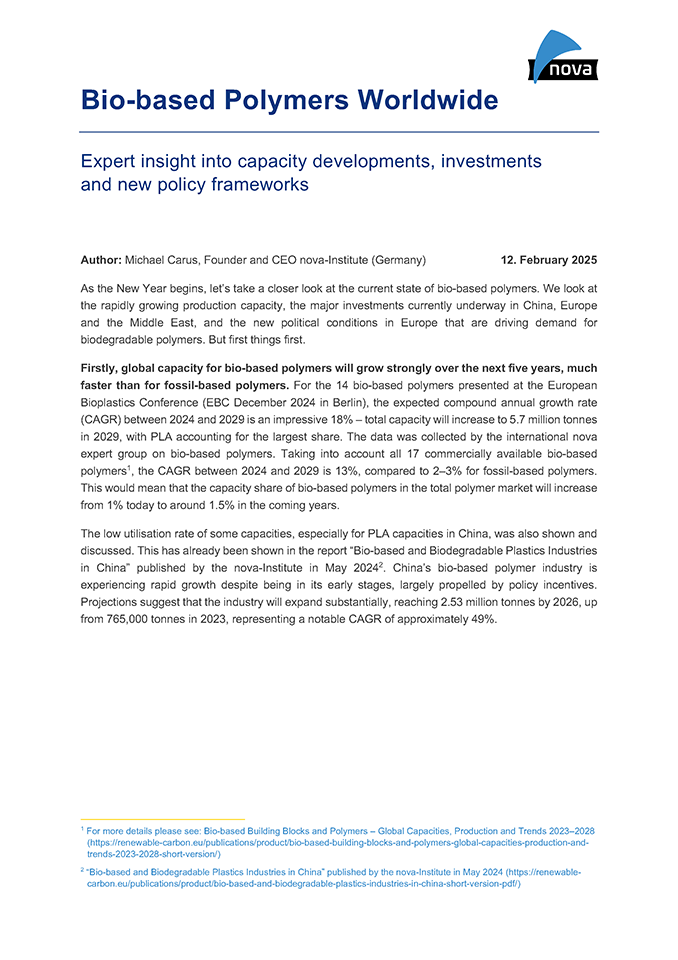
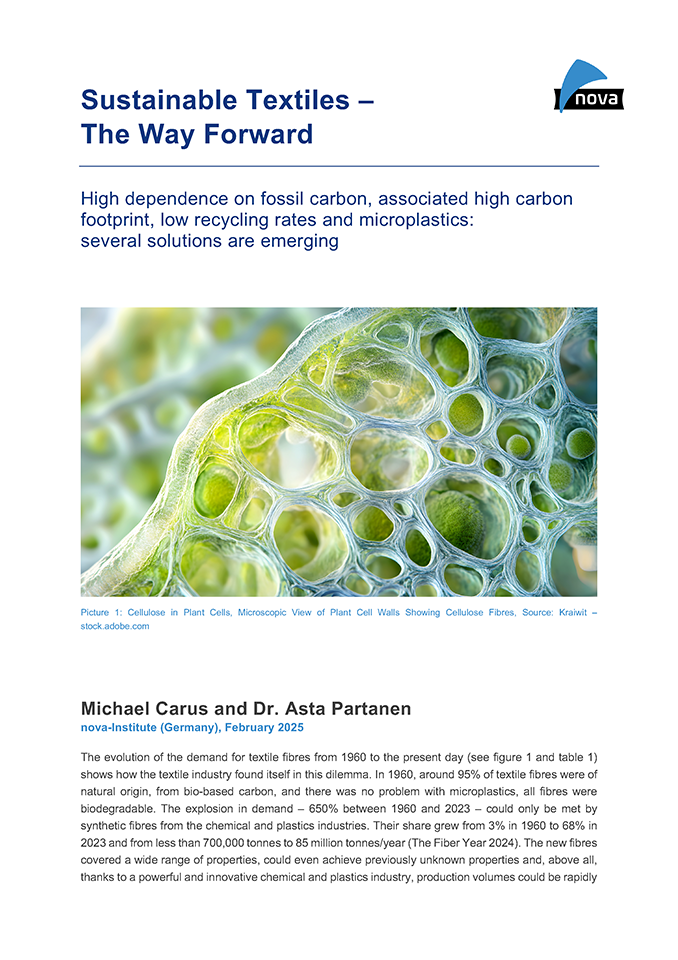
DownloadsHigh reliance on fossil carbon, associated high carbon footprint, low recycling rates and microplastics:Several solutions are emerging. The article analyses the evolution of the textile industry from 1960 to today, fossil and bio-based as well as recycling.The future of sustainable textilesThe sustainable textile industry of the future will be built on a foundation of cotton fibres and fast-growing cellulose fibres, later strongly supported by bio- and CO2-based synthetic fibres (“biosynthetics”) and high recycling rates for all types of fibres. This combination can eventually replace most fossil-based synthetic fibres by 2050. -
Global Major Fibre Types by Production in % (PNG)
Markets & Economy, Sustainability & Health
1 Page
48 Downloads
48 Downloads
2025-02
FREE
48
Downloads -
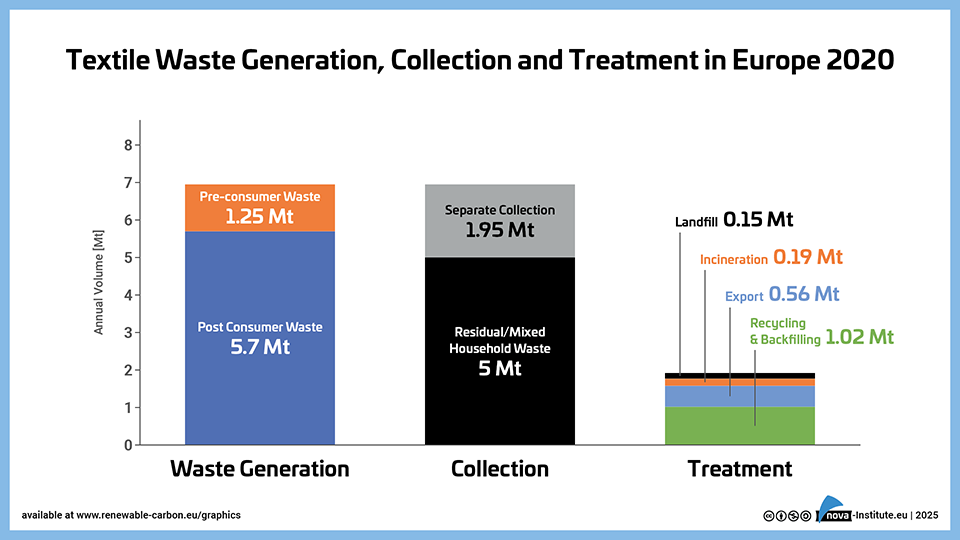
Textile-Waste-Generation-Collection-and-Treatment-in-Europe-2020 (PNG)
Markets & Economy, Sustainability & Health
1 Page
53 Downloads
53 Downloads
2025-02
FREE
53
Downloads -
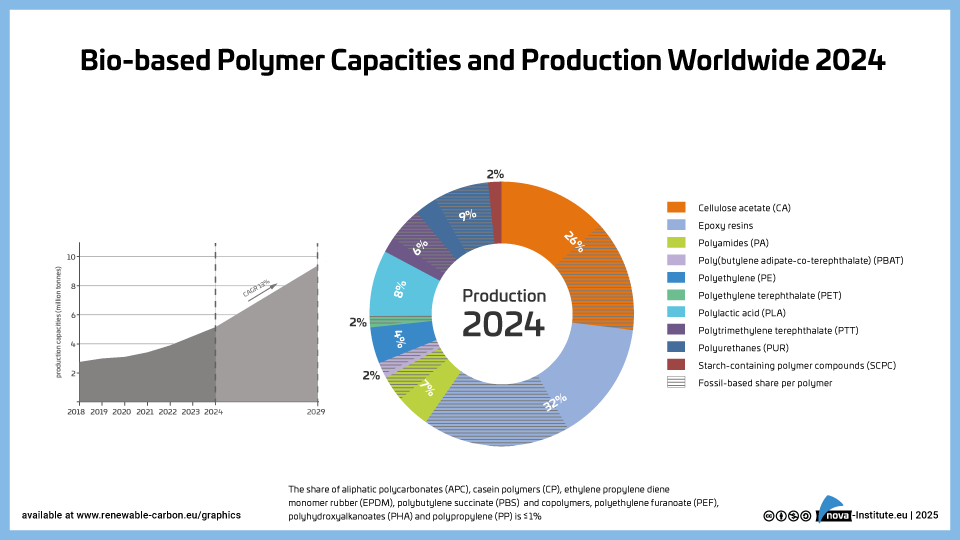
Bio-based-Polymer-Production-and-Bio-based-shares-2024 (PNG)
Markets & Economy, Policy, Sustainability & Health
1 Page
189 Downloads
189 Downloads
2025-02
FREE
189
Downloads -
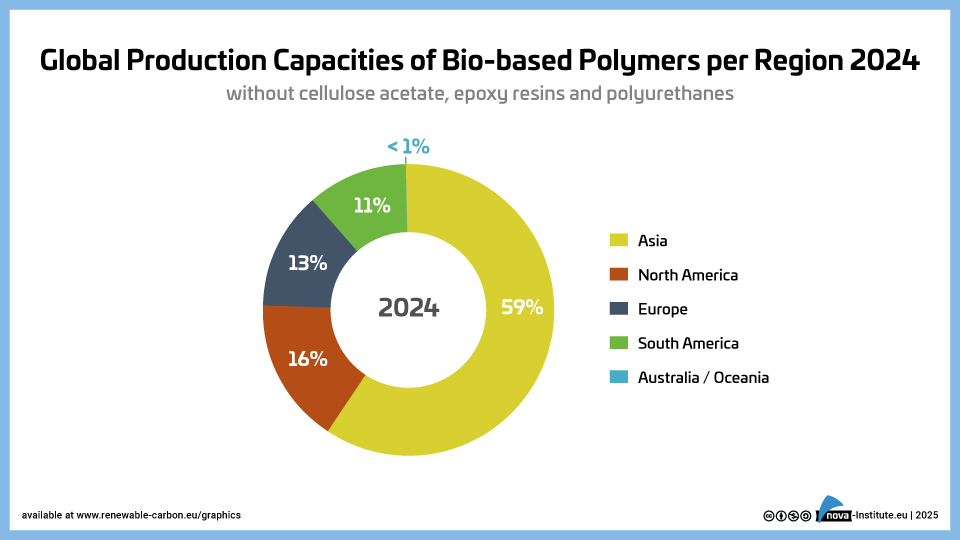
Global-Production-Capacities-of-Bio-based-Polymers-per-Region-2024 (PNG)
Markets & Economy, Policy, Sustainability & Health
1 Page
48 Downloads
48 Downloads
2025-02
FREE
48
Downloads -
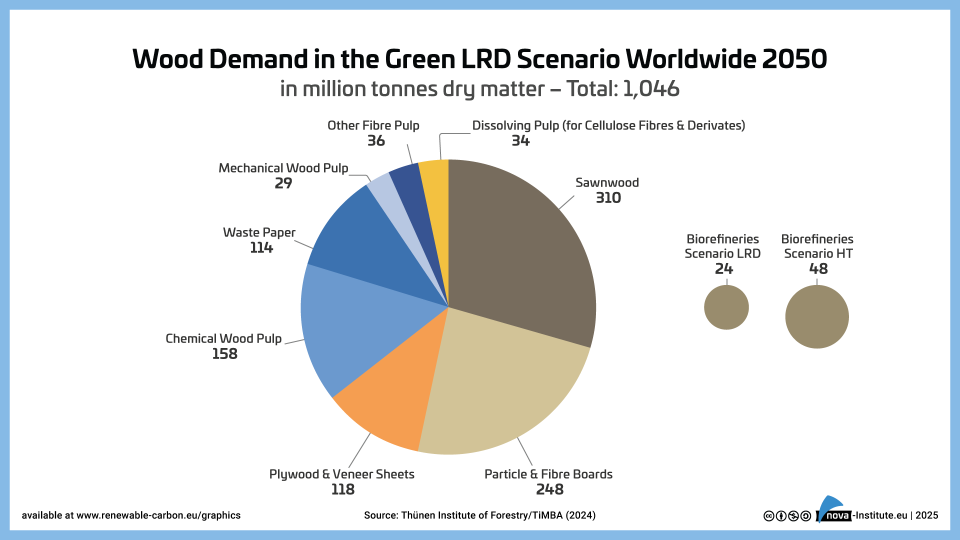
Wood Demand in the Green LRD Scenario Worldwide 2050 – Graphic (PNG)
Markets & Economy, Policy, Sustainability & Health
1 Page
17 Downloads
17 Downloads
2025-02
FREE
17
Downloads -
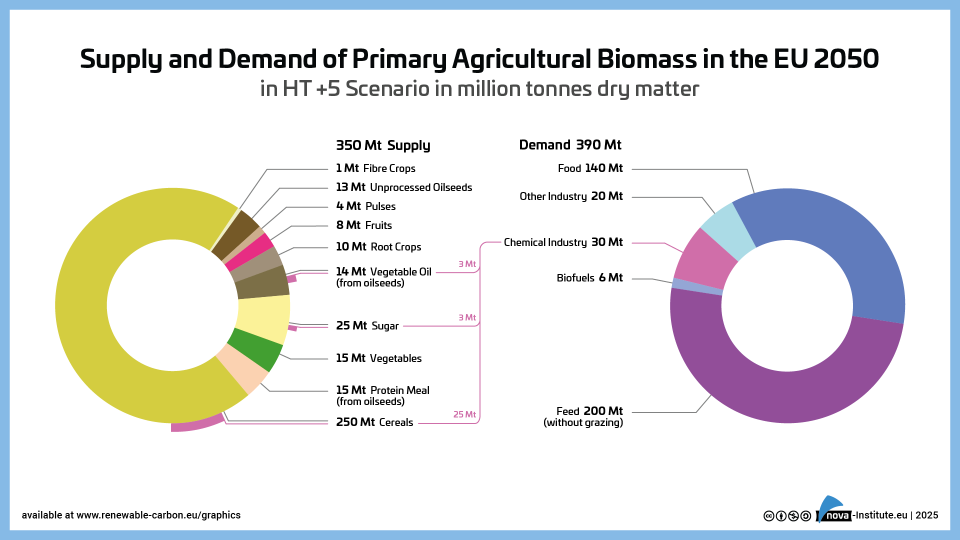
Supply and Demand of Agricultural Biomass in the EU 2050 in HT +5 Scenario – Graphic (PNG)
Markets & Economy, Policy, Sustainability & Health
1 Page
31 Downloads
31 Downloads
2025-02
FREE
31
Downloads -
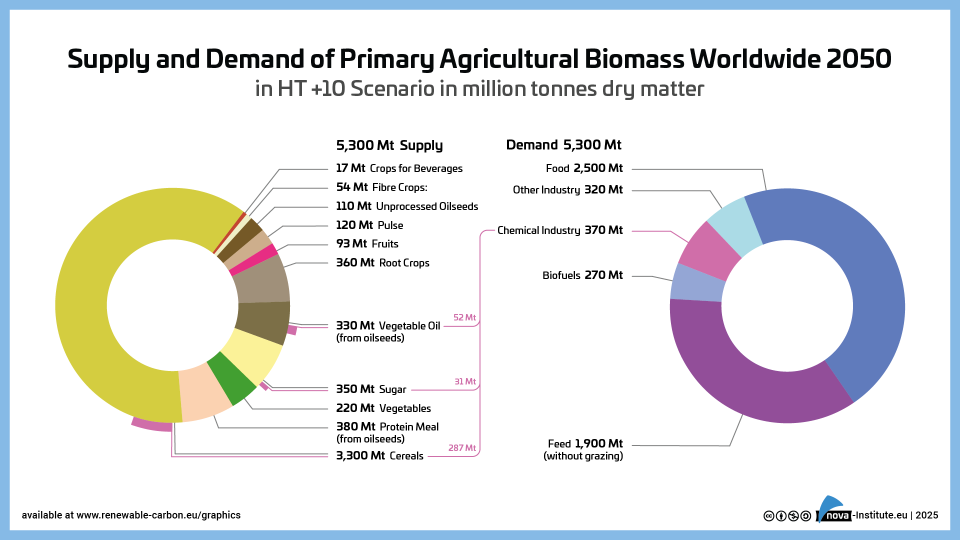
Supply and Demand of Agricultural Biomass Worldwide 2050 in HT +10 Scenario – Graphic (PNG)
Markets & Economy, Policy, Sustainability & Health
1 Page
46 Downloads
46 Downloads
2025-02
FREE
46
Downloads -
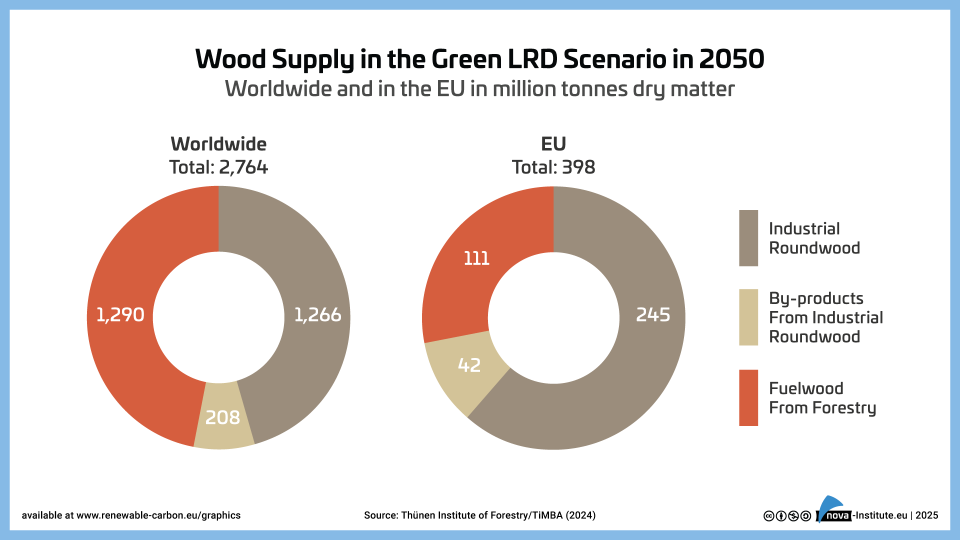
Wood Supply in the Green LRD Scenario in 2050 – Graphic (PNG)
Markets & Economy, Policy, Sustainability & Health
1 Page
15 Downloads
15 Downloads
2025-02
FREE
15
Downloads -
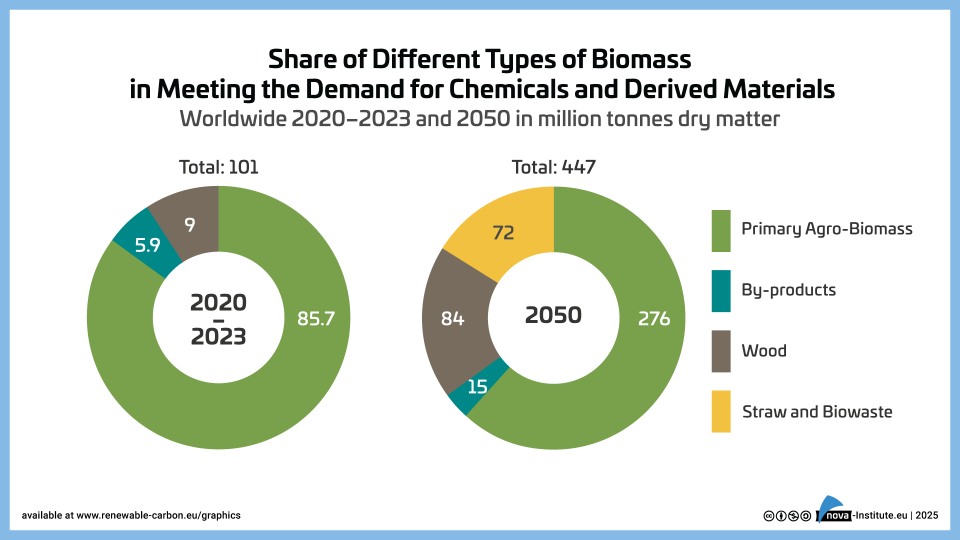
Share of Different Types of Biomass Worldwide 2023-2050 – Graphic (PNG)
Markets & Economy, Policy, Sustainability & Health
1 Page
69 Downloads
69 Downloads
2025-02
FREE
69
Downloads -
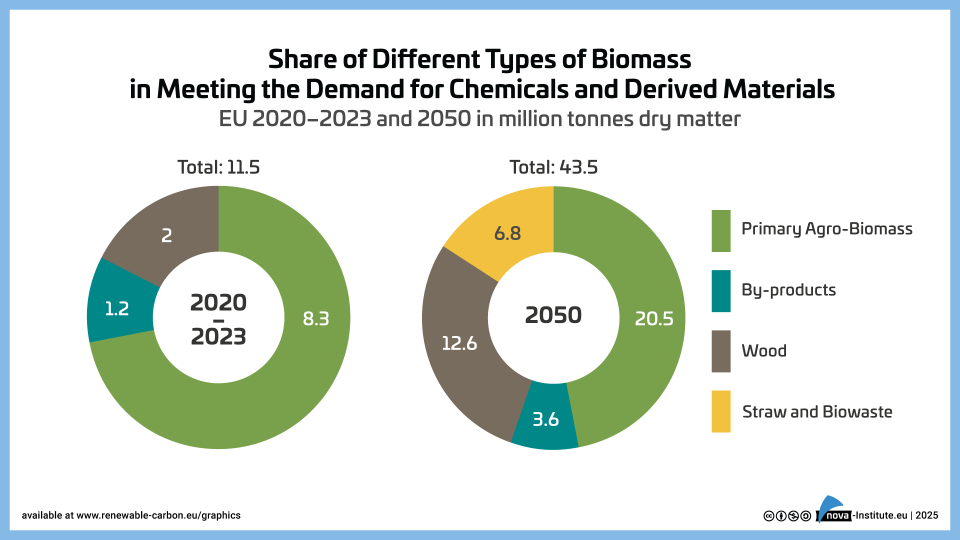
Share-of-Different-Types-of-Biomass-EU-2023–2050 – Graphic (PNG)
Markets & Economy, Policy, Sustainability & Health
1 Page
36 Downloads
36 Downloads
2025-02
FREE
36
Downloads -
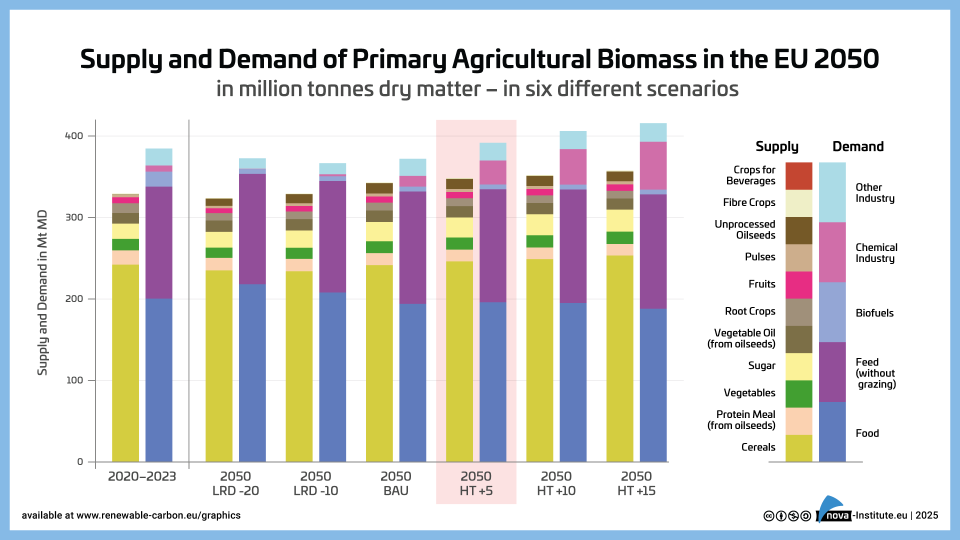
Supply and Demand of Agriculture Biomass in the EU 2050 – Graphic (PNG)
Markets & Economy, Policy, Sustainability & Health
1 Page
41 Downloads
41 Downloads
2025-02
FREE
41
Downloads -
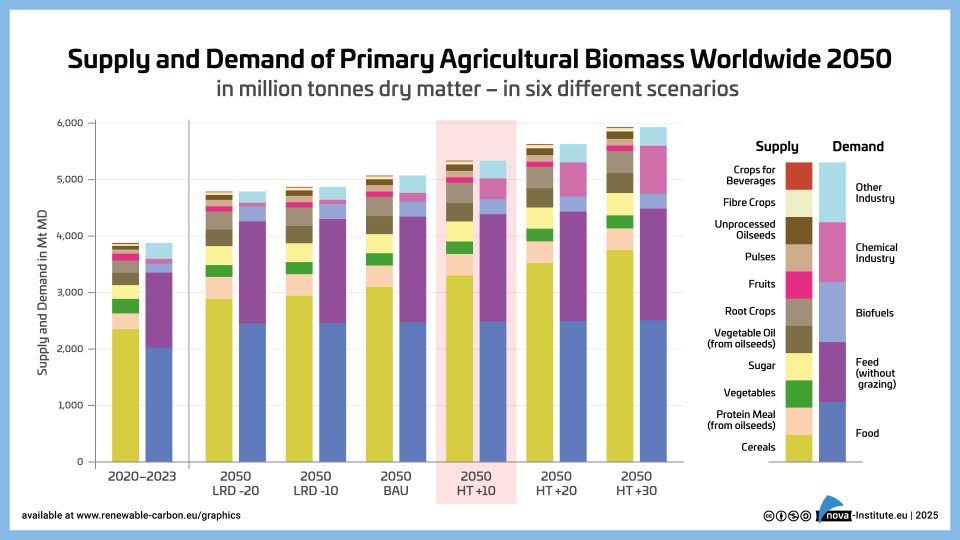
Supply and Demand of Agriculture Biomass Worldwide 2050 – Graphic (PNG)
Markets & Economy, Policy, Sustainability & Health
1 Page
47 Downloads
47 Downloads
2025-02
FREE
47
Downloads -
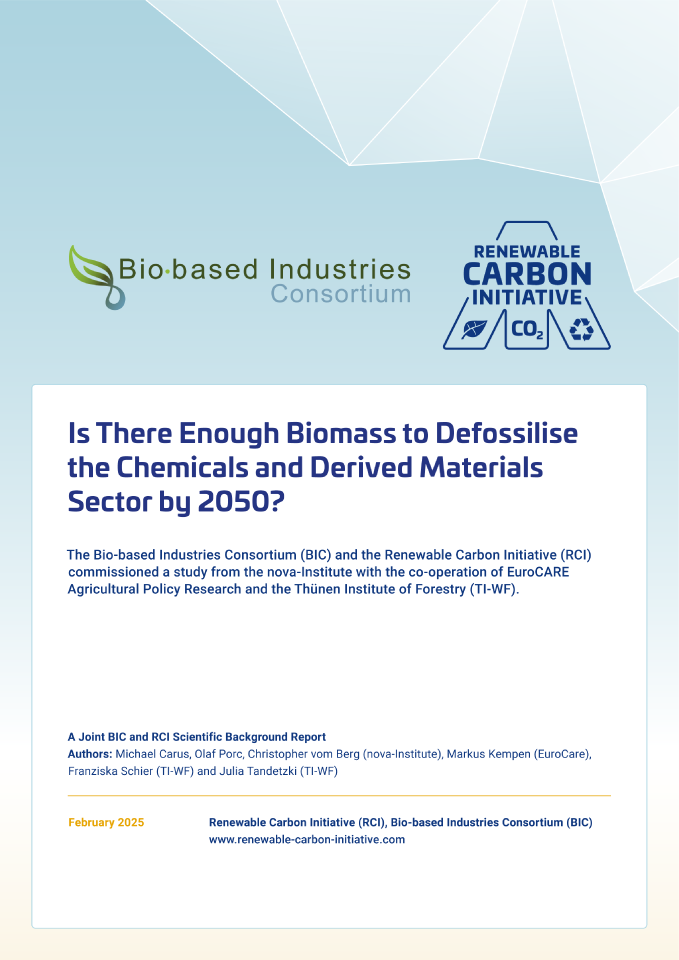
Is there Enough Biomass to Defossilise the Chemicals and Derived Materials Sector by 2050? – A Joint BIC and RCI Scientific Background Report (PDF)
Markets & Economy, Policy, Sustainability & Health
41 Pages
2012 Downloads
2012 Downloads
2025-02
FREE
Free Shipping2012
DownloadsThis reports presents the findings of a joint project of the Bio-based Industries Consortium (BIC) and the Renewable Carbon Initiative (RCI), which focuses on whether agricultural and woody biomass combined sustainably provide enough biomass to meet 20% of the future carbon demand of the chemical and derived materials industries in 2050 (up from 5.5% (EU27) and 10% (global) in 2023).
This leading question was investigated with professional experts to model a business-as-usual, a low resource depletion, and a high-tech scenario to better analyse the possible ranges of biomass availability under different developments.
Agriculture: By 2050, under the BAU scenario, production is projected to increase by 31% to 5.07 billion tonnes. Cereals increase by 32% to 3.1 billion tonnes, sugar by 40% to 340 million tonnes and vegetable oils by 45% to 317 million tonnes. In the Green LRD scenarios, production is projected to increase by 24–26%, and in the Green HT scenarios by 38–53% – compared to 31% in the BAU scenario.
Forestry: Global supply and demand of industrial roundwood (coniferous and non-coniferous) will increase by an estimated 38% between 2020 and 2050, from 0.9 to 1.3 billion tdm. The largest increase in supply is expected in Asia (69%), including China and Russia, but a significant increase of 32% is also seen for Europe.
The report concludes that sustainably meeting 20% of total carbon demand of the chemicals and derived materials sector in 2050 via biomass seems a realistic and achievable estimate.
DOI No.: https://doi.org/10.52548/PIRL6916
-
Global Non-fossil C-fuel Demand in the Transport Sector – Strong Ammonia – Graphic (PNG)
Markets & Economy, Policy, Sustainability & Health
1 Page
16 Downloads
16 Downloads
2025-01
FREE
16
Downloads -
Global Non-fossil C-fuel Demand in the Transport Sector – Strong CCU – Graphic (PNG)
Markets & Economy, Policy, Sustainability & Health
1 Page
658 Downloads
658 Downloads
2025-01
FREE
658
Downloads -
EU and Global: Biomass Demand for Transport Fuels, Aviation and Shipping up to 2050 and Implications for Biomass Supply to the Chemical Sector – RCI Report (January 2025)
Markets & Economy, Policy, Sustainability & Health
44 Pages
1328 Downloads
1328 Downloads
2025-01
FREE
Free Shipping1328
DownloadsThe Renewable Carbon Initiative’s Scientific Background Report explores three potential future scenarios for carbon-based fuel demand up to 2050 under current policy frameworks. It predicts a sharp rise in the demand for second-generation biomass biofuels, driven primarily by increasing quotas for aviation and shipping fuels. This growth raises concerns about ecological and resource sustainability and creates challenges for sectors like chemicals and materials, which rely on renewable carbon to reduce fossil dependency. Without similar regulatory incentives, these sectors may face limited access to critical feedstocks like biomass and captured carbon.
The report highlights that while bio-based and synthetic fuel production could indirectly benefit the chemical industry through by-products, competition with the fuel sector poses significant obstacles.The report includes 11 tables, 9 graphics, and a detailed overview of EU fuel regulations. Though focused on Europe, it also provides global insights, making it a valuable resource for stakeholders in biomass and CO2 utilisation sectors.
-
European Biomass Demand in Mt for Biofuel Production – Graphic (PNG)
Markets & Economy, Policy, Sustainability & Health
1 Page
33 Downloads
33 Downloads
2025-01
FREE
33
Downloads -
Industrial Roundwood Production in Three Scenarios in Million m3 – Graphic (PNG)
Markets & Economy, Policy, Sustainability & Health
1 Page
9 Downloads
9 Downloads
2025-01
FREE
9
Downloads -
European Non-fossil C-fuel Demand in the Transport Sector – Basic – Graphic (PNG)
Markets & Economy, Policy, Sustainability & Health
1 Page
32 Downloads
32 Downloads
2025-01
FREE
32
Downloads