Showing 141–158 of 158
-
BioSinn Presentation Final Conference 30 April 2021 (PDF)
Markets & Economy, Policy
141 Pages
437 Downloads
437 Downloads
2021-05
FREE
437
DownloadsBioSinn Presentation Final Conference 30 April 2021. Photos: nova-Institute unless otherwise stated.
-
BioSinn – Products for which biodegradation makes sense (PDF)
Markets & Economy, Policy
134 Pages
2641 Downloads
2641 Downloads
2021-05
FREE
2641
DownloadsIn the project “BioSinn – Products for which biodegradation makes sense”, which was funded by the Federal Ministry of Food and Agriculture (funding code 2219NR197), experts from the nova-Institute in Hürth near Cologne investigated whether there are applications and products for which biodegradation is a sensible or even the best end-of-life option. The selection criteria were that collecting the products (or their remaining parts), separating them from other organic waste or material recycling is not possible, economically not feasible or does not take place in practice. Further criteria were that the input of microplastics into the environment can be avoided through the use of biodegradable materials or that indirect positive effects, a relevant secondary benefit, can be achieved through the use of biodegradable materials.
The result of the project is a brochure for decision-makers from industry and politics but also for the general public, with 25 fact sheets and extensive background information on biodegradation. For each product, it explains to what extent biodegradation is a sensible and feasible option and what technical substitution options are available for a more sustainable use of materials. In addition, political framework conditions and regulations were highlighted and evaluated on a product-specific basis. For the first time, the market volumes for Germany and the EU were also surveyed and estimated. The total volume of the 25 applications in Germany is about 170,000 tonnes and in the European Union even about 1 million tonnes, of which the largest share ends up in the environment. Here, the use of biodegradable materials would bring considerable environmental benefits.
-
Turning off the Tap for Fossil Carbon – Future Prospects for a Global Chemical and Derived Material Sector Based on Renewable Carbon
Policy, Sustainability & Health
34 Pages
3188 Downloads
3188 Downloads
2021-04
FREE
Free Shipping3188
DownloadsNew study on the feedstock for global chemical and derived material sector and future prospects for the transition from fossil to renewable carbon sources
In a new study, total carbon embedded in products from the chemical and derived material sector is examined on a global scale. This includes product groups like plastics, rubbers, textile fibres, detergents and personal care solutions. For the first time ever, total global amount of embedded carbon is calculated, visualized and connected to the different feedstocks. Furthermore, end-user applications are investigated and depicted. A 2050 scenario is introduced, which outlines future prospects to transition from fossil to renewable carbon sources. Solutions for the highly interconnected chemical industry are illustrated together with supporting policy measures. This report aims to raise awareness of the need for, and the technical, industrial and political feasibility of, the biggest transformation of the chemical and derived material sector since the industrial revolution.
-
Products from the Chemical and Derived Material Sector in our Daily Lives (PNG)
Markets & Economy
1 Page
154 Downloads
154 Downloads
2021-04
FREE
154
DownloadsCommodities from the chemical and derived material sector surround us in manifold ways.
-
Global Carbon Demand for Organic Chemicals and Derived Materials by Type of Feedstock (PNG)
Markets & Economy
1 Page
242 Downloads
242 Downloads
2021-04
FREE
242
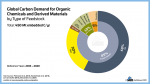
DownloadsCurrent global demand for carbon embedded in organic chemicals and derived materials by type of carbon feedstock.
-
Global Carbon Demand for Organic Chemicals and Derived Materials by End-user Application (PNG)
Markets & Economy
1 Page
140 Downloads
140 Downloads
2021-04
FREE
140
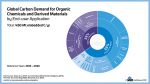
DownloadsAmount of carbon embedded in products from the global organic chemicals and derived materials by end-user application.
-
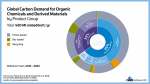
Global Carbon Demand for Organic Chemicals and Derived Materials by Product Group (PNG)
Markets & Economy
1 Page
151 Downloads
151 Downloads
2021-04
FREE
151
DownloadsType of feedstock for embedded carbon in each product group.
-
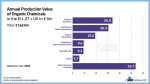
Annual Production Value of Organic Chemicals in the EU-27 + UK (PNG)
Markets & Economy
1 Page
91 Downloads
91 Downloads
2021-04
FREE
91
DownloadsProduction value of organic chemicals in the EU-27 + UK in 2018 by end-user application.
-
193 Downloads
2021-02
FREE
193
DownloadsIn einem komplementären Ansatz liefert chemisches Recycling zusätzliche Optionen, die das derzeitige Recyclingsystem verbessern und erweitern können.
-
Carbon economy – Studies on support to research and innovation policy in the area of bio-based products and services
Markets & Economy, Policy, Sustainability & Health, Technology
384 Pages
654 Downloads
654 Downloads
2021-02
FREE
Free Shipping654
DownloadsNova-Institute, together with COWI and Utrecht University published a report on the role of carbon in the global, European and regional economy for the Directorate-General for Research and Innovation (European Commission).
The report herein contains five Work Packages (WPs) that embody the requirements set out in the European Commission’s “Studies on support to R&I policy in the area of bio-based products and services – Carbon Economy (Lot 1).” The main aim of the project was to map out the current pathways available for the transition towards a low carbon economy as well as the barriers that hinder this transition. Based on the conclusions and key findings from the WPs, the authors set the scene for the future of the bio-based sector with a particular focus on ten case studies of regions and cities across the EU (WP4), an evaluation of promising innovations and novel technologies for the realisation of such an economy and a sweeping regulatory analysis containing Q1 2020 updates (WP3) on EU directives and regulations that pertain to the low carbon economy. This attention to the local level as well as the broader policy sphere is supported by a scientific understanding of the low carbon economy (WP1), potential future scenarios towards 2050 (WP2) as well as clear dissemination of the findings across the entire study (WP5). In the frame of the study an animated educational video was produced. The final study report contains an executive summary followed by each Work Package in its entirety, which can also be treated as stand-alone reports in their own right.
Further information at: https://op.europa.eu/en/publication-detail/-/publication/8c4de15d-a17d-11eb-b85c-01aa75ed71a1
-
326 Downloads
2020-12
FREE
326
Downloads -
240 Downloads
2020-12
FREE
240
Downloads -
Chemical Recycling – Status, Trends and Challenges. Technologies, Sustainability. Policy and Key Players
Markets & Economy, Technology
190 Pages
2020-11
500 € – 1,500 €Price range: 500 € through 1,500 € ex. tax
Plus 19% MwSt.Press
release Select
licenceNew market and technology report: Chemical Recycling – Status, Trends, and Challenges – Technologies, Sustainability, Policy and Key Players
nova’s new market and technology report „Chemical Recycling – Status, Trends, and Challenges” is addressed to the chemical and plastic industry, brands, technology scouts, investors, and policy makers. On 190 pages the report provides information around chemical recycling including 21 figures and 10 tables.
The report provides deep insights into current developments in order to assert a position in the current discussion based on clear definitions and categorisations of all technologies. More than 70 companies and research institutes, which developed and offer chemical recycling technologies, are presented in the report. Each company is listed with its technologies and status, investment and cooperation partners. Additionally, the report provides an overview of waste policy in the European Union. And finally, 10 companies and research institutes were interviewed to receive first-hand information around the topic of chemical recycling.
Further information:
The old report “Chemical Recycling – Status, Trends and Challenges” differs from the new report “Mapping of advanced recycling – Providers, technologies, and partnerships” as follows:
- >70 technologies and providers (vs. >100 technologies and providers in the new report)
- Profiles only with updated information of 2020
- The extensive introductory part on polymer types, demand of different polymer types, waste fractions, political framework, position papers, technologies, LCAs, associations and waste management companies are included in this report
In summary, this report is suitable for interested readers who have not yet dealt with advanced recycling and are searching for a introduction into the topic while an up-to-date overview of all identified providers is less important.
P.S.: All you want to know about advanced recycling technologies and renewable chemicals, building-blocks, monomers, and polymers based on recycling: Hear about it at the Advanced Recycling Conference (ARC), 28–29 November 2023, Cologne, Germany (hybrid event).
-
Chemical Recycling – Status, Trends and Challenges. Technologies, Sustainability, Policy and Key Players − Short Version
Markets & Economy, Technology
10 Pages
1997 Downloads
1997 Downloads
2020-11
FREE
1997
DownloadsNew market and technology report: Chemical Recycling – Status, Trends, and Challenges – Technologies, Sustainability, Policy and Key Players
nova’s new market and technology report „Chemical Recycling – Status, Trends, and Challenges” is addressed to the chemical and plastic industry, brands, technology scouts, investors, and policy makers. On 190 pages the report provides information around chemical recycling including 21 figures and 10 tables.
The report provides deep insights into current developments in order to assert a position in the current discussion based on clear definitions and categorisations of all technologies. More than 70 companies and research institutes, which developed and offer chemical recycling technologies, are presented in the report. Each company is listed with its technologies and status, investment and cooperation partners. Additionally, the report provides an overview of waste policy in the European Union. And finally, 10 companies and research institutes were interviewed to receive first-hand information around the topic of chemical recycling.
-
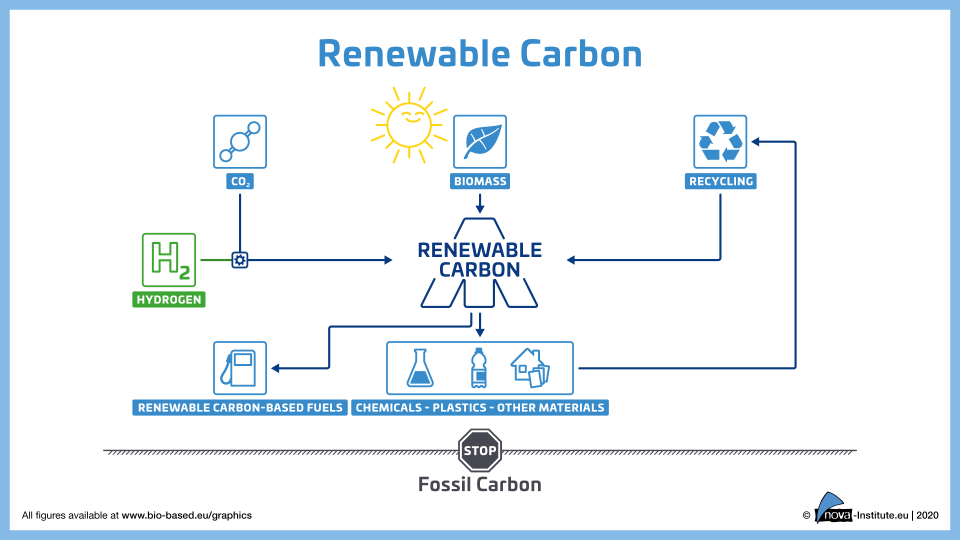
Renewable Carbon for a Sustainable Future − Graphic (September 2020) (PNG)
Markets & Economy, Policy, Sustainability & Health
1 Page
20 Downloads
20 Downloads
2020-09
FREE
Free Shipping20
Downloads -
5th Conference on CO2-based Fuels, Chemistry and Polymers 2016 Proceedings
Markets & Economy
68 Downloads
68 Downloads
2016-06
FREE
68
Downloads -
39 Downloads
2015-06
FREE
39
Downloads -
Mikroplastik in der Umwelt – Quellen, Folgen und Lösungen 2014 – Proceedings
Sustainability & Health, Technology
19 Downloads
19 Downloads
2014-06
FREE
19
Downloads


![5th Conference on CO2-based Fuels, Chemistry and Polymers 2016 Proceedings [Digital]](https://renewable-carbon.eu/publications/wp-content/uploads/2020/05/21-01-07_RC-Publications-Cover-Proceedings_CO2-based-100x141.png)
![Microplastic in the Environment 2015 - Proceedings [Digital]](https://renewable-carbon.eu/publications/wp-content/uploads/2020/05/21-01-07_RC-Publications-Cover-Proceedings_1-100x141.png)