Skip to content
Renewable Carbon Publications - LogoRenewable Carbon Publications - Logo
  • Publications
  • Contact
1
  • Cellulose Fibres Conference 2025 (Proceedings, PDF) [Digital]Cellulose Fibres Conference 2025 (Proceedings, PDF) [Digital] 1 × 150 €
    Plus 19% MwSt.

Subtotal: 150 €

CartCheckout

  • Renewable Carbon
    • Renewable Carbon
    • Events
    • Publications
    • Graphics
    • News
    • Business Directory
    • Newsletter
    • nova-Institute
  • Publications
  • Contact

Renewable Carbon Publications - LogoRenewable Carbon Publications - Logo
1
  • Cellulose Fibres Conference 2025 (Proceedings, PDF) [Digital]Cellulose Fibres Conference 2025 (Proceedings, PDF) [Digital] 1 × 150 €
    Plus 19% MwSt.

Subtotal: 150 €

CartCheckout

  • Renewable Carbon Publications
  • Markets & Economy
  • Page 3
Grid view List view
“Cellulose Fibres Conference 2025 (Proceedings, PDF)” has been added to your cart. View cart

Showing 41–60 of 528

  • Download Statistics
  • Direct Download
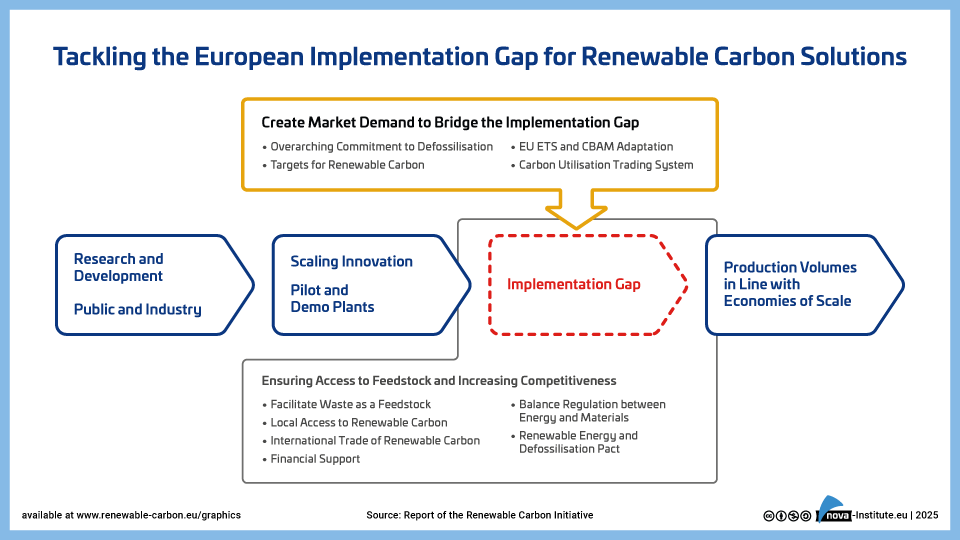
    trackling the european implementation gap for renewable carbon solutions (png)

    Trackling the European Implementation Gap for Renewable Carbon Solutions (PNG)

    Markets & Economy, Policy, Sustainability & Health, Technology

    1 Page
    47 Downloads

    47 Downloads  

    2025-04

    FREE

    Free Shipping
     

    47
    Downloads

    Direct Download
  • More
    info
    biomassepotenziale rheinisches revier (pdf)

    Biomassepotenziale Rheinisches Revier (PDF)

    Policy, Sustainability & Health


    2025-04

    FREE

    Plus 19% MwSt.
    Free Shipping
     

    0
    Downloads

    More
    info

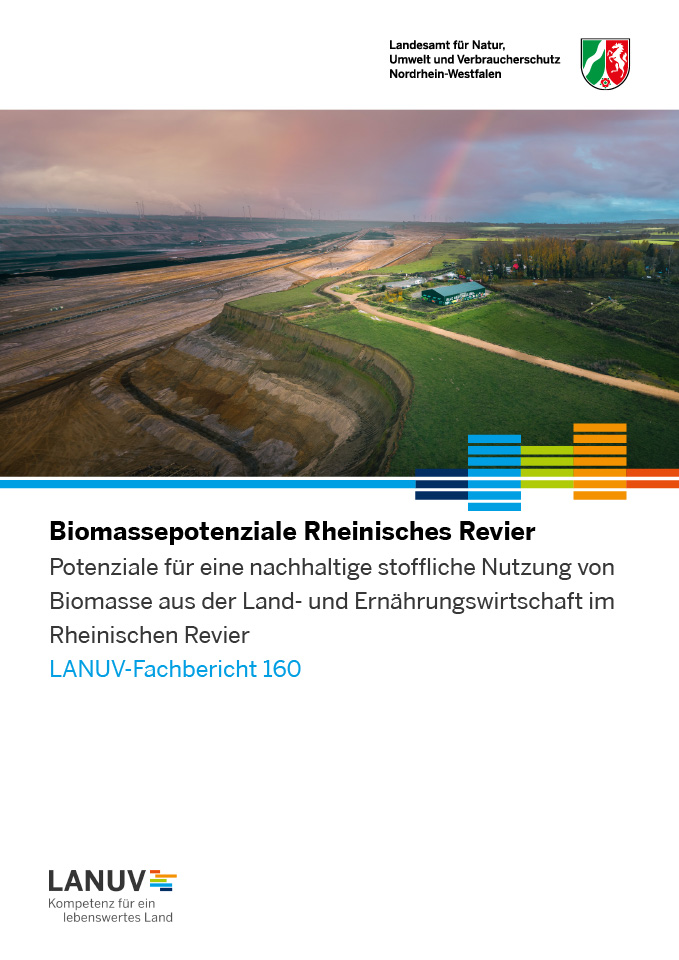
    Das Rheinische Revier soll im Zuge des Kohleausstiegs zu einer „Modellregion Bioökonomie“ entwickelt werden. Der dadurch steigende Biomassebedarf könnte negative Auswertungen haben und muss daher gründlich untersucht werden. Aus diesem Grund hat das LANUV mit Unterstützung des nova-Instituts im Zeitraum vom 01.03.2023 bis 28.02.2025 das Projekt „Biomassepotenziale Rheinisches Revier“ durchgeführt. Ziel des Projekts war es, Grundlagen und Instrumente zu schaffen, um zu einer nachhaltigen Nutzung von Biomasse aus der Land- und Ernährungswirtschaft in der Region beizutragen.

  • Add to
    cart
    Cellulose Fibres Conference 2025 (Proceedings, PDF) [Digital]

    Cellulose Fibres Conference 2025 (Proceedings, PDF)

    Markets & Economy, Policy, Sustainability & Health, Technology


    2025-03

    150 € ex. tax

    Plus 19% MwSt.
    Press
    release
    Add to
    cart

    The Cellulose Fibres Conference 2025 – New with Biosynthetics! (https://cellulose-fibres.eu, 12-13 March 2025, Cologne, hybrid) covered the entire value chain of the sustainable textile industry, from lignocellulose, pulp, cellulose fibres such as rayon, viscose, modal or lyocell and new developments to a wide range of applications:
    Textiles from renewable fibres, non-wovens such as wet wipes, as well as areas such as composites, hygiene, packaging or nano cellulose in the food industry. This year, for the first time, the conference included a dedicated session on biosynthetics – a promising area to complement the alternative for bio-based textiles. Deep insights have been offered into the future of cellulose fibres, which fits perfectly with the current shift towards circular economy, recycling and sustainable carbon cycles.

    The Cellulose Fibres Conference Proceedings include all released conference presentations, the conference journal, sponsor documents and the conference press release.

  • Direct Download
    schematic differentiation of pathways of drop in (png) (copy)

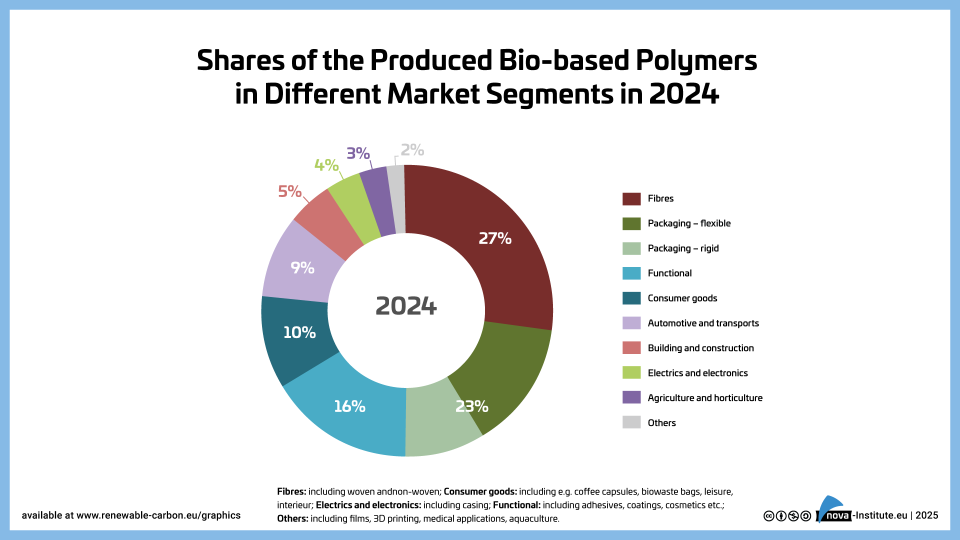
    Shares of the Produced Bio-based Polymers in Different Market Segments in 2024 (PNG)

    Markets & Economy

    1 Page
    135 Downloads

    135 Downloads  

    2025-03

    FREE

    Free Shipping
     

    135
    Downloads

    Direct Download
  • Select
    licence
    bio based building blocks and polymers – global capacities, production and trends 2024–2029 (pdf)

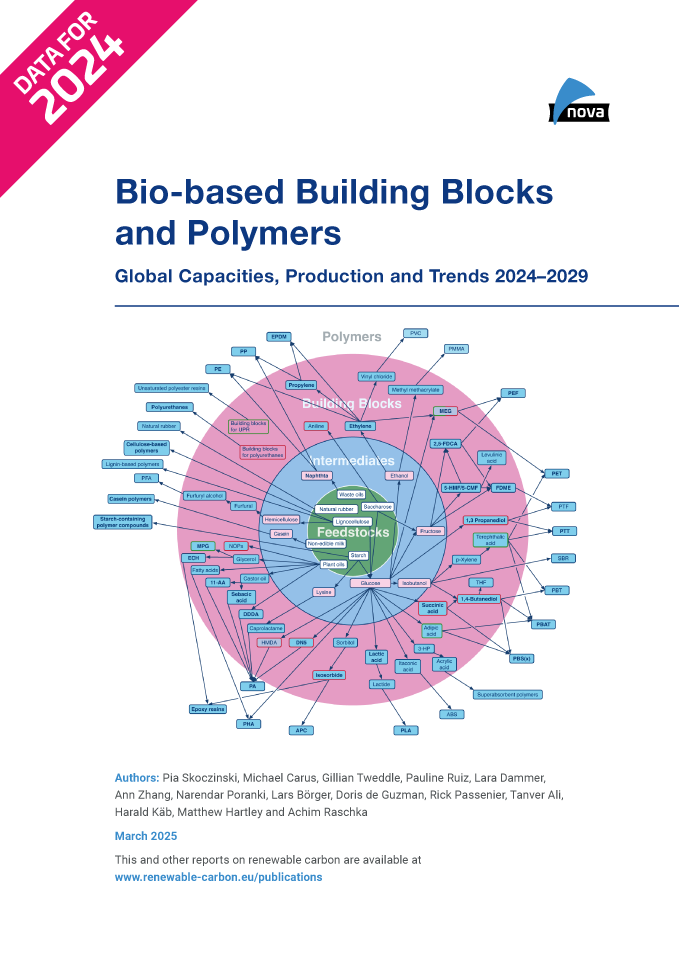
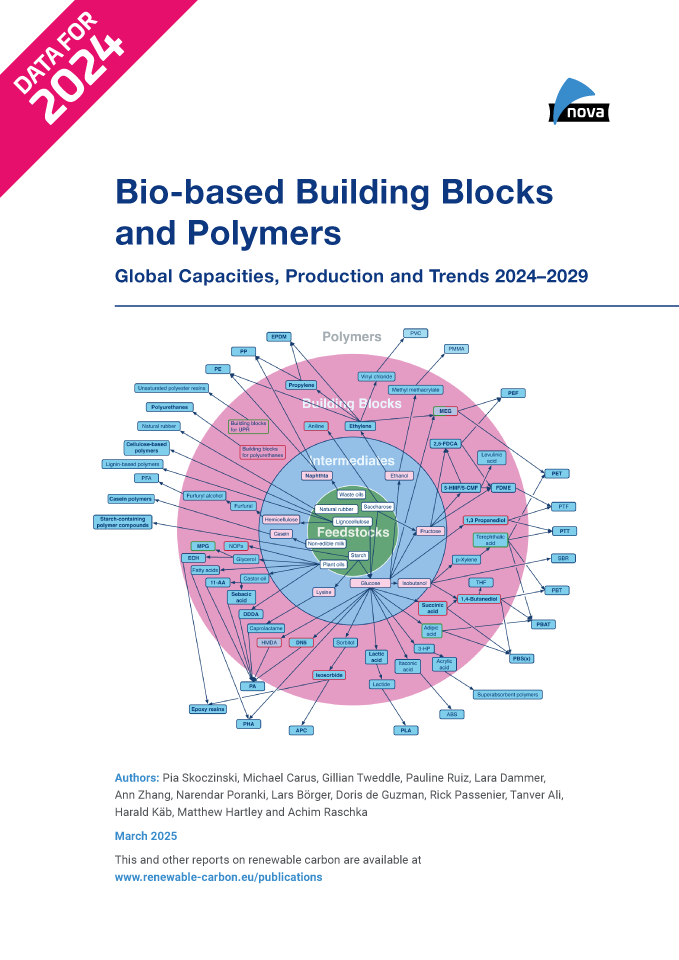
    Bio-based Building Blocks and Polymers – Global Capacities, Production and Trends 2024–2029 (PDF)

    New

    Markets & Economy

    434 Pages


    2025-03

    3,000 € – 10,000 €Price range: 3,000 € through 10,000 € ex. tax

    Plus 19% MwSt.
    Press
    release
    Select
    licence

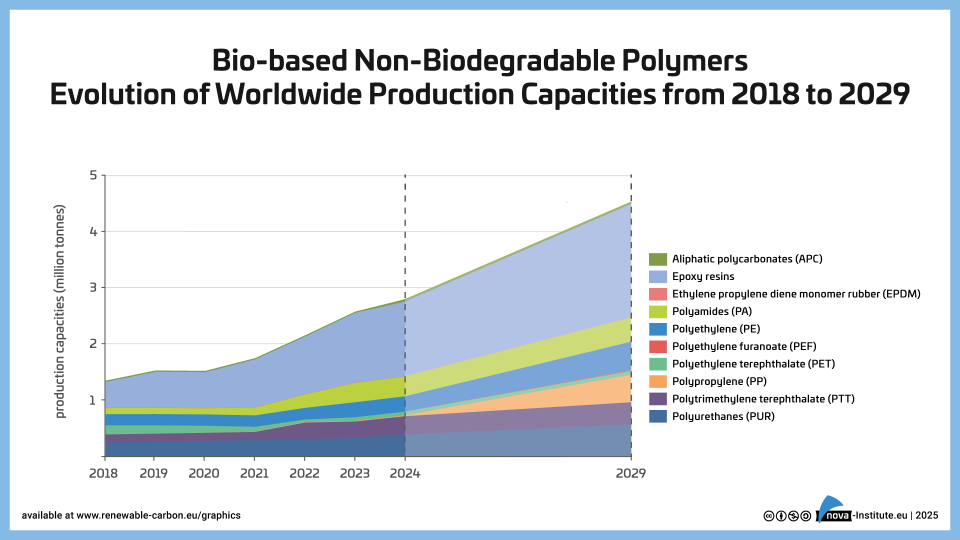
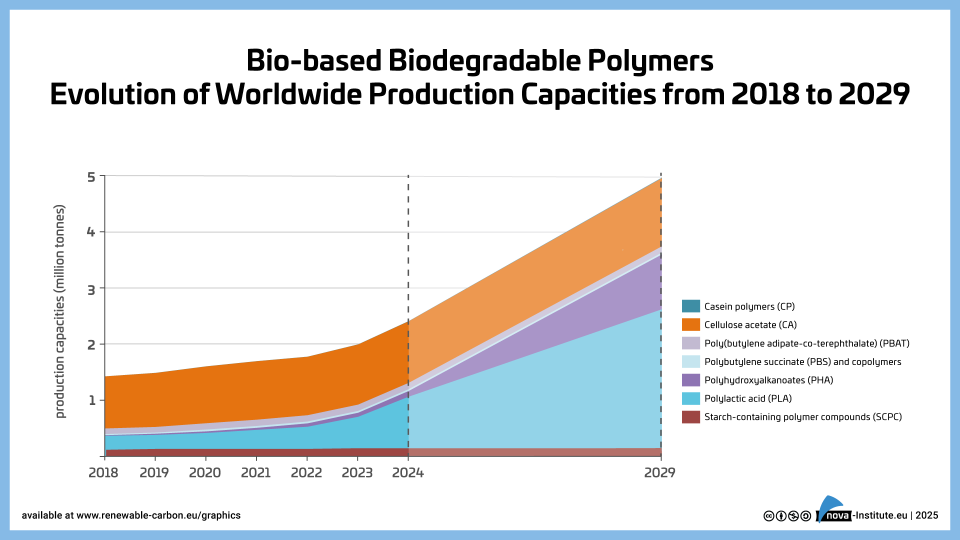
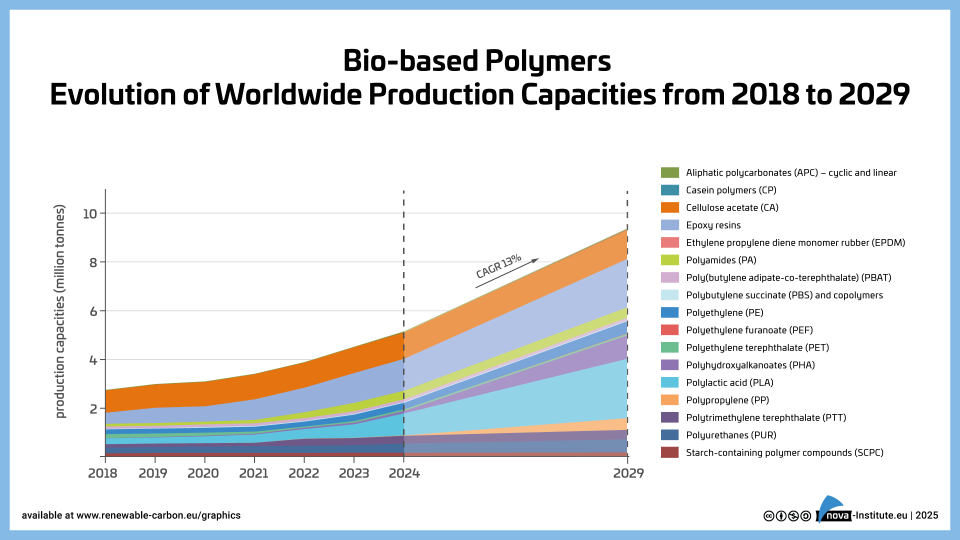
    2024 was a respectable year for bio-based polymers, with an overall expected CAGR of 13 % to 2029. Overall, bio-based biodegradable polymers have large installed capacities with an expected CAGR of 17 % to 2029, but the current average capacity utilisation is moderate at 65 %. In contrast, bio-based non-biodegradable polymers have a much higher utilisation rate of 90 %, but will only grow by 10 % to 2029.

    Epoxy resin and PUR production is growing moderately at 9 and 8 %, respectively, while PP and cyclic APC capacities are increasing by 30 %. Despite a decline in production of biodegradables, especially for PLA in Asia, capacities have increased by 40 %. The same applies to PHA capacities. Commercial newcomers such as casein polymers and PEF recorded a rise in production capacity and are expected to continue to grow significantly until 2029.

    DOI No.: https://doi.org/10.52548/UMTR4695

  • Direct Download
    (pdf)

    Bio-based Building Blocks and Polymers Global Capacities, Production and Trends 2024–2029 – Short Version (PDF)

    Markets & Economy

    28 Pages
    1593 Downloads

    1593 Downloads  

    2025-03

    FREE

    Free Shipping
     

    1593
    Downloads

    Direct Download

    2024 was a respectable year for bio-based polymers, with an overall expected CAGR of 13 % to 2029. Overall, bio-based biodegradable polymers have large installed capacities with an expected CAGR of 17 % to 2029, but the current average capacity utilisation is moderate at 65 %. In contrast, bio-based non-biodegradable polymers have a much higher utilisation rate of 90 %, but will only grow by 10 % to 2029.

    Epoxy resin and PUR production is growing moderately at 9 and 8 %, respectively, while PP and cyclic APC capacities are increasing by 30 %. Despite a decline in production of biodegradables, especially for PLA in Asia, capacities have increased by 40 %. The same applies to PHA capacities. Commercial newcomers such as casein polymers and PEF recorded a rise in production capacity and are expected to continue to grow significantly until 2029.

  • Direct Download
    bio based polymer capacities and production worldwide 2024 (png) (copy)

    Bio-based Non Biodegradable Polymers Evolution of Worldwide Prod Capacities 2029 (PNG)

    Markets & Economy

    1 Page
    144 Downloads

    144 Downloads  

    2025-03

    FREE

    Free Shipping
     

    144
    Downloads

    Direct Download
  • Direct Download
    bio based biodegradable polymers evolution of worldwide production capacities 2029 (png)

    Bio-based Biodegradable Polymers Evolution of Worldwide Production Capacities 2029 (PNG)

    Markets & Economy

    1 Page
    167 Downloads

    167 Downloads  

    2025-03

    FREE

    Free Shipping
     

    167
    Downloads

    Direct Download
  • Direct Download
    bio based biodegradable polymers evolution of worldwide production capacities 2029 (png) (copy)

    Bio-based polymers – Evolution of worldwide production capacities from 2018 to 2029 (PNG)

    Markets & Economy

    1 Page
    119 Downloads

    119 Downloads  

    2025-03

    FREE

    Free Shipping
     

    119
    Downloads

    Direct Download
  • Direct Download
    bio based polymers – evolution of worldwide production capacities from 2018 to 2029 (png) (copy)

    Biomass Utilisation Worldwide 2024 (PNG)

    Markets & Economy

    1 Page
    172 Downloads

    172 Downloads  

    2025-03

    FREE

    Free Shipping
     

    172
    Downloads

    Direct Download
  • Direct Download
    biomass utilisation worldwide 2024 (png) (copy)

    Global Production Capacities of Bio-based Polymers per region 2024 (PNG)

    Markets & Economy

    1 Page
    82 Downloads

    82 Downloads  

    2025-03

    FREE

    Free Shipping
     

    82
    Downloads

    Direct Download
  • Direct Download
    global production capacities of bio based polymers per region 2024 (png) (copy)

    Pathways to bio-based polymers (PNG)

    Markets & Economy

    1 Page
    161 Downloads

    161 Downloads  

    2025-03

    FREE

    Free Shipping
     

    161
    Downloads

    Direct Download
  • Direct Download
    pathways to bio based polymers (png) (copy)

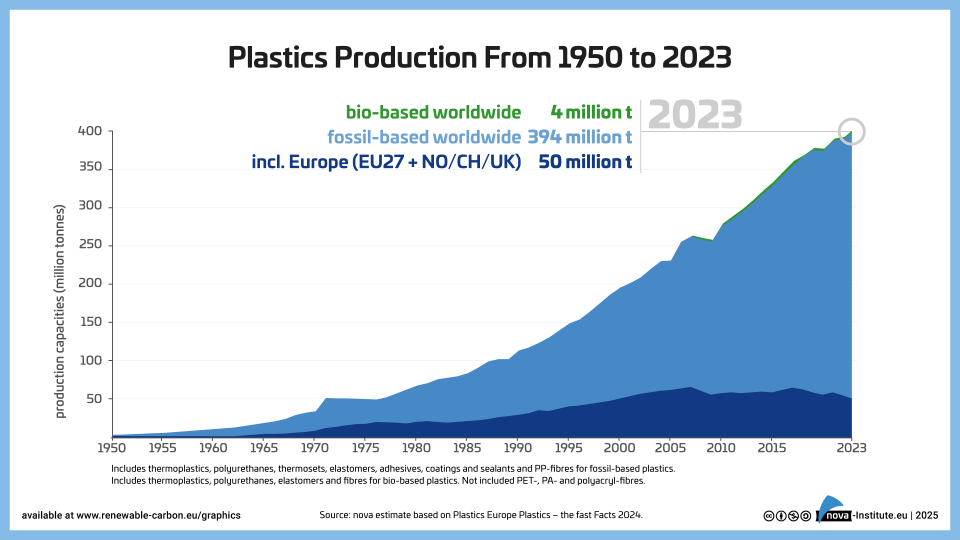
    Plastics Production From 1950 to 2023 (PNG)

    Markets & Economy

    1 Page
    210 Downloads

    210 Downloads  

    2025-03

    FREE

    Free Shipping
     

    210
    Downloads

    Direct Download
  • Direct Download
    plastics production from 1950 to 2023 (png) (copy)

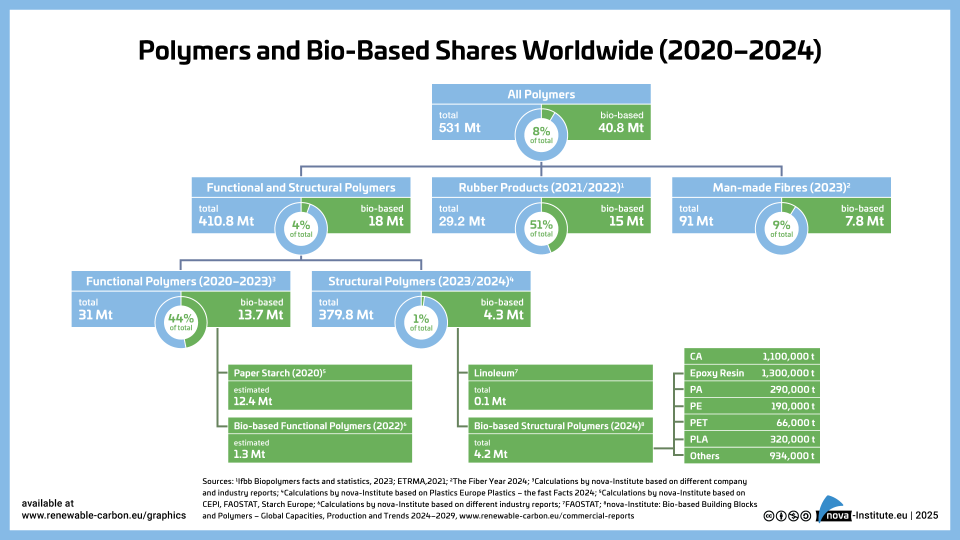
    Polymers and Bio-Based Shares Worldwide (2020–2025) (PNG)

    Markets & Economy

    1 Page
    133 Downloads

    133 Downloads  

    2025-03

    FREE

    Free Shipping
     

    133
    Downloads

    Direct Download
  • Direct Download
    polymers and bio based shares worldwide (2020–2025) (png) (copy)

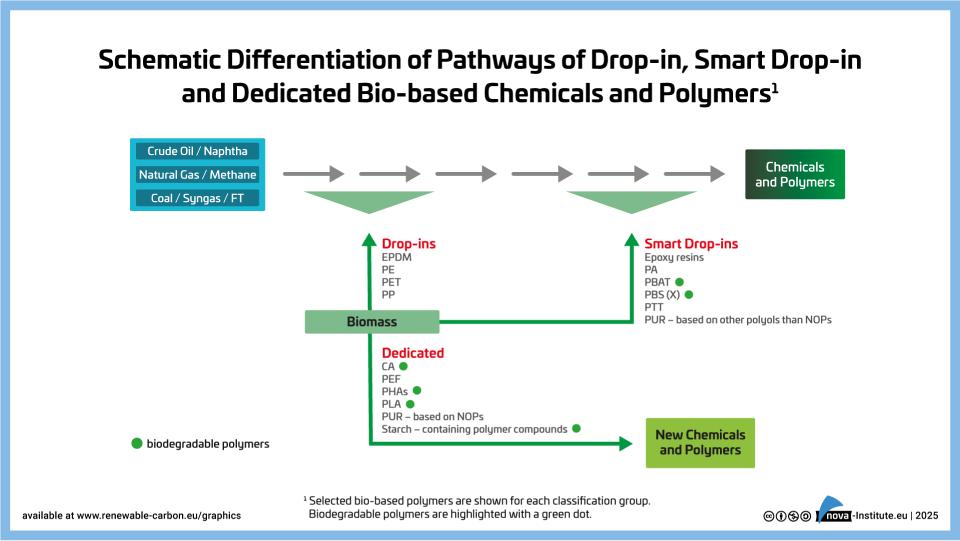
    Schematic Differentiation of Pathways of Drop-in (PNG)

    Markets & Economy

    1 Page
    69 Downloads

    69 Downloads  

    2025-03

    FREE

    Free Shipping
     

    69
    Downloads

    Direct Download
  • Direct Download
    evaluating lca approaches and methodologies for renewable carbon sources report 3 of 3 – non technical summary (march 2025)

    Evaluating LCA Approaches and Methodologies for Renewable Carbon Sources Report 3 of 3: Non-technical Summary – RCI Report (March 2025)

    Markets & Economy, Policy, Sustainability & Health

    15 Pages
    1006 Downloads

    1006 Downloads  

    2025-03

    FREE

    Free Shipping
     

    1006
    Downloads

    Direct Download

    This Non-technical Summary (15 pages),highlights main insights into the project results and states key take-aways for policy-makers.

    It compares several frameworks, such as ISO 14040, Product Environmental Footprint (PEF), and GHG Protocol, finding both commonalities and critical differences in areas like biogenic carbon accounting and recycling assessment. The study identifies significant methodological flexibility in existing frameworks, leading to inconsistencies in LCA results and challenges in standardisation. Key issues include differing treatment of carbon capture and utilisation (CCU), direct air capture (DAC), and allocation of environmental burdens in multifunctional processes. Policy recommendations emphasise the need for harmonisation, improved biogenic carbon accounting, and clear guidance on emerging technologies like DAC and mass balance attribution. Overall, the study calls for refining LCA methodologies to ensure fair comparison between renewable and fossil-based carbon solutions.

    This report is the third report of a larger RCI project on LCA methodology, which includes two additional publications:

    Report 1 of 3 – Renewable Carbon in LCA Guidelines
    Report 2 of 3 – Renewable Carbon in Recycling Situations

    Please find these additional reports by following the respective links at the bottom of this page.

    DOI No.: https://doi.org/10.52548/ZEKY1803

  • Direct Download
    evaluating lca approaches and methodologies for renewable carbon sources report 3 of 3 – non technical summary (march 2025) (pdf) (copy)

    Core Elements of LCA for Renewable Carbon Solutions (PNG)

    Policy, Sustainability & Health

    1 Page
    132 Downloads

    132 Downloads  

    2025-03

    FREE

    Free Shipping
     

    132
    Downloads

    Direct Download

    Several methodological aspects are relevant for LCA and carbon footprints in general and for products containing renewable carbon in particular.

  • Direct Download
    evaluating lca approaches and methodologies for renewable carbon sources report 1 of 3 – renewable carbon in lca guidelines (march 2025) (pdf)

    Evaluating LCA Approaches and Methodologies for Renewable Carbon Sources Report 1 of 3: Renewable Carbon in LCA Guidelines – RCI Report (March 2025)

    Markets & Economy, Policy, Sustainability & Health

    145 Pages
    1138 Downloads

    1138 Downloads  

    2025-03

    FREE

    Free Shipping
     

    1138
    Downloads

    Direct Download

    Renewable Carbon in LCA Guidelines (146 pages) evaluates methodological choices which impact LCAs for products containing renewable carbon in existing LCA frameworks and guidelines. The study specifically examines the similarities and differences in the methodological choices of guidelines, as well as the implications of these methodological aspects on the resulting LCA outcomes.The frameworks were selected based on their relevance and legitimacy in the industry, academia and policy field, and include: ISO 14040/44, ISO 14067, GHG Protocol Product Standard, PACT’s Pathfinder Framework, the PCF Guideline for the chemical industry by Together for Sustainability (TfS), EPD for the construction industry – ISO 14025 and EN 15804, the Renewable Energy Directive, the Product Environmental Footprint (PEF) and the JRC’s plastics LCA methodology. One field with a particularly large methodological freedom is recycling.

    This report is the first report of a larger RCI project on LCA methodology, which includes two additional publications:

    Report 2 of 3 – Renewable Carbon in Recycling Situations
    Report 3 of 3 – Non-technical Summary

    Please find these additional reports by following the respective links at the bottom of this page.


    DOI No.: https://doi.org/10.52548/VCYM7822

  • Direct Download
    evaluating lca approaches and methodologies for renewable carbon sources report 2 of 3 – renewable carbon in recycling situations (march 2025) (pdf)

    Evaluating LCA Approaches and Methodologies for Renewable Carbon Sources Report 2 of 3: Renewable Carbon in Recycling Situations – RCI Report (March 2025)

    Markets & Economy, Policy, Sustainability & Health

    37 Pages
    810 Downloads

    810 Downloads  

    2025-03

    FREE

    Free Shipping
     

    810
    Downloads

    Direct Download

    This report focuses on renewable carbon in recycling scenarios and the key challenges in LCA and carbon footprint assessments. It examines system boundaries, allocation methods, and biogenic carbon accounting approaches, highlighting their influence on sustainability evaluations. The report emphasises the cut-off and avoided-burden approaches for recycling while recommending the -1/+1 method for biogenic carbon transparency. However, it also identifies contradictions between LCA results and broader sustainability goals, such as the EU waste hierarchy, which prioritises recycling. To address these inconsistencies, the report suggests integrating LCA with additional sustainability metrics like land use and recyclability. Ultimately, refining these methodologies will enhance the accuracy and reliability of environmental assessments for bio-based and recycled materials.

    This report is the second report of a larger RCI project on LCA methodology, which includes two additional publications:

    Report 1 of 3 – Renewable Carbon in LCA Guidelines
    Report 3 of 3 – Non-technical Summary

    Please find these additional reports by following the respective links at the bottom of this page.


    DOI No.: https://doi.org/10.52548/QTVU8642

  • Direct Download
    suited approach: sustainable integrated technology development (png)

    SUITED approach: SUstainable Integrated TEchnology Development (PNG)

    Markets & Economy, Sustainability & Health

    1 Page
    26 Downloads

    26 Downloads  

    2025-02

    FREE


    26
    Downloads

    Direct Download

    Start the ecological and economic evaluation of your technology as early as possible:

    • Continuous optimization process
    • Sustainability integrated technology development
    • SUITED as a tool for technology improvement

Renewable Carbon Types

Publications

Topics

  • 1
  • 2
  • 3
  • 4
  • 5
  • …
  • 27

nova-Logo
contact@nova-institut.de
www.nova-institute.eu

nova-Institut GmbH
Leyboldstr. 16
50354 Hürth / Germany

  • Renewable Carbon
  • Events
  • Publications
  • Graphics
  • News
  • Business Directory
  • Newsletter
  • nova-Institute
  • My account
  • Legal Information
  • Terms and Conditions
  • Data protection regulation
© 2026 nova-Institut GmbH
Renewable Carbon Publications - Logo

Login

Lost your password?