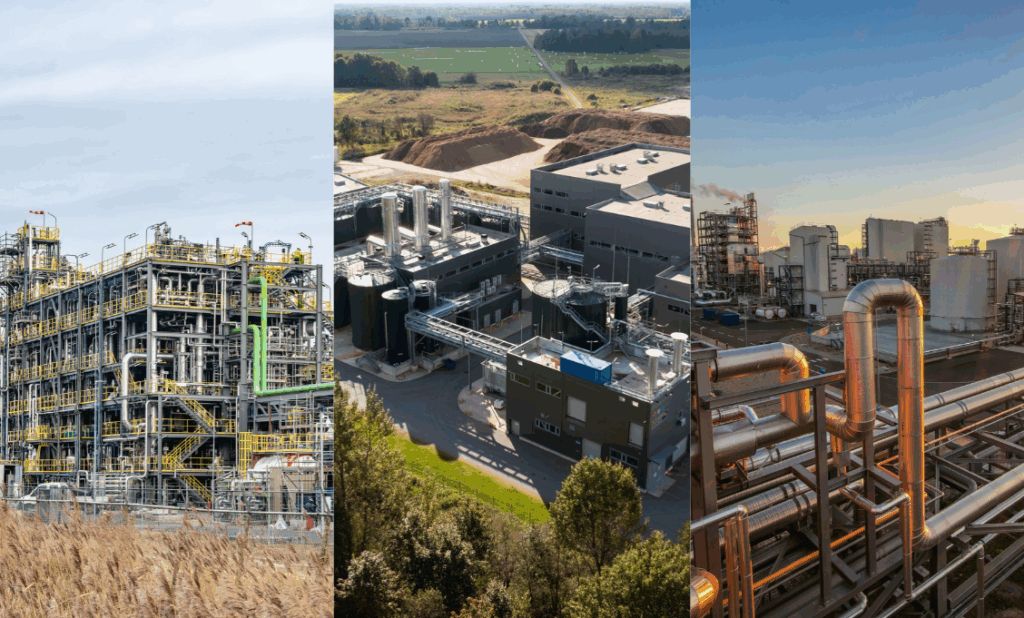
The study, Winning the First-of-a-Kind Challenge, was produced by the Bio-based Industries Consortium (BIC) and authored by Melich Seefeldt. Drawing evidence from UPM, Avantium and Fibenol, whose projects moved from investment decision to physical plant, the study highlights three routes to a FOAK surviving the second valley of death: corporate-backed industrial deployment, listed technology-platform scale-up, and project-led lignocellulosic commercialisation.
FOAK plants are the bridge between a technology that works in the lab and an industry that works at scale: without a first plant, a new technology never reaches the market. That makes them decisive for the EU Bioeconomy Strategy, envisaging a wide deployment of bio-based materials and products in the EU by 2040. Given how long it takes to build and ramp up a plant, 2040 is effectively tomorrow.
The study identifies four measures that helped these projects succeed:
- Funding must cover the phase after construction, when the plant is commissioned and ramped up;
- Starting with one controlled feedstock route and widening it later leads to faster learning;
- Successful projects relied on binding or conditioned off-take agreements, which give stronger evidence to financiers;
- Policy can help determine whether the sustainable value of a first plant is recognised by customers and investors, through bio-based carbon recognition, credible claims and workable certification.
The study also calls for a strong EU budget for the bioeconomy for 2028-2034 and for patient capital from public and private sources. Where customers are unwilling to pay a green premium, public policy can improve market conditions through mandates, targets and public procurement.
Commenting on the study’s findings, Marco Rupp, Deputy Executive Director of BIC, said: “The decisions we take today will shape how Europe produces for decades, and a clear political agenda to scale up bio-based innovation and a strong EU budget for the bioeconomy will help to win the first of a kind challenge and mobilise private investments.”
Martin Ledwon, Vice President Marketing, Sustainability and Communications at UPM Next Generation Renewables, shared in his capacity of BIC Board Member: “One of the clearest lessons from first-of-a-kind projects is that success depends on much more than technology. Financing, offtake and demand certainty matter just as much. Europe needs industries, manufacturing capacity and value chains that turn innovation into competitiveness. Predictable demand, investment and industrial deployment will ultimately determine where future growth, jobs and resilience are created.”
Marco Jansen, Chief Commercial Officer at Avantium shared from his company perspective that: “At Avantium, we have experienced first-hand what it takes to bring an innovative technology from pilot scale to industrial reality with our FDCA Flagship Plant in Delfzijl, the world’s first commercial facility producing FDCA. First-of-a-kind projects like ours are essential to bridge the gap between innovation and commercial scale, but they require supportive capital, realistic timelines and policy frameworks that recognise the unique challenges. If Europe wants to turn its innovation leadership into industrial leadership, supporting this scale-up phase must be a priority.”
Peep Pitk, Chief Strategic Business Development Officer of Fibenol, highlighted that: “Our experience at Fibenol has shown that building the first plant is only the beginning of the FOAK journey. The real learning comes from operating at industrial scale, where technology, feedstock, product quality, customers and economics all have to work together as one system.”
Managing Director and Global Commercial Executive at VIA SOLUTIS and author of the current study, Melich Seefeldt, concluded: ”The chemicals and materials we use every day can become the foundation of a new European industrial success story, built on renewable resources. These pioneers have taken the scale-up risk; the opportunity now is to build on their experience with the ambition it deserves.”
Source
BIC, press release, 2026-11-17.
Supplier
Avantium Technologies B.V.
Biobased Industries Consortium (BIC)
Fibenol
UPM Next Generation Renewables
Share
Renewable Carbon News – Daily Newsletter
Subscribe to our daily email newsletter – the world's leading newsletter on renewable materials and chemicals