In a landmark collaborative project, scientists at the VTT Technical Research Centre of Finland, together with 16 partners from 11 European countries, have discovered new plant-based ingredients with proven anti-inflammatory and anti-ageing effects for the development of next-generation skincare products. This research represents the most comprehensive scientific exploration of plant-based cosmetic ingredients ever conducted.
Read the summary
- VTT’s EU-funded InnCoCells project developed sustainable methods for discovering and producing plant-based cosmetic ingredients, screening over 100 plant extracts to identify 25 with significant anti-inflammatory and anti-ageing effects.
- Extracts from Cochlearia danica, Capsicum chinense, and Ocimum basilicum showed promising results, with efficient anti-inflammatory, antimicrobial, and anti-collagenase properties, and without irritation.
- The project emphasises combining scientific efficacy with environmentally responsible production, aligning with consumer demand and enhancing Europe’s bioeconomy by leveraging plant cell cultures and sustainable practices.
- The initiative, involving 17 partners from 11 countries, aims to transition from laboratory discoveries to commercial applications, fostering collaboration between institutes, SMEs and international companies in developing innovative cosmetic ingredients.
This summary is written by AI and checked by a human.
The EU-funded InnCoCells project signals a shift in how cosmetic ingredients are discovered, validated and developed. Earlier work often centred on single isolated plant compounds, whereas InnCoCells has taken a broad, systematic screening approach. More than 100 plant extracts have been screened for effects on 20 skin-related biomarkers related to inflammation and ageing, revealing ~25 extracts suitable for development as skincare product ingredients.
Importantly, these extracts can be derived from responsibly grown plants in greenhouses, plant cell and tissue cultures in bioreactors, or agricultural side-streams that would otherwise be discarded, making them not only effective but also environmentally sustainable. The sustainability and commercial potential of all production platforms and ingredients has been validated by life cycle assessment and techno-economic analysis.
Breakthrough plant cell extracts address inflammation and ageing
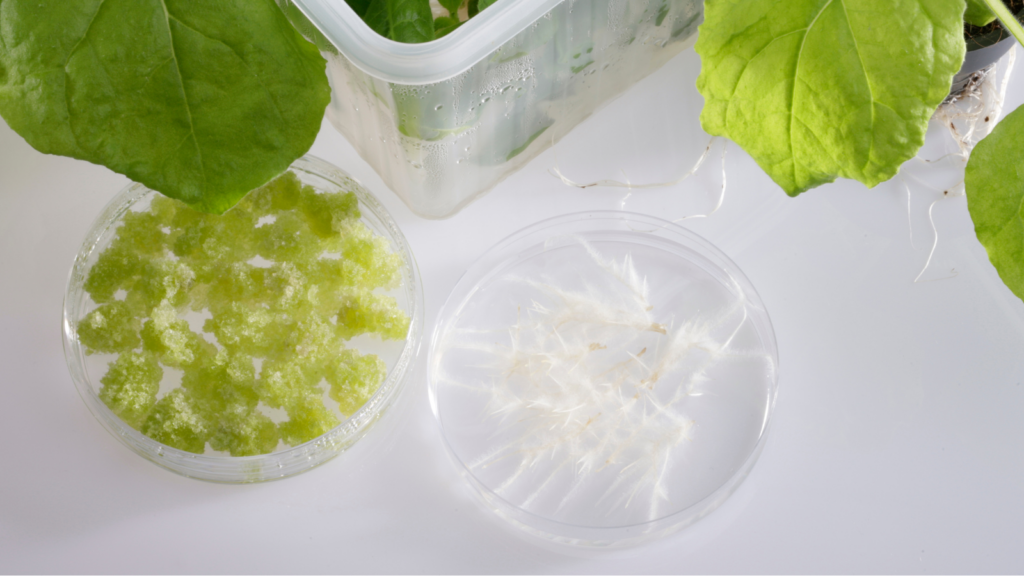
Among the most exciting discoveries are extracts from cell cultures of Cochlearia danica (Danish scurvygrass), Capsicum chinense (a tropical pepper) and hairy roots of Ocimum basilicum (basil).
Cell cultures of C. danica, a small herb that grows on Northern European coastlines, were ranked in our studies first for the production of multiple bioactive compounds with scientifically proven efficacy. This versatile extract not only demonstrated strong anti-inflammatory and anti-ageing activities in vitro but also potent antimicrobial effects exceeding those of many single-compound ingredients currently on the market.
Extracts of C. chinense cell cultures also showed promising antimicrobial activity against harmful skin bacteria, even inhibiting the pathogenic hospital bacterium Staphylococcus aureus MRSA. Furthermore, the extract showed strong anti-ageing activity, protecting skin cells from stress. But unlike popular anti-ageing ingredients such as retinol and vitamin C, there was no sign of skin irritation.
Basil hairy root extracts showed unique anti-collagenase and anti-hyaluronidase activities but did not affect elastase, indicating the potential to counter the signs of skin ageing without affecting hydration.
“These findings highlight how nature and science can come together to create the next generation of cosmetic ingredients,” says InnCoCells coordinator, Kirsi-Marja Oksman-Caldentey from VTT.
“For the first time, we are building a pipeline of ingredients that combine scientifically proven skin benefits with responsible, scalable production. This direction reflects what consumers and the beauty industry are actively seeking, while also aligning with the wider goals of the European bioeconomy.”
These discoveries feed directly into the growing demand for commercial applications. VTT and its partners are already exploring business models to bring these ingredients closer to the market. The aim is not only to demonstrate efficacy but also to find the right partners to produce these ingredients for the market so that brands can integrate them into their product formulations.
“Collaborating with European research institutes, universities and SMEs during the InnCoCells project provided an exciting opportunity for international companies to access cutting-edge expertise in plant research” says Dr Christophe Carola from MERCK.
“This enabled significant innovation, and the initial results from efficacy tests confirm the successful production of many promising extracts that are now being considered as ingredient candidates for skincare products.”
About the research
InnCoCells was a 4.5-year research and innovation project funded by the European Union’s Horizon 2020 programme with a total budget of €7.9 million. Coordinated by VTT, the project’s objective was to establish new, sustainable production systems for plant-derived cosmetic ingredients with scientifically validated biological activity and efficacy.
To achieve this, InnCoCells combined advanced plant science, biotechnology, and cultivation methods — including greenhouse, aeroponic and plant cell culture technologies — with circular approaches such as the upcycling of agricultural side-streams. The project involved 17 partners from 11 European countries, ranging from universities and research institutes to SMEs, a large company, and sectoral organisations. Together, the consortium worked to ensure that discoveries could move efficiently from laboratory testing into real-world cosmetic applications.
Get to know our experts

Kirsi-Marja Oksman-Caldentey
Senior Advisor
phone: +358405522082
E-Mail: kirsi-marja.oksman@vtt.fi
Kirsi-Marja Oksman-Caldentey is a globally recognised expert in biotechnology and plant-based innovations, with a long-standing career in international research and scientific leadership. She is a Senior Advisor at VTT and Associate Professor in Pharmaceutical Biology at the University of Helsinki.
Her work focuses on bioactive compounds, plant cell cultures, cellular agriculture, and the health effects of plants and microbes – across food, cosmetics, and medicine. She has played a key role e.g. in researching the health benefits of Finnish berries and bringing those findings closer to consumers through commercialization. She has also advanced the use of plant cell cultures to produce complex compounds that are difficult to synthesize chemically, including plant-derived anticancer molecules. This research led to the founding of SoluCel Ltd, a spin-off company of VTT established in collaboration with Belgium’s VIB.
Driven by curiosity, scientific integrity, and a desire to improve human health, Kirsi-Marja believes in the power of science to drive societal progress. She has coordinated major EU-funded projects, built strong international networks, and actively mentors the next generation of researchers. Her contributions have been recognised with several international awards, including the Knight First Class of the Order of the Lion of Finland.
Source
VTT, press release, 2025-10-16.
Supplier
Horizon 2020
Technical Research Centre of Finland (VTT)
The Merck Group
Share
Renewable Carbon News – Daily Newsletter
Subscribe to our daily email newsletter – the world's leading newsletter on renewable materials and chemicals