 Two Weeks to Go: Advanced Recycling Needs Collaboration More Than Ever
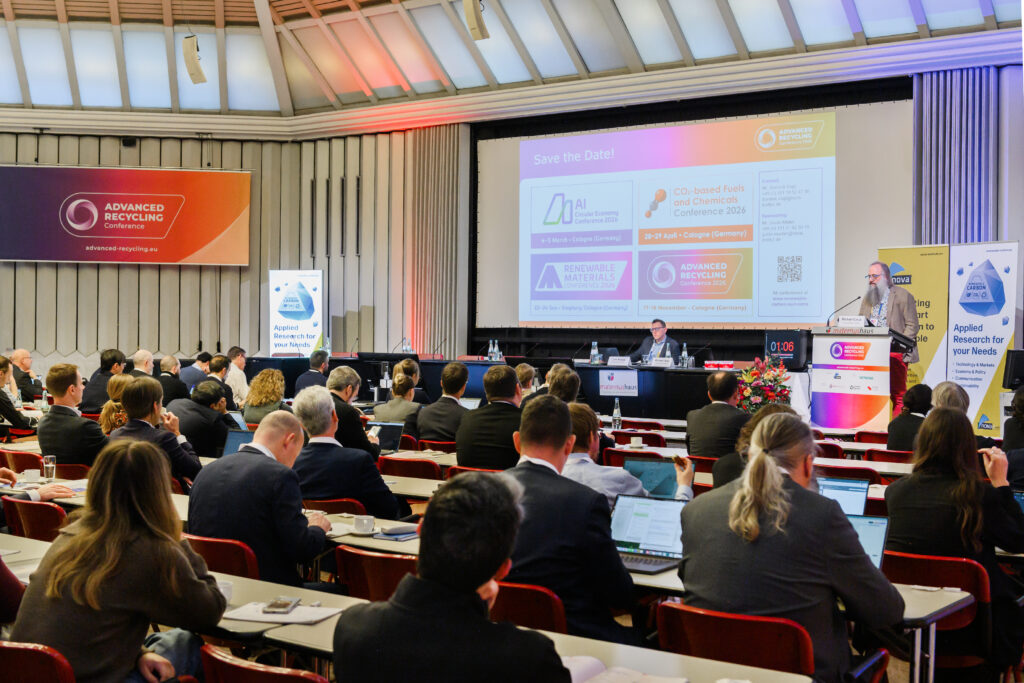
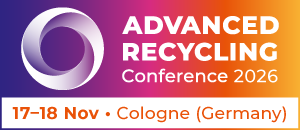
With just two weeks to go until the Advanced Recycling Conference (ARC) on 17–18 November 2026 in Cologne, collaboration and exchange across sectors are more urgent than ever. Europe’s recycling and materials industries are under growing pressure to deliver circular solutions in a difficult economic environment, while regulation is setting increasingly concrete requirements for recyclability and recycled content.
One example is the Packaging and Packaging Waste Regulation. In the automotive sector, the new EU End-of-Life Vehicles Regulation, which replaces the existing End-of-Life Vehicles Directive, introduces minimum recycled-plastic content of 15% for new vehicle types from 2032 and 25% from 2036. At least 20% of that recycled-plastic target must come from end-of-life vehicles or vehicle parts. This policy showy how quickly circularity ambitions are becoming practical requirements for industry.
Meeting them, however, will require far more than individual technologies. Manufacturers need reliable volumes and consistent material quality; recyclers need suitable feedstock and stable demand; technology providers need industrial partners; and investors need confidence that projects can scale to secure feasibility. This is why closer cooperation and open exchange are becoming a practical necessity: the different actors involved must understand one another’s requirements early enough to build functioning value chains and viable industrial solutions.
Further information and the full conference programme are available at https://advanced-recycling.eu.

Bringing the right actors together
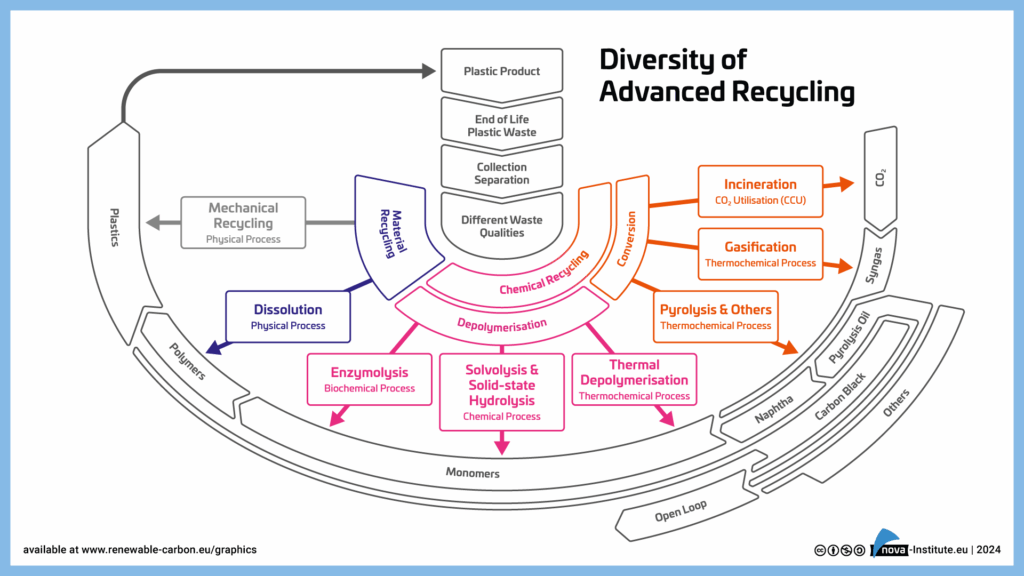
The Advanced Recycling Conference brings together technology providers, recyclers, material producers, manufacturers, researchers, investors and policy-makers to discuss exactly these challenges. The programme covers crucial solutions like dissolution, depolymerisation, pyrolysis and thermochemical recycling, alongside developments in plastics, textiles and PVC, as well as financing, environmental performance, digitalisation, markets and regulation.
With only two weeks remaining, ARC offers a timely opportunity to compare experience, identify bottlenecks and build the partnerships needed to turn ambitious circularity targets into industrial reality.
Register now for ARC 2026 or explore the full conference programme: https://advanced-recycling.eu/registration/
Increasing impact through collaboration
The Advanced Recycling Conference 2026 is supported by sponsors commited to advancing circular solutions. nova-Institute thanks Gold Sponsor Siemens, Silver sponsors BUSS ChemTech and Yncoris, and bronze sponsor Erema Group.
To encourage exchange among industry professionals, the event also features a trade exhibition and poster session. Exhibition stands can be booked at https://advanced-recycling.eu/exhibition-booking/. Posters can be submitted until 9 October 2026 via https://advanced-recycling.eu/call-for-posters/.
The Advanced Recycling Conference is supported by industry and trade associations, non- profit organisations, research institutions and interest groups that are thematically linked to the conference: BCNP Consultants (DE), C.A.R.M.E.N. (DE), ChemCologne (DE), Chemie-Cluster Bayern (DE), CLIB (DE), Fecc – European Association of Chemical Distributors (EU), IBB Netzwerk (DE), kunststoffland.NRW (DE), Plastics Europe (DE), Renewable Carbon Initiative (International), VinylPlus(DE).
About nova-Institute
Since the mid-1990s, nova-Institute has been dedicated to sustainability and today focuses primarily on renewable carbon cycles. As an independent research institute, it supports companies – particularly from the chemical, plastics and materials industries – in the use of renewable carbon derived from biomass, direct CO₂ utilisation (CCU) and recycling.
With a multidisciplinary team of scientists, nova-Institute participates in international innovation projects and provides science-based management consulting. The institute follows a holistic approach: its experts analyse which technologies and raw materials are suitable for specific products, in which markets their application is feasible, which regulatory frameworks apply, how sustainable the solutions are and how they can be successfully positioned in the market.
Based on these analyses, the team develops tailored strategies to support the transformation from fossil to renewable carbon. Around 50 experts from various disciplines work together to drive the defossilisation of industry – for a climate-neutral future.
More information: www.nova-institute.eu and www.renewable-carbon.eu
Source
nova-Institute, original text, 2026-10-29.
Supplier
EREMA
Fraunhofer-Institut für Verfahrenstechnik und Verpackung (IVV)
INEOS Inovyn
JEPLAN
nova-Institut GmbH
Schüco Polymer Technologies
Valmet
VinylPlus Deutschland e.V.
Share
Renewable Carbon News – Daily Newsletter
Subscribe to our daily email newsletter – the world's leading newsletter on renewable materials and chemicals