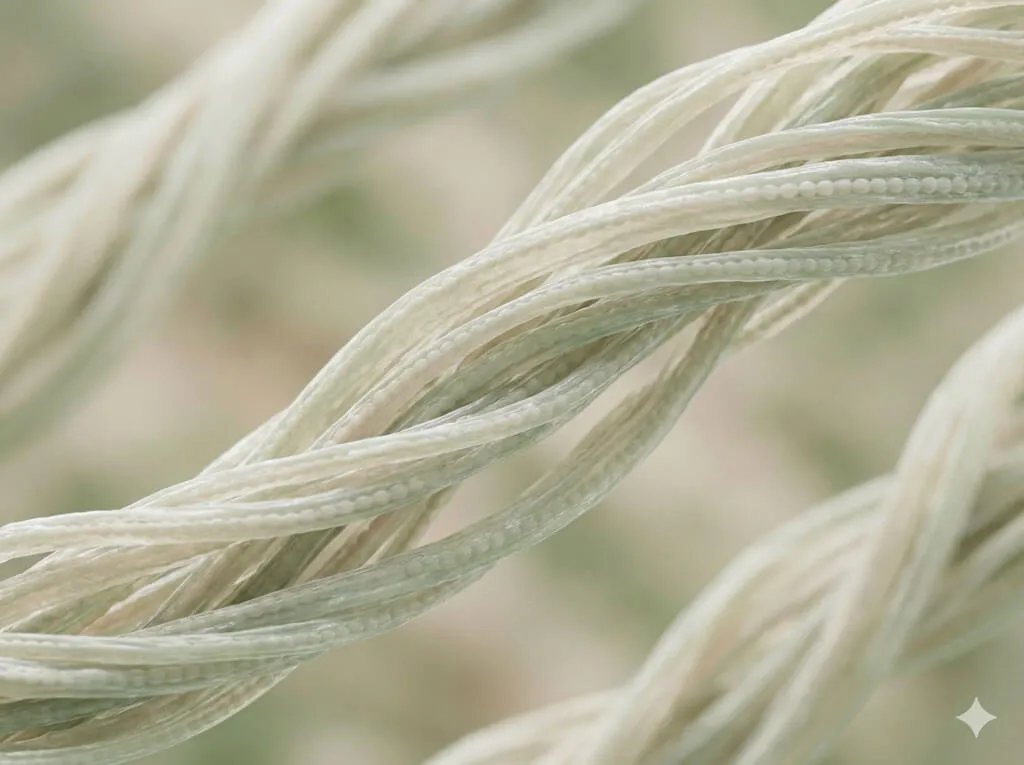
Everything around us is made up of polymers, that is, chemical compounds composed of many repeating units (the so-called monomers). From packaging and textiles to structural elements. They are divided into synthetic polymers and natural polymers. Synthetic polymers include, among others, polyethylene (PE), polypropylene (PP), polylactic acid (PLA), polyethylene terephthalate (PET) and many more.
The difference between natural and synthetic polymers is that synthetic polymers are produced through human intervention, whereas natural polymers occur naturally in the environment. They can be found in both plant and animal organisms, where they act as structural materials, protective substances, or energy reserves, or are found in microorganisms. They are present in many products we use daily, from fibres in clothing to biodegradable packaging. In recent decades, interest in natural polymers has grown significantly due to the pressure to reduce the environmental impact of conventional plastics and to take advantage of renewable resources.
But what exactly is a natural polymer?
Natural polymers are attributed to four groups of compounds: polysaccharides, proteins, nucleic acids, and latex (natural rubber).
Polysaccharides are the most abundant and widely distributed natural polymers in nature. They are formed from simple sugar molecules, and some examples include:
- cellulose, which is the main component of plant cell walls; it is composed of between a dozen and several hundred thousand glucose units;
- starch, a polysaccharide formed by amylose and amylopectin that acts as an energy reserve in plants; it is the main carbohydrate in the human diet, and is used as a thickening and stabilising agent in numerous products ranging from sauces to desserts;
- chitin, which forms the exoskeletons of insects and crustaceans. Chitosan can be obtained from chitin through partial deacetylation, which increases its solubility in water and allows its use in medicine, cosmetics and the food industry;
- pectin, which is used as a gelling and emulsifying agent. The richest sources of pectin are citrus peels (oranges, lemons, grapefruits), which contain approximately 20–30% dry matter.
Other, somewhat less common polysaccharides include carrageenan, agar, xanthan gum, alginate and inulin.
A natural polymer that is classified neither as a polysaccharide nor as a protein is natural rubber (latex). It is a material obtained mainly from Hevea brasiliensis, the rubber tree.
However, another classification of natural polymers can also be found in the literature: those of plant origin and those of animal origin.
Natural polymers are undoubtedly remarkable and possess many advantages over synthetic ones. Their biodegradability is one of their main strengths: materials such as cellulose, starch or chitin can naturally degrade in the environment through the action of microorganisms, thus reducing the accumulation of plastic waste. Although some synthetic biopolymers, such as PLA, are compostable, they do not always completely degrade under natural conditions, which limits their long-term sustainability. In addition, they are biocompatible, making them ideal candidates for biomedical, pharmaceutical or food applications.
Another very important advantage is that they come from renewable sources, which contributes to environmental sustainability. This helps reduce dependence on fossil resources and minimise the carbon footprint.
Unfortunately, they also present certain significant disadvantages that prevent them from fully replacing conventional materials. Artificial (synthetic) polymers are more resistant than natural ones in terms of thermal and mechanical properties. This superiority is due to the fact that, in synthetic polymers, chain length, crosslink density and monomer distribution can be optimised, enabling materials with predictable and uniform properties. (chemical modification – which is not present)
What are the applications of natural polymers?
In the food industry, both as foods or as additives such as thickeners, gels and edible coatings, such as pectin and agar.
In packaging, natural polymers are used in the manufacture of biodegradable films, edible coatings and rigid packaging based on cellulose or starch. They are also used in active packaging solutions, for example with chitosan or proteins, to improve barrier properties and extend the shelf life of food.
In the textile and paper industry, cellulose is a key example. It is the main component of plant fibres such as cotton and linen, and is also used to produce artificial fibres such as viscose, acetate and lyocell, as well as in paper manufacturing.
In medicine and pharmaceuticals, where they are used for wound-care materials, tissue regeneration (chitin), surgical sutures, implants and drug-delivery systems.
In cosmetics, where alginate and chitosan are used in hydrating gels and creams because they retain water and form moisturising films on the skin, helping to maintain hydration for longer. Moreover, polymers such as pectin or gelatine can encapsulate antioxidants.
At AIMPLAS we have been working for many years on the processing and functionalisation of natural polymers, using a wide range of technologies (such as compounding, extrusion and injection moulding) and different coating-production methods, including work with suspensions. The materials obtained are versatile and are applied both in the packaging industry and in the agricultural sector.
Source
AIMPLAS Blog, press release, 2025-12-12.
Supplier
AIMPLAS (Asociación de Investigación de Materiales Plásticos y Conexas)
Share
Renewable Carbon News – Daily Newsletter
Subscribe to our daily email newsletter – the world's leading newsletter on renewable materials and chemicals