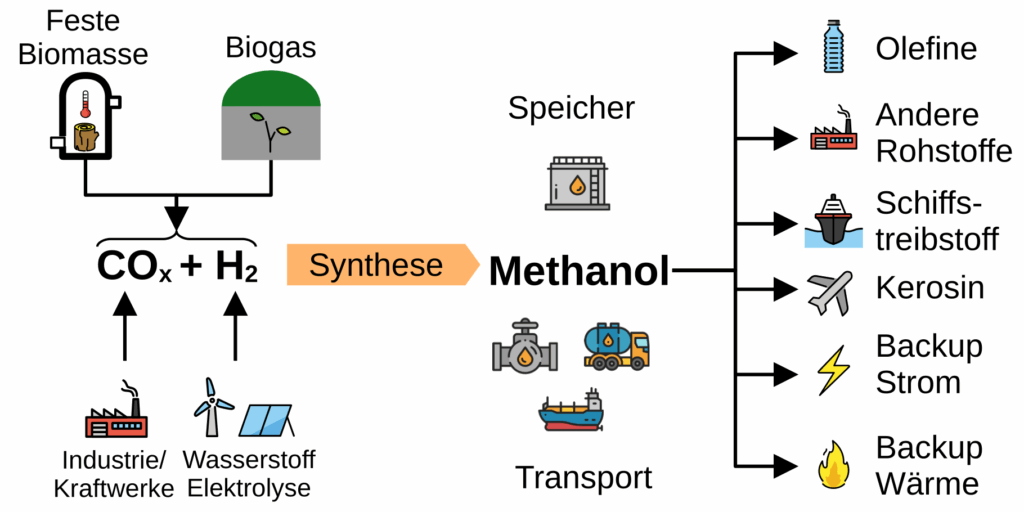
According to a study conducted by TU Berlin, a climate-neutral energy system in Europe could be based largely on direct electrification. For the few applications that cannot be electrified in the future – such as in shipping, parts of the chemical industry, or to provide backup during long periods of low wind and little sunlight – the researchers advocate relying more on methanol rather than hydrogen. According to their calculations, the total system costs would be only slightly higher, while methanol offers significant advantages in terms of transportation, storage, and infrastructure.
The study titled “A Minimal Methanol Backstop for High-Electrification Scenarios,” published in the journal Joule, examines how Europe can achieve a cost-effective, climate-neutral energy supply. The findings show that, contrary to what was assumed just a few years ago, it is now possible to directly electrify significantly more sectors – for example, through battery-electric trucks or electric solutions for heat supply.
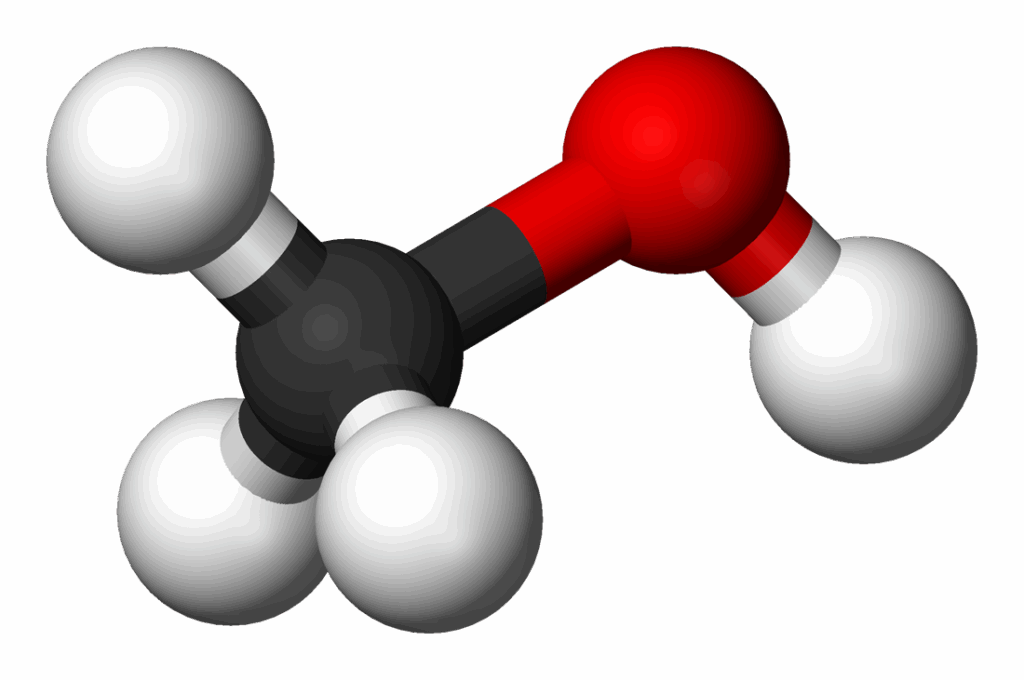
This eliminates many potential applications for hydrogen. Chemical energy carriers will therefore only be needed in areas where direct electrification is technically difficult to achieve, for example, in international shipping, air travel, certain sectors of the chemical industry, and in backup power plants that ensure a steady power supply during prolonged periods of low wind and little sunlight. In these sectors, liquid fuels such as methanol or kerosene, which have a high energy density, are needed more than hydrogen.
Methanol infrastructure can be developed more flexibly
“A large hydrogen network is currently being planned in Germany,” says Professor Dr. Tom Brown, head of the Department of Digital Transformation in Energy Systems at TU Berlin. “However, it is likely that future demand for hydrogen has been significantly overestimated. Using methanol instead of hydrogen would make it possible to adapt the infrastructure much more flexibly to actual demand.”
This is because, while hydrogen requires long pipelines and underground storage due to its small molecular size and low density, liquid methanol can be transported by ship, rail, truck, or through existing oil pipelines with relatively little effort and stored in tanks. According to Brown and his team, this flexibility makes it much easier to set up new infrastructure and reduces the risk of costly misinvestments.
Minimal additional costs for methanol with greater flexibility
The model calculations, which were conducted using the “PyPSA” software developed by Tom Brown’s research group, show that an energy system with a minimal “methanol backup” results in total system costs that are only about 2.4 percent higher than a scenario that relies on hydrogen or methane for the remaining applications. However, according to the researchers, these slight additional costs are offset by advantages that the models have so far only been able to capture partially – such as more flexible infrastructure expansion, which can be adapted as conditions change, and easier storage of the energy source. The researchers also see their findings as a contribution to the current debate on energy policy. In their view, expanding electrification should remain a top priority, with sustainably produced methanol taking on an important role in areas where electric solutions reach their technical limits.
Further information
- Study “A Minimal Methanol Backstop for High-Electrification Scenarios” in the journal Joule
- Blog post “A World Without Gas Infrastructure“
Contact
Professor Dr. Tom Brown
Department of Digital Transformation in Energy Systems
Phone: +49 (0) 30 314 22 890
Email: t.brown@tu-berlin.de
Source
Technical University of Berlin, press release, 2026-07-23.
Supplier
Share
Renewable Carbon News – Daily Newsletter
Subscribe to our daily email newsletter – the world's leading newsletter on renewable materials and chemicals