 Renewable Carbon-based Materials Show Significant Lower CO2 Footprint Than Fossil Counterparts
In the extended, second version of the report, RCI summarises and presents eleven peer-reviewed lifecycle assessment (LCA) case studies – representing the highest possible scientific standard – that examine the carbon footprint of materials and products made from renewable carbon compared to fossil-based products. These eleven products and the respective LCAs are from RCI members Avantium (NL), BASF (DE), Braskem (US), Econic (UK), Fibenol (EE), IFF (US), LanzaTech (US), Lenzing (AT), Neste (FI), Peter Greven (DE), and Primient Covation (US) and have been peer-reviewed by external, independent experts.
Source: Renewable Carbon Initiative
In times of “Code Red” warnings by the UN on climate change, the carbon footprint of chemical and materials is one of the most crucial indicators. Fossil resources are the main cause of human-made climate change, responsible for more than 70% of global warming. Where feasible, like in the energy sector, decarbonisation reduces the dependence on fossil carbon as a feedstock. But for carbon-dependent industries, defossilisation is the essential strategy to eliminate additional influx of fossil carbon into the chemical industries’ carbon cycles and the atmosphere. To achieve defossilisation, renewable carbon feedstocks which can be bio-based, CO2-based or recycled, need to substitute the dominant fossil feedstock in the production of chemicals and derived materials. The respective sectors rely on carbon as a feedstock and cannot do without.
At the same time the sectors need to ensure that the alternatives really reduce greenhouse gas emissions. While fossil resources are undeniably the main driver of climate change, it cannot be assumed that alternative production pathways are automatically superior. Transparent evaluation and comparison is critical because process emissions, energy needs, and current production scales must be fully accounted for.
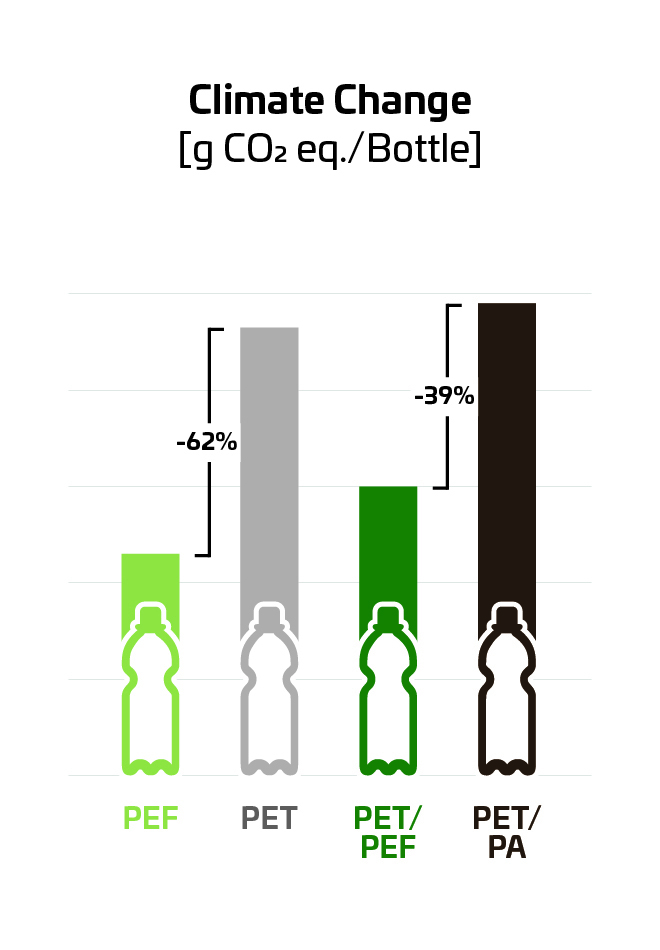
This report provides conclusive proof. It clearly demonstrates that renewable carbon products already on the market today can achieve significantly reduced carbon footprints, with GHG savings ranging from 30% to 90% compared to their fossil counterparts. This is exemplified in the figure, which shows the comparison for one of the 11 case studies covered. These peer-reviewed LCAs offer the solid evidence needed to inform policy and investment, countering doubts that the climate benefits of renewable carbon are merely theoretical. At the same time, these materials and products still have significant potential to further reduce emissions in the future.
The case studies in the latest RCI report provide essential information to guide policy in pursuit of climate targets. A key implication is clear: the less additional fossil carbon we introduce, the smaller the future burden of costly atmospheric carbon removal. By enabling truly circular carbon loops, renewable carbon feedstocks are a proven, viable solution for defossilising chemical industries already today.
The full report can be downloaded here: https://renewable-carbon.eu/publications/product/case-studies-based-on-peer-reviewed-life-cycle-assessments-carbon-footprints-of-different-renewable-carbon-based-chemicals-and-materials-2nd-extended-version-rci-report-pdf/
Source
Renewable Carbon Initiative, 2026-01-22.
Supplier
Avantium Technologies B.V.
BASF SE
Braskem
Econic Technologies Ltd.
Fibenol
IFF: International Flavors & Fragrances Inc.
LanzaTech Ltd.
Lenzing Gruppe
nova-Institut GmbH
Renewable Carbon Initiative (RCI)
Share
Renewable Carbon News – Daily Newsletter
Subscribe to our daily email newsletter – the world's leading newsletter on renewable materials and chemicals