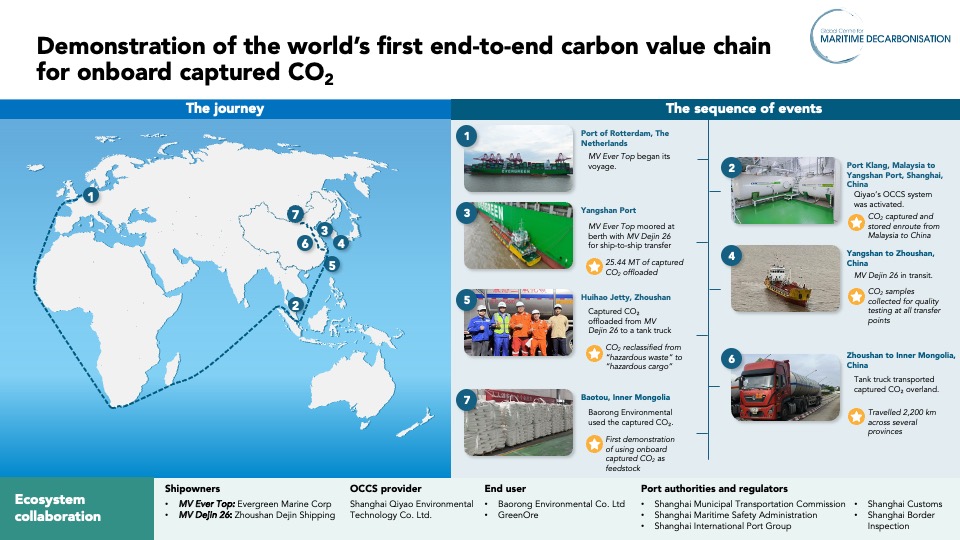
The journey of the captured CO₂
- 𝘔𝘝 𝘌𝘷𝘦𝘳 𝘛𝘰𝘱 initiated OCCS capture operations after it left Port Klang, Malaysia
- Ship-to-ship CO₂ transfer to 𝘔𝘝 𝘋𝘦𝘫𝘪𝘯 26 at Yangshan Port, China
- Coastal transport to Zhoushan jetty; offloaded to a tank truck
- Overland transport to Baotou, Inner Mongolia (~2,200 km)
- Utilisation of CO₂ to produce low-carbon calcium carbonate in Baotou, Inner Mongolia
Why this matters
Capturing carbon is only one part of the carbon removal solution. For carbon capture solutions to be viable at scale, we must demonstrate how captured CO₂ can be safely handled, transported, and reused across jurisdictions and supply chains. This pilot shows that it’s possible.
Key technical and regulatory milestones
- Reclassification of captured CO₂ from “hazardous waste” to “hazardous cargo” enabled its use as an industrial feedstock
- Coordinated logistics across ports, jetties, and inland transport
- Cross-sector collaboration spanning maritime, regulatory, industrial, and logistics partners
What’s next
GCMD will conduct a comprehensive Life Cycle Assessment (LCA) to quantify GHG emissions for this pilot with CO2 quality and quantity data obtained through sampling activities conducted throughout the pilot. A detailed report will follow, sharing challenges, key learnings, and enablers for future scaling. Stay tuned for updates!
Source
Global Centre for Marine Decarbonisation, press release, 2025-07-25.
Supplier
Global Centre for Marine Decarbonisation
Port of Rotterdam
Share
Renewable Carbon News – Daily Newsletter
Subscribe to our daily email newsletter – the world's leading newsletter on renewable materials and chemicals