- UN Member States unable to agree on treaty text to end plastic pollution, hardline positions remain a challenge
- Binding measures across the full lifecycle to end the plastic crisis and protect marine environments missing from final draft text; ghost gear regulations watered down despite being the deadliest form of marine plastic pollution
- Negotiation process must be reformed: Ambitious country majority blocked by petrochemical states and consensus mechanism, new strategy needed for future rounds
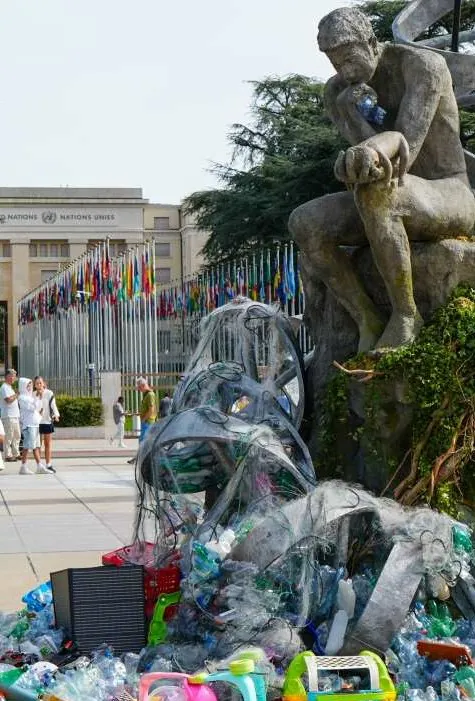
After three years and six rounds of negotiations, UN Member State delegations in Geneva could not agree on a text for the world’s first global plastics treaty. Despite passionate efforts by the Chair and ambitious countries, positions remained too far apart and no international agreement to end plastic pollution could be established. However, no treaty is better than a bad treaty, in OceanCare’s view.
Measures that address the full lifecycle of plastics and decisive protection measures for marine ecosystems are essential.
Fabienne McLellan, Managing Director of OceanCare, commented on the negotiation outcome:
“I am extremely disappointed. This is a missed opportunity that the Ocean cannot afford. But no treaty is still better than an empty, meaningless treaty.”
“Despite the lack of results, these negotiations have shown both the best and worst of multilateral diplomacy. We witnessed passionate efforts from the Chair and a majority of ambitious countries – including progressive heads of state and government who advocated for science-based measures and an effective plastics agreement despite enormous pressure from petrochemical states.
“The process itself used a tried-and-tested scheme by first presenting an unacceptable text and then returning with a mediocre version containing only marginal improvements but still falling far short of what is needed to tackle the plastic crisis. The new text was presented in the middle of the night, while delegations were getting exhausted.
“This final draft contained some interesting formulations on decision-making processes and financing. However, closer examination revealed major shortcomings. The most important elements – production control, control of problematic products and chemicals, protection of human health – would be almost entirely based on voluntary measures. These provisions will be difficult to strengthen over time. Important marine protection measures that OceanCare had advocated for were watered down despite good developments during the last 11 days. This includes regulations on ghost gear – the deadliest form of marine plastic pollution.
“Despite the remarkable determination of the majority of ambitious states to advance real measures, a historic opportunity has been missed. What is encouraging is that coalitions have been formed and global awareness of plastic pollution has been raised in a way we have never seen before. The foundation for stronger action has been laid, but the next round of negotiations must draw conclusions from these insights to avoid future deadlock.”
OceanCare will continue to strive for an ambitious agreement that provides the ocean with the protection they urgently need.
Further information
- OceanCare et al.: Untangled – The plastics treaty’s critical role in tackling fishing gear. Policy briefing for the Intergovernmental Negotiation Committee for UNEA 5/14 (May 2023)
- Break Free From Plastic coalition: Manifesto for a Future Free from Plastic Pollution (July 2025)
- OceanCare press release: UN Negotiations in Busan: Bridge Built Towards Historic Global Plastics Treaty (03/12/2024)
Source
OceanCare, press release, 2025-08-15.
Supplier
Share
Renewable Carbon News – Daily Newsletter
Subscribe to our daily email newsletter – the world's leading newsletter on renewable materials and chemicals