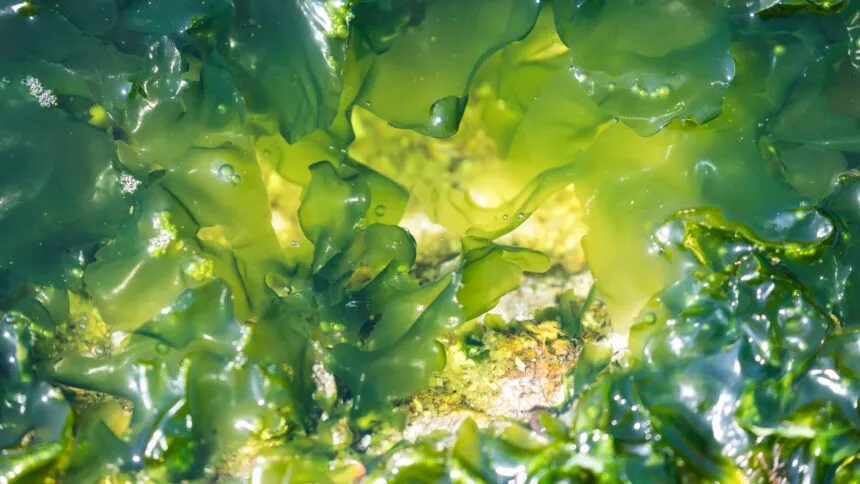
The Marcos Jr. administration is strengthening support for science-driven and sustainable technologies as experts from the Department of Science and Technology (DOST) called for seaweed-derived bioplastics to become one of the Philippines’ top technology priorities through 2050.
Citing their potential to reduce plastic pollution, create economic opportunities for coastal communities, and expand research and development (R&D), the recommendation was presented during the 48th Annual Scientific Meeting of the National Academy of Science and Technology, Philippines (NAST PHL) in Manila on July 9, where academicians urged greater national investment in the R&D of seaweed-derived bioplastics.
Academician Marco Nemesio E. Montaño said increased investments in fundamental research are needed to identify niche opportunities that will support inclusive and sustainable development.
“There should be more investments in the fundamental research to identify niche areas [of the Philippines bioplastic industry] as an opportunity for inclusive growth and sustainable development,” Montaño said during his plenary presentation.
Experts described bioplastics as plastics derived from biological sources, including seaweeds, that can be broken down into harmless materials through natural processes.
Academician Ernesto J. del Rosario said the Philippines should maximize its vast marine resources by expanding seaweed farming to ensure a sustainable supply of raw materials for bioplastics and other seaweed-based products.
“We are only utilizing a very small fraction of our available ocean and sea resources for growing seaweeds,” del Rosario said. “We have a large economic zone where we can grow seaweed as a source of biopolymers. So, that makes us a very potential producer of bioplastics.”
The Philippines is currently the world’s fourth-largest producer of seaweeds, accounting for 4.2 percent of global production, with Kappaphycus alvarezii contributing the largest share of the country’s output.
According to the experts, seaweeds contain valuable biopolymers that can be converted into biodegradable plastics, including carrageenan from Kappaphycus and Eucheuma, alginates from Sargassum, agar and fucoidan.
Montaño said researchers should further study the chemistry of these biopolymers and combine them with bioadditives such as glycerol or sorbitol to improve the strength and flexibility of bioplastics.
“We have the biopolymer plus additives that would result in bioplastics,” he said. “This is important to develop a strong bioplastics industry; we must study the chemistry of biopolymers and additives.”
Del Rosario also encouraged universities and research institutions to focus on isolating long-chain biopolymers, evaluating their properties and improving production processes for bioplastics.
He added that continued R&D is needed to identify and cultivate climate-resilient seaweed varieties that can help lower production costs while protecting the industry’s long-term sustainability.
“You’ve probably heard of the effect of global warming on the corals,” del Rosario said. “We do not want that to happen to the seaweeds here in the Philippines.”
The academicians said developing a domestic seaweed bioplastics industry could create sustainable livelihood opportunities for coastal communities, particularly in Sulu, Southern Mindanao and other seaweed-producing provinces.
When asked where seaweed-derived bioplastics should rank among the country’s long-term research priorities, both academicians said it should be included in the Philippines’ top five priority technologies through 2050.
The annual scientific meeting is among DOST’s initiatives to promote science-based, innovative and inclusive solutions under its four strategic pillars: human well-being, wealth creation, wealth protection and sustainability, in line with the OneDOST4U: Solutions and Opportunities for All program.
Author
Jerome Carlo Paunan
Source
Philippine Information Agency, press release, 2026-07-16.
Supplier
Ernesto del Rosario, Ph.D. (UoP, Los Banos)
Marco Nemesio E. Montaño
National Academy of Science and Technology (NAST)
Philippine DOST-PCAARRD
University of the Philippines
Share
Renewable Carbon News – Daily Newsletter
Subscribe to our daily email newsletter – the world's leading newsletter on renewable materials and chemicals