 Monthly News from the Renewable Carbon Initiative (RCI), March 2026
Input Needed for RCI Project “Raising Awareness of Renewable Carbon Discussions Across Regions”
Our ongoing project “Raising Awareness of Renewable Carbon Discussions Across Regions,” focuses on addressing the fragmented landscape of definitions, regional approaches, and communication around the overarching concept of the transition away from virgin fossil carbon to carbon sources from above the ground (biomass, CCU, recycling) and its corresponding terms.
Different regions – including Europe, North America, Asia, and Africa – are advancing in diverse ways, shaped by their specific policy frameworks, economic conditions, and sustainability priorities. At the same time, key global frameworks (e.g. GHG Protocol, Science Based Targets Initiative) have not yet fully integrated concepts related to the transition.
Through this project, we aim to map global discussions and implementations, clarify terminology, develop a strategic communication toolkit, and run a targeted advocacy and awareness campaign.
We would like to gather your input on terminology
- Which umbrella term is used in your country for replacing virgin fossil carbon with carbon from above-ground sources (biomass, CCU, recycling)?
- Which term is commonly used in your country for the overarching concept of the transition?
Please complete our survey and share it widely: https://nova-institute.eu/survey/index.php/525771?lang=en.
Thank you for your support!
WG Policy
Critical Chemicals Alliance –Working Groups 3 and 4
RCI has been a member of the European Commission’s Critical Chemicals Alliance (CCA) since December 2025 and is actively participating in two Working Groups and their core groups, which the RCI Office considers priority. In both WGs, the core groups have fully started their work with many meetings and an overall intensive pace:
Working Group 3 (Modernisation and Investments) focuses on steam crackers and ammonia production, with the intention to prepare a charter setting out potential measures to support the modernisation of these in Europe. A roadmap was also established outlining the key activities and milestones towards finalising the charter by June. As RCI, we are looking to widen the scope beyond steam cracker and ammonia production only, steering the discussions also to innovative solutions and chemical pathways – this has been encouraged by the Commission, highlighting that steam crackers and ammonia production should only be the starting point.
Working Group 4 (Lead Markets) aims to identify most promising lead markets for the uptake of low-carbon and sustainable carbon products, and then provide a policy package to enable the lead markets. The core group has worked intensively on definitions of sustainable and low-carbon products, criteria for selecting the most viable end markets, as well as on a bucket list of possible end markets. The core group met in Brussels on 23 March for a half-day working session. Next steps will be detailing out the selected criteria to then apply them to the bucket list of end markets and come to a final selection (envisioned for end of April). In parallel, work on the policy package has been kicked off (envisioned for finalisation end of June).
RCI Statement SUPD – Call for Evidence
On 16 March, the RCI submitted a statement on the revision of the SUPD which provides a unique chance to align environmental protection with industrial innovation.
The RCI strongly recommends to refocus the SUPD exemptions on polymers that demonstrate verifiable environmental safety, rather than only on their origin as “natural”. Exemptions should apply both to natural polymers and to polymers that:
- Are fully biodegradable in various environments according to established standards and test methods “within a timescale short enough for the plastics not to be harmful to marine life and not to lead to an accumulation of plastics in the environment”, and
- Can be produced through controlled and recognised sustainable biotechnological, biomanufacturing and other bio-based processes, both emerging and existing.
The submitted input can be found at https://ec.europa.eu/info/law/better-regulation/have-your-say/initiatives/14422-Rules-on-single-use-plastics-and-fishing-gear-evaluation-/F33382392_en
Quotas Activity – Planning Meeting
For the first time, the Packaging and Packaging Waste Regulation (PPWR) and the End-of-Life Vehicles Regulation (ELV) are discussing future quotas for bio-based plastics (European Commission, 2023). These initiatives could serve as a blueprint for introducing renewable carbon targets in additional sectors.
RCI has already published work on policy frameworks and quota concepts, but has not yet translated these into concrete recommendations or defined content targets. This project aims to explore how feasible bio-based and/or renewable carbon quotas can be derived in alignment with existing recycled content targets, and how such an approach could function as a template for other industries.
During the planning meeting on 17 March, ideas were collected via whiteboards, capturing a wide range of valuable ideas and perspectives. These inputs are now being clustered and structured, forming the basis for a consolidated proposal that will be presented at the upcoming WG Policy Meeting on 31 March.
Ecodesign Forum
On 19 March, the Ecodesign for Sustainable Products and Energy Labelling Expert Group held an engaging and productive discussion on the implementation of the Digital Product Passport (DPP). The agenda covered several key topics, including recent DPP policy developments, progress under the Ecodesign for Sustainable Products Regulation (ESPR), updates from the construction, textile, clothing, leather and footwear sectors, developments in the iron and steel sector, as well as discussions on the harmonised guarantee label and new obligations under the Empowering Consumers Directive.
WG Sustainability
The WG Sustainability met on 25 March in a meeting fully dedicated to a proposal by RCI member Braskem and TU Munich on how to deal with recycling in Life-Cycle Assessment.
Proposal by Braskem (with TU Munich)
The last WG Sustainability Meeting on 25 March focused on the topic of recycling, more specifically on a proposal suggested by Braskem (with TU Munich) for dealing with recycling which might solve the problems also for biogenic carbon accounting in recycling situations.
New Project: Recycling in LCA
RCI is considering a White Paper comparing carbon allocation approaches (cut-off, substitution, embodied burden) to improve clarity and comparability for recycled and renewable materials. The dedicated session with Braskem on 25 March advanced this work.
Feedback on the “Biodiversity in LCA” Work Package
The report on “Biodiversity in LCA” (work package) is finalised and is currently in the final layout stage.
The key findings confirm that no single LCA methodology fully captures biodiversity impacts across all relevant dimensions. RCI therefore recommends applying a combination of assessment methods, complemented by certification schemes and site-specific field data where appropriate. Given existing data gaps and methodological uncertainties, current biodiversity LCA approaches are not sufficiently robust for standalone consumer communication.
Science Based Targets initiative (SBTi)
RCI submitted feedback to the SBTi Net-Zero Standard v2.0 (Kim Shoppink) in December. As a result, SBTi expressed interest in further discussions, possibly with technical experts. The next step for RCI is to consider applying for a place on the SBTi’s Technical Council for the period 2026–2029.
RCI’s upcoming project “Consider Renewable carbon and embedded carbon emissions in SBTi/GHG standards” aims to ensure renewable and embedded carbon (including the -1/+1 biogenic uptake approach) are properly included in Scope 3 raw material accounting under SBTi and the Greenhouse Gas Protocol, as current rules disadvantage renewable feedstocks.
In order to proceed efficiently, RCI office will directly exchange with SBTi to identify what kind of project and output might best help to advance discussions.
RCI Roundtable
The RCI Roundtable is a member-driven, one-hour discussion format enabling structured, science-based dialogue on key renewable-carbon topics. RCI members may submit their interest to host a session, external stakeholders or partners can be invited to present, and each roundtable consists of a 15-minute topic presentation followed by 45 minutes of discussion.
Braskem (NL) – Biogenic Carbon Accounting and Engagement with the SBTi: A Position Paper
The last roundtable with the title “Biogenic Carbon Accounting and Engagement with the SBTi: A Position Paper” was hosted by Yuki Hamilton Onda Kabe from Braskem on 5 March and brought together 56 participants.
As a follow-up, we would once again like to invite you to support the initiative that emerged from a previous workshop. In September 2025, Braskem participated in a workshop facilitated by The Carbon Trust, which resulted in a position paper on advancing renewable carbon solutions.
You can co-sign the petition and support the shared message of accelerating the transition away from fossil carbon at: https://www.braskem.com/imgreen/redefining-the-carbon-accounting-rules-for-scope-3-ghg-emissions
Ambassador Activities
AI Circular Economy Conference 2026 | 4-5 March
The RCI-Office, as a partner of nova conferences, participated in the AI Circular Economy Conference 2026 in Cologne. The conference highlighted the key role of artificial intelligence in accelerating the transition from fossil to renewable carbon across biomass, CCU, and recycling pathways.
Circular Valley Convention | 11 March
The RCI-Office was at the second Circular Valley Convention in Düsseldorf, Germany which covers all dimensions of the industrial circular economy and brings together decision-makers from business, research, politics, and society.
Bio-KET | 17-19 March
The RCI-Office was at the BIOKET annual international conference in Fribourg, Switzerland that serves as a premier platform dedicated to advancing Key Enabling Technologies and innovations applied to biomass valorisation. The conference aims to promote the production of high added value products across diverse sectors of the economy through sustainable practices and cutting-edge technologies. It offered many networking opportunities.
Climate and Energy Meeting at Economic Council of the CDU | 19 March
The RCI-Office joined a full day closed-door meeting on energy and environmental policy organised by the Economic Council in Berlin on 19 March.
RCI Member Interview
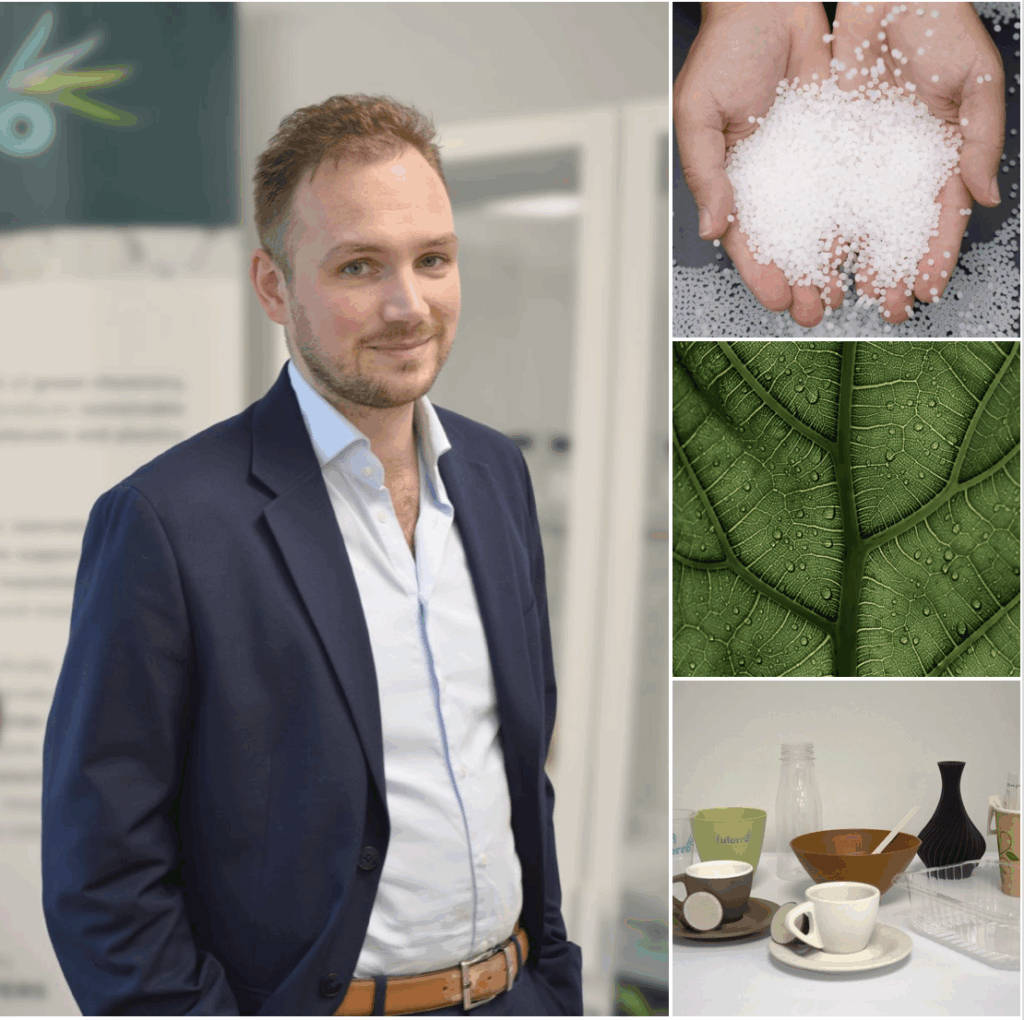
In a recent interview, Geoffrey Delvinquier, Public Affairs Manager at Futerro, shared how the company has mastered the entire PLA lifecycle, from sustainable biomass to recycling, through decades of innovation and industrial learning.
Futerro’s technology offers a fully circular, bio-based alternative to fossil plastics, with nearly 300 patents and the world’s largest lactic acid facility. PLA is recyclable, compostable, and reduces microplastic pollution.
Geoffroy highlights the need for “clear, long-term and binding market incentives” in Europe to support bio-based materials and build dedicated recycling infrastructures.
Futerro’s upcoming European biorefinery will use sustainably sourced French wheat, ensuring traceability and lower emissions.
Defossilisation with the three renewable carbon sources, i.e. biomass, CO₂ and recycling, is the key: “Europe needs all three options working together to fully replace fossil carbon in chemicals and materials. Bio-based materials are one essential piece of this puzzle”, he states.
Read the full interview here: https://renewable-carbon-initiative.com/network/futerro/
New Member

Viridi (UK) is a deep tech startup developing CO₂-to-polymer technology through a unique catalyst technology that enables efficient upcycling of waste CO2..
For now, focusing on home and personal care, furniture and footwear, automotive and construction, Viridi is currently working with major chemical companies and consumer brand owners to commercialise surfactants for the home and personal care sector.
Through the RCI network, Viridi is looking forward to collaborating with other visionary industry leaders, researchers, and policymakers to advance renewable carbon solutions across the value chain.
Find out more about new RCI member Viridi at: https://renewable-carbon-initiative.com/network/viridi/
Partner Event: CO2-based Fuels and Chemicals Conference 2026 | 28 – 29 April 2026, Maternushaus, Cologne (Germany), hybrid
RCI is a partner of the nova conferences, bringing together experts and innovators shaping the future of renewable carbon and circular materials.
The CO2-based Fuels and Chemicals Conference has successfully established itself as an international and unique meeting and networking ground for the entire Carbon Capture and Utilisation (CCU) and Power-to-X industry and its customers. The upcoming 14th edition of the conference will take place on 28–29 April 2026, Cologne, Germany as a hybrid event. Organiser nova-Institute expects over 230 leading international experts in the field of CCU, green hydrogen production and Power-to-X. Once more the event will showcase the latest innovations and most important developments in the fast-growing field of Carbon Capture and Utilisation with plenty of opportunities to network.
More information: https://co2-chemistry.eu
Source
Renewable Carbon Initiative, March 2026, 2026-04-02.
Supplier
Braskem
Circular Valley
European Commission
Futerro
nova-Institut GmbH
Renewable Carbon Initiative (RCI)
Science Based Targets Initiative (SBTi)
Technische Universität München (TUM)
ViridiCO2
Share
Renewable Carbon News – Daily Newsletter
Subscribe to our daily email newsletter – the world's leading newsletter on renewable materials and chemicals