 Monthly News from the Renewable Carbon Initiative (RCI), December 2025
In December, RCI joined the Critical Chemicals Alliance, published a press release of the ‘OK renewable’ label, kicked off two projects for 2025 and will launch upcoming projects for 2026, participated in recent policy outreach and events, and got a new partner, Molecule Group. Stay tuned for opportunities to shape the renewable carbon transition and connect with industry leaders.
RCI Is Now A Member of the Critical Chemicals Alliance
We are pleased to announce that RCI has become a member of the European Commission’s Critical Chemicals Alliance (CCA). This alliance is a key element of the EC’s Industry Action Plan which serves to support the chemical sector and their investments on modernisation. The Action Plan highlights the key role of the chemical industry as the “industry of industries” and proposes a series of measures to boost its competitiveness. The alliance will work on establishing criteria to identify critical chemical productions and molecules for the European economy; mapping out critical molecules which can benefit from enhanced trade monitoring and support, including under the Customs Surveillance Systems.
Moreover, CCA will be supporting the EU and Member States in aligning investment priorities and guide coordination of EU support mechanisms with national projects.
As a member, RCI has been invited to CCA’s first General Assembly, taking place on 13 January 2026, from 14:30 to 17:30 CET at the Chemelot Campus Centre in Geleen, The Netherlands. We will report the results.
A new milestone for the Renewable Carbon Economy: the “OK renewable” certificate by TÜV AUSTRIA Belgium
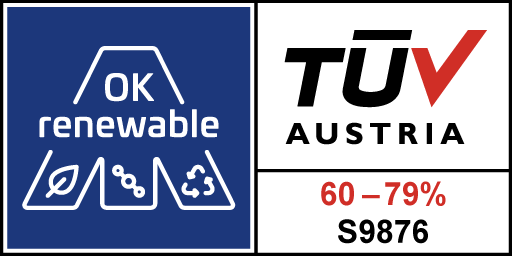
The launch of the ‘OK renewable’ certificate marks an important step towards a more transparent and practical transition away from fossil carbon. The label clearly shows how much fossil carbon in a product or manufacturing process has been replaced by biomass, captured CO₂, or recycled carbon.
Developed jointly by the Renewable Carbon Initiative (RCI) and nova-Institut, and implemented by TÜV AUSTRIA Belgium, the certification is the result of three years of development. Available since April 2025, it can be applied to products, intermediates, and raw materials across a wide range of industries.
Unlike the energy sector, which can largely decarbonise by switching to renewable power, the chemical and materials industries fundamentally depend on carbon. For these sectors, defossilisation – replacing fossil carbon with renewable carbon sources – is the central strategy. This is where ‘OK renewable’ plays a crucial role. It is currently the only certification that can combine bio- and CO2-based and attributed as well as recycled carbon shares within a single certificate. For many companies, this makes it not only an attractive option, but in some cases the only viable one.
‘OK renewable’ is designed as a meta-label that builds on existing certification schemes. At present, nine leading certifiers are recognised under the label, with their certificates accepted as valid proof of renewable carbon sourcing. This approach simplifies verification, improves efficiency, and enhances transparency along the value chain.
For businesses and customers alike, the benefits are clear: fewer labels, streamlined verification processes, greater clarity on renewable carbon content, and increased trust in sustainability claims.
Companies interested in certifying their products can find more information here. Find the press release from December 2025 here.
New RCI Projects
We kicked off two 2025 projects in December and are preparing to launch the first two 2026 projects in January – based on a proposals voting from the General Assembly in November 2025 – with many more planned throughout 2026.
In December 2025, we kicked off two projects:
- Raising Awareness of Renewable Carbon Across Regions – Mapping global renewable carbon terminology and policies, developing harmonised communication tools, and fostering international dialogue.
- Update of the RCI Carbon Flows Report – Updating global and EU carbon flow data, reflecting new policies, and improving analysis and visualisations.
In early 2026, we will start to prepare the first two new projects:
- MBA – Certification, Process, Impacts – Covering mass balance certification, methodology, CO₂ footprinting, regulatory barriers, and strategic impacts for plastics and chemicals.
- Biomass Risk Navigator – Developing a toolkit to evaluate environmental, social, and regulatory risks of biomass feedstocks with standardised scoring, digital tools, and case studies.
RCI members who join the corresponding Project Advisory Boards (PABs) will have the opportunity to shape the projects and define their scope from the outset.
Stay tuned – so many exciting topics are coming up! If you want to become a member of the RCI, send us your application here to join these and future projects, and help shape policy while driving the renewable carbon transition.
Policy Outreach
European Bioplastics Conference
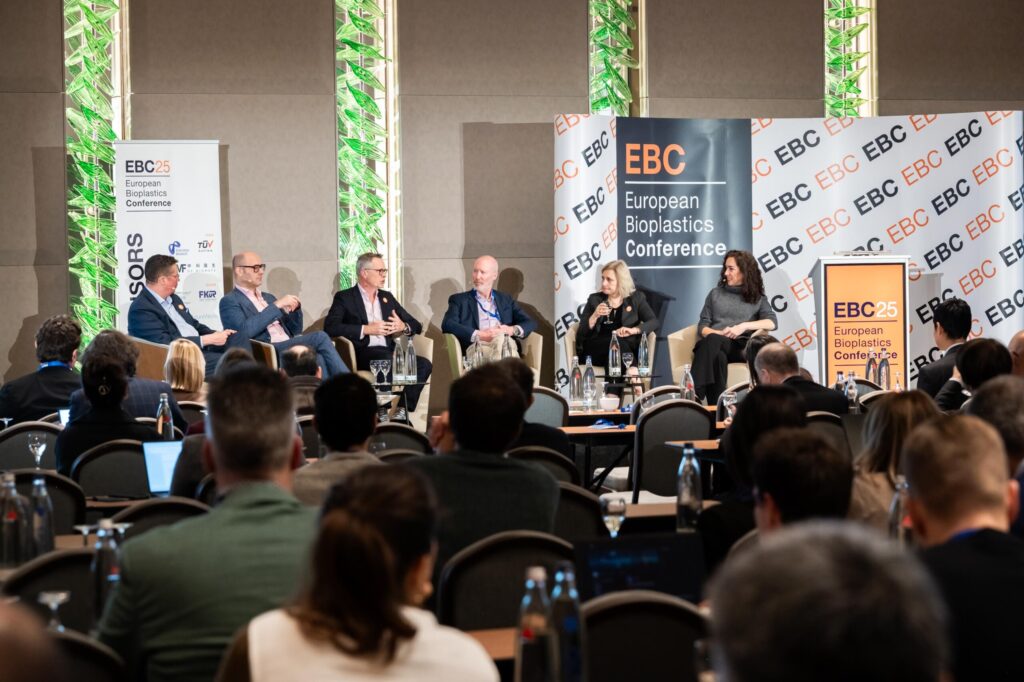
From 2 to 3 December, Michael Carus was a speaker at the European Bioplastics Conference advocating for the RCI. The conference focused on the latest innovations in bio-based and biodegradable plastics, the current political landscape, as well as environmental aspects, and opportunities for growth in the circular economy.
NEXT LEVEL Forum I – Club of Rome (Austrian Chapter)
Latest Webinar: Success Stories RCI 2025 and Outlook to 2026 – Project results and position papers
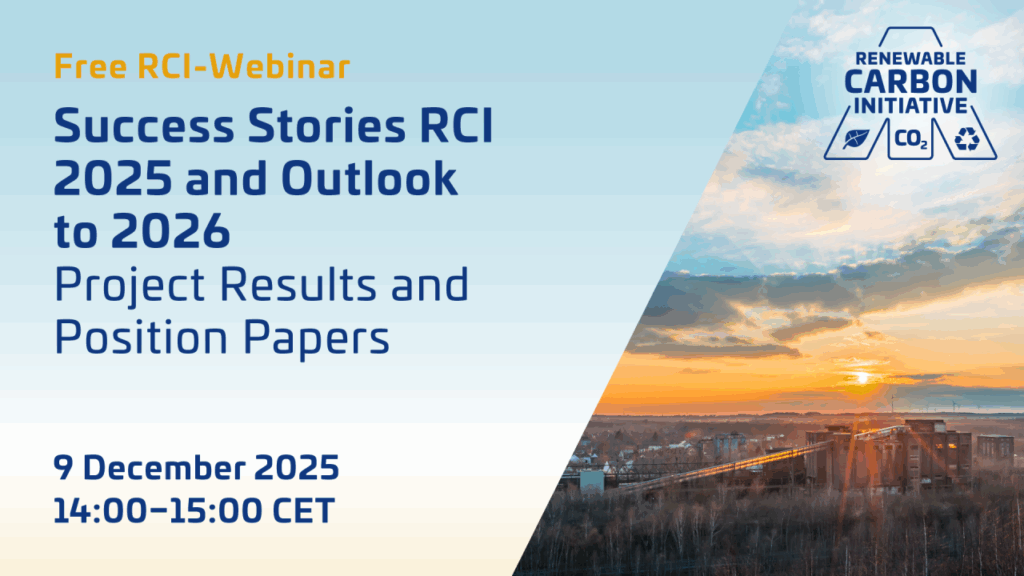
On 9 December, RCI hosted a free public webinar with 29 attendees, looking back at major publications and success stories from 2025 while providing an outlook to 2026. The webinar focused on five key scientific background reports published this year, covering biomass demand up to 2050, biomass availability for defossilising chemicals and materials, life-cycle assessment approaches for renewable carbon, RCI policy proposals to support the renewable carbon transition, and the implications of increased methane emissions in oil and gas supply for petrochemicals. Access the slides here.
Join the RCI at the 10th European Chemistry Partnering (ECP)!

Once again, we invite all RCI members and start-ups to join the 10th European Chemistry Partnering (ECP) in Frankfurt/Main on 4 February 2026 – the leading industry speed-dating event. ECP offers a prime chance to pitch your company in 10 minutes and meet key industry players in pre-arranged 20-minute one-to-one meetings. Participants span the entire chemical value chain. As an ECP partner, the RCI will host a dedicated pitch session with 5+ member companies. Previous RCI participants include Greenlyte, Fibenol, Colipi, BioBTX, CovationBio, and AllocNow.
New RCI partner

Molecule Group (US) is a policy firm and industry convenor focused on accelerating the deployment of sustainable fuels, chemicals, and materials across global markets. In an increasingly complex policy landscape, Molecule Group fills a critical gap by providing a cross-technology, cross-border platform for advancing policy alignment on sustainable molecules. Others separate molecules by end use, domestic needs from international perspectives, or climate ambition from commercial feasibility. Molecule Group brings those conversations together—across sectors, across borders, and across value chains. For more information on the Molecule Group, click here.
Source
Renewable Carbon Initiative, press release, 2026-01-12.
Supplier
AllocNow
BioBTX
Covation Biomaterials
European Bioplastics e.V.
Fibenol
Greenlyte Carbon Technologies
Molecule Group
nova-Institut GmbH
Renewable Carbon Initiative (RCI)
Share
Renewable Carbon News – Daily Newsletter
Subscribe to our daily email newsletter – the world's leading newsletter on renewable materials and chemicals