© GIG Karasek
Following many years of expertise, the Austrian process engineering and plant equipment company GIG Karasek has a long industrial track record. Since 2022, the company has expanded its portfolio with a dedicated Environmental Technologies business unit to accelerate the development of decarbonisation solutions, including CO2 utilisation.
In this interview, Mohammad Rezaei (Head of Business Unit Environmental Technology & Business Development Management) shares GIG Karasek’s practical learnings from industrialisation and CCU scale-up, in anticipation of his presentation at the upcoming CO2-based Fuels and Chemicals Conference 2026 (28-29 April 2026) – a key international meeting point for CCU and Power-to-X innovators, taking place in Cologne, Germany and online.
1. Strategic Entry into Carbon Capture and CO2 Valorisation
In 2022, GiG Karasek established the Business Unit “Environmental Technologies” and entered the field of carbon capture and CO₂ valorisation. Why do you consider CCU a commercially viable path for a globally active, medium-sized plant engineering company, and how has this strategic shift reshaped your internal priorities, capabilities and investments?
Mohammad Rezaei: For a plant engineering company, CCU is commercially relevant when customers are willing to invest in bankable systems — safe operation, defined interfaces, predictable performance, and a credible scale-up route. We therefore look at “viability” primarily through the lens of deployable equipment and lifecycle services, not through selling molecules ourselves.
This strategic move reshaped priorities in three concrete areas: building electrochemistry and systems engineering competence, investing in pilot infrastructure to generate operating data, and anchoring development in integration questions that decide indus- trial success (utilities, CO2 quality, product conditioning, control philosophy, and safety).
2. Building a Start-up within an Established Engineering Organisation
ECO2CELL, your proprietary technology for converting captured CO₂ into synthesis gas for fuels and chemicals, was developed within your existing organisation rather than as a separate start-up. How did you structure and prioritise the project internally, and what changes in governance, project management or resource allocation were required to enable innovation within established structures?
Mohammad Rezaei: We developed ECO2CELL inside the existing organisation to shorten the industrialisation path. A cross-functional core team drove rapid build-test-learn cycles, while established functions ensured execution quality (procurement, fabrication, QA, compliance).
The main governance change was evidence-based stage-gating: we only scale what has been demonstrated in tests, and we bring EHS/ATEX and operability reviews in early, so industrial constraints are engineered in, not patched in.
3. From Concept to Industrial Pathway – Key Milestones
ECO2CELL has evolved from an initial concept towards industrial implementation. Which technical and commercial milestones were decisive along this path, and when did the project shift from exploratory development to a credible industrial plant perspective?
Mohammad Rezaei: Two milestones mattered most. First, demonstrating reproducible operation beyond a single cell by integrating stack(s) with a defined balance-of-plant. Second, shifting the main question from “does it work?” to “does it run reliably and safely over time?”.
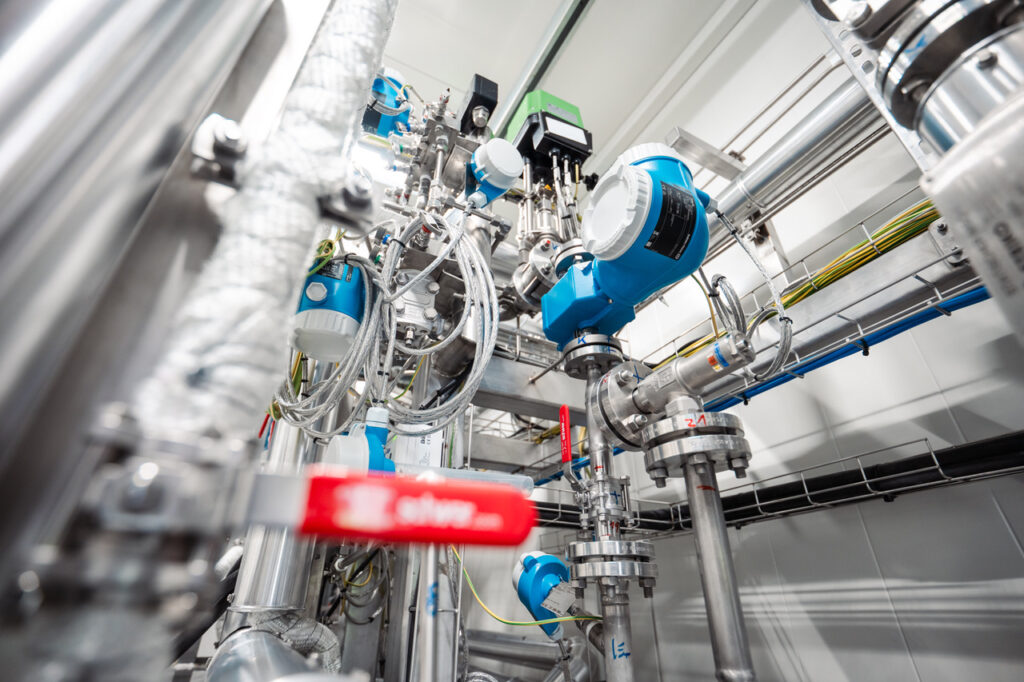
That shift became tangible when we committed to pilot-plant operation and long-term testing as the primary learning vehicle. Our current pilot setup is designed for up to 15 kW and up to 5.34 kg CO2 per hour, enabling realistic 24/7 operating scenarios and the data needed for the next scale step.
4. The ECO2CELL in a nutshell
The ECO2CELL Cube is currently the latest step in your developments. Can you briefly explain the concept and technology of the cube and how it will change the way of syngas production?
Mohammad Rezaei: ECO2CELL is a low-temperature electrochemical CO2 conversion platform. Using renewable electricity, we convert captured CO2 into a product gas stream that can be used as synthesis gas building blocks (CO and in-situ generated H2).
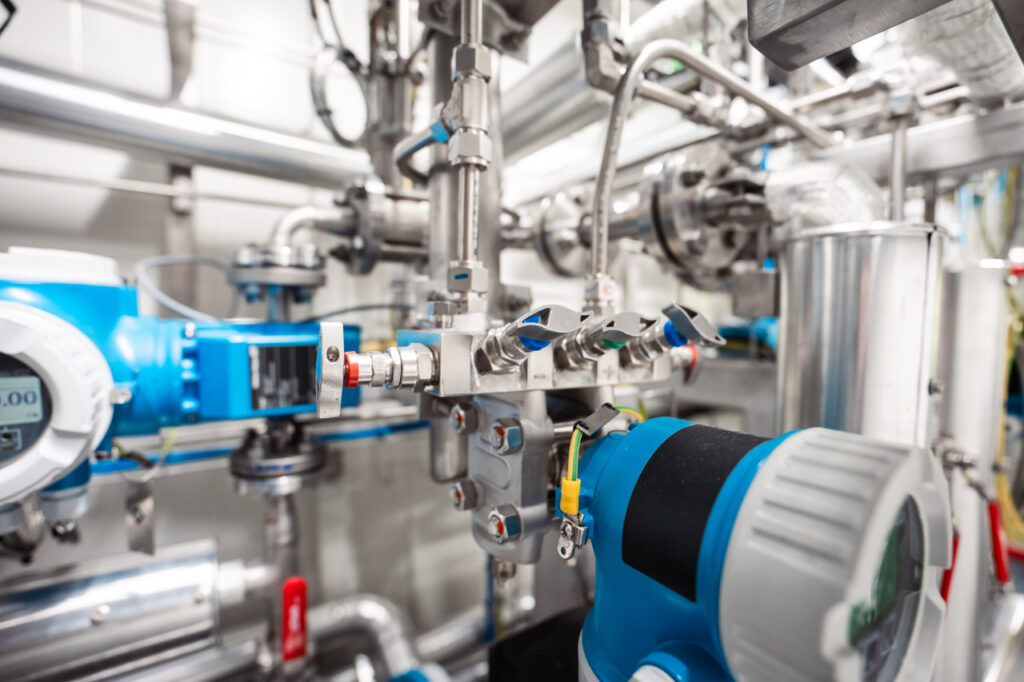
The ECO2CELL CUBE represents our approach to a modular, repeatable unit combining electrolysis stack(s), media loops, instrumentation, controls, and safety functions. The intent is faster deployment and a clear scale logic via modular replication.
5. Scale-up and the ECO2CELL CUBE – Addressing Industrial Reality
Scale-up is often the most critical stage for carbon capture and CO₂ valorisation technologies. What were the key technical and operational challenges in advancing ECO2CELL to industrial relevance, and what does the ECO2CELL Cube demonstrate in terms of scalability and practical applicability?
Mohammad Rezaei: Scale-up challenges are well known: flow and current distribution, sealing and materials durability, impurity robustness, analytics, and safe handling of CO/H2-containing streams. In practice, control stability and maintainability decide whether a technology can leave the pilot stage.
The CUBE is designed to demonstrate industrial practicality: repeatable operation with balance-of-plant and safety concept, and a scale pathway that reduces risk through modular replication rather than a single large step.
6. Rebranding and the Next Phase of Industrial Deployment
GiG Karasek has recently introduced a rebranding that reinforces its focus on forward-looking process technologies. How does ECO2CELL reflect this repositioning, and what are the next steps towards full industrial deployment? How do you see carbon capture and CO₂ valorisation shaping your portfolio over the coming decade?
Mohammad Rezaei: Our rebranding reinforces a forward-looking process technology focus—but we want to be measured by what can be operated and scaled. ECO2CELL reflects that mindset: it is engineered around execution, compliance, and scale-up readiness.
Next steps are clear: finish long-term pilot operation, define and validate the customer KPI set (stability, efficiency, product specs, operability, and cost drivers), and move towards a first industrial demonstration with partners. Over the next decade, we expect CCU to become a structural part of our portfolio wherever integrated, modular PtX/CCU solutions and reliable project execution are the differentiators.
Source
nova-Institut, original text, 2026-03-26.
Supplier
GIG Karasek GmbH
nova-Institut GmbH
Share
Renewable Carbon News – Daily Newsletter
Subscribe to our daily email newsletter – the world's leading newsletter on renewable materials and chemicals