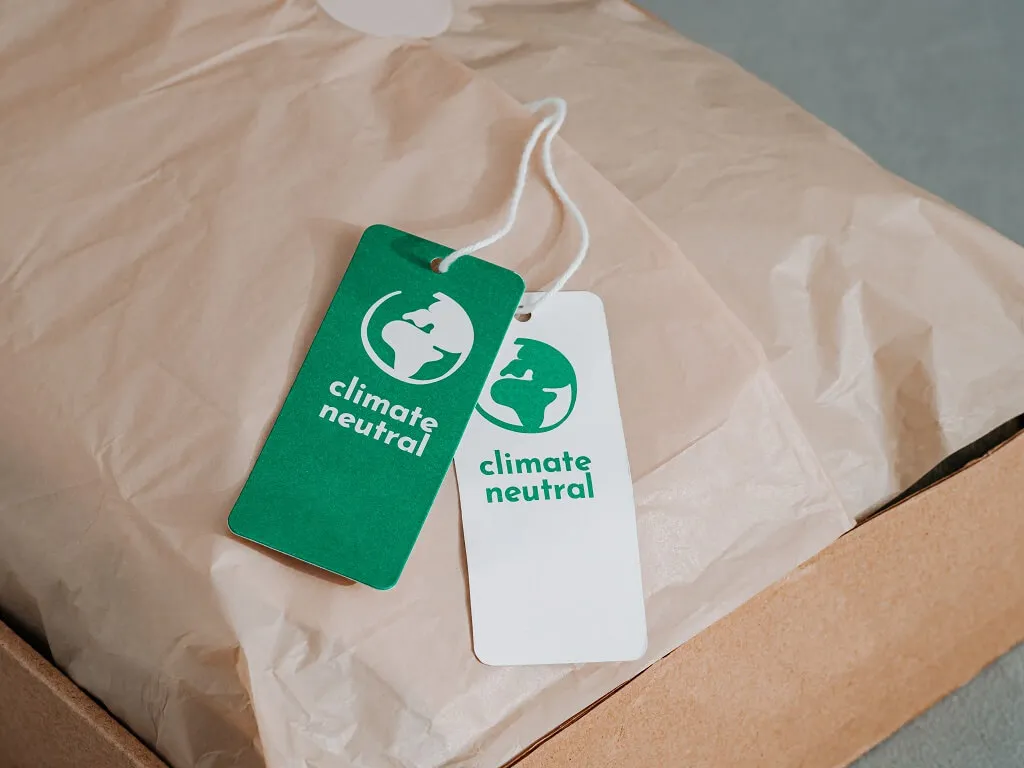
From 27 September 2026, Directive (EU) 2024/825 will apply throughout the EU, tightening the rules on environmental claims, sustainability labels and climate neutrality claims. This article summarises what is changing, the current status of transposition in Spain and which claims companies should review in relation to their products and activities.
The fight against greenwashing is entering a decisive phase in the European Union. Directive (EU) 2024/825, on empowering consumers for the green transition through better protection against unfair practices and through better information, will apply through national legislation from 27 September 2026.
The Directive amends two key pieces of consumer protection legislation – Directive 2005/29/EC on unfair commercial practices and Directive 2011/83/EU on consumer rights – and introduces new rules on environmental claims, sustainability labels, climate-related claims, environmental comparisons and future sustainability commitments.
For sectors such as plastics, packaging and materials, where terms such as “recyclable”, “recycled”, “biodegradable”, “circular”, “sustainable”, “low-carbon” or “climate-neutral” are commonly used, reviewing commercial communications is becoming an essential compliance issue.
What is greenwashing and what changes under Directive (EU) 2024/825?
Greenwashing is a marketing strategy in which a company exaggerates or misleadingly presents its environmental efforts in order to improve its image among consumers. As public concern about sustainability has grown, many brands have used terms such as “biodegradable”, “eco-friendly” or “sustainable” on their products without evidence to support them.
The Directive introduces new rules for environmental claims aimed at consumers. The main changes include:
- Restrictions on generic environmental claims: expressions such as “environmentally friendly”, “green” or “sustainable” may not be used in a generic way unless they can be justified by recognised excellent environmental performance.
- Ban on overstating environmental benefits: an advantage that applies only to one part or specific feature of a product may not be attributed to the product as a whole.
- Greater control over sustainability labels and marks: voluntary labels must be based on a certification scheme or established by a public authority.
- Restrictions on climate neutrality claims: certain claims of neutral, reduced or positive climate impact are prohibited when they are based on emissions offsetting.
- Future environmental commitments: these must be supported by clear, verifiable plans with measurable targets.
What is happening in Spain?
Member States were required to transpose the Directive by 27 March 2026 and must apply its provisions from 27 September 2026.
With only a few weeks to go before this date, several Member States, including France, Italy and Germany, have already incorporated the Directive into their national legal systems. In Spain, however, transposition has not yet been completed.
The Draft Sustainable Consumption Act is currently being processed and is intended to incorporate, among other EU legislation, Directive (EU) 2024/825. While transposition in Spain is being completed, companies should already begin adapting their environmental claims and communications, particularly when marketing their products in other Member States that have already incorporated the Directive into national law.
| Date | What happens |
|---|---|
| 27 March 2026 | Deadline for Member States to adopt and publish the transposition provisions. |
| 27 September 2026 | Date from which the new provisions on environmental claims apply. |
How will this affect the plastics industry?
For companies in the sector, it will be particularly important to review the claims used on packaging, labels, technical data sheets, websites and advertising campaigns.
Issues that will need to be assessed include:
- claims such as “recyclable”, “recycled”, “biodegradable”, “compostable”, “circular” or “sustainable”;
- percentages of recycled content and their correct scope;
- environmental comparisons between products;
- claims relating to carbon footprint or climate neutrality;
- environmental labels and marks used on products and in commercial communications.
Companies will need to have sufficient technical information to substantiate the environmental characteristics they communicate and to prevent a claim that is technically correct from becoming misleading because of its wording or scope.
What should companies do before 27 September?
The application of Directive (EU) 2024/825 from 27 September 2026 will bring a significant change to the way companies communicate the environmental characteristics of their products.
For the plastics industry, the challenge will be to ensure that environmental claims are clear, proportionate, verifiable and supported by sufficient technical evidence.
At AIMPLAS, we help companies review their communications and obtain the technical and regulatory basis required to reduce greenwashing risks and communicate their environmental progress with greater confidence and transparency.
How can AIMPLAS help companies?
At AIMPLAS, we can support companies in adapting to this new framework through:
- Technical and legal review of environmental claims and labelling, assessing their compliance with applicable legislation.
- Testing and material characterisation to provide technical support for the claims made.
- Studies on recyclability, recycled content, biodegradability and compostability.
- Specialist training so that technical, commercial, marketing and sustainability teams understand the new requirements.
Frequently asked questions
When does the Anti-Greenwashing Directive apply?
From 27 September 2026. Member States were required to transpose it by 27 March 2026, but its provisions apply from September.
Can I continue using my own sustainability label?
Only if it is based on a certification scheme or has been established by a public authority. Voluntary labels without a certification basis may no longer be used.
Can I say that my product is “climate-neutral”?
Not when the claim is based on emissions offsetting. The Directive prohibits certain claims of neutral, reduced or positive climate impact where they rely on offsetting.
Does it affect me if Spain has not yet transposed the Directive?
Yes, if you market your products in other Member States that have already incorporated it into national law, such as France, Italy or Germany. It is advisable to adapt your claims without waiting for Spain’s proposed Sustainable Consumption Act
Can a technically correct claim still be misleading?
Yes. A truthful claim can still be misleading because of its wording or scope, for example if it attributes to the entire product an advantage that only applies to one of its parts.
Source
AIMPLAS, press release, 2026-09-22.
Supplier
AIMPLAS (Asociación de Investigación de Materiales Plásticos y Conexas)
European Union
Share
Renewable Carbon News – Daily Newsletter
Subscribe to our daily email newsletter – the world's leading newsletter on renewable materials and chemicals