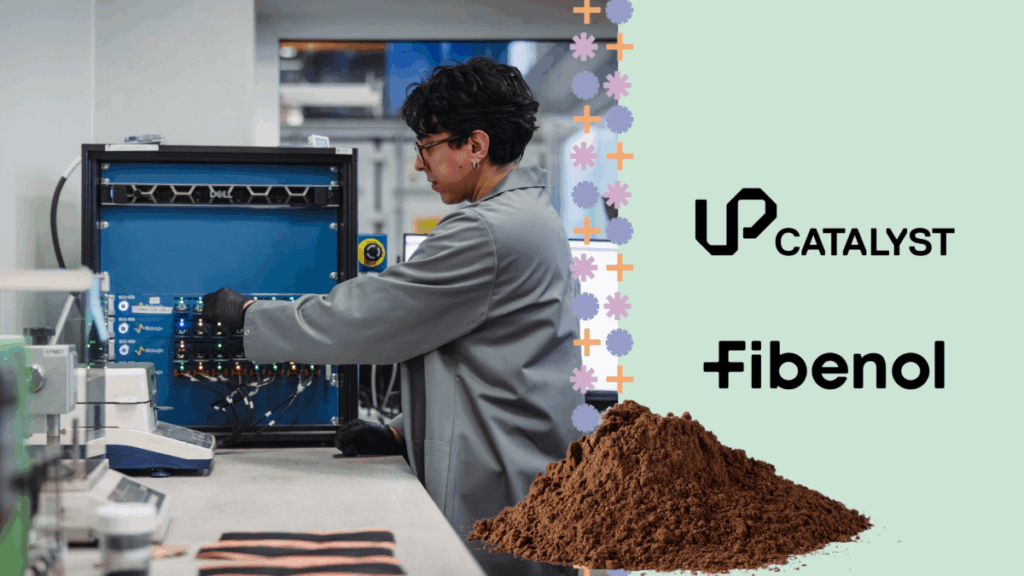
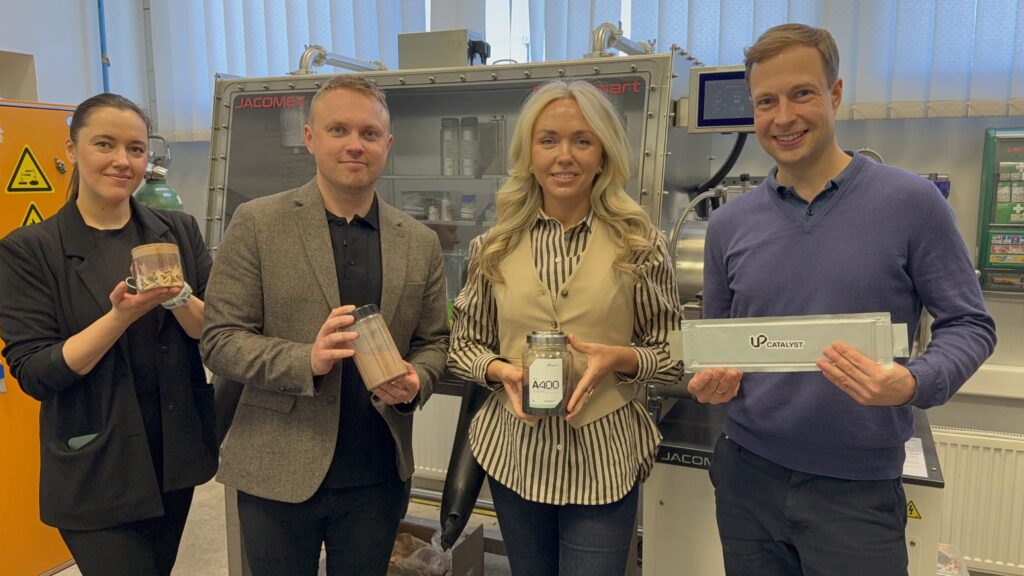
Two innovative Estonian technology companies, Fibenol and UP Catalyst, are expanding their collaboration to develop lignin-derived hard carbon and high-surface-area activated carbon for energy storage applications, including sodium-ion batteries and supercapacitors. Building on joint research that began in 2022, the two companies have now formalised their work through a Memorandum of Understanding aimed at long-term collaboration and industrial-scale development of battery anode materials originating from Estonian woody biomass.
Wood industry residues are often overlooked resources. Many assume that little value can be created from them. At Fibenol, however, this underused stream is seen as an opportunity. Using its innovative Sunburst® technology, wood residues are transformed into advanced biomaterials: lignin, wood sugars, and crystalline cellulose.
When wood is processed, valuable fibers and sugars are extracted first. One of the remaining components is lignin, the structural polymer that gives wood its strength. At Fibenol, we call it Lignova®, a high-purity lignin powder designed as a building block for new materials.
“Lignin has historically been treated as a low-value side stream, but in reality, it is one of the largest renewable sources of carbon available to industry,” says Peep Pitk, Chief Development Officer at Fibenol. “By refining it into a consistent, high-purity material, we can open pathways where renewable carbon from wood becomes part of entirely new material value chains.”
In collaboration with UP Catalyst, that pathway now extends into energy storage. Through a high-temperature process, this lignin is transformed into hard carbon, a material used in sodium-ion batteries, where its microscopic pores store sodium atoms during charging and discharging cycles.
“This collaboration is significant because it connects two critical pieces of the emerging energy storage puzzle: a reliable, renewable source of carbon and the know-how to turn it into a high-performance battery material. Sodium-ion batteries are one of the most promising frontiers in energy storage, with the market projected to more than triple by 2030,” says Dr Einar Karu, VP of Partnerships at UP Catalyst.
The collaboration highlights how renewable carbon from wood can move through a new value chain, from forest biomass to advanced materials that support the energy transition.
Source
Fibenol, press release, 2026-04-14.
Supplier
Share
Renewable Carbon News – Daily Newsletter
Subscribe to our daily email newsletter – the world's leading newsletter on renewable materials and chemicals