The BioFibreLoop project aims to produce functional textiles from renewable and recyclable raw materials (lignin, cellulose and polylactide (PLA)). To protect these textiles from liquids, gases, UV light and bacteria, a thin coating of lignin is applied to the textile surface. The project is also developing a new, very environmentally friendly surface treatment to give the lignin coating increased water and oil repellency over and above its natural material properties.
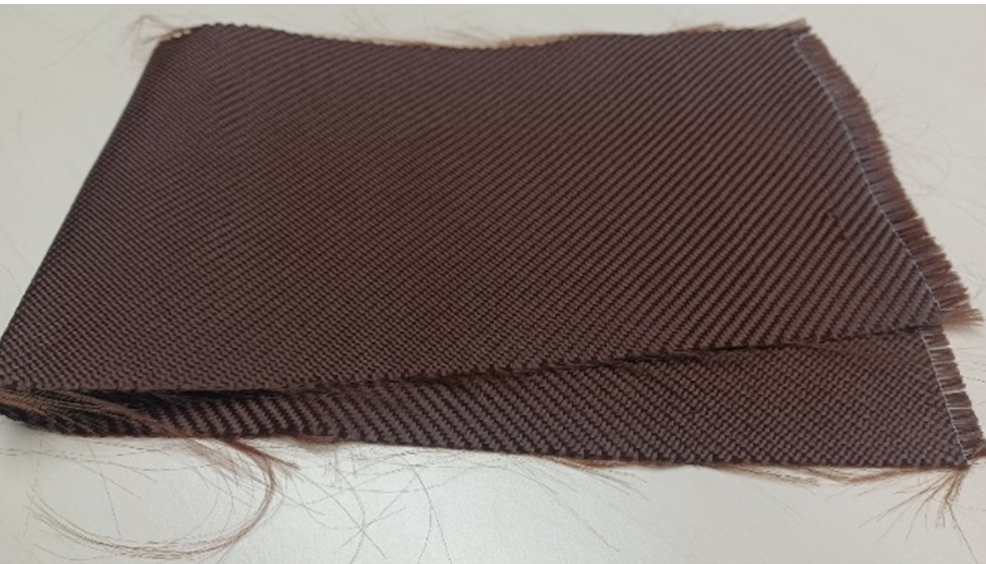
After the first few months of the project, the German Institutes of Textile and Fibre Research (DITF) have managed to successfully spin the first fibres from lignin mixed with a suitable cellulose that increases suppleness and strength. The slightly brownish, fine and smooth continuous fibres show a slightly shimmering sheen in the small sample fabrics produced (see left image).
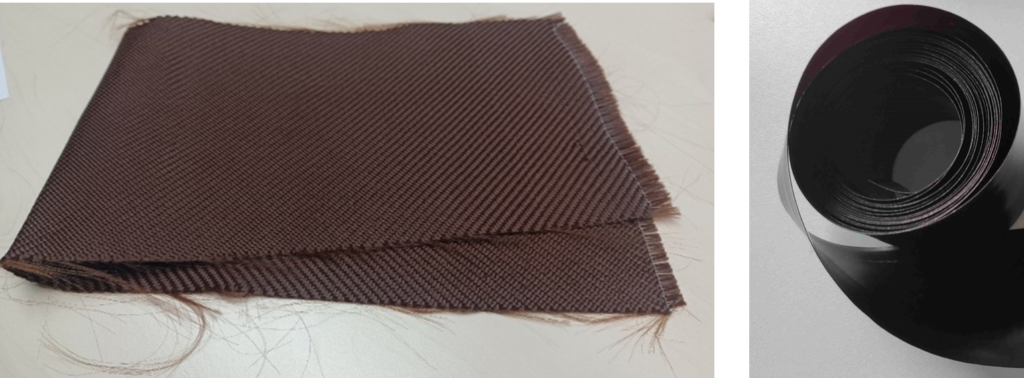
In addition, the DITF were also able to produce the first films from the mixture of lignin with cellulose, which are used to coat the textiles (see right image). In the next step, once very thin and uniform variants have been successfully produced, these films are applied to the textiles in a laminating process and bonded. Further textile samples from the textile partners in Italy, Austria and Germany made from woven, knitted and nonwoven fabrics with fibres made from cellulose and PLA have already been produced and evaluated, and some of the selected variants have already been used to produce larger samples on industrial systems.

BioFibreLoop has also made further progress in the development of the new technology for creating surfaces that repel water and oil. To this end, the researchers and employees involved intensively analysed previously known surface structures of certain plants and fish. The micro- and nanostructures on the surface are responsible for the aforementioned functional properties. From the findings, it was possible to derive a physical thought model for a good understanding of the relationships between micro- and nanostructures and the properties of the liquids to be repelled. The major challenge now is to transfer these structures to the surfaces of the lignin coating using a novel, laser-based embossing process. In the laboratories of Centre Technologique ALPhANOV, France and the DITF, intensive research is already being carried out on metallic surfaces for transfer, special laser technologies and the many variants of the embossing technique.
Project Coordinator
Thomas Fischer,
Deutsche Institute für Textil- und Faserforschung Denkendorf (DITF)
thomas.fischer@ditf.de
Technical Coordinator
Thomas Stegmaier,
Deutsche Institute für Textil- und Faserforschung Denkendorf (DITF)
thomas.stegmaier@ditf.de

Funded by the European Union Horizon Europe Research and Innovation Program under Grant Agreement No. 101130603. Views and opinions expressed are however those of the author(s) only and do not necessarily reflect those of the European Union or the European Health and Digital Executive Agency (HADEA). Neither the European Union nor HADEA can be held responsible for them.
Source
Biofibreloop, press release, 2025-01-28.
Supplier
biofibreloop
Centre Technologique ALPhANOV
DITF – Deutsche Institute für Textil- und Faserforschung Denkendorf
European Union
Horizon Europe
Share
Renewable Carbon News – Daily Newsletter
Subscribe to our daily email newsletter – the world's leading newsletter on renewable materials and chemicals