 Electrochemistry Turning CO₂ into Valuable Products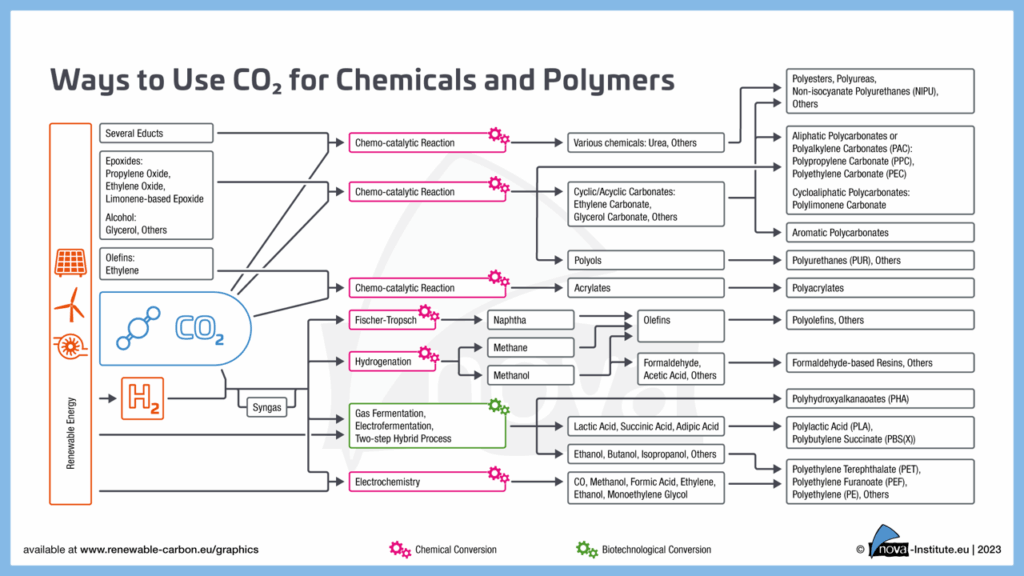
Electrochemical CO₂ conversion is moving from scientific promise to industrial relevance. By combining effective CO2 capture and conversion with renewable electricity, smart technologies can generate platform molecules such as syngas, formic acid, ethylene and other C1–C2 chemicals that fit into already established value chains or offer new platforms for various industries.
Why scale-up matters
The key challenge is no longer only catalyst performance in the laboratory. What matters increasingly is selectivity, long-term stability, product separation and energy efficiency of electrochemical CO2 conversion under industrial conditions and scale-up. That is why integrated system design, including electrodes, membranes and cell architecture, is becoming just as important as catalyst development itself. Pilot demonstrations provide the critical data needed for megawatt-scale viability, ensuring processes can handle real-world impurities and continuous operation, for instance, through modular plant designs that integrate direct air capture, multi-cell electrochemical stacks, and ethylene separation in air-to-ethylene systems.
Proven applications and untapped potential
Industries such as ammonia synthesis already leverage syngas from CO₂ electroreduction as a drop-in intermediate, and it also can reduce fossil input in established Fischer-Tropsch or methanol-to-olefins processes. Ethylene production, a cornerstone of petrochemicals (used for example in polyethylene for packaging and consumer goods), shows particular promise through process development approaches that bridge lab cells to full systems with balance-of-plant subsystems for reliable operation. Recent advancements yield increased efficiency at practical current densities, positioning it as a solution for defossilising Europe’s chemical industries.
Additionally, innovations like electrified high-temperature reactors for reverse water-gas shift (RWGS) reactions enable efficient syngas production from CO₂ and green hydrogen and future application potential spans aviation fuels via Fischer-Tropsch and sustainable polymers from e-methanol. Analysis by nova-Institute highlights CCU’s potential to supply 33% of average feedstock shares for chemicals by 2050, provided green hydrogen infrastructure scales alongside.
Join the discussion on CO2 valorisation at the CO₂-based Fuels and Chemicals Conference 2026
Electrochemical advancements in CCU, hydrogen and CO2 infrastructure, CCU policy and market hurdles take centre stage at the upcoming CO₂-based Fuels and Chemicals Conference 2026, taking place on 28–29 April in Cologne, Germany, and online.
Join the conversation and register here: https://co2-chemistry.eu/registration/
Sessions on electrochemical CO2 conversion and scale-up feature the following experts:
- Todd Thoreau Brix (OCOchem) – OCOchem FluX Electrolyzer 400
- Annelie Jongerius (Avantium Chemicals) – Powering the Future: Advancing Electrochemical CO₂ Conversion with the WaterProof Project
- Mohammad Rezaei (GIG Karasek) – The Green Frontrunner Project – Advancing Electrochemical CO₂ Conversion from Concept to Pilot Scale
- Tamás Fődi (eChemicles) – Low-Temperature CO₂ Electrolysis in a Real Industrial Setting
- Mariasole Cipolletta (Rosetti Marino) – Electrifying Syngas Production from CO₂ and Green Hydrogen: from Lab to Pilot
- Colin O’Brien (CERT Systems) – Scaling CO₂ Electrolysis: Process Development of an Air-to-Ethylene Pilot Plant
Further Readings
nova-Institut (2024). Evaluation of Recent Reports on the Future of a Net-Zero Chemical Industry in 2050 – RCI Report (November 2024) https://renewable-carbon.eu/publications/product/evaluation-of-recent-reports-on-the-future-of-a-net-zero-chemical-industry-in-2050-pdf/
nova-Institute (2022). CO₂ reduction potential of the chemical industry through CCU. https://renewable-carbon-initiative.com/wp-content/uploads/2022/05/22-05-03-CO2_Reduction_Potential_of_the_Chemical_Industry_Through_CCU.pdf
Source
CO2-based Fuels and Chemicals, original text, 2026-04-09.
Supplier
Avantium Technologies B.V.
CERT Systems
eChemicles (HU)
GIG Karasek GmbH
nova-Institut GmbH
OCOchem
Rosetti Marino
Share
Renewable Carbon News – Daily Newsletter
Subscribe to our daily email newsletter – the world's leading newsletter on renewable materials and chemicals