 Dr. Lars Börger Charts nova-Institute’s Renewable Carbon Future As New CEO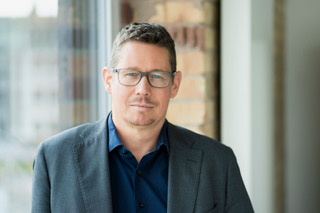
With a dynamic and constantly changing global environment, Europe’s chemical and materials sector is facing significant challenges. How do you estimate the current state and prospects of the European economy?
Lars: We are witnessing the beginning of a new carbon era. In the midst of global crises, the vision of a fully defossilised materials world where fossil carbon is replaced by renewable carbon is taking shape. This transformation goes beyond incremental improvement as it is about redesigning the very foundation of our industrial system.
The tools are available, the pathways are visible, and the momentum is building. And we can actively shape this post-fossil materials economy.
Talking specifically about Europe, the challenges of the current global situation and the feedstock transition of the chemical industry hold significant opportunities. Europe has a solid chance of becoming world champion of the circular economy if it takes the right steps, exactly because has limited domestic resources and therefore a high dependency on external supplies, particularly energy and fossil raw materials. Thus, defossilisation by moving towards new paths of circular utilisation of renewable carbon from biomass, CO₂ and recycling, supported by renewable energy infrastructure, is almost naturally the number one priority.
If Europe approaches this with determination and clarity, this becomes the competitive advantage and not a burden.
The transition you describe is more than a technological adjustment. How would you characterise this paradigm shift towards renewable carbon and what does it require from industry?
Lars: It is indeed a paradigm shift. Technology is part of it, but the change is broader. We know that paradigm shifts are uncomfortable. People prefer familiar solutions and established habits. Yet history shows that energy and material systems have changed before — from wood to coal to fossil-based resources. Now we must take the next step and move towards sustainable renewable carbon solutions, supported by renewable energy.
What matters is that we do not unnecessarily limit ourselves. Alternatives based on biomass, CO₂ utilisation and recycling are already well developed and often ready for scale-up. The task is not to favour one pathway ideologically, but to create the right framework conditions that can support investments and create fair market conditions for renewable carbon materials.
Innovative routes as well as drop-in solutions are part of the total solution. We cannot neglect the need for using the existing infrastructure to introduce renewable carbon pragmatically just for reasons of urgency, while innovations such as chemical recycling continue to scale. It is about pragmatic implementation and, at times, soft compromises — of course without losing sight of the overall objective.
At the same time, we must stop measuring new solutions solely against fossil-based benchmarks in a superficial way. It is not wise to compare the problem with the solution.
You bring more than 25 years of experience from companies such as BASF and Neste. How do you plan to integrate this experience from the free market economy into your work and leadership at nova-Institute?
Lars: Having built businesses across different regions of the world has taught me the importance of partnership and collaboration along the value chain. It needs to be understood what the drivers on each value chain step are to create successful business cases and thereby move forward towards the overall vision. Actively seeking synergies and complementary solutions is the only way to create sustainable, market-relevant, scalable and feasible outcomes.
In a free market economy, sustainable solutions must also be economically viable. Transformation therefore needs to align environmental ambition with competitiveness. And sustainability has indeed become a competitive advantage, but only if companies can implement it under framework conditions that do not hinder implementation.
This perspective is highly relevant for nova’s work. We understand both the strategic ambitions and the economic realities companies face. That combination of market understanding and independent analysis is crucial for enabling transformation at scale.
As the new CEO of nova-Institute you are now taking over leadership from its founder and pioneer Michael Carus. How do you see this transition and what is your vision for nova and for the chemical and materials industry?
Lars: Michael Carus has built nova-Institute into a leading think tank for renewable carbon and circular economy concepts. Taking over this responsibility means continuing this mission while strengthening nova’s role at a time when transformation and innovation have never been so urgent and important.
Supporting and accompanying enterprises, investors, start-ups, governments and other stakeholders that actively want to change and move towards the defossilised vision is therefore crucial and exactly what we do at nova. We combine practical industry experience with independent, science-based analysis. With our multidisciplinary team, we follow a holistic approach: we analyse which technologies and renewable carbon sources are suitable, in which markets their application is feasible, which regulatory frameworks apply, how sustainable the solutions are and how they can be successfully positioned.
Our support can start with key insights from a single life-cycle assessment — but it can also lead to a comprehensive transformation of technology infrastructure or market strategy. Each enterprise requires its own unique and tailor-made solution.
For the chemical and materials industry, the direction is clear: defossilisation through renewable carbon from biomass, CO₂ utilisation and recycling. The chemical industry is the key to the solution, not the problem.
For Europe in particular, this transformation is a strategic opportunity. If we collaborate across value chains and align innovation, policy and markets, we can actively shape a competitive and circular economy based on renewable carbon.
Source
nova-Institute, original text, 2026-03-02.
Supplier
nova-Institut GmbH
Renewable Carbon Initiative (RCI)
Share
Renewable Carbon News – Daily Newsletter
Subscribe to our daily email newsletter – the world's leading newsletter on renewable materials and chemicals