 CO₂ Infrastructure as a Key Enabler for Carbon Capture Utilisation (CCU) and Decarbonisation – The Example of Chemiepark Knapsack in Hürth (Germany)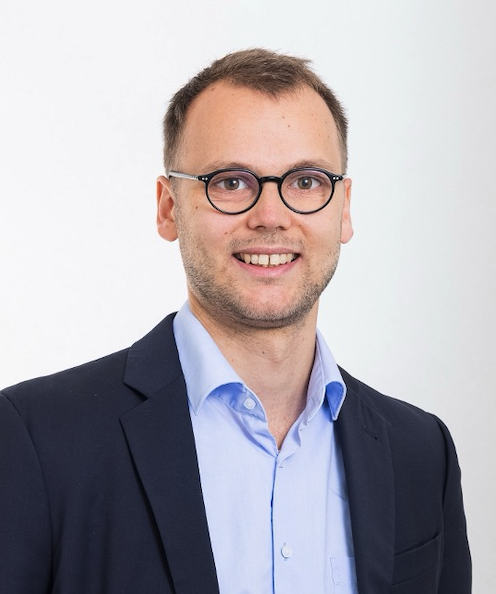
Project Manager Site Development, YNCORIS
© YNCORIS
The utilisation of CO₂, also known as Carbon Capture and Utilisation (CCU), is increasingly becoming a key element of Europe’s transformation strategy towards a defossilised and circular economy. In combination with Power-to-X technologies, CCU enables the production of synthetic fuels, chemicals, and material feedstocks based on captured CO₂. These approaches transform CO₂ emissions into a valuable raw material, supporting the transition towards effective carbon valorisation.
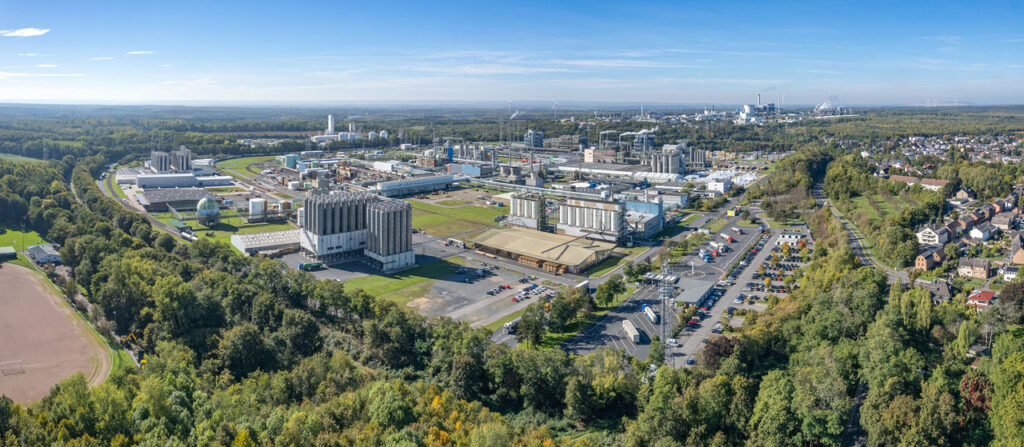
As a site operator and energy service provider, YNCORIS actively supports this development at Chemiepark Knapsack. By sponsoring the “Best CO₂ Utilisation” innovation award, presented annually at the CO₂-based Fuels and Chemicals Conference, the company highlights the importance of effective infrastructure, collaboration, and market-ready solutions for establishing functioning CO₂-based industries. In this interview, Sebastian Trunk (Project Manager Site Development ) discusses these aspects using the example of Chemiepark Knapsack located in Hürth, Germany.
Why is connecting Chemiepark Knapsack to a CO₂ infrastructure essential for companies like YNCORIS—particularly with regard to CO₂ valorisation and Power-to-X applications?
For YNCORIS, CO₂ infrastructure is the key lever for advancing defossilisation and decarbonisation at Chemiepark Knapsack. It therefore represents a core component of our CCUS strategy. For decades, the primary role of chemical park operators was to support resident companies so they could focus on their core business. Today, this role is evolving: we must also actively support our customers in their defossilisation efforts, enabled through smart infrastructure solutions.
Our CO₂ footprint analysis clearly shows that heat generation, particularly steam supply, is the largest source of emissions. Without reliable CO₂ transport infrastructure and viable pathways for Carbon Capture and Utilisation (CCU) or Carbon Capture Storage (CCS), technically and economically feasible decarbonisation options remain limited. This is why expanding CO₂ infrastructure is a top priority for YNCORIS at Chemiepark Knapsack.
How is the transformation of energy and utilities supply being approached, particularly regarding the role of CO₂ capture and utilisation?
At YNCORIS we are pursuing a dual-track strategy. Firstly, we are transitioning our supply system away from coal towards electricity and gas. This reduces emissions immediately and increases operational flexibility. Secondly, we are planning to complement the current baseload supply, largely provided by a waste-to-energy plant, with CO₂ capture, followed by utilisation or storage. This is the only way to decarbonise this central pillar of supply.
At the same time, we are establishing the technical and regulatory foundations. Through the CaReS Knapsack project, we are working with partners such as EEW, OGE, and SEFE to analyse potential carbon capture options and system designs for the site. This enables us to act quickly and implement solutions as soon as favourable framework conditions are in place.
The YNCORIS study on CO₂ infrastructure in the Cologne region connects numerous stakeholders along the CCU value chain. How does this concept fit into the broader context of a circular CO₂ economy?
The study integrates activities across the entire CCUS value chain: from point sources in Knapsack and the Wesseling cluster, through existing pipeline corridors and hubs, to long-distance transport routes, interim storage facilities, an export point towards the Port of Antwerp-Bruges, and ultimately offshore storage in the North Sea.
Key partners include Shell, LyondellBasell (LYB), EEW, Evonik, YNCORIS, Nippon Gases, SEFE, OGE, Fluxys, and the Port of Antwerp-Bruges. YNCORIS is pursuing a three-stage objective:
- Short term: Establish a platform for exchange and collaboration on CCUS
- Medium term: Assess CAPEX and OPEX for a CO₂ infrastructure between Cologne and Antwerp/Zeebrugge and develop robust business cases
- Long term: Connect Chemiepark Knapsack to this infrastructure to ensure sustainable decarbonisation
What advantages does the Cologne region offer for effective CO₂ utilisation and innovative Power-to-X concepts?
The region especially benefits from an integrated chemical cluster, existing pipeline networks, and increasing regulatory clarity. This creates favourable conditions for establishing a CO₂ backbone using existing corridors, significantly reducing capital expenditure for a European CO₂ infrastructure, particularly in densely populated areas.
This benefits not only CCS but also CCU. Given the high energy and hydrogen demand, CO₂ should ideally be utilised where renewable energy and green hydrogen are available at scale and at competitive cost. This does not necessarily have to be at the emission source, as a well-developed infrastructure enables efficient allocation and economies of scale.
What is needed to successfully achieve the transition towards a defossilised circular economy, and how do you assess CCS compared to alternative decarbonisation pathways?
Insights from numerous discussions and studies are clear: under current conditions, CCS is the most realistic option for decarbonising waste-to-energy plants and large parts of the chemical industry.
At the same time, the value chain is too complex for any single company to implement independently. Close collaboration between industry, policymakers, and society is essential to establish reliable planning and permitting frameworks, funding mechanisms, market designs for transport and storage, cross-border interoperability, and clear liability rules.
Industry, network operators, and port partners agree that CO₂ infrastructure represents the lowest common denominator for ensuring a climate-neutral and competitive European chemical industry.
The next step for YNCORIS is to consolidate the findings from the CaReS Knapsack project and the infrastructure study, further define routes and hubs, and prepare for CCUS implementation – so that projects can be launched quickly once favourable conditions are in place.
Although YNCORIS currently focuses on CO₂ infrastructure and CCS, your company sponsors the “Best CO₂ Utilisation” innovation award. What are the reasons behind this?
In the medium term, we see CCS as the more pragmatic solution. However, in the long term, CO₂ will become a valuable renewable carbon source that will progressively replace fossil-based solutions.
That said, industrial-scale CO₂ utilisation and valorisation is still in its early stages compared to other circular economy technologies. Therefore, YNCORIS places great importance on supporting young, innovative companies -many of which are present at the CO₂-based Fuels and Chemicals Conference – by providing them with visibility and support throughout their development journey.
Source
CO2-based Fuels and Chemicals, original text, 2026-04-21.
Supplier
Chemiepark Knapsack
nova-Institut GmbH
YNCORIS
Share
Renewable Carbon News – Daily Newsletter
Subscribe to our daily email newsletter – the world's leading newsletter on renewable materials and chemicals