Today’s dry mortars must deliver a lot: they must be easy to apply, stable, crack-bridging, reliably adhesive, and cost-effective to formulate. This is precisely where LARGOCELL cellulose fibers from Nordmann partner Interfiber offer clear added value: they specifically enhance formulations in areas where performance is critical during application.
Whether tile adhesives, plasters, external thermal insulation composite systems, joint fillers, self-leveling floor compounds, or construction adhesives: Even the smallest amounts of special additives can noticeably improve workability, stability, and surface quality.
LARGOCELL cellulose fibers are natural, water-insoluble functional fibers for mineral-based and paste-like systems. They can be flexibly integrated into existing formulations and help manufacturers specifically optimize application quality and process reliability.
More control in the formulation — more reliability in application

LARGOCELL fibers form a fine fiber network in dry-mix mortar systems. This allows them to positively influence rheology, water distribution, viscosity, stability, and dimensional stability.
Typical applications include:
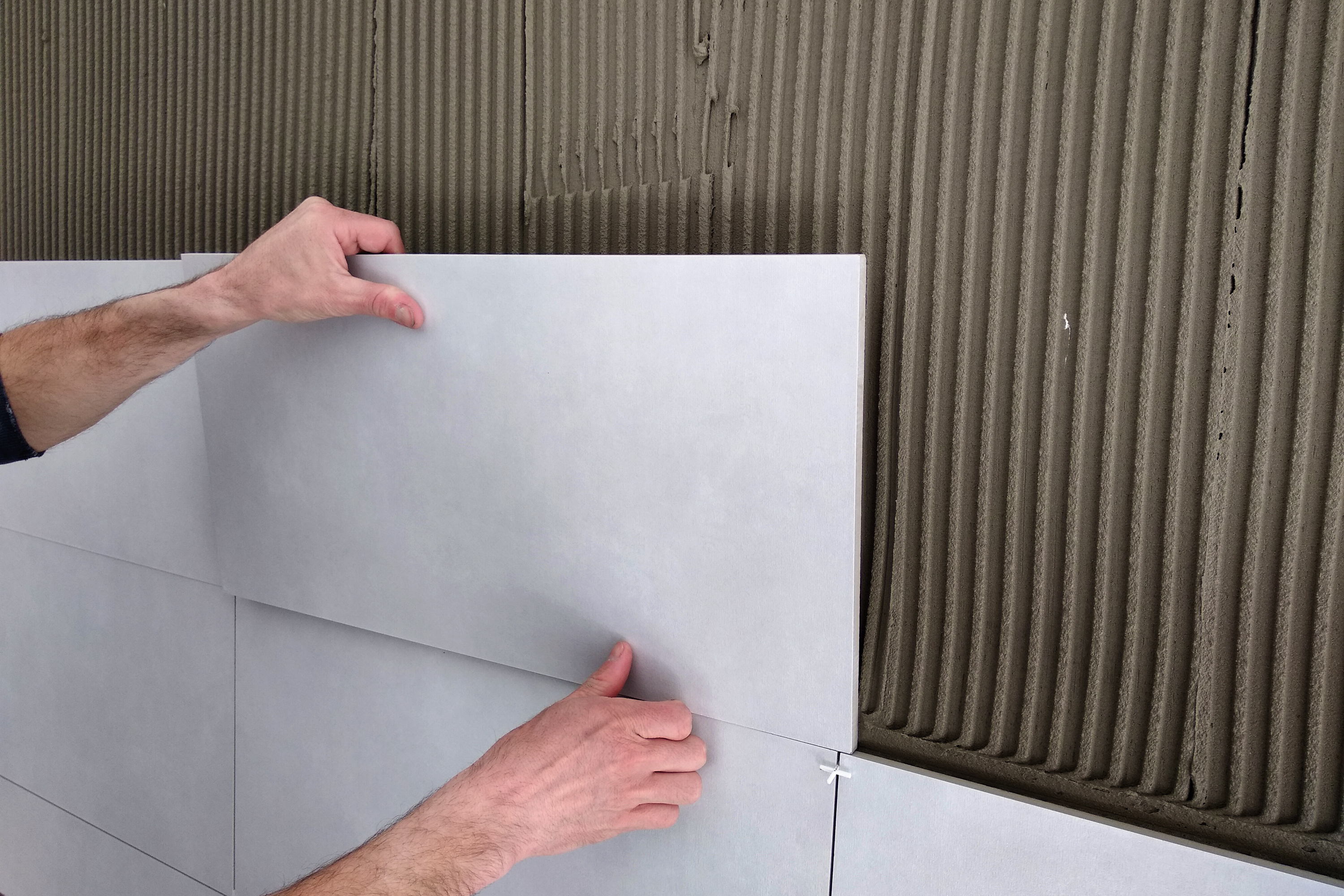
- Tile adhesives: Improved open time, stability, adhesion, anti-sagging, and workability.
- Mineral plasters and mortars: More homogeneous mixing, less material segregation, better mechanical stability, and reduced cracking tendency.
- Wall fillers and joint fillers: easier workability, fewer pinholes and microcracks, reduced shrinkage, and more uniform surfaces.
- ETICS and construction adhesives: higher stability and reliable application, even on vertical surfaces.
- Specialty mortars and renovation systems: Support for dimensional stability, layer formation, and reproducible application.
- Bituminous and paste-like systems: Stabilization, better consistency, higher plasticity, and reduced cracking.
Nordmann assists in selecting the appropriate fiber quality—tailored to the application, desired performance, and existing formulation. Short fibers are particularly easy to incorporate; longer fibers can specifically enhance reinforcement, crack resistance, and dimensional stability.
But cellulose fibers offer more than just functional benefits: They are based on renewable, plant-based raw materials and combine technical performance with a sustainable raw material profile.
Source
Nordmann, press release, 2026-09-08.
Supplier
Share
Renewable Carbon News – Daily Newsletter
Subscribe to our daily email newsletter – the world's leading newsletter on renewable materials and chemicals