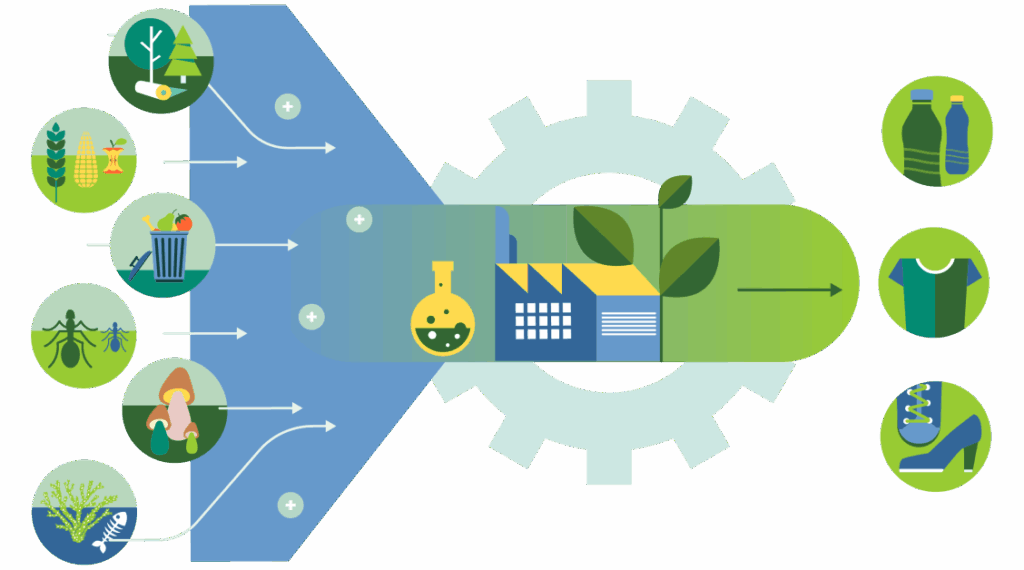
For the first time, a new study developed by BIC provides an evidence base on Europe’s bio-based products lead markets. The study concludes that there is no shortage of technology or ambition, but the absence of a regulatory framework that would stimulate demand.
Covering chemicals, plastics and polymers, fibre-based packaging, and textiles, the study shows that Europe has a genuine opportunity to lead globally in bio-based products but only if their full value, including their environmental benefits, is properly rewarded in the market.
BIC Executive Director Philippe Mengal commented: “The deployment of the bio-based industries in Europe can be a real competitive advantage,and strengthen our strategic autonomy at the same time. That potential stays untapped, without the market signals to unlock it. The legislation to do this is being written now, and we are ready to work with policymakers to get these measures into it.”
The study, produced by the Bio-based Industries Consortium (BIC), is in two parts: the first maps the lead markets for bio-based products across chemicals, plastics and polymers, fibre-based packaging, and textiles, while the second sets the policy measures to overcome them.
As outlined in the EU bioeconomy strategy, Europe has a real opportunity to lead globally in bio-based products, and the potential reaches across the economy.
- Bio-based plastics capacity alone is set to nearly double, to about 4.7 Mt by 2030, and Europe already holds the largest regional share of that market, at 43.1%.
- Europe’s chemicals industry is worth around €655 billion a year, yet only about 8% of it is currently bio-based;
- Its fibre-based packaging sector generates €110 billion in revenue and supports some 710,000 jobs;
- Europe leads globally in textile fibres such as flax and hemp, producing 64% of the world’s flax and more than half of global hemp fibre.
That potential can be realised by rewarding the full value of bio-based products and their environmental benefits. Bio-based products, like other renewables, often come with a green premium compared to their fossil-based counterparts. Without binding policy measures and incentives to drive demand, Europe will miss an opportunity to remain a global leader in the bioeconomy. Lead market measures are needed to attract private investments and scale-up bio-based solutions in Europe.
To overcome this, the report calls for a package of well-designed, targeted measures to create predictable demand, such as binding bio-based content requirements. It recommends the EU to build these into the legislation already being prepared or revised, including the Biotech Act II and the forthcoming revision of the Public Procurement Directives.
Read our Lead Markets reports:
- Bio-based Chemicals
- Textiles from Bio-based Fibres & Fabrics
- Bio-based Plastics, Polymers & Fibre-based Packaging
- Policy Recommendations
- Overview and Key Findings
- Annex & References
Source
BIC, press release, 2026-07-14.
Share
Renewable Carbon News – Daily Newsletter
Subscribe to our daily email newsletter – the world's leading newsletter on renewable materials and chemicals