 Artificial Intelligence Reshaping Recycling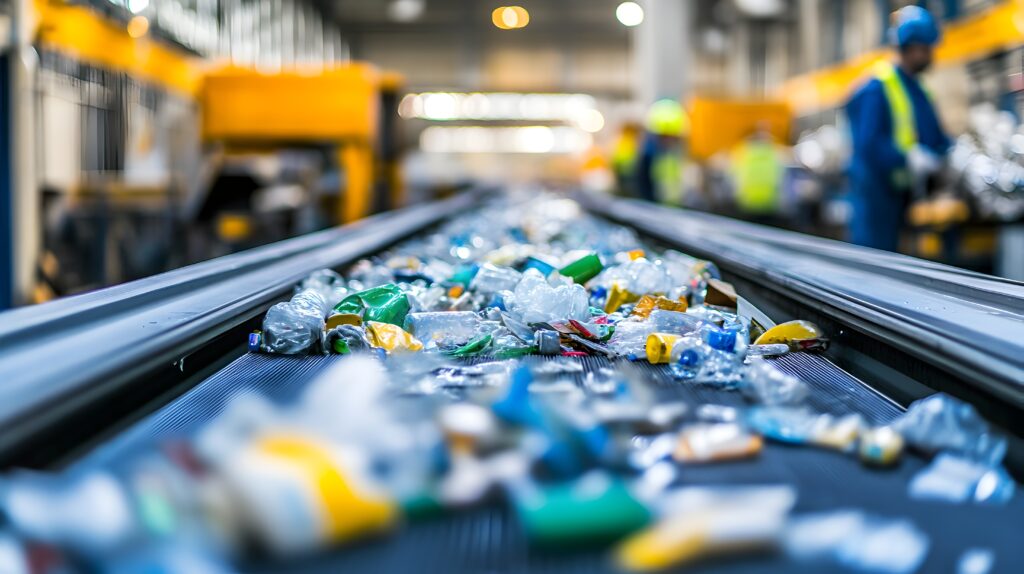
Artificial intelligence (AI) is rapidly transforming recycling technologies by enabling a new level of process control and efficiency. Machine learning algorithms are capable of continuously analysing sensor, spectroscopy, and image data. This allows for more precise modelling of reaction processes and dynamic adjustment of key parameters such as temperature, pressure, and catalyst dosage. The goal: stable process control despite highly variable feedstock qualities. At the same time, AI improves the analysis of waste streams and supports automated pre-sorting and material preparation.
State of the Art
AI has already become a core enabler in industrial recycling. Modern sorting plants use near-infrared sensor systems combined with deep learning to distinguish and separate various plastic types with high precision. In process control, AI systems dynamically optimise operating parameters in real time, cutting energy consumption and stabilising product quality. Predictive maintenance has also proven valuable: continuous evaluation of machine data allows early detection of potential failures and prevents unplanned downtime. Research initiatives are now advancing digital models that simulate depolymerisation reactions, enabling faster selection of suitable solvents and catalysts while reducing costly trial-and-error experimentation.
Automated, AI-Driven Recycling Cascades
The next major step goes beyond optimising single processes. Semi-autonomous, AI-driven systems can manage complete recycling cascade – multi-stage process chains in which materials are automatically directed to the most suitable recovery route. The system determines whether a stream is better suited for mechanical, solvent-based, or chemical recycling. Residual fractions from one process can seamlessly move to the next, creating flexible combinations of processes that maximise resource use, improve energy efficiency, and increases output quality.
Potentials and Current Limitations
AI-based control offers clear advantages: higher efficiencies, improved yields, and consistent product quality. Operating costs and energy demands drop, strengthening both the ecological and economic case for technologies such as depolymerisation. However, data availability remains a limiting factor. Many recycling facilities still lack sufficiently long and consistent data sets to train advanced machine-learning models. Integration into existing plants can also be challenging, requiring adjustments across sensor systems, data infrastructures, and staff training.
Depolymerisation as a Key to Circularity
Depolymerisation belongs to the class of ‘advanced recycling’ processes and differs from thermal conversion routes such as pyrolysis or gasification. Instead of completely breaking polymers into basic molecules or synthesis gases, depolymerisation aims to recover the original monomers. These monomers can then be reused in high-quality applications equivalent to virgin materials – a critical step toward circular material cycles.
Figure 1 illustrates the variety of advanced recycling technologies and shows the role of depolymerisation within this spectrum.
Preview of the AI Circular Economy Conference 2026
Looking ahead, the AI Circular Economy Conference 2026, which takes place on 4–5 March in Cologne, will focus specifically on the role of AI in enabling a fossil-free circular industry. Discussions will extend from AI-based depolymerisation control and catalyst modelling to applications in bio-based processes, supply-chain management, and sustainability assessments. The conference aims to connect stakeholders from chemistry, materials science, biotechnology, recycling and IT – turning AI into a practical driver of circular innovation. https://ai-circulareconomy.eu
Source
nova-Institute, original text, 2025-12-15.
Share
Renewable Carbon News – Daily Newsletter
Subscribe to our daily email newsletter – the world's leading newsletter on renewable materials and chemicals