 ReTraCC: Austria’s Flagship Project Takes on the Circular Carbon Economy
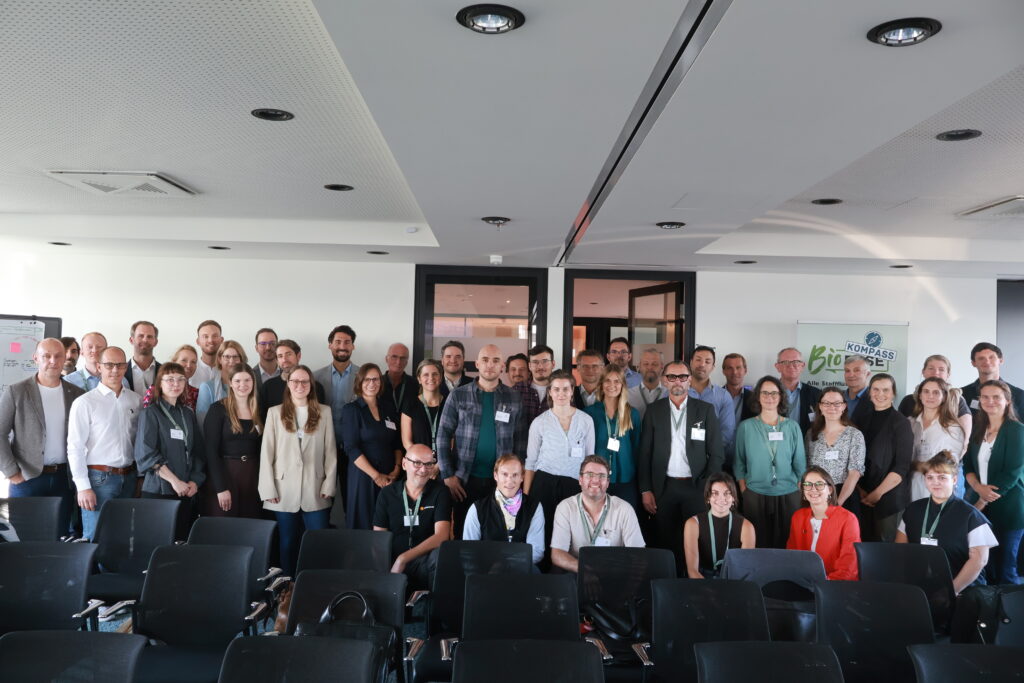
Carbon is not only an energy issue, but a material flow issue: it accounts for 43% of global resource consumption and 39% in Austria. On 29 September 2026, the Austrian flagship project ReTraCC (Resource Transition through Circular Carbon) started its work. Running from July 2026 to June 2030, the project aims to test a systemic transformation towards a circular carbon economy and thereby contribute to the defossilisation of the economic system.
Carbon will remain indispensable for energy, materials and everyday products. The challenge is therefore not decarbonisation, but defossilisation: replacing fossil carbon with renewable carbon from biomass, CO₂ and recycling and keeping it in closed loops. In Austria, 54% of all goods-producing sectors depend on carbon. So far, many individual solutions exist, but they are rarely connected and often considered in isolation.
ReTraCC addresses this with a three-level approach:
- System level: A systematic analysis of Austria’s carbon value network and the participatory development of transformative solutions.
- Pilot level: Development and piloting of 13 use cases in four focus areas: the use of biogenic CO₂, recycling of carbon-containing residues, circular business models and digital tools. The use cases address not only technological aspects, but also logistical, regulatory and social ones.
- Scaling level: Holistic sustainability assessment and validation of the use cases, transfer to other parts of the national carbon value network and policy recommendations.
A broad consortium
The project brings together 8 research institutions, 8 service providers and 16 industry and user partners from sectors such as plant engineering, transport, chemicals, food and waste management. The consortium is coordinated by BioBASE. An advisory board of external experts will accompany the project.
nova-Institute’s role
nova-Institute is involved in many of the project’s work packages. We support ReTraCC’s objectives by bringing our expertise on renewable carbon and a pan-European perspective into the Austrian context .
About nova-Institute
Since the mid-1990s, nova-Institute has been dedicated to sustainability and today focuses primarily on renewable carbon cycles. As an independent research institute, it supports companies – particularly from the chemical, plastics and materials industries – in the use of renewable carbon derived from biomass, direct CO₂ utilisation (CCU) and recycling.
With a multidisciplinary team of scientists, nova-Institute participates in international innovation projects and provides science-based management consulting. The institute follows a holistic approach: its experts analyse which technologies and raw materials are suitable for specific products, in which markets their application is feasible, which regulatory frameworks apply, how sustainable the solutions are and how they can be successfully positioned in the market.
Based on these analyses, the team develops tailored strategies to support the transformation from fossil to renewable carbon. Around 50 experts from various disciplines work together to drive the defossilisation of industry – for a climate-neutral future.
More information: www.nova-institute.eu and www.renewable-carbon.eu
Source
nova-Institute, original text, 2026-11-03.
Supplier
Share
Renewable Carbon News – Daily Newsletter
Subscribe to our daily email newsletter – the world's leading newsletter on renewable materials and chemicals